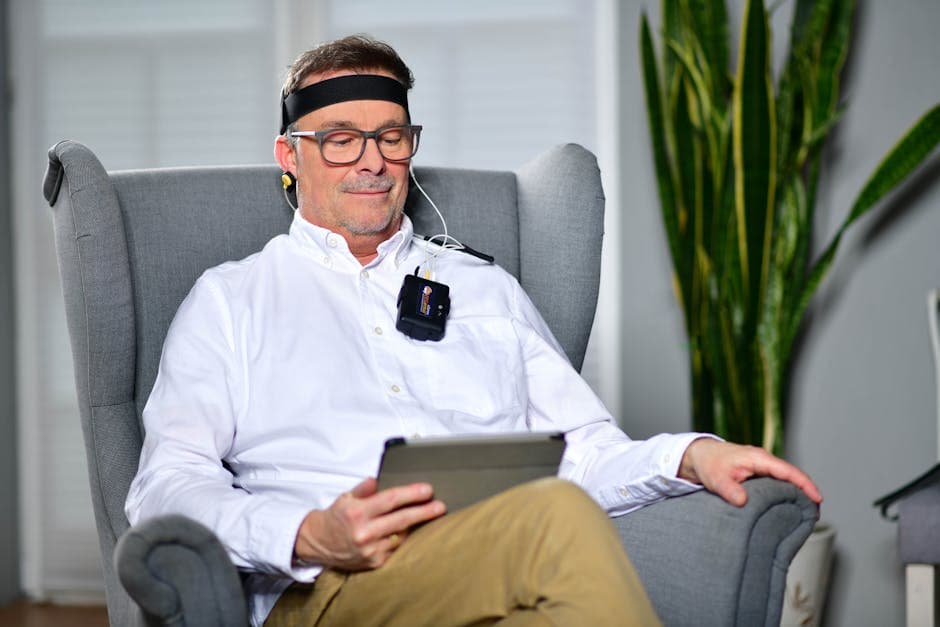
What Is Biofeedback?
Biofeedback is a technique in which physiological signals — such as heart rate variability, muscle tension, skin conductance, or brainwave activity — are measured in real time and displayed back to the individual. By observing these signals, people learn to recognise and voluntarily influence their own physiological state. The underlying principle is operant conditioning: when you can see your nervous system responding, you can learn to regulate it.
For anxiety, the most widely used and best-evidenced forms are heart rate variability (HRV) biofeedback — which trains the cardiovascular-respiratory system — and electromyography (EMG) biofeedback, which targets muscle tension. Neurofeedback (EEG biofeedback) is also used for anxiety, though its evidence base is more variable.
Why HRV Biofeedback for Anxiety?
Anxiety is associated with reduced heart rate variability — a marker of diminished vagal tone and reduced parasympathetic nervous system flexibility. HRV biofeedback trains individuals to breathe at their resonance frequency (typically around 0.1 Hz, or approximately six breaths per minute), which maximises HRV oscillations and strengthens vagal tone. Over repeated sessions, this produces lasting improvements in autonomic regulation.
What the Evidence Shows
Biofeedback has one of the stronger evidence bases among complementary approaches for anxiety. A 2017 meta-analysis by Goessl and colleagues examined 24 randomised controlled trials of HRV biofeedback for stress and anxiety, finding a moderate-to-large effect size compared to control conditions. A systematic review by Schoenberg and David found consistent evidence across multiple anxiety presentations including generalised anxiety, PTSD, and performance anxiety.
The evidence for EMG biofeedback is also well-established for anxiety-related muscle tension and tension headaches. Neurofeedback for anxiety shows promising results but methodological variability in studies makes firm conclusions more difficult.
How Biofeedback Compares to Other Approaches
Several studies have compared biofeedback to CBT and found comparable outcomes for anxiety reduction. The advantage of biofeedback is its skills-based, somatic focus — it trains physiological regulation directly rather than primarily targeting cognitive patterns. Many practitioners combine HRV biofeedback with CBT or mindfulness for additive benefits.
Limitations
Most biofeedback research uses standardised protocols that may not reflect typical clinical practice. Study populations often exclude those with severe psychiatric comorbidities. Access to qualified biofeedback practitioners remains limited in some regions, though home-based devices are expanding accessibility.