The Science of Applied Pressure
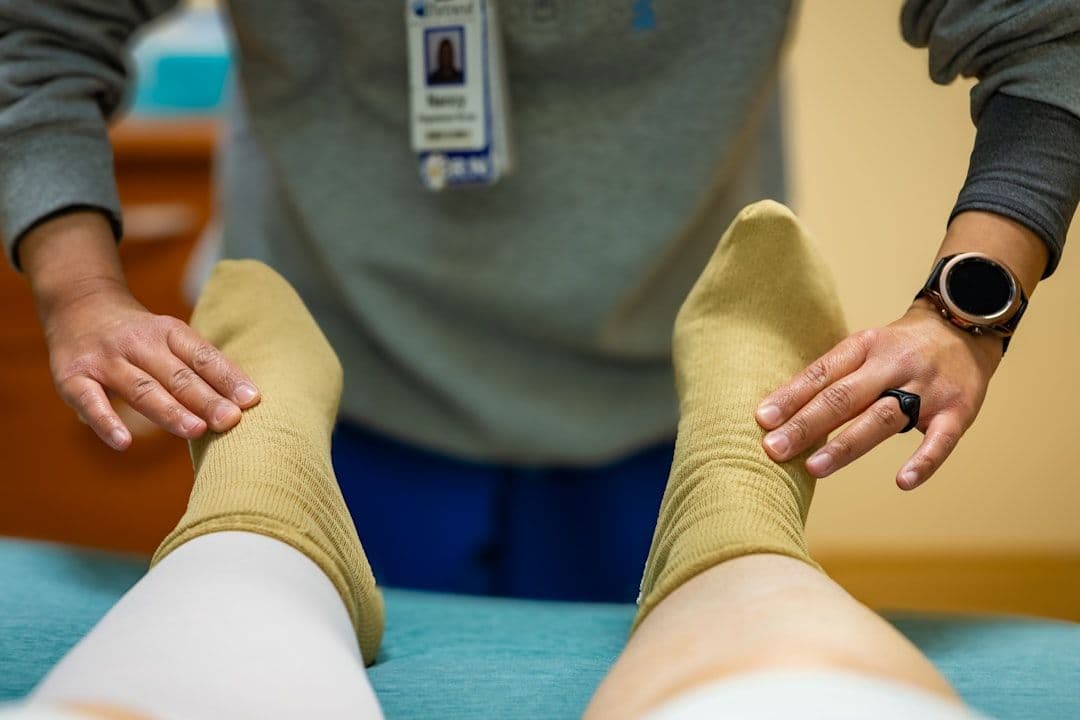
Watch a physiotherapist fit compression stockings on someone with swollen legs, and you'll see something remarkable happen. As the graduated pressure moves from ankle to knee, visible swelling diminishes within minutes. This isn't magic—it's physics applied to human physiology.
Compression therapy works by creating external pressure that assists your body's natural circulation systems. When blood vessels are gently compressed, blood flow velocity increases, much like putting your thumb over a garden hose creates a stronger stream. This enhanced flow helps overcome the gravitational challenge of returning blood from your legs to your heart, whilst simultaneously encouraging fluid trapped in tissues to return to the lymphatic system.
The pressure isn't uniform—therapeutic compression typically uses graduated pressure, strongest at the extremities and decreasing towards the heart. This pressure gradient mimics your body's natural muscle pump action, supporting rather than replacing normal physiological processes.
From Battlefield Medicine to Modern Healthcare
Compression techniques trace back to ancient Egyptian and Roman civilisations, where physicians wrapped injured limbs with linen bandages. Military surgeons refined these approaches over centuries, recognising that controlled pressure could reduce bleeding and support healing.
The modern era began in the 1940s when vascular surgeon Denis Jobst developed the first medical compression stockings following his own experience with venous issues. His innovations led to precise pressure measurements and standardised therapeutic protocols that transformed compression from an art into a science.
Today's compression therapy encompasses everything from simple elastic bandages to sophisticated pneumatic devices. The field has expanded beyond wound care to include sports medicine, oncology support, and preventive healthcare, with each application requiring specific pressure protocols and delivery methods.
Strong Evidence Across Multiple Conditions
The clinical evidence for compression therapy is particularly robust. NICE specifically recommends compression bandaging for venous leg ulcers, with systematic reviews showing healing rates of 60-70% at 24 weeks compared to 30-40% without compression.
For lymphoedema management, randomised controlled trials consistently demonstrate that compression garments can reduce limb volume by 30-60% when used as part of comprehensive treatment programmes. The Lymphatic Research Network has documented these benefits across multiple cancer survivor populations.
In sports medicine, research shows promise for enhanced recovery. A 2019 meta-analysis in the Journal of Sports Medicine found that compression garments worn post-exercise reduced muscle soreness by 20-30% and improved perceived recovery markers, though effects on actual performance remain modest. Athletes report feeling more prepared for subsequent training sessions, even when objective measures show limited improvement.
What to Expect During Treatment
Your first compression therapy assessment typically begins with detailed circulation evaluation. A qualified practitioner will measure ankle-brachial pressure indices to rule out arterial disease, assess swelling patterns, and determine appropriate compression levels. This isn't a quick process—proper evaluation can take 30-45 minutes.
For medical compression, expect precise measurements of your limbs at multiple points. Modern fitting involves calculating pressure requirements based on your specific condition, mobility level, and tissue characteristics. The resulting garments should feel snug but not painful, with pressure that feels supportive rather than restrictive.
Daily wear typically ranges from 8-16 hours depending on your condition. Some people wear compression stockings only during active hours, whilst others with lymphoedema may require 24-hour management with different garments for day and night use. Athletic compression often focuses on specific training and recovery windows rather than continuous wear.
Finding Qualified Care and Managing Costs
Look for practitioners certified by the Lymphoedema Training Consortium or holding relevant HCPC registration as physiotherapists or occupational therapists. Many tissue viability nurses have specialist compression training, particularly valuable if you're dealing with wound healing alongside circulation issues.
NHS provision varies significantly by region, but compression therapy is typically available through vascular clinics, lymphoedema services, and tissue viability teams. Private consultations range from £80-150 for initial assessment, with follow-up appointments around £50-80.
Compression garments themselves cost £30-200 depending on specification and customisation requirements. Made-to-measure garments for complex lymphoedema can reach £300-500, but many are available through NHS prescription. Most therapeutic garments need replacing every 3-6 months as elastic properties diminish with regular use.
Sports compression products are generally more affordable (£20-80) but ensure you're choosing graduated compression rather than simple elastic support if you want therapeutic benefits rather than just comfort.