Before You Arrive
Wear loose-fitting clothing that can be easily removed from the treatment area — typically your legs, though arm compression is also available. Trousers or skirts that roll up comfortably work well, and avoid tight socks that might leave marks on your skin.
Bring any previous compression garments you've used, along with a list of current medications and details of any circulation problems. If you're being assessed for new compression wear, schedule your appointment for morning when swelling is typically at its lowest.
Avoid applying lotions or oils to the treatment area on the day of your session, as these can interfere with measurements and garment fitting. If you have diabetes or take blood-thinning medications, inform the practitioner beforehand as this may affect the pressure levels they recommend.
The Assessment and Application Process
Your practitioner will begin with a thorough assessment of your circulation and the areas requiring compression. They'll examine your skin condition, check pulses, and may measure the circumference of your limbs at multiple points using a measuring tape. This process typically takes 15-20 minutes and ensures the compression level is appropriate for your specific needs.
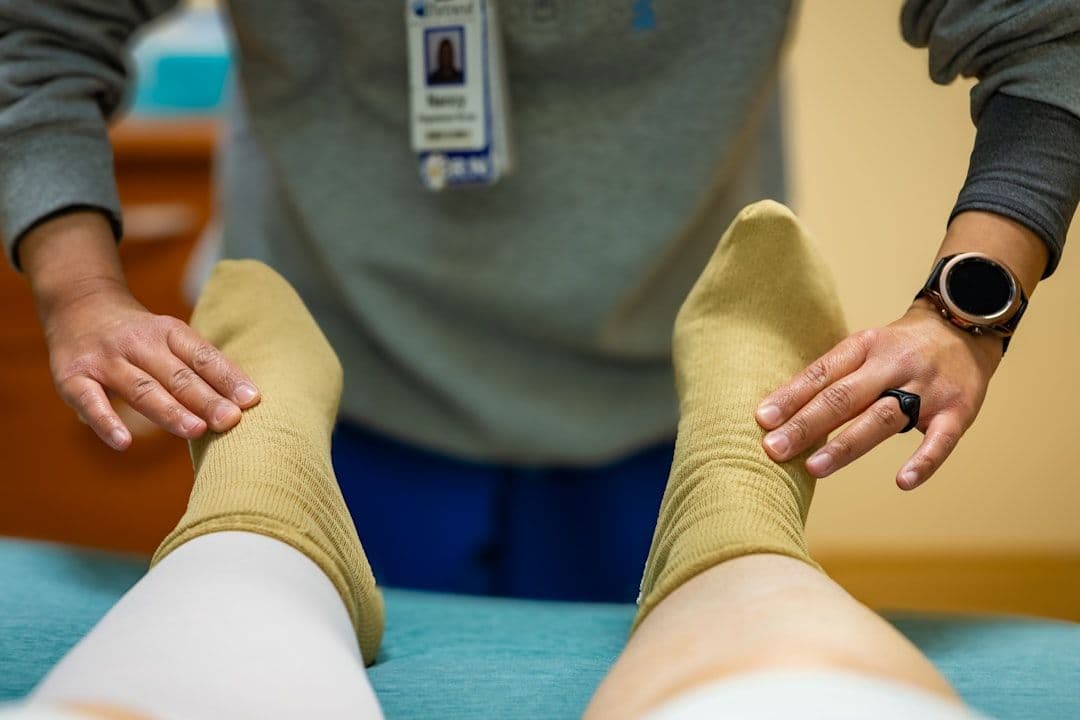
For compression stockings, you'll be fitted with the garment whilst lying down or seated, depending on the type. The practitioner will guide the stocking up your leg gradually, ensuring even distribution and checking that the heel and toe areas align properly. You'll feel immediate pressure — this should be firm but not painful.
Bandaging techniques involve wrapping specialised bandages in specific patterns, often starting from the toes and working upward. Each layer overlaps the previous one by about half its width, creating graduated pressure that's highest at the extremities. This process can take 30-45 minutes for both legs and requires skill to achieve the correct pressure gradient.
What You Might Experience
Initially, you'll notice a firm, supportive sensation around the compressed area. Some people describe it as feeling "hugged" or supported, whilst others find it takes time to adjust to the pressure. Your skin may appear slightly indented where the compression garment sits, which is normal.
During the first few hours, many people report reduced heaviness or aching in their legs. Swelling often decreases gradually over the first day, though this varies considerably between individuals. Some experience immediate relief, whilst others notice benefits building over several days of consistent use.
Mild skin marking where the compression garment sits is expected and should fade within an hour of removal. Persistent red marks, numbness, or increased pain suggests the pressure may be too high and requires immediate practitioner review. You might also notice changes in skin temperature — feeling slightly cooler initially as circulation adjusts.
Aftercare and Daily Management
Resume normal activities gradually, starting with gentle walking to help your circulation adapt to the compression. Avoid prolonged standing or sitting during the first day, and elevate your legs when resting to maximise the benefits.
Remove compression garments before sleeping unless specifically instructed otherwise. When taking them off, do so slowly and check your skin for any unusual marks or irritation. Wash garments daily in lukewarm water with mild detergent — they typically last 3-6 months with proper care.
Monitor for warning signs including increased pain, numbness, colour changes in your toes or fingers, or any signs of infection. Contact your practitioner immediately if you experience these symptoms. Most people notice optimal benefits within the first week, though improvements in chronic conditions may continue developing over several months.
Treatment Courses and Follow-up
For graduated compression stockings, you may only need one fitting session followed by regular replacement every 3-6 months as the garments lose elasticity. Your practitioner will typically schedule a follow-up appointment within 2-4 weeks to assess how you're managing and ensure the pressure remains appropriate.
Lymphedema management often requires more intensive treatment, with sessions 2-3 times weekly for 2-4 weeks during the initial phase. This may involve daily bandaging changes initially, transitioning to compression garments as swelling stabilises.
Sporting applications might involve single sessions for specific events or competitions, or regular appointments during intensive training periods. Your practitioner will tailor the frequency based on your condition, response to treatment, and practical considerations like your ability to manage the compression independently.