Watching Your Brain in Real Time
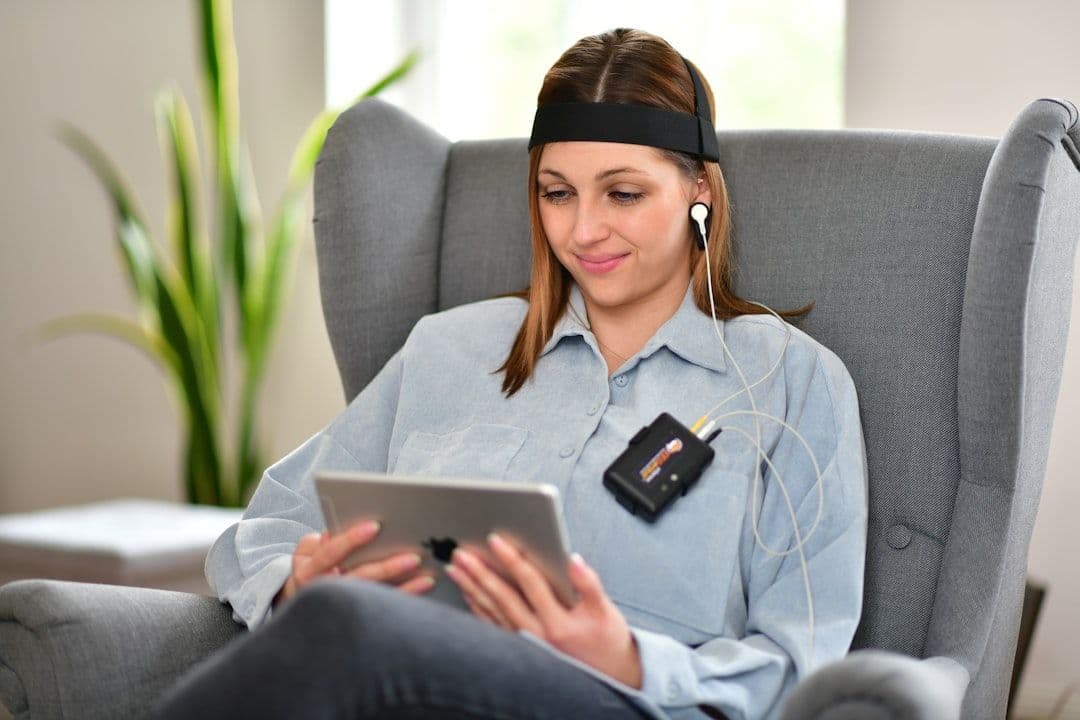
Picture sitting comfortably in a chair whilst watching a game on screen where moving a car forward depends entirely on your brain producing specific electrical patterns. As your brainwaves shift into the desired frequency range, the car accelerates. When they drift away, it slows down. This is EEG biofeedback in action — a remarkably direct form of brain training that makes the usually invisible world of neural activity visible and controllable.
Also known as neurofeedback, this technique uses sensors placed on your scalp to detect the tiny electrical signals that brain cells generate when they communicate. These signals are processed in real time and translated into immediate visual or auditory feedback, creating a learning loop between your conscious mind and your brain's electrical activity.
From Space Programme to Clinical Practice
EEG biofeedback emerged in the 1960s from an unexpected discovery. NASA researcher Dr Barry Sterman was studying brain rhythms in cats when he noticed that animals trained to produce specific brainwave patterns showed remarkable resistance to seizures caused by rocket fuel exposure. This led him to wonder whether humans could similarly learn to control their brain activity.
The first clinical applications focused on epilepsy, with encouraging results prompting exploration into other neurological conditions. By the 1980s, practitioners were using neurofeedback for ADHD, learning difficulties, and anxiety disorders. The field has evolved considerably since those early days, with sophisticated software and more precise protocols, though the fundamental principle remains unchanged: the brain can learn to regulate itself when given appropriate feedback.
How Your Brain Learns New Patterns
During an EEG biofeedback session, sensors detect electrical activity from specific brain regions and separate this into different frequency bands — delta (0.5-4 Hz), theta (4-8 Hz), alpha (8-13 Hz), beta (13-30 Hz), and gamma (30-100 Hz). Each frequency range is associated with different mental states: alpha waves often accompany relaxed focus, whilst excess theta activity might correlate with inattention.
The practitioner designs protocols targeting specific brainwave patterns based on your individual needs. You might train to increase sensorimotor rhythm (12-15 Hz) to improve focus, or enhance alpha activity to promote calm alertness. The feedback — whether visual, auditory, or both — operates on operant conditioning principles. Your brain receives immediate rewards when it produces desired patterns, gradually learning to recreate these states more readily.
From a neuroplasticity perspective, repeated practice appears to strengthen neural pathways associated with improved self-regulation. Brain imaging studies suggest that neurofeedback may enhance connectivity between regions responsible for attention, emotional regulation, and executive function.
Who Might Benefit from Neurofeedback
Children and adults with ADHD represent the largest group seeking EEG biofeedback, often as an alternative or complement to medication. Parents frequently pursue this approach when concerned about pharmaceutical side effects or when medication provides incomplete symptom relief.
People experiencing anxiety, particularly those with generalised anxiety or panic symptoms, may find neurofeedback helpful for developing greater emotional regulation. The technique shows promise for trauma-related conditions, though practitioners emphasise it works best as part of comprehensive treatment rather than as a standalone intervention.
Those recovering from traumatic brain injury sometimes use neurofeedback to support cognitive rehabilitation, whilst individuals seeking peak performance — students, athletes, executives — explore it for enhanced focus and mental clarity. Sleep difficulties, particularly when related to an overactive mind, may also respond to specific neurofeedback protocols.
What to Expect in Sessions
Your first appointment involves a detailed assessment of symptoms, medical history, and treatment goals. Some practitioners conduct a quantitative EEG (qEEG) brain map to identify specific patterns that might benefit from training, though this isn't always necessary.
During training sessions, you'll sit in a comfortable chair whilst the practitioner attaches sensors to your scalp using conductive gel. The placement depends on which brain regions are being targeted — frontal areas for attention training, or temporal regions for emotional regulation, for example.
A typical session lasts 30-45 minutes, during which you'll engage with feedback displays that might include games, videos, or abstract visual patterns. The experience is generally relaxing, though some people notice mild fatigue initially as their brain adapts to the new demands. You remain fully conscious and in control throughout — the system cannot force your brain to do anything, only provide information about what it's already doing.
The Evidence Base
Research into EEG biofeedback shows the strongest support for ADHD treatment. Several randomised controlled trials have demonstrated significant improvements in attention, hyperactivity, and impulsivity that persist months after training completion. A 2014 meta-analysis found effect sizes comparable to those seen with medication, though direct comparisons remain limited.
For anxiety disorders, evidence is more mixed but increasingly positive. Studies suggest neurofeedback may reduce anxiety symptoms and improve emotional regulation, particularly when combined with other therapeutic approaches. Trauma-related applications show promise in pilot studies, though larger trials are needed.
The evidence for peak performance enhancement and cognitive optimisation in healthy individuals remains largely preliminary. Whilst some studies report improvements in attention and working memory, results are often modest and may not justify the time and expense for everyone.
Critics point to methodological limitations in some research, including small sample sizes and difficulties with proper blinding. The field continues to work towards more standardised protocols and rigorous research designs.
Finding Qualified Practitioners and Costs
EEG biofeedback requires specialised training, so practitioners should hold certification from recognised organisations such as the Biofeedback Certification International Alliance (BCIA) or have completed comprehensive neurofeedback training programmes. Many come from backgrounds in psychology, clinical neurophysiology, or related healthcare fields.
Expect to invest £80-150 per session, with treatment typically requiring 20-40 sessions over several months. Initial qEEG brain mapping, if recommended, may cost an additional £200-400. Some practitioners offer package deals that can reduce per-session costs.
Most neurofeedback isn't currently available through the NHS, though some private clinics and hospitals offer it as part of comprehensive treatment programmes. When choosing a practitioner, ask about their specific training, experience with your condition, and whether they can provide references or outcome data.
Consider geographical accessibility, as the frequency of sessions means convenience matters. Some practitioners offer home-rental equipment for established clients, though this requires careful training and supervision to be effective.