Before the Session
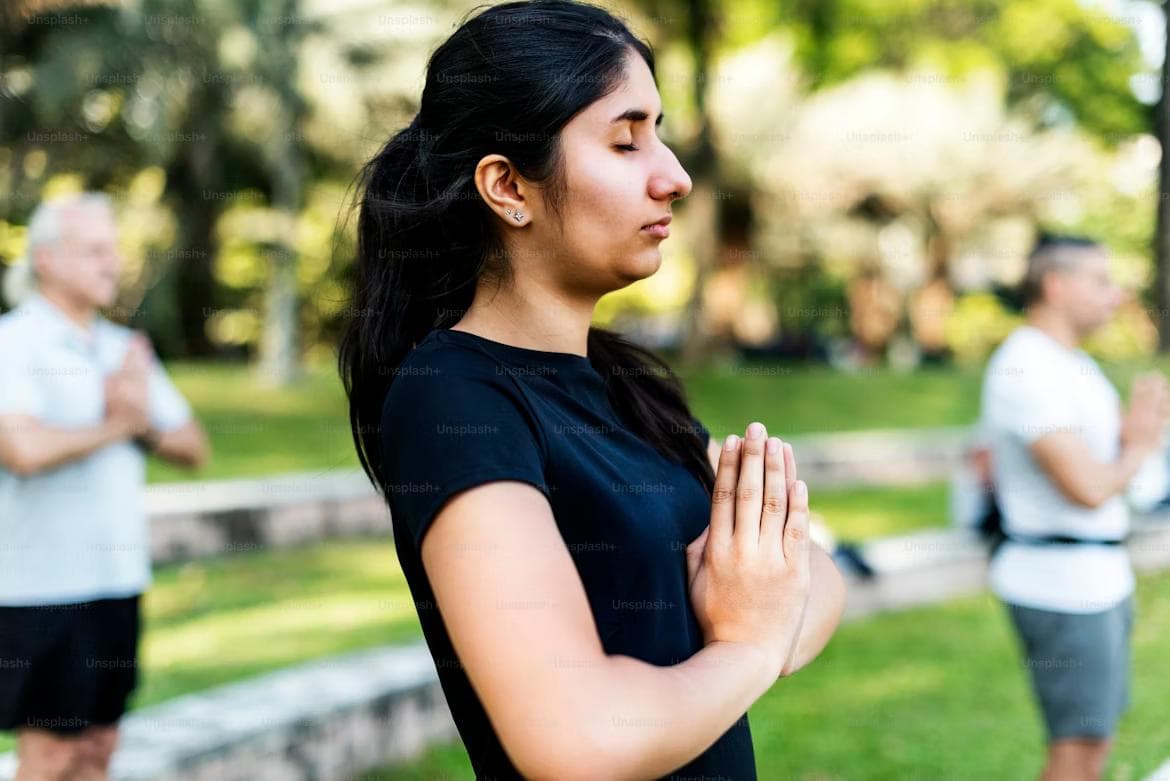
Guided meditation requires minimal preparation. Choose a quiet space where you won't be interrupted, silence your phone and wear comfortable clothing. You can sit in a chair, cross-legged on the floor or lie down — whatever feels most natural. Most people close their eyes, though a soft downward gaze is an alternative if you prefer.
Opening: Settling and Grounding
Most sessions begin with a short grounding phase. The instructor will ask you to notice your physical contact with your seat or the floor, take several deep breaths and consciously release tension. This transition from ordinary activity to meditative awareness typically takes 2–5 minutes. You may be guided through extended exhalations — a direct signal to the nervous system to move toward calm.
The Core Practice
Once settled, the main practice begins. Depending on the session type, this might involve sustained breath awareness — simply noticing the sensation of each inhalation and exhalation; a body scan, moving attention systematically from feet to head while noticing physical sensation; guided imagery, visualizing a peaceful scene in sensory detail; or a loving-kindness practice, directing compassionate attention toward yourself and others.
What You Will Notice
Your mind will wander. This is entirely normal and happens to experienced meditators too. The instructor will gently prompt you to return attention without judgement. You may notice varying degrees of physical relaxation as muscles release. Some people feel warmth, tingling or heaviness. Brief emotional responses — tears, a sense of relief, or surfacing tension — are not uncommon and are part of the process.
Closing the Session
Most guided meditations end with a gradual return to ordinary awareness. The instructor guides you to bring attention back to your surroundings, take several deeper breaths and slowly open your eyes. Taking a minute before reaching for your phone or resuming tasks helps preserve the quality of the experience.
After the Session
Many practitioners suggest brief journalling after meditation — noting any observations, feelings or thoughts that arose. Some people find that the effects are most noticeable in how they respond to challenges later in the day rather than during the session itself. Benefits are cumulative: the more consistently you practice, the more integrated and accessible the calm becomes.