What it is
Birth charting maps planetary positions at your birth to reveal personality patterns and life themes.
Birth Charting creates a detailed astrological map based on the exact time, date, and place of birth to provide insights into personality...

At a glance
What it is
Birth charting maps planetary positions at your birth to reveal personality patterns and life themes.
Why explore it
It offers a symbolic lens for exploring your strengths, relationships, and personal patterns.
How it’s experienced
A practitioner reads your natal chart and explores what its symbols might reflect about your life.
Evidence context
Birth charting has no scientific backing and is best used as a reflective tool, not predictive science.
See the evidence snapshotSafety
It's low-risk but should never replace medical, mental health, or financial professional guidance.
See staying safeHistory & Origin
Birth Charting involves creating an astrological chart to offer insights into personality and life events.
Birth charting, also known as natal astrology, has ancient roots stretching back over 4,000 years to Babylonian civilization, where astronomers first began systematically tracking celestial movements and their perceived influence on human affairs. The Babylonians developed the zodiac system and established many foundational principles that would later influence Greek, Roman, and Islamic astrological traditions. Greek philosophers like Ptolemy refined these concepts in works such as the Tetrabiblos, creating mathematical frameworks for chart calculation that remained influential for centuries.
During the Renaissance, astrology experienced a revival as scholars translated ancient texts and developed more sophisticated calculation methods. Notable figures like Johannes Kepler and Tycho Brahe, despite their contributions to astronomy, also practiced astrology. The practice spread throughout Europe and eventually to the Americas through colonization and cultural exchange.
The modern era saw astrology evolve from a primarily predictive tool to one focused on psychological insight and personal development. In the 20th century, astrologers like Dane Rudhyar pioneered humanistic astrology, emphasizing birth charts as tools for self-understanding rather than fate prediction. The advent of computer technology revolutionized chart calculation, making detailed birth charts accessible to the general public and contributing to astrology's contemporary popularity as a form of spiritual and psychological guidance.
Mechanism
Birth Charting is generally framed as a guided process for attention, reflection, learning, and emotional integration. Depending on the method, a practitioner may use conversation, imagery, structured exercises, body awareness, or therapeutic techniques to help the person explore patterns and choices. It should not be presented as a standalone solution or a substitute for urgent care, but it may support self-understanding when practiced within an appropriate scope. An astrologer calculates your natal chart using three precise data points: your exact birth time, date, and geographical location.
Your first visit
A typical session outline to help you feel prepared
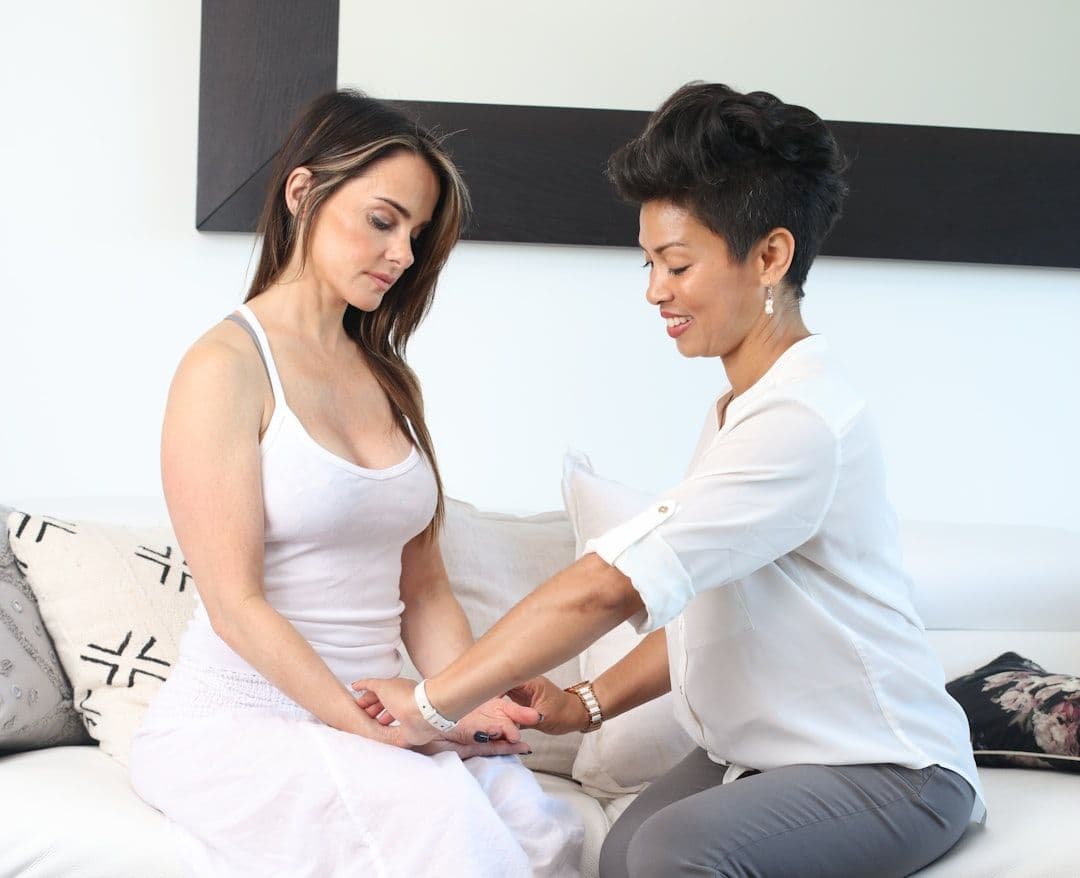
Your astrologer uses your birth details to map the sky at your exact moment of arrival, then walks you through what that cosmic snapshot reveals about you.
Before anything else, you'll provide your birth date, exact time, and location so the astrologer can calculate your precise natal chart. Even a few minutes off can shift key placements, so the more ac
Using your details, the astrologer generates your natal chart, a circular map showing where every planet sat at the moment of your birth. This usually happens before or at the very start of your sessi
Your astrologer will check in about what brought you to the session and whether there are any areas of life you're most curious about, such as relationships, purpose, or patterns you've noticed. This
The astrologer begins walking you through the foundational layers of your chart, starting with your Sun, Moon, and Rising signs, which together paint a portrait of your core identity, emotional world,
From there, you'll explore where other planets fall in your chart and what houses they occupy, revealing tendencies around communication, love, career, and more. Your astrologer will connect these pla
This is an active conversation, not a monologue, so you're encouraged to ask questions, share what resonates, and request deeper explanation on anything that stands out. Most sessions leave dedicated
Before you wrap up, you'll receive a copy of your natal chart along with any notes or key takeaways from the session to reflect on at your own pace. Your astrologer may also point you toward next step
The Evidence
What research and tradition say about birth charting, and how to use it with realistic expectations.
A 4,000-year-old practice with limited scientific support
Birth charting has deep historical roots across many cultures but lacks scientific validation through controlled research. Any benefits observed are more likely linked to reflection and meaning-making than to the accuracy of astrological interpretation.
Studies testing astrological predictions have found no statistical correlation between birth chart elements and measured personality traits or life outcomes beyond chance. No peer-reviewed research has demonstrated that celestial positions at birth reliably predict individual characteristics. The evidence base for birth charting as a predictive tool is currently absent.
Research on similar consultative practices suggests that structured reflection, personalised attention, and symbolic frameworks can support self-understanding and emotional processing. Any benefit from birth charting is more plausibly linked to these psychological mechanisms than to astrological accuracy. This does not make the experience meaningless, but it does reframe where the value likely lies.
Birth charting traces back over 4,000 years to Babylonian sky-watchers who first mapped the zodiac. Greek scholars like Ptolemy formalised calculation methods that shaped Western astrology for centuries. The practice spread through Islamic scholarship and European Renaissance thought, reflecting a persistent human interest in finding pattern and meaning in celestial cycles.
Gyfts classifies birth charting as Holistic — a practice oriented toward whole-person reflection rather than clinical intervention. It may complement personal development work, journalling, or values clarification, but it is not a substitute for professional assessment, mental health support, or evidence-based care.
As a consultative practice, birth charting involves no physical intervention and is generally low risk. Caution is warranted when astrological guidance is used as the sole basis for major life decisions. People managing significant mental health concerns should prioritise qualified professional support rather than relying on birth charting as a primary resource.
Inflated outcome claims — such as precise life predictions or personality certainty — are not supported by evidence. Birth charting is not a substitute for professional assessment in any clinical domain. Practitioners should maintain clear boundaries and refer clients to qualified professionals when concerns fall outside the scope of reflective or symbolic guidance.
Safety first
General guidance to help you decide whether this approach is appropriate for you. This is informational only and not a substitute for medical, psychological, or professional advice.
Some situations call for extra care or a different approach. Share any conditions, injuries, or sensitivities with your practitioner before your first session.
If you are pregnant, managing a health condition, recovering from injury or surgery, or taking medication, consult a qualified healthcare professional first.
Look for clear boundaries, transparent pricing, and practitioners who avoid fear-based claims or pressure to book frequent sessions.
Mild, short-lived effects such as tenderness, tiredness, or temporary soreness can occur. Rest, hydrate, and tell your practitioner how you respond.
For you?
A simple, human way to weigh it up. This is general guidance, not personal medical advice — a qualified practitioner can advise on your situation.
Gyfts is a discovery platform, not a medical provider. Nothing here diagnoses, treats or replaces professional care. In an emergency, contact your local emergency number.
Explore approaches
Other practices people often explore alongside birth charting.
In their words
FAQ
A birth charting session involves the astrologer creating and interpreting your natal chart based on your birth details. They'll explain planetary positions, zodiac signs, and houses, discussing how these elements might influence your personality and life patterns. Sessions are typically conversational, with opportunities to ask questions about specific areas of interest such as relationships, career, or personal growth.
Many people find value in a single comprehensive birth chart reading, though some return for follow-up sessions focusing on specific life areas or current planetary transits. There's no standard number of sessions required – it depends entirely on your personal interests and how helpful you find the insights provided.
While an exact birth time provides the most detailed and accurate chart, astrologers can still offer valuable insights with approximate times or even just birth date and location. However, precise timing is important for accurate house positions and certain astrological techniques, so it's worth checking birth certificates or hospital records when possible.
No, birth charting is much more personalized and comprehensive than newspaper or app horoscopes. While daily horoscopes are generalized for entire zodiac signs, birth charts are unique maps created specifically from your individual birth data, offering detailed and personalized insights rather than broad predictions.
This depends on the practitioner and tradition. Traditional horoscopic astrology presents birth chart interpretation as a predictive and descriptive system — suggesting the chart reveals fixed characteristics and probable life events. Modern psychological astrology, associated with figures like Liz Greene and Howard Sasportas, treats the birth chart as a symbolic map of psychological patterns, potentials, and developmental themes — a tool for self-reflection rather than prediction. On Gyfts, birth charting is positioned within the reflective and meaning-making tradition: a framework for self-understanding, not a forecast or diagnostic instrument.
References
Educational sources that inform this overview. Inclusion is for context and does not imply endorsement.
Full citations are maintained by the Gyfts editorial team and reviewed periodically.
Keep exploring
Browse practitioners, explore honest overviews, and take what you learn to a conversation — at your own pace.