What it is
Vitamins and fluids go straight into your bloodstream, skipping digestion entirely.
IV Drip Therapy delivers vitamins, minerals, and nutrients directly into the bloodstream via intravenous infusion to support hydration, i...
At a glance
What it is
Vitamins and fluids go straight into your bloodstream, skipping digestion entirely.
Why explore it
Some find IV drips helpful for hydration, energy, and recovery when daily life feels depleting.
How it’s experienced
A 30–60 minute session with a quick needle stick, then you simply relax while the drip does its work.
Evidence context
Research outside specific medical uses is still limited, so results can vary from person to person.
See the evidence snapshotSafety
Generally safe with a licensed provider, though kidney, heart, or liver conditions warrant a doctor chat first.
See staying safeHistory & Origin
IV Drip Therapy involves the administration of nutrient-rich solutions via intravenous (IV) infusion.
IV therapy has its roots in medical practice dating back to the 17th century, when physicians first experimented with direct intravenous fluid administration. However, modern intravenous nutrient therapy emerged in the mid-20th century, with Dr. John Myers developing the famous "Myers' Cocktail" in the 1960s—a combination of B vitamins, vitamin C, magnesium, and calcium administered intravenously. This formulation was originally used in clinical and wellness contexts for a range of concerns, with evidence and appropriateness varying by formulation and setting.
In the 1990s and 2000s, IV nutrient therapy gained popularity in wellness and anti-aging clinics, particularly in North America and Europe. Practitioners argued that bypassing the digestive system allowed for higher nutrient concentrations and better absorption. The modality has since expanded into mainstream wellness centers, sports recovery clinics, and integrative medical practices. Celebrity endorsements and wellness marketing have significantly amplified public interest, though medical organizations remain cautious about claims that exceed current evidence.
Today, IV drip therapy is administered by medical doctors, nurse practitioners, and physician assistants in clinical settings. The practice exists at the intersection of traditional medicine and wellness, with varying levels of regulation and standardization depending on jurisdiction. While some formulations have preliminary research support, the broader wellness applications remain largely anecdotal.
Mechanism
IV Drip Therapy is generally framed as a guided process for attention, reflection, learning, and emotional integration. Depending on the method, a practitioner may use conversation, imagery, structured exercises, body awareness, or therapeutic techniques to help the person explore patterns and choices. It should not be presented as a standalone solution or a substitute for urgent care, but it may support self-understanding when practiced within an appropriate scope. A trained healthcare practitioner inserts a small catheter into a peripheral vein (usually in the arm) and connects it to a sterile IV bag containing a custom-formulated solution of vitamins, minerals, amino acids, and electrolytes.
Your first visit
A typical session outline to help you feel prepared
A relaxing, medically guided session where a customized blend of vitamins and minerals is delivered directly into your bloodstream through a small IV line.
You'll fill out a brief intake form covering your health history, current medications, and wellness goals so the practitioner can personalize your drip formula safely.
Your practitioner reviews your intake and recommends a specific IV blend — such as hydration, energy, or immune support — tailored to your needs and how you're feeling that day.
You'll settle into a cozy recliner or chair, often in a calm lounge-style room. You can bring headphones, a book, or just plan to relax for the next 30 to 60 minutes.
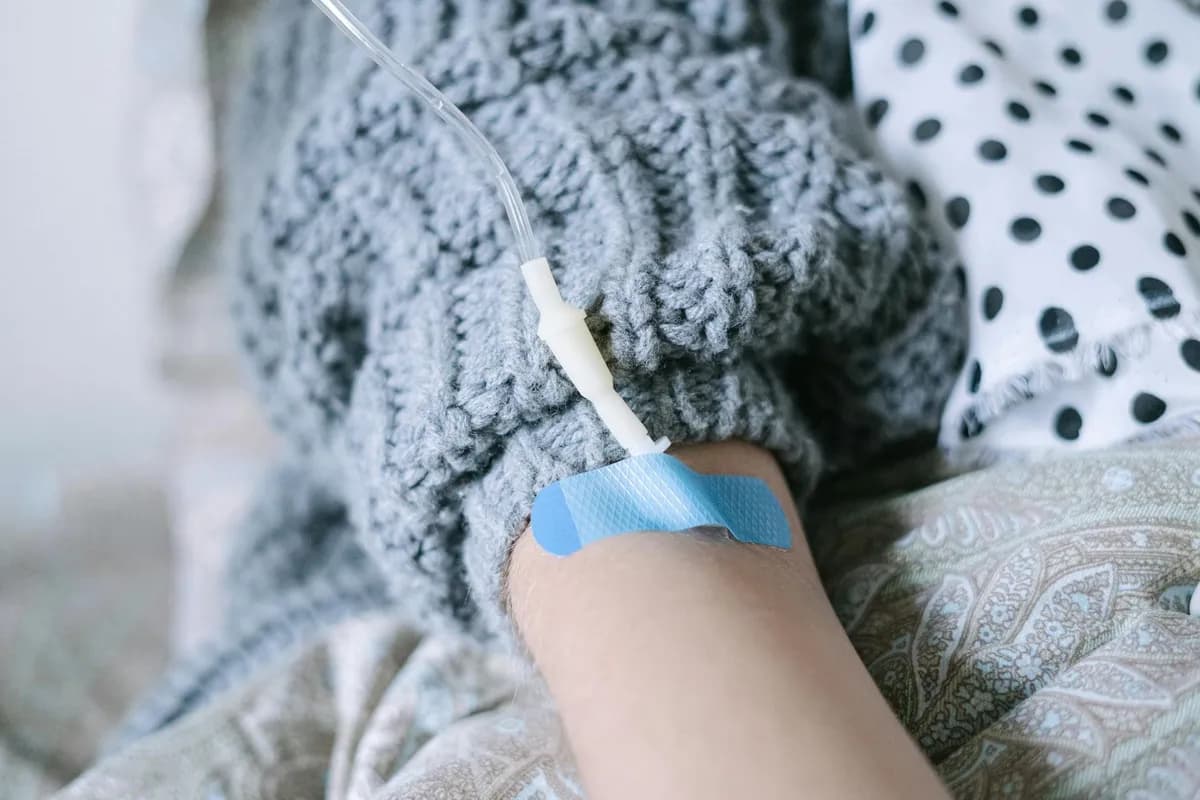
A sterile, single-use needle is gently inserted into a vein, typically in your arm or hand. You may feel a brief pinch or mild pressure — most people find it quick and manageable.
The nutrient solution flows steadily through the IV line at a controlled rate. You may notice a cool or slightly mineral taste as the fluids enter your bloodstream — this is completely normal.
Your practitioner will check on you periodically throughout the session to make sure the drip is flowing well, you're comfortable, and you have no unexpected reactions.
Once the bag is empty, the IV line is gently removed and a small bandage is placed over the site. The whole process typically wraps up in under an hour from start to finish.
Your practitioner shares hydration and activity tips for the rest of your day and may discuss how often to return based on your goals and how your body responds over time.
The Evidence
What research currently shows, where evidence is limited, and what to consider before booking a session.
Wellness-popular, but research remains early-stage
IV nutrient therapy has a medical history but limited high-quality evidence for most wellness uses. Some applications show preliminary promise, while many popular claims outpace the available science.
The most studied application is high-dose intravenous vitamin C for specific health conditions, with mixed results and mostly small trials. Formulations similar to the Myers' Cocktail show some preliminary signals for fatigue and migraines. Most wellness-oriented claims — energy, skin, detoxification — lack rigorous validation. Large-scale independent clinical trials are largely absent.
Many available studies are small, observational, or conducted by clinics offering the treatment, introducing potential bias. Subjective outcomes like increased energy are difficult to separate from placebo effects. Medical bodies including the American Medical Association remain cautious. Consumers should weigh these limitations when evaluating inflated outcome claims.
As a complementary modality, IV therapy is most appropriately used to support general wellness or recovery alongside standard medical care. It is not a substitute for professional assessment of underlying health conditions. Integrative practitioners may incorporate it selectively, but it should not replace evidence-based medical management.
Intravenous fluid and nutrient administration is well-established in hospital medicine. The Myers' Cocktail, developed in the 1960s, brought this into wellness contexts. Clinical IV use for verified deficiencies or specific medical conditions differs meaningfully from elective wellness drips — a distinction worth understanding before booking.
People with kidney disease, heart disease, uncontrolled hypertension, or chronic conditions should consult their doctor before proceeding. Pregnant or breastfeeding individuals need medical clearance. Sessions must be administered by a licensed healthcare provider using sterile equipment in a regulated setting. Complications including infection, vein irritation, and fluid imbalance are possible.
Seek IV therapy only from licensed healthcare professionals — typically registered nurses, nurse practitioners, or physicians — in a regulated clinical setting. Verify that the facility follows infection control standards and uses sterile, single-use equipment. Be cautious of providers making broad health claims or offering drips without any health screening.
Safety first
General guidance to help you decide whether this approach is appropriate for you. This is informational only and not a substitute for medical, psychological, or professional advice.
If you are pregnant, managing a health condition, recovering from injury or surgery, or taking medication, consult a qualified healthcare professional first.
Some situations call for extra care or a different approach. Share any conditions, injuries, or sensitivities with your practitioner before your first session.
Look for clear boundaries, transparent pricing, and practitioners who avoid fear-based claims or pressure to book frequent sessions.
Mild, short-lived effects such as tenderness, tiredness, or temporary soreness can occur. Rest, hydrate, and tell your practitioner how you respond.
For you?
A simple, human way to weigh it up. This is general guidance, not personal medical advice — a qualified practitioner can advise on your situation.
Gyfts is a discovery platform, not a medical provider. Nothing here diagnoses, treats or replaces professional care. In an emergency, contact your local emergency number.
Explore approaches
Other practices people often explore alongside iv drip therapy.
In their words
FAQ
A licensed healthcare provider inserts a small IV catheter into your vein and infuses a nutrient-rich solution directly into your bloodstream. The process typically takes 30–60 minutes, during which you remain seated or reclined. You may feel minimal discomfort beyond the initial needle insertion. The provider monitors you throughout for any adverse reactions.
This varies significantly by individual and intended outcome. Some people report feeling benefits after a single infusion, while others notice gradual changes over multiple sessions. Practitioners often recommend starting with 1–4 sessions spaced weekly or monthly, then adjusting frequency based on your response. Results are highly subjective and not guaranteed.
Evidence is mixed and limited. The original Myers' Cocktail has some preliminary research supporting its use for specific conditions like migraines and fatigue, but most wellness applications lack robust clinical trials. Many claimed benefits remain anecdotal rather than scientifically proven. Always discuss the evidence for your specific goals with your provider.
Most people tolerate IV therapy well. Potential side effects include mild bruising or soreness at the insertion site, temporary flushing, a metallic taste, or rare allergic reactions. More serious complications like infection or vein inflammation are uncommon but possible. High-dose vitamins can cause electrolyte imbalances in susceptible individuals.
No. IV therapy is best viewed as a supplement to, not a replacement for, proper nutrition, regular exercise, and healthy lifestyle habits. The body absorbs and utilizes nutrients from food in complex ways that IV infusion cannot fully replicate. Practitioners should encourage comprehensive wellness practices alongside any IV protocol.
Sessions usually range from $150 to $400+ per infusion, depending on location, the specific formula, and the facility. Most sessions are not covered by health insurance, as they are considered wellness or elective procedures. Monthly or package pricing may be available.
People with kidney disease, heart disease, uncontrolled diabetes, active infections at the IV site, or a history of adverse reactions to IV fluids should avoid treatment. Pregnant individuals, those on certain medications, and anyone with significant medical conditions should consult their doctor first.
Some practitioners claim high-dose vitamin C and other nutrients support immune function, but evidence is limited. While certain vitamins are essential for immune health, there's no strong proof that IV delivery provides superior immune benefits compared to oral supplementation or a balanced diet. Claimed benefits often exceed current scientific support.
References
Educational sources that inform this overview. Inclusion is for context and does not imply endorsement.
Full citations are maintained by the Gyfts editorial team and reviewed periodically.
Keep exploring
Browse practitioners, explore honest overviews, and take what you learn to a conversation — at your own pace.