What it is
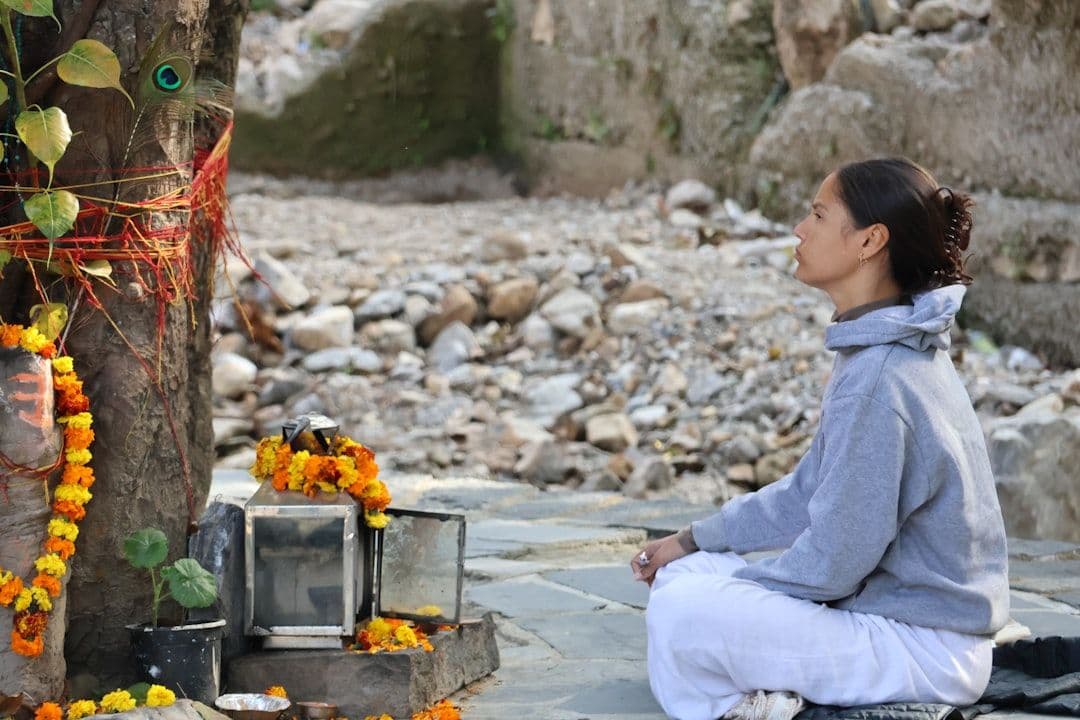
Spirituality connects you to meaning and purpose through practice, faith, or reflection.
Spirituality refers to personal beliefs and practices related to meaning, purpose, connection, and values; it may include (but is not lim...
At a glance
What it is
Spirituality connects you to meaning and purpose through practice, faith, or reflection.
Why explore it
It can offer comfort, belonging, and clarity during grief, illness, or big life changes.
How it’s experienced
Explore through prayer, meditation, ritual, or guided reflection with a chaplain or director.
Evidence context
Benefits are tied to personal engagement; research is promising but varies by practice.
See the evidence snapshotSafety
Generally low risk when self-directed; pair with clinical care if serious mental health needs exist.
See staying safeHistory & Origin
Spirituality involves exploring and embracing one's spiritual beliefs, practices, and connection with the divine.
Spiritual practices and belief systems have existed across cultures for millennia, shaping community life, rituals, ethics, and approaches to coping with adversity.
Mechanism
Spirituality is best framed as a traditional, symbolic, energetic, reflective, or spiritual practice rather than a validated medical mechanism. Practitioners may use ritual, attention, sound, imagery, touch-free work, cards, symbols, prayer, or intention to support meaning-making and a sense of connection. People may explore it for reflection, calm, or spiritual context, while health claims should remain cautious and personal. Spirituality operates through personal exploration of meaning, values, and connection—whether through established religious traditions, secular contemplative practices, or individual belief systems.
Your first visit
A typical session outline to help you feel prepared
A spirituality session is a gentle, reflective conversation and practice that helps you explore meaning, values, and inner wellbeing in a supportive, nonjudgmental space.
Your guide or chaplain warmly greets you and invites you to get comfortable. There is no rush — this opening moment is intentionally unhurried to help you feel safe.
A brief centering ritual opens the session, which might be a moment of silence, a simple breathing exercise, or a short prayer if that feels right for you. This signals a shift from ordinary busyness
Your guide asks open questions about your background, beliefs, and what brings you here today. You are never pressured to hold any particular faith — all traditions and none are equally welcome.
Together you explore what gives your life meaning, what feels uncertain or heavy, and what values feel most alive or most tested right now. This values clarification is the heart of the session's early work.
Depending on your comfort and goals, you may be guided through a meditation, a visualization, a gratitude reflection, or a prayerful practice. Your guide follows your lead on what feels appropriate.
You talk through what arose during the practice — insights, questions, emotions, or memories. Your guide listens deeply and helps you weave these threads into a broader sense of purpose or coping.
Near the close, you identify one small, meaningful intention to carry forward — perhaps a daily reflection, a value to act on, or a question to sit with. This is not homework; it is a gentle compass point.
The session closes with a grounding moment and a brief check-in about how you are feeling. Your guide may suggest resources, readings, or follow-up practices to support your ongoing inner journey.
The Evidence
What research and tradition tell us about spirituality's role in health and wellbeing.
Spirituality is linked to wellbeing, with mixed intervention findings
Research associates spiritual and religious engagement with improved coping, sense of meaning, and psychological wellbeing. Formal intervention studies show mixed-to-moderate effects depending on population, approach, and outcome measured.
Spirituality is not a clinical intervention but a dimension of human experience explored through personal belief, practice, and connection. The MACH framework places it in the Metaphysical category, recognising that its value is not reducible to measurable outcomes alone. Gyfts presents it as a domain of personal exploration, not a health treatment.
A substantial body of observational research associates spiritual and religious involvement with lower distress, stronger social support, and improved coping with illness and grief. Intervention studies in clinical settings show more variable results, with effects depending heavily on the approach used, the population studied, and how outcomes are measured. Evidence is promising but not conclusive.
Spiritual practices and belief systems appear in virtually every known culture, providing frameworks for ethics, ritual, community, and coping with adversity. Whether expressed through organised religion, indigenous tradition, or individual contemplative practice, spirituality has long served as a resource for navigating life's most difficult passages. This depth of tradition is itself a meaningful context.
Healthcare systems in many countries now include spiritual care as part of holistic patient support, particularly in palliative care, serious illness, and grief. Research in these settings suggests that addressing spiritual needs can improve quality of life and reduce existential distress. Spiritual support is considered complementary to, not a substitute for, professional clinical assessment and care.
Spirituality is a broad, culturally variable concept that resists standardised measurement. Studies vary widely in how they define it, which practices they examine, and what outcomes they track. Many rely on self-report and observational designs, making it difficult to establish causation. Findings should be interpreted with appropriate caution, and inflated outcome claims should be viewed critically.
Spiritual exploration is generally low-risk when approached with respect for individual autonomy and cultural context. Coercive or dogmatic approaches are not appropriate. People experiencing severe mental health symptoms should seek qualified clinical support; spiritual practices may be integrated supportively when clinically appropriate. In palliative or serious illness contexts, coordination with the broader care team is advisable.
Safety first
General guidance to help you decide whether this approach is appropriate for you. This is informational only and not a substitute for medical, psychological, or professional advice.
Some situations call for extra care or a different approach. Share any conditions, injuries, or sensitivities with your practitioner before your first session.
If you are pregnant, managing a health condition, recovering from injury or surgery, or taking medication, consult a qualified healthcare professional first.
Look for clear boundaries, transparent pricing, and practitioners who avoid fear-based claims or pressure to book frequent sessions.
Mild, short-lived effects such as tenderness, tiredness, or temporary soreness can occur. Rest, hydrate, and tell your practitioner how you respond.
For you?
A simple, human way to weigh it up. This is general guidance, not personal medical advice — a qualified practitioner can advise on your situation.
Gyfts is a discovery platform, not a medical provider. Nothing here diagnoses, treats or replaces professional care. In an emergency, contact your local emergency number.
Explore approaches
Other practices people often explore alongside spirituality.
In their words
FAQ
Not always. Spirituality can be religious or non-religious and often focuses on meaning, purpose, and connection.
Yes. Many palliative care frameworks include spiritual care as one dimension of whole-person support, alongside medical care.
No. It can be complementary, but it should not replace evidence-based treatment when needed.
A substantial body of research documents the relationship between spiritual practice and health outcomes. Regular spiritual engagement is associated with lower rates of depression and anxiety, greater resilience following adversity, better recovery from serious illness, lower substance use, and improved quality of life in chronic disease. The mechanisms are not fully established but likely include the social support of spiritual community, the meaning-making function of spiritual frameworks, the stress-reducing effects of prayer and meditation, and a sense of coherence and purpose. Harold Koenig's Handbook of Religion and Health (Oxford, 2012) provides the most comprehensive review of this literature.
Yes — and this is increasingly how many people in contemporary Western contexts approach it. Secular spirituality refers to the pursuit of meaning, transcendence, connection, and inner depth outside of formal religious structures. Mindfulness practice, nature connection, creative expression, depth psychology, and contemplative inquiry are all pathways into spiritual experience that do not require religious affiliation. Many holistic practitioners work in this secular spiritual space — supporting clients in developing a relationship with their inner life, sense of meaning, and connection to something larger than the personal self, within whatever framework is authentic to them.
References
Educational sources that inform this overview. Inclusion is for context and does not imply endorsement.
Full citations are maintained by the Gyfts editorial team and reviewed periodically.
Keep exploring
Browse practitioners, explore honest overviews, and take what you learn to a conversation — at your own pace.