What it is
A Japanese practice using gentle hand placement to channel energy for calm.
Usui Reiki is a Japanese energy healing system founded by Mikao Usui in which practitioners channel healing energy through their hands to...
At a glance
What it is
A Japanese practice using gentle hand placement to channel energy for calm.
Why explore it
It may ease stress, restore emotional balance, and support your overall sense of wellbeing.
How it’s experienced
You rest fully clothed while a practitioner places hands on or above your body for deep relaxation.
Evidence context
Research is still limited, so Reiki is best seen as a complement to conventional medical care.
See the evidence snapshotSafety
Reiki is low-risk, but always keep up with prescribed treatments and never use it in emergencies.
See staying safeHistory & Origin
Usui Reiki is a Japanese energy healing system founded by Mikao Usui, focused on channeling healing energy through the hands to promote relaxation and well-being.
Usui Reiki originated in Japan in the early 20th century, founded by Mikao Usui (1865–1926), a Buddhist educator and spiritual seeker. According to tradition, Usui spent years studying various spiritual and healing practices before experiencing a profound spiritual awakening on Mount Kurama in 1922. During this transformative experience, he reportedly received the ability to channel healing energy, which he named Reiki—a term combining the Japanese characters for "rei" (universal or spiritual) and "ki" (life force energy).
Following his awakening, Usui returned to Tokyo and established the Usui Reiki Ryoho (Usui Reiki Healing Method) society. He began training others in the practice, developing a system of hand positions and attunement rituals designed to facilitate the flow of healing energy. Usui's approach emphasized simplicity and accessibility, making the practice available to people of varying spiritual backgrounds. He created a structured training system with levels of progression, which remains the foundation of modern Reiki practice.
After Usui's death in 1926, his student Chujiro Hayashi, a retired naval officer, continued to develop and systematize the practice. Hayashi refined the hand positions and established one of the first dedicated Reiki clinics in Tokyo. Through Hayashi's student Hawayo Takata, a Hawaiian-Japanese woman who trained in the 1930s, Usui Reiki spread to the West. Takata adapted the teachings for Western audiences and trained hundreds of practitioners, establishing Reiki as a recognized healing modality outside Japan.
Today, Usui Reiki is practiced worldwide in various lineages and styles, though all maintain the core principles of channeling universal healing energy through the hands. The practice has been integrated into complementary health settings, wellness centers, and some hospitals, where it is offered alongside conventional medical treatments. Usui Reiki remains rooted in its Japanese spiritual origins while continuing to evolve and adapt across different cultures.
Mechanism
Usui Reiki is best framed as a traditional, symbolic, energetic, reflective, or spiritual practice rather than a validated medical mechanism. Practitioners may use ritual, attention, sound, imagery, touch-free work, cards, symbols, prayer, or intention to support meaning-making and a sense of connection. People may explore it for reflection, calm, or spiritual context, while health claims should remain cautious and personal. Usui Reiki operates on the principle that universal life force energy (called "ki" in Japanese) can be channeled through a practitioner's hands to the recipient's body.
Your first visit
A typical session outline to help you feel prepared
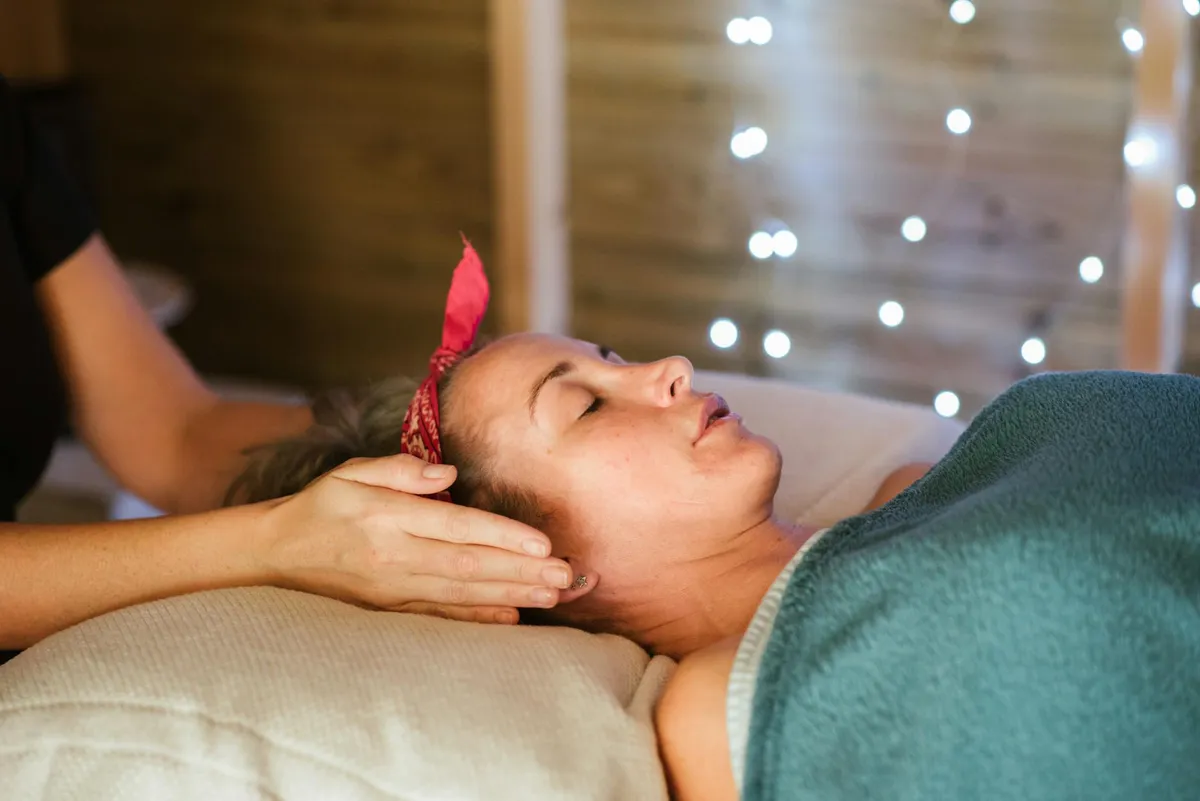
A Usui Reiki session invites deep relaxation through gentle, intentional hand placements that channel universal life energy, leaving you feeling calm and restored.
Your practitioner welcomes you and spends a few minutes learning about your intentions, any areas of concern, and what you hope to experience. This is a great time to ask questions.
Together, you and your practitioner briefly identify a focus or intention for the session, such as stress relief or emotional balance. This helps guide where attention is placed during treatment.
You lie fully clothed on a padded table, usually with soft music or silence in the background. Your practitioner may offer a blanket and will ensure you feel at ease before beginning.
Before touching you, your practitioner quietly centers themselves and calls in Reiki energy using the Usui system's symbols and intention, preparing to act as a clear channel for universal life energy.
Your practitioner moves through a series of standard Usui hand positions, beginning at the crown of your head and working down toward your feet. Hands rest lightly on or just above the body for severa
As the session progresses you may notice warmth, tingling, gentle pulsing, or a deep sense of heaviness and ease beneath or near your practitioner's hands. Some people see colors or drift into a dreamlike state.
Your practitioner gently signals the end by smoothing the energy field around your body and grounding the session with a final hand placement. They will softly let you know it is time to return to full awareness.
You are given a moment to slowly sit up before your practitioner shares any observations and recommends drinking plenty of water. They may suggest how often to return based on your goals.
The Evidence
What research and tradition tell us about Usui Reiki, and where the evidence is strong, limited, or still developing.
Widely practised, but clinical evidence remains limited
Usui Reiki has a century of traditional use and is common in complementary health settings. Small studies suggest modest relaxation benefits, but methodological challenges mean the evidence base is not yet robust by clinical standards.
Small-scale studies have explored Reiki's effects on stress, anxiety, and pain, with some showing modest benefits over no treatment. However, study quality is limited by small sample sizes, difficulty designing appropriate control conditions, and reliance on subjective outcomes. No strong clinical consensus currently exists.
Within the MACH holistic framework, Usui Reiki addresses physical, emotional, and energetic dimensions of well-being together. Practitioners aim to support relaxation and balance across the whole person. This integrative orientation is valued by many users, even where specific clinical outcomes remain difficult to measure.
Mikao Usui developed this system following years of spiritual study, establishing a structured approach to energy-based healing. The practice has been transmitted across generations through formal attunement and training. Its longevity and global reach reflect sustained cultural and personal value, independent of clinical research outcomes.
Some healthcare institutions have integrated Reiki into supportive care programmes, particularly for stress reduction, comfort, and emotional support during illness or recovery. It is used alongside, not instead of, conventional medical care. Practitioners and users should maintain open communication with their medical team.
Reiki involves gentle, non-invasive touch or near-body hand positions and carries low physical risk for most people. It should never replace professional medical assessment or urgent care. Those with serious medical conditions, electronic implants, or significant mental health concerns should consult their healthcare provider before starting.
The concept of channelling universal life force energy sits outside conventional scientific frameworks, and no validated method currently exists to measure it directly. Users should be cautious of inflated outcome claims. Reiki is best understood as a relaxation and well-being support, not a substitute for professional assessment or medical care.
Safety first
General guidance to help you decide whether this approach is appropriate for you. This is informational only and not a substitute for medical, psychological, or professional advice.
If you are experiencing severe distress, suicidal thoughts, psychosis, acute trauma, or another serious mental health concern, seek qualified support first.
This approach is not suitable for diagnosis, treatment instructions, or decisions that require medical, legal, financial, or professional advice.
Look for clear boundaries, transparent pricing, and practitioners who avoid fear-based claims or pressure to book frequent sessions.
Treat any insight as one reflective perspective, not absolute truth. Important decisions should be considered with appropriate professional support.
For you?
A simple, human way to weigh it up. This is general guidance, not personal medical advice — a qualified practitioner can advise on your situation.
Gyfts is a discovery platform, not a medical provider. Nothing here diagnoses, treats or replaces professional care. In an emergency, contact your local emergency number.
Explore approaches
Other practices people often explore alongside usui reiki.
In their words
FAQ
Reiki is a Japanese energy healing practice developed by Mikao Usui in the early 20th century. Practitioners work with what is understood in the Reiki framework as universal life energy (ki), channelling it through light touch or near-body hand positions to support the recipient's natural healing capacity. From a contemporary integrative health perspective, Reiki is positioned as a complementary practice that promotes deep relaxation and parasympathetic nervous system activation — creating conditions that support recovery, stress reduction, and emotional regulation. The proposed energetic mechanism is not established in conventional science, but the relaxation response it induces is well-documented.
Most people report a profound sense of relaxation, warmth, or gentle tingling during a session. Some experience emotional release, vivid imagery, or a sense of heaviness in the body. Sessions are typically conducted lying fully clothed on a treatment table in a quiet, calm environment. The practitioner places hands lightly on or just above specific body areas for several minutes each. Sessions generally last 45–90 minutes. Many clients fall asleep. There is rarely any discomfort.
Research on Reiki is limited in scale and quality, but growing. Several small RCTs and controlled studies have found benefits for anxiety reduction, pain management in cancer patients, and physiological markers of relaxation (heart rate, blood pressure, cortisol). A 2014 meta-analysis found moderate evidence for Reiki reducing anxiety and pain compared to sham treatment. Larger, methodologically rigorous trials are needed. The NHS in the UK and several major hospitals in the US have integrated Reiki as a complementary support for patients — not as a treatment for disease, but as a tool for wellbeing and comfort.
This is where Reiki has the most consistent evidence. The deep relaxation response produced during a session reliably reduces acute anxiety and perceived stress. Regular sessions over several weeks have been shown to reduce baseline anxiety levels in multiple studies. The combination of stillness, human touch, intention, and therapeutic attention creates a powerful context for nervous system downregulation — regardless of the specific mechanism. For people who find verbal therapies difficult to access or who want a somatic complement to psychological work, Reiki can be a useful and accessible entry point.
Reiki is among the safest complementary modalities — it is non-invasive, requires no substances, and is suitable for most people including children, pregnant women, and the elderly. It is not a treatment for any medical condition and should never replace medical care. People with active psychosis or severe mental illness should discuss with their mental health team before engaging with energy-based modalities. Reiki should never be used as an alternative to urgent medical treatment.
References
Educational sources that inform this overview. Inclusion is for context and does not imply endorsement.
Full citations are maintained by the Gyfts editorial team and reviewed periodically.
Keep exploring
Browse practitioners, explore honest overviews, and take what you learn to a conversation — at your own pace.