What it is
Vitamins and minerals go straight into your bloodstream, skipping digestion entirely.
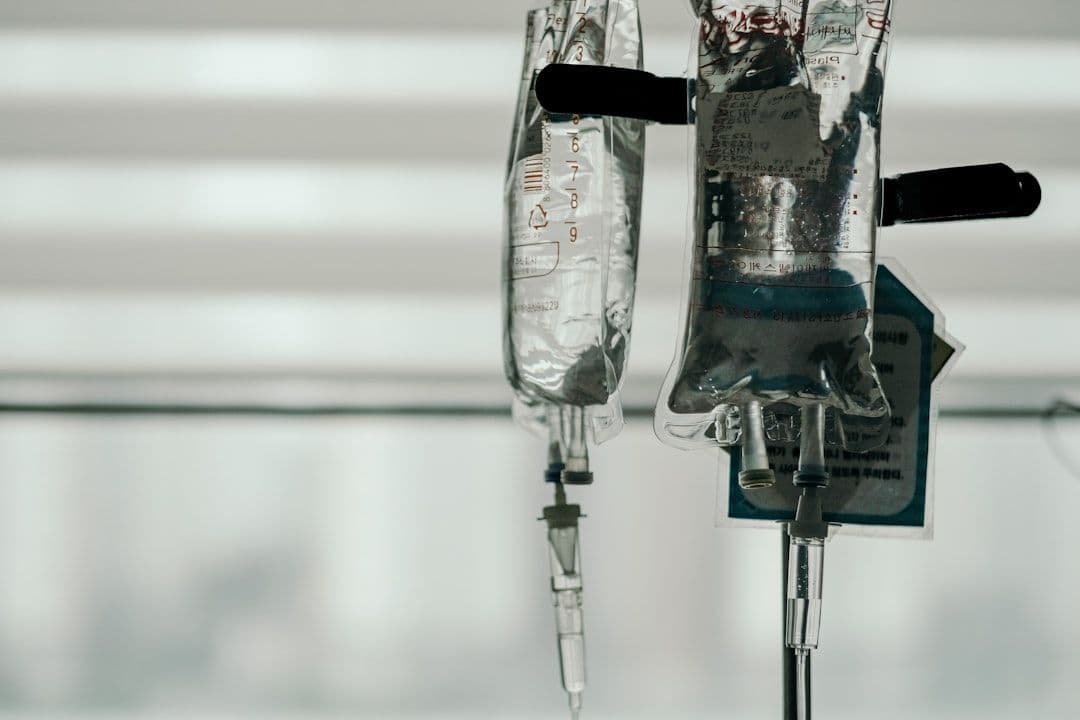
Vitamin IV Drip Therapy delivers vitamins, minerals, and nutrients directly into the bloodstream through intravenous infusion, bypassing ...

At a glance
What it is
Vitamins and minerals go straight into your bloodstream, skipping digestion entirely.
Why explore it
May support energy, immunity, and recovery when oral supplements aren't cutting it.
How it’s experienced
A small IV drip delivers a custom nutrient blend into your vein over 30 to 60 minutes.
Evidence context
General wellness benefits are promising but not yet backed by large clinical trials.
See the evidence snapshotSafety
Generally safe with licensed pros and sterile solutions, but check with your doctor first.
See staying safeHistory & Origin
Vitamin IV Drip Therapy involves intravenous administration of vitamins, minerals, and nutrients to promote overall health and address specific deficiencies.
Vitamin IV therapy emerged in the mid-20th century as physicians and researchers explored alternative routes for nutrient delivery. The practice gained particular attention in the 1960s when Dr. John Myers, a Baltimore physician, developed the 'Myers' Cocktail'—a popular IV formulation combining B vitamins, vitamin C, calcium, and magnesium. This formulation became a foundational protocol in the complementary medicine field and remains one of the most recognized IV drip formulas today.
The modality developed primarily within integrative and naturopathic medicine communities, where practitioners sought methods to deliver high-dose nutrients that would be difficult or impossible to achieve through oral supplementation alone. The theory behind IV administration is that it bypasses hepatic metabolism and absorption limitations in the gastrointestinal tract, allowing for higher blood concentrations of specific nutrients. This approach gained popularity in wellness centers and anti-aging clinics throughout the 1990s and 2000s.
While some conventional medical applications of IV nutrition therapy exist—particularly for parenteral nutrition in hospitalized patients or treatment of specific deficiencies—the broader wellness application remains primarily within the complementary health space. The practice has expanded significantly with the rise of 'IV therapy bars' and wellness centers in major metropolitan areas, though it remains controversial within mainstream medicine due to limited evidence for most claimed benefits in healthy individuals.
Mechanism
Vitamin IV Drip is generally framed as a guided process for attention, reflection, learning, and emotional integration. Depending on the method, a practitioner may use conversation, imagery, structured exercises, body awareness, or therapeutic techniques to help the person explore patterns and choices. It should not be presented as a standalone solution or a substitute for urgent care, but it may support self-understanding when practiced within an appropriate scope. Vitamin IV drips deliver a customised blend of vitamins, minerals, amino acids, and sometimes antioxidants directly into the bloodstream through intravenous infusion, bypassing the digestive system and allowing for higher bioavailability than oral supplements.
Your first visit
A typical session outline to help you feel prepared
A Vitamin IV Drip session delivers nutrients directly into your bloodstream while you relax in a comfortable chair, typically taking 20 to 60 minutes from start to finish.
You'll arrive and be greeted by a staff member who confirms your appointment and has you complete any remaining intake forms covering your health history and goals.
A practitioner sits down with you to review your intake forms, ask about your energy levels, hydration, and wellness goals, and answer any questions you have before anything begins.
Based on your conversation, the practitioner selects or customizes an IV blend — such as a hydration drip, immune boost, or energy formula — matched to what your body needs today.
You'll be shown to a comfortable reclining chair. There's no special clothing required, just roll up a sleeve. Some clinics offer blankets, water, or entertainment to make the wait cozy.
Using a sterile needle, the practitioner inserts a small catheter into a vein, usually in your arm or hand. You'll feel a brief pinch, and the needle is removed once the soft catheter is in place.
The IV bag is connected and nutrients begin flowing steadily into your bloodstream. The drip runs for roughly 20 to 60 minutes depending on your formula, and you're free to rest, read, or scroll your phone.
Staff check in periodically to make sure the drip is flowing well and you're comfortable. Let them know if you feel any coolness in your arm, unusual sensation, or discomfort at the site.
Once the bag is empty, the catheter is gently removed and a small bandage is placed on your arm. Staff will share any aftercare tips, like staying hydrated, and you can head right back into your day.
The Evidence
What research says about intravenous nutrient therapy, where evidence is strong, and where gaps remain.
Established in clinical care; wellness use lacks robust support
IV nutrient delivery has a clear role in clinical medicine for severe deficiencies and malabsorption. Evidence for wellness applications in healthy individuals is sparse, and many popular claims outpace the available research.
IV magnesium has demonstrated benefit in acute migraine and asthma. High-dose IV vitamin C has been studied in oncology support contexts. The widely used Myers' Cocktail lacks robust clinical trial data for the wellness outcomes it is commonly promoted for. Evidence in healthy, non-deficient individuals remains limited.
Intravenous nutrient delivery is standard care for malabsorption disorders, critical illness, and documented severe deficiencies. These clinical applications are distinct from wellness IV drips offered in complementary settings. Extrapolating clinical findings to healthy individuals seeking optimisation is not supported by current evidence.
As an Alternative modality, IV drip therapy is typically sought outside standard medical settings for goals such as energy, recovery, or immune support. Practitioners vary widely in training and oversight. Users should distinguish between evidence-informed clinical use and wellness-oriented applications where evidence is limited.
Risks include infection at the insertion site, vein irritation, and electrolyte imbalance. People with kidney disease, heart conditions, or those taking anticoagulants such as warfarin should consult a doctor before proceeding. Active infection or bacteremia are contraindications. Practitioner training and sterile technique matter significantly.
Inflated outcome claims around anti-ageing, immune boosting, and performance enhancement are common in this space. Higher blood concentrations of nutrients do not automatically translate to clinical benefit in non-deficient individuals. Gyfts encourages users to ask practitioners what evidence supports a specific formulation for their specific goal.
Look for providers with verified clinical training in IV administration and a clear intake process that screens for contraindications. A reputable practitioner will not promise specific outcomes, will review your health history, and will refer you to a physician if your needs fall outside their scope. This modality is not a substitute for professional assessment of underlying health concerns.
Safety first
General guidance to help you decide whether this approach is appropriate for you. This is informational only and not a substitute for medical, psychological, or professional advice.
If you are pregnant, managing a health condition, recovering from injury or surgery, or taking medication, consult a qualified healthcare professional first.
Some situations call for extra care or a different approach. Share any conditions, injuries, or sensitivities with your practitioner before your first session.
Look for clear boundaries, transparent pricing, and practitioners who avoid fear-based claims or pressure to book frequent sessions.
Mild, short-lived effects such as tenderness, tiredness, or temporary soreness can occur. Rest, hydrate, and tell your practitioner how you respond.
For you?
A simple, human way to weigh it up. This is general guidance, not personal medical advice — a qualified practitioner can advise on your situation.
Gyfts is a discovery platform, not a medical provider. Nothing here diagnoses, treats or replaces professional care. In an emergency, contact your local emergency number.
Explore approaches
Other practices people often explore alongside vitamin iv drip.
In their words
FAQ
You will be seated comfortably while a trained practitioner inserts a small IV catheter into a vein in your arm. The catheter is connected to a drip containing a customized blend of vitamins, minerals, and nutrients. The infusion typically takes 20 minutes to one hour, depending on the volume and formula. You can relax, read, or rest during the procedure. Once complete, the IV is removed and you can resume normal activities.
This varies based on your individual goals and response. Some people use IV therapy as a one-time wellness boost, while others receive monthly maintenance treatments. Your practitioner will recommend a personalized schedule based on your health objectives, current status, and response to initial treatments. Regular users typically space sessions 2-4 weeks apart.
IV therapy carries minimal risk when administered by a qualified healthcare professional using sterile techniques and pharmaceutical-grade solutions. Potential side effects are generally mild and temporary, including slight discomfort at the insertion site, a cool sensation during infusion, or a metallic taste. However, the safety profile depends on individual health status, the specific formula used, and how frequently treatments are received. Individuals with certain health conditions should consult their doctor first.
IV therapy delivers nutrients directly into the bloodstream, bypassing the digestive system and hepatic metabolism. This allows for higher blood concentrations of certain nutrients that would be difficult or impossible to achieve orally. Oral supplements are digested and absorbed through the GI tract, which limits the amount that can be absorbed. IV therapy may be more efficient for specific nutrients, but oral supplementation is more practical for ongoing nutrition support and is sufficient for most people.
Some people report feeling more energetic shortly after an IV drip, while others notice benefits gradually over hours or days. Response varies significantly between individuals based on baseline nutrient status, overall health, stress levels, and sleep quality. IV therapy should not be viewed as a substitute for adequate sleep, nutrition, and stress management. Benefits are typically most noticeable in individuals with documented nutrient deficiencies.
IV formulas often contain vitamin C, B vitamins, zinc, and other nutrients involved in immune function. While these nutrients are essential for immune health, scientific evidence for IV therapy specifically boosting immunity in healthy individuals is limited. IV therapy may be more useful for people with documented deficiencies or during periods of heightened immune demand, such as during illness or high stress.
IV solutions themselves are regulated by the FDA, but the way they are formulated and combined for wellness purposes is not regulated the same way as pharmaceutical treatments. Practitioners may have varying qualifications and approaches. Choose providers who are licensed healthcare professionals (MDs, NDs, RNs) and who use pharmaceutical-grade, sterile solutions from reputable sources.
This depends on your specific condition. Individuals with kidney disease, heart conditions, electrolyte imbalances, or those taking certain medications should consult their physician before receiving IV therapy. Some conditions may contraindicate IV therapy entirely, while others may require medical oversight. Always disclose your complete health history to your practitioner.
References
Educational sources that inform this overview. Inclusion is for context and does not imply endorsement.
Full citations are maintained by the Gyfts editorial team and reviewed periodically.
Keep exploring
Browse practitioners, explore honest overviews, and take what you learn to a conversation — at your own pace.