What Amazonian floral baths are
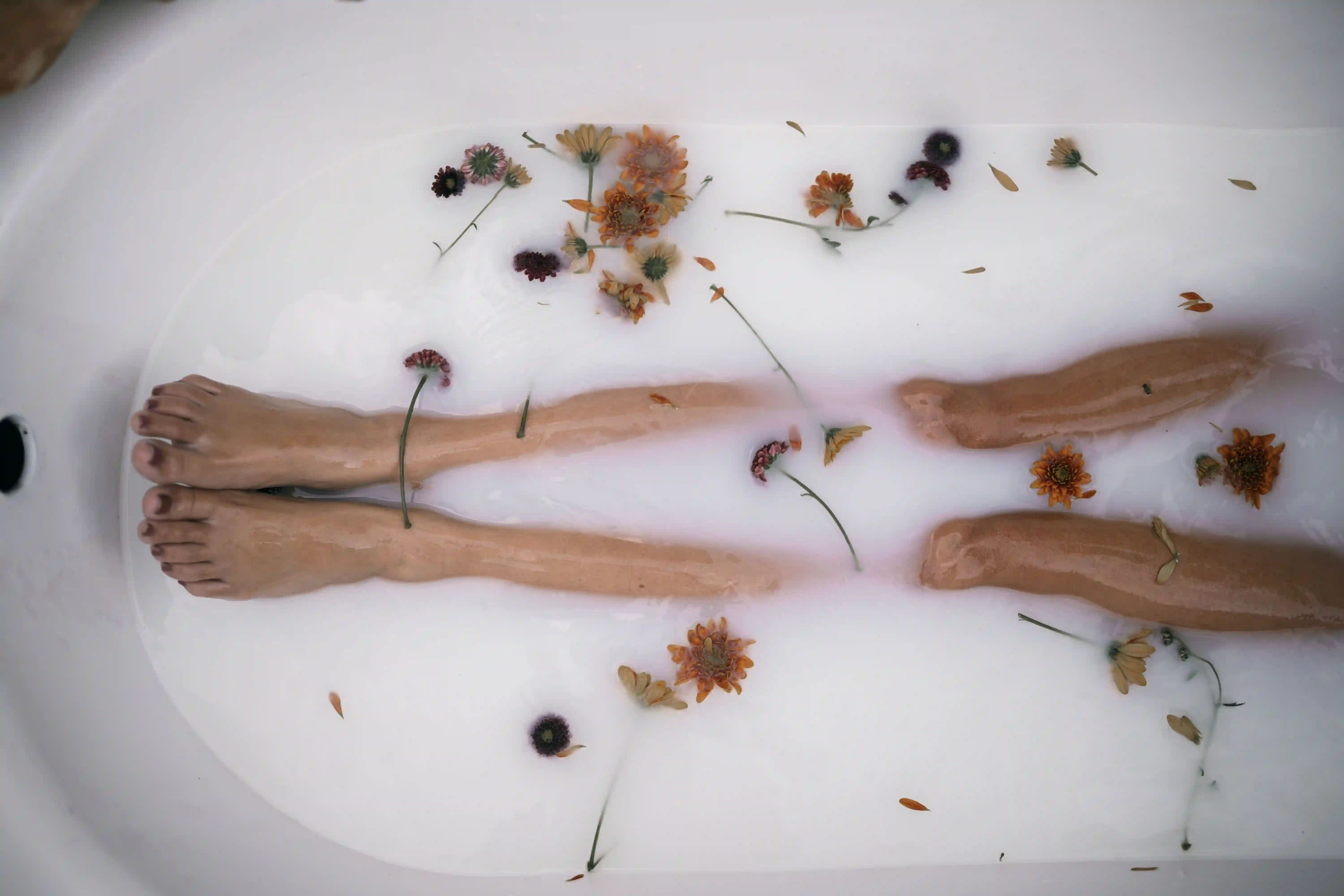
Amazonian floral baths are a traditional practice from the Peruvian Amazon in which a person bathes in water infused with fragrant flowers and leaves. In Spanish they are often called baños de florecimiento (flowering baths) or baños de flores (flower baths). In the tradition they are understood as a way to cleanse, to renew, and to invite good fortune and love. They are not understood as a remedy for a named condition, and this guide makes no health claim.
The practice is associated with the ancestral medicine of the Shipibo-Konibo people and with other Amazonian peoples. For a wider view of that tradition, see our guide to Shipibo-Konibo medicine. Floral baths are one practice among many, alongside plant teas, steams, song, and ceremony, and they are best understood in that wider setting rather than on their own.
Today flower baths are also offered to visitors at retreat centers. The way they are presented there may differ from how they are held within Indigenous communities, and this guide tries to keep that difference clear.
Language and respect: onanyabo, not shamans
The words we use matter. The Asociación de Onanyabo Médicos Ancestrales Shipibo-Konibo-Xetebo (ASOMASHK) is an Indigenous organization of ancestral medicine practitioners in the Peruvian Amazon, founded in 2019. It rejects the words shaman and shamanism as imported terms that do not reflect Shipibo practice. It uses onanya (plural onanyabo), meaning a master of ancestral medicine. This guide follows that choice.
The Shipibo-Konibo-Xetebo nation lives mainly along the Ucayali River in the Peruvian Amazon. ASOMASHK describes its Yarinacocha Declaration as taking a firm stand against spiritual extractivism, which it describes as outsiders taking and selling Indigenous spiritual knowledge without benefit to the people who hold it. The declaration also notes that foreign apprentices can outnumber local students, while young Shipibo people often lack the funds for long training, and it asks those who profit from Indigenous medicine to contribute to community empowerment and fair pay.
The organization says it was founded in the wake of the killing of the ancestral medicine master Olivia Arévalo Lomas, which news outlets reported in 2018. The circumstances were widely covered, and the details are best read in those reports rather than summarized here. For anyone considering a retreat, the point is simple: this is a living tradition held by real people, and visitors carry responsibilities toward them.
What the tradition says floral baths are for
Within the tradition, floral baths are understood as a practice of cleansing and renewal. Descriptions from retreat settings often link them to good luck and love and to the idea of opening, or flowering, after a period of release. These are meanings attributed to the tradition, not findings from research, and they differ between communities and healers.
It helps to see floral baths against the wider background of Amazonian plant baths. Ethnographic work among the Ashéninka of the Ucayali, a different Indigenous people, describes leaf baths given to children and recommended by healers after a session, understood as strengthening the body. That study also did not test whether any plant works, which is a useful reminder that these practices are about relationships and meaning as much as about plant chemistry (Lenaerts, 2006). Floral baths likely sit in a related space, though the sources reviewed for this guide do not describe floral baths in detail.
How a floral bath is traditionally prepared and taken
Details vary, and the people who hold this knowledge are the right source for them. In general terms, the tradition involves the following.
- •Choosing the plants. A knowledge holder selects fragrant flowers and leaves. Which plants, and why, differ between communities and healers.
- •Preparing the water. The plants are steeped or crushed in water, often in a basin or in a river setting.
- •Setting an intention. The person may hold a quiet intention, such as release, renewal, or openness.
- •Bathing. The infused water is poured over the body or used for bathing, usually in a calm, private place.
- •Resting. A period of quiet usually follows. Retreat programs often offer these baths around ceremony, though that is a retreat custom and not a requirement.
This guide does not name specific plants for floral baths. The scholarly sources reviewed do not list the flowers used, and retreat websites vary and are not independent. Naming plants without a reliable source could mislead people into using something unsuitable for the skin.
What the research says
No clinical trials or systematic reviews of Amazonian floral baths were found. The evidence is ethnographic and ethnobotanical, meaning it records what people do and what plants mean, not what the practice does to the body. A chapter on the ethnobotany of the Shipibo-Konibo documents field inventories of plants and cultural concepts in two Ucayali communities between 1991 and 1996 (Tournon and colleagues, 2014). A study in the Shipibo-Conibo community of Vencedor identified culturally significant medicinal plants among 31 heads of family (Tudela-Talavera and La Torre-Cuadros, 2015). Neither source, as far as could be confirmed, describes floral baths in detail.
The honest summary is that floral baths rest on traditional use. They may be valued for fragrance, ritual, and meaning, and some people find the experience calming. None of that has been measured here, and no source reviewed supports the idea that a bath changes health, mood, or luck. Evidence from other plant practices should not be borrowed to fill that gap.
Safety and things to consider
Floral baths are generally low risk, but a few cautions are worth knowing.
- •Allergy and skin irritation. Plants can cause allergic reactions or contact irritation. Test a small patch of skin first and stop if you notice itching, redness, or a rash.
- •Identify every plant. Never use a flower or leaf you cannot positively identify. Some are irritating or toxic.
- •Skin only. These infusions are for the skin. Do not drink them.
- •Pregnancy. Check with a doctor before using plant baths if you are pregnant.
- •Eczema, asthma, and fragrance sensitivity. Strong scents and plant oils can trigger reactions. Speak with a clinician if this applies to you.
- •Water quality. River or untreated water can carry germs. Use clean water, and avoid open wounds.
- •Medication and health conditions. Mention any medication or skin treatment to your doctor, and do not use a bath in place of medical care.
- •Who may offer these practices. That is the Indigenous community's call. Training, licensing, and legality vary by country, so ask about the background of anyone who offers them.
Floral baths complement ordinary care. They never replace medical or mental health treatment.
Taking part respectfully
If you are drawn to this practice, a few steps can help you engage well. Ask where your host learned it and who benefits from your visit. Prefer hosts who work with Indigenous organizations and who pay fairly. Learn and use the community's own words, such as onanya, rather than imported ones. Be wary of anyone who sells the practice as a guaranteed fix, or who presents it as a product to be copied.
Fair exchange is part of respect. Many Indigenous organizations ask visitors to pay a fair price for time and knowledge, to avoid bargaining it down, and to give back where they can. Ask openly how fees are shared, and whether Indigenous practitioners lead the work or only appear in the marketing. A good host will welcome those questions and answer them plainly, without defensiveness.
If you simply want a fragrant bath at home, you can make one with ingredients you know well and that suit your skin. That is a different thing from the Indigenous practice, and there is no need to borrow its name or claim its meaning.
Questions to ask a practitioner
- •Who taught you this practice, and how is it held in your community or lineage?
- •Which plants are in the bath, and are they all positively identified?
- •Is the water clean, and how are the plants prepared and stored?
- •Is there anything in the bath I should avoid if I am pregnant or have allergies?
- •How do you support Indigenous communities and pay fairly for the knowledge you share?
- •What are your fees and cancellation terms?
Related practices
Floral baths sit within the larger world of Shipibo-Konibo medicine, which also includes song, plant teas, and ceremony. A different practice with a similar gentle, plant-based feel is flower essence therapy, which uses diluted flower preparations and has its own, separate evidence picture. You can browse more practices with the Gyfts explore tool, where each practice shows its own evidence context.
The bottom line
Amazonian floral baths are a traditional practice of cleansing and renewal with deep cultural meaning, and there is no clinical research showing a health effect. They are generally low risk when the plants are known, the skin is tested, and the water is clean. If you are curious, approach them as a guest in a living tradition: use the community's own words, support Indigenous-led organizations, pay fairly, and treat the baths as a complement to care, never a substitute for it.