What it is
The ancestral medicine of the Shipibo-Konibo-Xetebo people, practiced by onanyabo in the Peruvian Amazon.
The ancestral medicine of the Shipibo-Konibo people of the Peruvian Amazon, carried by onanyabo
At a glance
What it is
The ancestral medicine of the Shipibo-Konibo-Xetebo people, practiced by onanyabo in the Peruvian Amazon.
Why explore it
Some seekers want to understand an Indigenous medical tradition or take part in baths and ceremony.
How it’s experienced
Baths, plant preparations, song and ceremony, shaped by the onanya, the community and the place.
Evidence context
Traditional use, documented by anthropology and ethnobotany. No clinical trials of the system.
See the evidence snapshotSafety
Moderate risk. Purging, nicotine and strong plants can interact with medicines. Ask a clinician first.
See staying safeHistory & Origin
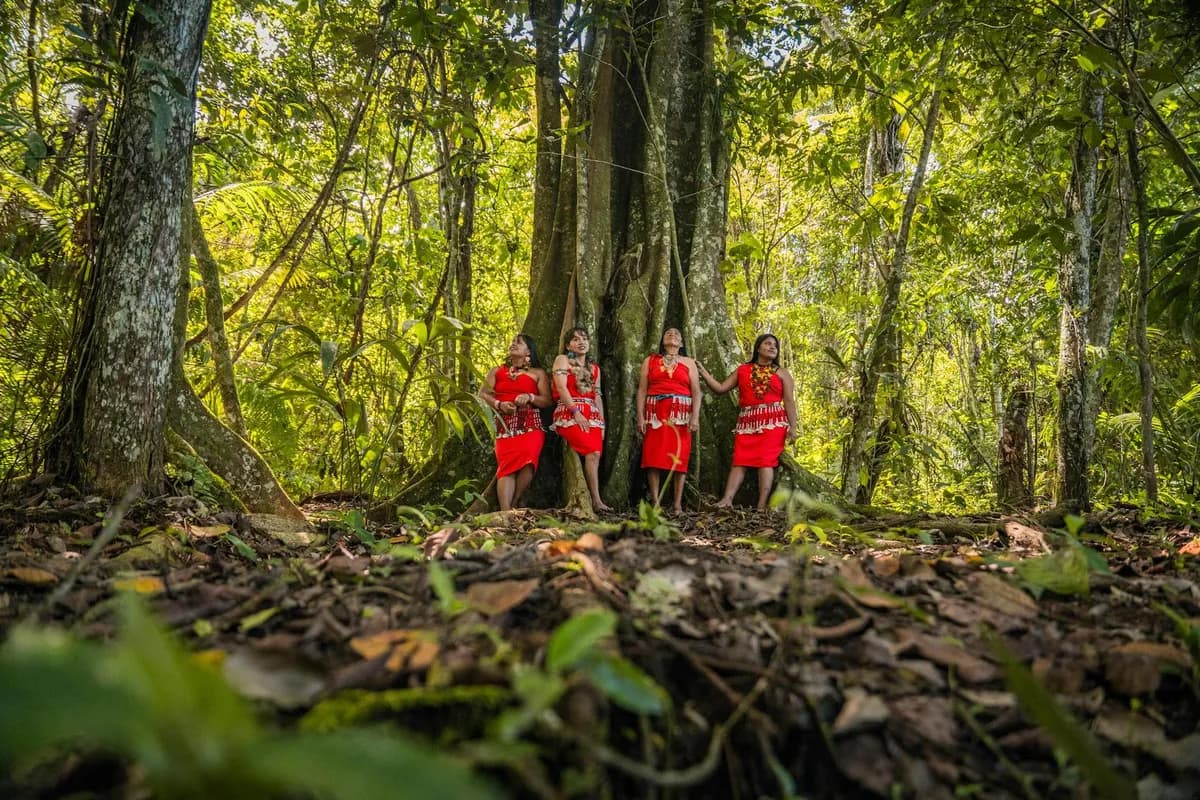
Shipibo-Konibo medicine is the ancestral medical tradition of the Shipibo-Konibo-Xetebo people, who live mainly along the Ucayali River in the Peruvian Amazon. It is practiced by onanyabo (singular onanya), people who have trained for years in the knowledge of plants, song and the forest. The tradition understands health as a relationship between a person, their community and the living world around them.
Practices described in the tradition include plant medicine (often called vegetal medicine), baths, purges, tobacco, songs known as icaros, ceremony, and periods of restricted diet called dietas. Which of these is used depends on the onanya, the community and the situation. Ayahuasca is one plant medicine within this wider system, and it has its own profile on Gyfts. Many people first meet the tradition through visits to Pucallpa or Iquitos, and the quality and safety of what they find there varies a great deal.
The tradition is not a wellness product, and it is not a replacement for medical care. The Shipibo-Konibo organization ASOMASHK, founded in 2019, asks outsiders to approach it with respect for Indigenous self-determination and to avoid what it calls spiritual extractivism. Who may offer these practices is for the Indigenous community to decide, and training, licensing and legality vary by country.
The Shipibo-Konibo-Xetebo people speak a language of the Panoan family and have lived in the Ucayali River basin of the Peruvian Amazon for generations. Their medical knowledge is part of a wider relationship with the forest, the river, and their communities, and it is held by the people themselves. Knowledge has traditionally been passed from teacher to apprentice over years of training, which researchers in the region have documented as involving plants, dietas, and supervision by an experienced master.
The tradition is closely tied to kene, the geometric designs that Shipibo-Konibo women create in textiles, ceramics, and body painting and that are also sung. Peru has recognized kene as part of the nation's cultural heritage. Anthropologists began documenting the relationship between designs, song, and medicine in the late 20th century, and in recent decades international attention has grown, much of it through ayahuasca tourism around Pucallpa and Iquitos.
After the 2018 killing of onanya Olivia Arevalo Lomas, the Shipibo-Konibo-Xetebo representative council convened a first gathering of ancestral medicine practitioners at Yarinacocha. The resulting Yarinacocha Declaration rejected the imported words shaman and shamanism in favor of onanya, and led to ASOMASHK, founded in 2019. Peru also has an intercultural health policy that recognizes traditional medicine.
Mechanism
The tradition works through a trained onanya, who uses plants, song and ceremony within a community framework of knowledge.
Your first visit
A typical session outline to help you feel prepared
There is no standard first appointment, and visitors should ask what is appropriate rather than expect a fixed format.
You meet the onanya or community host, share why you have come, and learn what is and is not open to visitors.
A responsible host asks about your health, medicines and pregnancy status, and may decline to include you in some practices.
You settle fair payment, what will happen, who will be present, and what is not appropriate to photograph or record.
Some visits begin gently with a plant bath or a preparation, taken at your own pace, and you may say no at any point.
If included, an evening ceremony with icaros may follow, in which you listen and follow the guidance of the onanya.
You rest, drink water, and talk through what happened, with a plan for getting to medical care if you need it.
The evidence
An honest read on how Shipibo-Konibo Medicine has been studied — an evidence tier and the research behind it, not a guarantee and not a ranking of “better.”
Rooted in traditional use, with growing research interest
Support for Shipibo-Konibo medicine is traditional use, backed by anthropological and ethnobotanical documentation of what practitioners do and mean.
Laboratory studies of single plants do not show that traditional practices have a health effect.
Health uses have not been tested in trials, and some practices involve strong plants or purging, so check with a clinician first.
Safety first
General guidance to help you decide whether this approach is appropriate for you. This is informational only and not a substitute for medical, psychological, or professional advice.
Some situations call for extra care or a different approach. Share any conditions, injuries, or sensitivities with your practitioner before your first session.
If you are pregnant, managing a health condition, recovering from injury or surgery, or taking medication, consult a qualified healthcare professional first.
Look for clear boundaries, transparent pricing, and practitioners who avoid fear-based claims or pressure to book frequent sessions.
Mild, short-lived effects such as tenderness, tiredness, or temporary soreness can occur. Rest, hydrate, and tell your practitioner how you respond.
For you?
A simple, human way to weigh it up. This is general guidance, not personal medical advice — a qualified practitioner can advise on your situation.
Gyfts is a discovery platform, not a medical provider. Nothing here diagnoses, treats or replaces professional care. In an emergency, contact your local emergency number.
Explore approaches
Other practices people often explore alongside shipibo-konibo medicine.
In their words
Before you book
FAQ
It is the ancestral medical tradition of the Shipibo-Konibo-Xetebo people of the Peruvian Amazon. Practitioners called onanyabo work with plants, baths, purges, tobacco, songs and ceremony. It is understood by the tradition as a way of keeping balance between people, community and the forest, and its support is traditional use rather than clinical trials.
The Shipibo-Konibo practitioners themselves have asked outsiders not to. ASOMASHK, an organization of ancestral medicine practitioners founded in 2019, rejected the words shaman and shamanism as imported terms in its Yarinacocha Declaration, and chose onanya (plural onanyabo) instead. Using their own word is a simple first step in respect.
It carries real risks, so it is not automatically safe. Purging, strong plants, nicotine and fasting can interact with medicines and health conditions, and remote settings may be far from emergency care. Speak with a licensed clinician first, never stop prescribed treatment, and choose Indigenous-led, fairly paid providers recommended by Indigenous organizations.
No, not for the system as a whole. Support is traditional use, documented by anthropologists and ethnobotanists, and there are no clinical trials of the tradition. Some individual plants have been studied in laboratories, but that does not show that traditional practices have a health effect. This page makes no claim that any practice treats a condition.
The best way is to learn the tradition on its own terms, use the word onanya, and support Indigenous-led organizations and the training of young Shipibo-Konibo people. Pay fairly, avoid copying songs or designs for profit, and do not present yourself as a practitioner. ASOMASHK warns against spiritual extractivism and asks foreign visitors to respect Shipibo self-government.
References
Educational sources that inform this overview. Inclusion is for context and does not imply endorsement.
Full citations are maintained by the Gyfts editorial team and reviewed periodically.
Keep exploring
Browse practitioners, explore honest overviews, and take what you learn to a conversation — at your own pace.