What it is
Supports how children naturally learn to communicate, from first babbles to full sentences.
Child Language refers to the study and support of how children naturally develop communication and language skills from infancy through e...
At a glance
What it is
Supports how children naturally learn to communicate, from first babbles to full sentences.
Why explore it
Catching language delays early can make a real difference in how children communicate long-term.
How it’s experienced
Sessions use play and parent coaching to build language skills in ways that feel fun, not clinical.
Evidence context
Decades of strong research support early language intervention, though every child's progress is unique.
See the evidence snapshotSafety
Generally very safe with a qualified professional, but sudden loss of language skills needs prompt medical attention.
See staying safeHistory & Origin
Child Language focuses on how children learn to communicate and develop language skills.
The formal study of child language development emerged in the mid-20th century, building on earlier observations by psychologists and linguists. Jean Piaget's cognitive development theories in the 1920s laid groundwork for understanding how children's thinking relates to language acquisition. Noam Chomsky's revolutionary work in the 1950s proposed that humans have an innate capacity for language learning, challenging behaviorist views that language was purely learned through imitation.
The field gained momentum through longitudinal studies by researchers like Roger Brown at Harvard in the 1960s, who documented the predictable stages of language acquisition in young children. Patricia Kuhl's research in the 1980s and beyond revealed how infants' brains are specially tuned to language sounds from birth. These discoveries led to better understanding of critical periods for language development and the importance of early intervention.
Modern child language support combines insights from linguistics, psychology, neuroscience, and speech pathology. The field has evolved to recognize the complex interplay between biological predispositions and environmental factors in shaping language development. Today's practitioners use evidence-based approaches to support children with typical development as well as those facing challenges due to hearing impairments, autism spectrum disorders, or other developmental differences.
Mechanism
Child Language is generally framed as a guided process for attention, reflection, learning, and emotional integration. Depending on the method, a practitioner may use conversation, imagery, structured exercises, body awareness, or therapeutic techniques to help the person explore patterns and choices. It should not be presented as a standalone solution or a substitute for urgent care, but it may support self-understanding when practiced within an appropriate scope. Child language development unfolds through predictable stages—from pre-linguistic sounds and babbling in infancy, through first words and word combinations, to grammatical complexity by age 5—driven by maturation of the brain's language centres, exposure to language input, and social interaction with caregivers.
Your first visit
A typical session outline to help you feel prepared
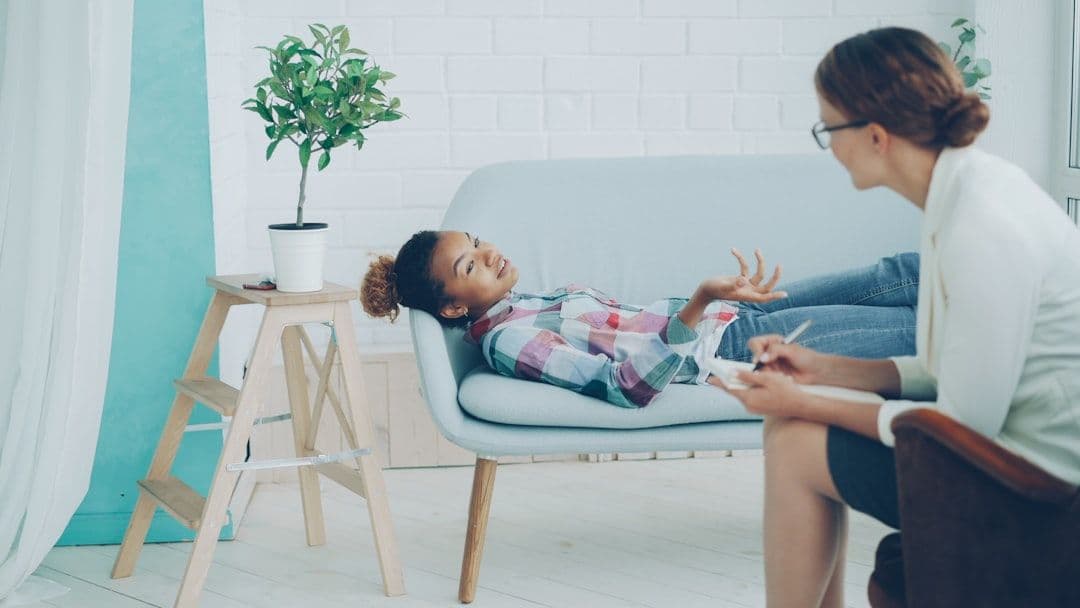
A child language session is a warm, play-based experience where a specialist observes and supports how your child communicates through games, stories, and everyday interactions.
You and your child arrive and spend a few minutes settling in with the specialist, who creates a relaxed atmosphere so your child feels safe and curious rather than tested.
While your child explores some toys nearby, you share observations about your child's communication at home, any concerns, and what you're hoping to see develop over time.
The specialist engages your child in natural play activities like building blocks, picture books, or simple games to observe how they initiate communication, follow directions, and express themselves.
Your child is guided through age-appropriate activities such as retelling a short story or naming objects, giving the specialist a closer look at vocabulary, sentence structure, and comprehension.
Based on what the specialist observes, they introduce specific prompts, modeling techniques, or turn-taking games designed to gently stretch your child's current communication abilities.
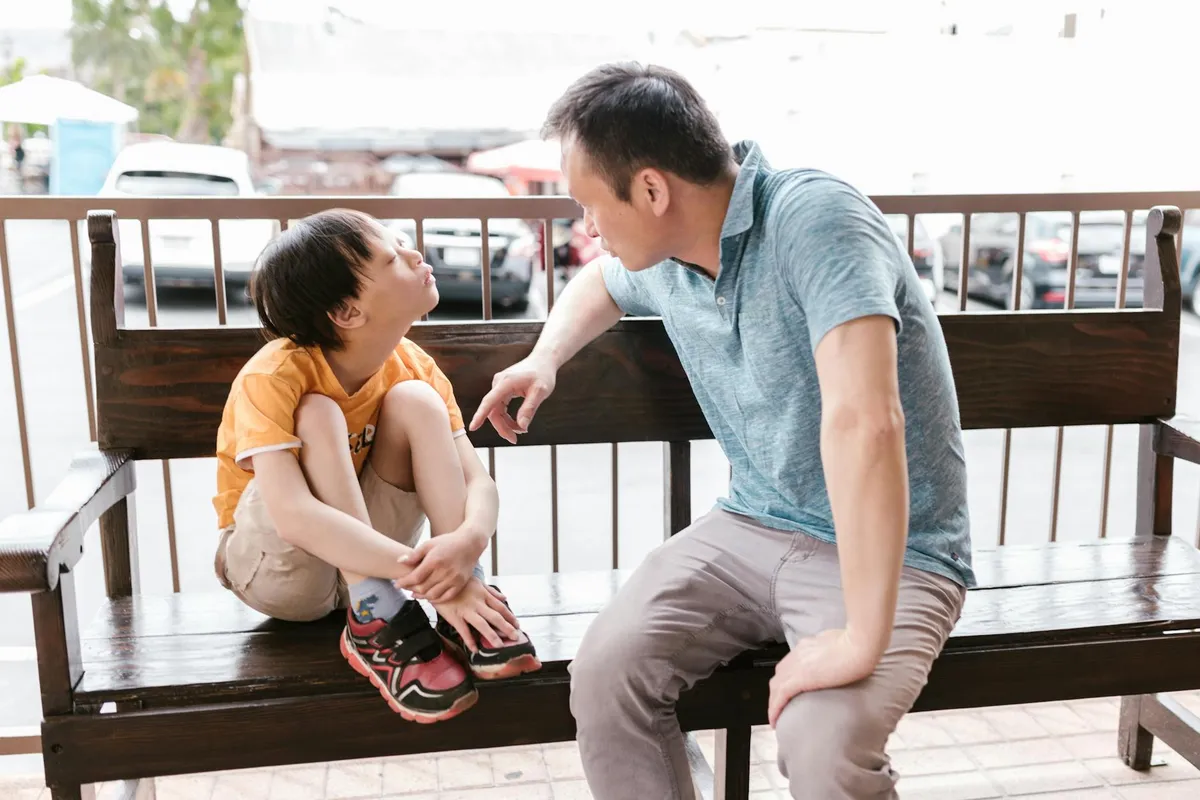
You're invited to join the activity so the specialist can show you exactly how to use the same techniques at home during meals, bath time, or everyday play.
The specialist shares what they noticed during the session, celebrates your child's strengths, and sends you home with simple strategies to practice before the next visit.
The Evidence
What research tells us about child language development and the support strategies that make a meaningful difference.
Decades of research support early language intervention
Child language development is one of the most thoroughly studied areas in developmental science, with consistent findings across longitudinal studies and cross-cultural research. Early, responsive support is associated with meaningfully better long-term communication outcomes.
Longitudinal studies, controlled trials, and cross-cultural research consistently identify predictable developmental milestones and effective intervention approaches. Naturalistic, parent-mediated, and play-based strategies show the strongest outcomes for vocabulary and social communication growth. Individual variation in response to intervention remains an active area of study.
Research consistently shows that children who receive appropriate language support earlier achieve stronger gains in vocabulary, sentence complexity, and communication skills than those who receive support later. Developmental screening tools help identify children who may benefit from professional assessment before delays become entrenched.
Parent coaching, language-rich routines, and play-based activities complement formal speech-language pathology rather than replacing it. For children with identified delays or conditions such as hearing loss or autism spectrum disorder, these strategies are most effective when coordinated with qualified professionals.
Interventions should not create undue pressure or frustration for the child. Any child who loses previously acquired language skills warrants prompt medical evaluation. Children with complex medical conditions, significant hearing impairment, or cognitive delays may require specialist multidisciplinary input beyond general language support.
Concerns about hearing, loss of previously acquired words, limited social responsiveness, or delays across multiple developmental areas should prompt professional assessment rather than a wait-and-see approach. Early referral is supported by evidence and carries no meaningful downside.
Research has not yet established definitive guidance on the ideal frequency or length of intervention for all child profiles and contexts. Outcomes vary across individual children, and findings from high-resource research settings may not translate uniformly across all cultural and linguistic environments.
Safety first
General guidance to help you decide whether this approach is appropriate for you. This is informational only and not a substitute for medical, psychological, or professional advice.
If you are pregnant, managing a health condition, recovering from injury or surgery, or taking medication, consult a qualified healthcare professional first.
Some situations call for extra care or a different approach. Share any conditions, injuries, or sensitivities with your practitioner before your first session.
Look for clear boundaries, transparent pricing, and practitioners who avoid fear-based claims or pressure to book frequent sessions.
Mild, short-lived effects such as tenderness, tiredness, or temporary soreness can occur. Rest, hydrate, and tell your practitioner how you respond.
For you?
A simple, human way to weigh it up. This is general guidance, not personal medical advice — a qualified practitioner can advise on your situation.
Gyfts is a discovery platform, not a medical provider. Nothing here diagnoses, treats or replaces professional care. In an emergency, contact your local emergency number.
Explore approaches
Other practices people often explore alongside child language.
In their words
FAQ
Sessions involve play-based activities designed to encourage natural language development. The practitioner engages the child through games, books, toys, and conversations while modeling good communication techniques. Parents learn strategies to support language development at home through everyday activities like meals, bath time, and play. Sessions are tailored to each child's developmental level and interests to keep them engaged and motivated.
The number of sessions varies greatly depending on the child's needs, age, and goals. Some children benefit from short-term support over a few months, while others with more significant challenges may need ongoing support over years. Most practitioners recommend starting with weekly sessions and adjusting frequency based on progress. Early intervention typically shows faster results, emphasizing the importance of addressing concerns as soon as they're identified.
Speech and language therapists (SLTs) assess and treat communication and swallowing difficulties across the lifespan — but for children, language development is a primary focus. They address: delayed language acquisition, speech sound difficulties (articulation and phonological processing), stammering, social communication difficulties (including autism spectrum), selective mutism, voice disorders, and literacy difficulties linked to language processing. SLTs work with the child directly, train parents and teachers in supporting communication, and collaborate with educational professionals.
Broad developmental landmarks: by 12 months, babbling and responding to name; by 18 months, first single words (ideally 20+ words); by 24 months, two-word combinations; by 36 months, sentences of 3–4 words and 75% intelligibility to strangers. These are averages — there is natural variation. Seek SLT assessment if your child is not meeting landmarks by these ages, is losing previously acquired language, shows frustration communicating, or has concerns around social interaction alongside language. Early intervention consistently produces better outcomes — there is no benefit in waiting to see if a child grows out of it.
Speech and language therapy is a regulated healthcare profession (HCPC-registered in the UK) that assesses and treats clinical communication and swallowing disorders across all ages. Communication coaching is an unregulated developmental practice focused on interpersonal effectiveness — public speaking, assertiveness, professional presence — typically for adults without clinical communication conditions. The former addresses pathology; the latter addresses performance. Both can be valuable in their respective domains; choosing the right one depends on whether your concern is clinical (seek SLT) or developmental and performance-focused (seek a qualified communication coach).
References
Educational sources that inform this overview. Inclusion is for context and does not imply endorsement.
Full citations are maintained by the Gyfts editorial team and reviewed periodically.
Keep exploring
Browse practitioners, explore honest overviews, and take what you learn to a conversation — at your own pace.