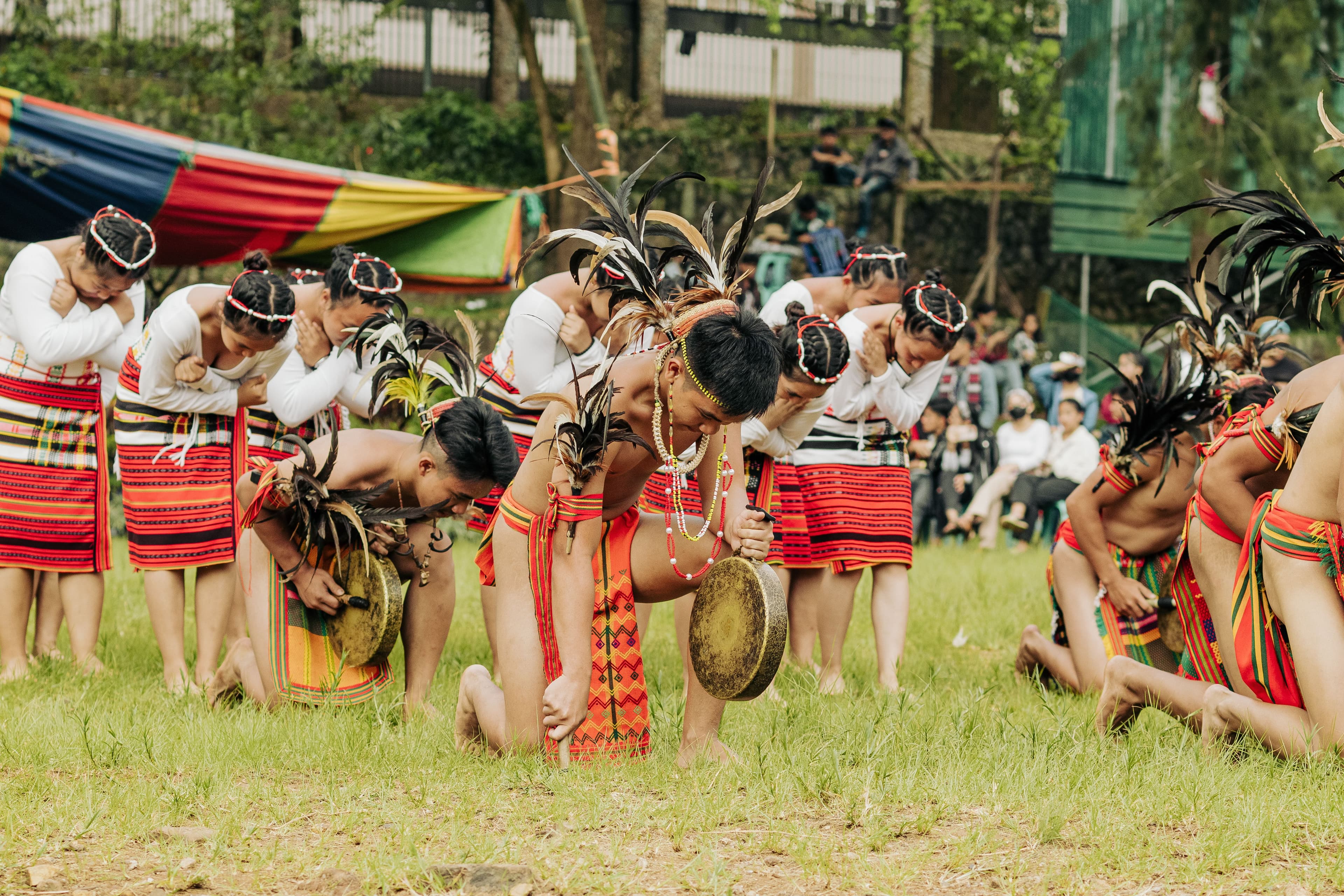
Healing Rooted in Land, Language, and Community
Long before hospitals and clinics, every people on earth developed its own way of understanding illness, restoring balance, and caring for body, mind, and spirit together. A babalawo casting palm nuts in southwestern Nigeria, a curandero singing icaros in the Amazon, an elder telling healing stories by a fire in the Australian desert, a Celtic healer gathering herbs at a holy well: each belongs to a complete system of knowledge, developed over centuries within a specific land, language, and community.
Indigenous Traditions is the umbrella Gyfts uses for these place-based healing systems. It is not a single practice, and the traditions within it are not interchangeable. What unites them is a shared shape: healing understood as a matter of relationship, between a person and their community, their ancestors, their land, and the unseen world, carried by practitioners whose authority comes from lineage and community recognition rather than institutional licensing.
The Traditions Within This Family
On Gyfts, this family currently includes five traditions, each with its own dedicated page. Yoruba Tradition carries the healing, divinatory, and herbal knowledge of the Yoruba people of West Africa, including Ifa divination, and lives on through diaspora communities across the Americas. Amazonian Traditions encompass the plant knowledge and ceremonial healing of peoples across the Amazon basin. Celtic Traditions draw on the healing customs of Ireland, Scotland, Wales, and Brittany, from herbal lore to sacred wells and seasonal ritual. Aboriginal Australian Practices reflect tens of thousands of years of continuous culture, including Dreamtime healing and bush medicine. Shamanic Healing describes the practitioner-guided ceremonial lineages found across Siberia, Mongolia, and the Americas, in which a trained healer mediates between the everyday and spirit worlds on behalf of a person or community.
The family also relates closely to healing knowledge held by First Nations, Native American, Inuit, Sami, Maori, and many other indigenous peoples. Some of these traditions maintain strong community protocols about who may practice and share them, and their absence as separate listings here reflects respect for those protocols and for the practitioners who hold them, not a judgment about their value.
Common Threads Across Distinct Systems
Although each tradition is distinct, several threads recur. Ceremony and ritual mark the difference between ordinary time and healing time, whether through drumming, chanting, smoke, water, or seasonal observance. Plant knowledge, developed through generations of careful observation, informs everything from everyday herbal preparations to ceremonial use. Ancestral connection treats the wellbeing of the living as continuous with the remembered dead, and many traditions include practices for honoring, consulting, or making peace with ancestors.
Storytelling carries the knowledge itself. In oral traditions, teaching stories, songs, and proverbs are the medical literature, memorized and transmitted by trained practitioners. And healing roles are community-held: the healer, diviner, or ceremony-keeper is recognized and accountable to a community, trained through apprenticeship that can span decades, rather than self-appointed.
Who Explores These Traditions
Many people come to indigenous healing traditions through their own heritage, seeking reconnection with practices their families carried before migration, colonization, or simple distance interrupted the thread. Others arrive through a sense that something is missing from purely clinical approaches to wellbeing: community, meaning, ceremony, or a relationship with the natural world.
People commonly explore these traditions for spiritual connection, ancestral healing, life transitions, grief, and a sense of disconnection or depletion that resists easy naming. What these traditions offer is not a targeted treatment for a diagnosis but a framework of meaning, belonging, and practice within which people often report finding steadiness and perspective.
Understanding Evidence Within Living Traditions
Indigenous healing systems developed their own standards of knowledge long before the randomized controlled trial existed, and they are not well captured by it. Their effectiveness is evaluated within their communities through different criteria: the wisdom of the guidance, the integrity of the practitioner, the coherence of the ceremony, and the lived experience of those it serves across generations.
Where Western research has engaged with these traditions, it has mostly examined specific elements, such as particular plants or the health effects of cultural reconnection for indigenous communities, rather than the systems as wholes. Gyfts presents these traditions for cultural understanding and respectful exploration. They are living knowledge systems, not evaluated medical treatments, and nothing here should be read as a claim that any practice treats or cures any condition.
Approaching These Traditions with Respect
These traditions belong to their communities. The difference between respectful engagement and appropriation usually comes down to lineage and accountability. Before working with a practitioner, ask how they were trained, within what tradition, over what period, and whether a community recognizes their practice. Genuine practitioners tend to answer these questions gladly and precisely; they are proud of their teachers.
Be cautious of practitioners who blend many traditions loosely without deep training in any, make guarantees about outcomes, or attach escalating fees to increasingly elaborate ceremonies. Practices involving ingested plant preparations deserve particular care: they carry real physical and psychological risks, interact with medications, and are legally restricted in many countries. A trustworthy practitioner will acknowledge when a concern belongs with a doctor or mental health professional, and these traditions are best understood as a complement to, never a replacement for, professional medical care.
