What it is
Acupressure uses finger pressure on specific body points to encourage energy flow and ease tension.
Acupressure is a traditional Chinese medicine technique that applies finger pressure to specific points on the body to stimulate energy f...
At a glance
What it is
Acupressure uses finger pressure on specific body points to encourage energy flow and ease tension.
Why explore it
It may help with stress, sleep, and pain — and you can learn to use it on yourself anytime.
How it’s experienced
A practitioner guides pressure on key body points, and you may feel warmth, tingling, or deep calm.
Evidence context
Research shows promising results for pain and stress relief, though outcomes can vary by person and condition.
See the evidence snapshotSafety
Generally safe for healthy adults — skip pressure near wounds or during pregnancy, and check with your doctor first.
See staying safeHistory & Origin
Acupressure stimulates the body's energy pathways to promote healing and relieve pain.
Acupressure has its roots in Traditional Chinese Medicine (TCM), with origins dating back over 5,000 years to ancient China. The practice developed alongside acupuncture as part of a comprehensive healing system based on the concept of qi (life energy) flowing through specific pathways called meridians. Ancient Chinese healers discovered that applying pressure to certain points along these meridians could restore balance and promote healing without the use of needles.
The foundational principles of acupressure were first documented in classical Chinese medical texts, including the Yellow Emperor's Classic of Internal Medicine (Huangdi Neijing), written around 100 BCE. This seminal work established the theoretical framework for understanding the body's energy system and the specific acupoints that could be stimulated for therapeutic benefit.
As trade routes expanded and cultural exchange increased, acupressure techniques spread throughout Asia, with each culture adapting the practice to their own healing traditions. In Japan, it evolved into shiatsu, while other variations developed in Korea, Thailand, and India. The practice remained relatively unknown in the West until the 20th century, when increased interest in alternative medicine and the establishment of acupuncture clinics introduced Western practitioners to pressure point therapy.
Modern acupressure has been influenced by both traditional practitioners and contemporary researchers who have worked to document and standardize techniques while maintaining the core principles of the ancient practice. Today, it is practiced worldwide as both a standalone therapy and as a complement to other healing modalities.
Approaches
Acupressure isn’t a single method. Practitioners may train in one tradition or blend several — here are the styles you’re most likely to meet.
Uses rhythmic thumb, palm, or elbow pressure along meridian pathways, usually through clothing.
Applies steady pressure to selected acupuncture points for a specific concern, such as nausea, tension, or headache support.
Teaches simple points a person can safely press at home between sessions.
Uses ear points, sometimes with small seeds or beads, to provide gentle ongoing stimulation.
Mechanism
Acupressure is generally described as working through skilled touch, careful pacing, and the body's response to pressure, movement, warmth, or stillness. Practitioners may focus on muscle tone, joint comfort, circulation, breath, or relaxation depending on the method. Traditional explanations may also include energy flow or whole-person balance. Research support varies by modality, so the experience is best framed as supportive care with outcomes that vary. Acupressure applies sustained or rhythmic finger, thumb, or hand pressure to specific anatomical points traditionally mapped in Traditional Chinese Medicine as lying along meridian pathways.
Your first visit
A typical session outline to help you feel prepared
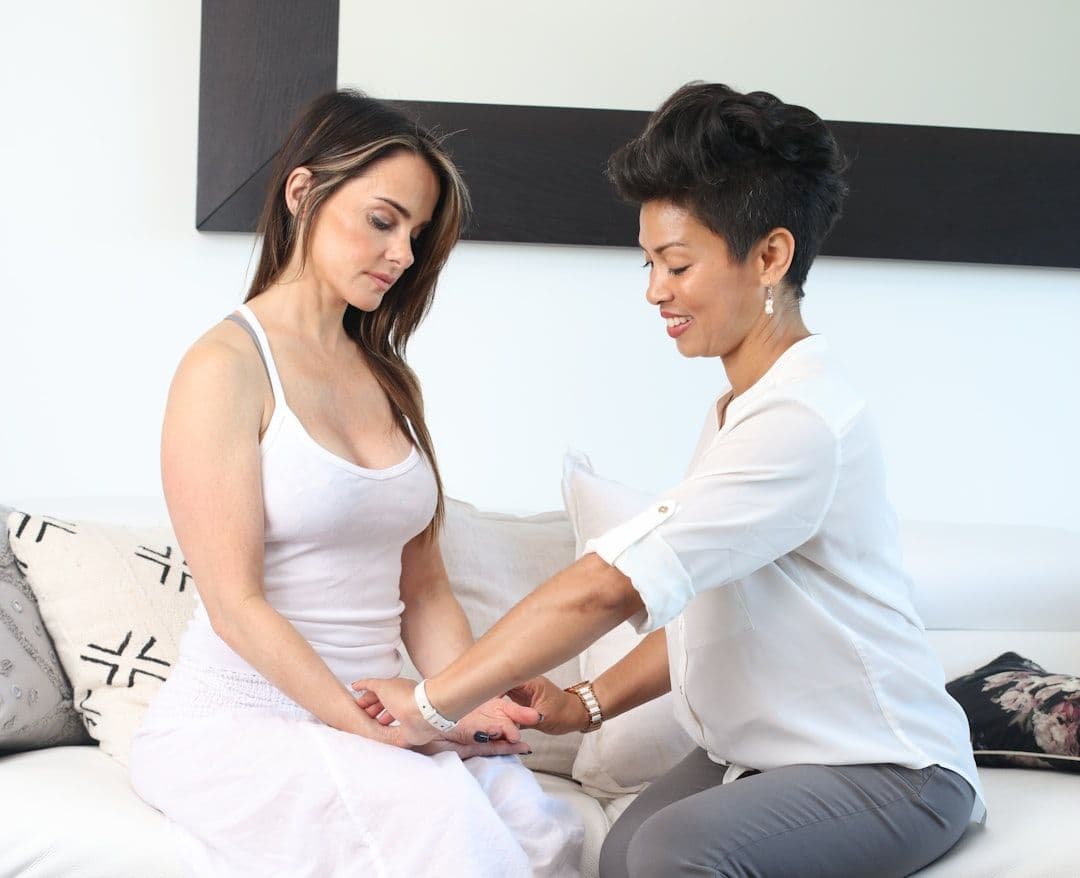
A typical acupressure session combines a brief health conversation with hands-on pressure work along your body's energy pathways, all while you remain fully clothed.
Your practitioner will ask about your health history, stress levels, sleep quality, and any areas of tension or discomfort, so they can tailor the session to your needs.
Following traditional Chinese medicine principles, your practitioner will gently look at your tongue and feel your pulse at both wrists to assess the flow of energy, or qi, in your body.
You'll lie fully clothed on a padded treatment table in a calm, dimly lit room. Loose, comfortable clothing works best since nothing needs to be removed.
The practitioner uses their fingers, thumbs, and palms to locate specific acupoints along your body's meridians, which are energy channels mapped in traditional Chinese medicine.
Firm, sustained pressure is applied to each point for several seconds to a few minutes. You may feel a dull ache, warmth, or gentle pulsing sensation, which are considered positive responses.
Your practitioner works through a series of points in a flowing sequence, which might include your head, neck, shoulders, arms, abdomen, legs, or back depending on your needs.
Near the end of the session, pressure becomes lighter and slower, giving your nervous system a chance to settle. Many people feel deeply relaxed or even a little drowsy at this stage.
Your practitioner will share personalized self-care tips, including simple pressure points you can try at home, hydration reminders, and suggestions for rest if needed.
The Evidence
What research says about acupressure, where evidence is stronger, where it is limited, and how it fits within a broader care picture.
Promising for nausea and pain; mixed results elsewhere
Acupressure has a growing research base with its strongest support for nausea, vomiting, and certain pain conditions. Evidence for other applications is moderate and sometimes inconsistent, and study quality varies considerably across the field.
Multiple randomised controlled trials and meta-analyses support acupressure for nausea and vomiting, including in pregnancy and chemotherapy settings. Evidence for pain, sleep, and anxiety is moderate but more mixed. Study sizes, methodologies, and outcome measures vary, making broad conclusions difficult.
Creating a convincing sham acupressure control is difficult, which complicates blinding in trials. Many studies are small or have short follow-up periods. Variation in point selection, pressure technique, and practitioner training also makes it hard to compare findings across studies.
Traditional Chinese Medicine frames acupressure as restoring balanced qi flow along meridians. Western physiological models suggest pressure activates nerve endings, stimulates endorphin release, and modulates pain signalling. Both frameworks inform practice; neither is required to be accepted exclusively.
Certain acupoints should be avoided during pregnancy. Pressure should not be applied over wounds, fractures, tumours, or inflamed tissue. People with deep vein thrombosis, severe cardiovascular conditions, or recent surgery in treatment areas should seek professional guidance before proceeding.
Some techniques, such as P6 wristband pressure for nausea, are widely used as self-care. For complex or chronic conditions, working with a trained practitioner improves safety and precision. Practitioner credentials and training standards vary by country, so checking qualifications is advisable.
Acupressure is not a substitute for professional assessment or medical management of serious conditions. It may be used alongside conventional care for symptom support, particularly for nausea, pain, and stress. Always inform your primary healthcare provider about any complementary practices you are using.
Safety first
General guidance to help you decide whether this approach is appropriate for you. This is informational only and not a substitute for medical, psychological, or professional advice.
If you are pregnant, managing a health condition, recovering from injury or surgery, or taking medication, consult a qualified healthcare professional first.
Some situations call for extra care or a different approach. Share any conditions, injuries, or sensitivities with your practitioner before your first session.
Look for clear boundaries, transparent pricing, and practitioners who avoid fear-based claims or pressure to book frequent sessions.
Mild, short-lived effects such as tenderness, tiredness, or temporary soreness can occur. Rest, hydrate, and tell your practitioner how you respond.
For you?
A simple, human way to weigh it up. This is general guidance, not personal medical advice — a qualified practitioner can advise on your situation.
Gyfts is a discovery platform, not a medical provider. Nothing here diagnoses, treats or replaces professional care. In an emergency, contact your local emergency number.
Explore approaches
Other practices people often explore alongside acupressure.
Featured
These practitioners have chosen to be featured on Gyfts.
See all practitionersIn their words
Top Practitioners
Practitioners are ranked using relevance, experience signals, reviews, and support-area fit.
FAQ
A typical Acupressure session involves an intake to understand goals and preferences, followed by guided techniques aligned to the approach, with time for questions and aftercare suggestions.
The number of sessions varies by goals, preferences, and individual response. Some people try a short series and then reassess with the practitioner.
Acupressure and acupuncture share the same theoretical foundation — both work with qi (life energy) along meridian pathways through specific acupuncture points. The difference is the tool: acupuncture uses fine needles inserted into the points, while acupressure uses firm manual pressure applied by fingers, thumbs, or tools like seeds or magnets. Acupressure can be self-applied, making it accessible as a between-session practice, and is suitable for people who are uncomfortable with needles. Evidence for acupressure is somewhat less developed than for acupuncture but growing, particularly for nausea and pain.
Yes — self-acupressure is one of its significant advantages. Several points are well-documented for self-application: P6 (Pericardium 6, on the inner wrist) for nausea and anxiety, LI4 (Large Intestine 4, between thumb and forefinger) for headache and pain, ST36 (Stomach 36, below the knee) for fatigue and digestion, and KD1 (Kidney 1, on the sole of the foot) for grounding. Firm, sustained pressure of 1–3 minutes is typically recommended. Instruction from a trained practitioner helps ensure correct point location and appropriate technique.
Acupressure is most commonly used for nausea (pregnancy, chemotherapy, post-operative — with moderate evidence for P6 point stimulation), headache and migraine, chronic pain, stress and anxiety relief, menstrual pain, and digestive discomfort. It is also used in palliative and hospital settings as a gentle complementary tool for symptom management. Labour acupressure support for pregnant women has growing evidence and is offered in some NHS midwifery-led units in the UK.
References
Educational sources that inform this overview. Inclusion is for context and does not imply endorsement.
Full citations are maintained by the Gyfts editorial team and reviewed periodically.
Keep exploring
Browse practitioners, explore honest overviews, and take what you learn to a conversation — at your own pace.