Preparing for Your Session
Arrive wearing comfortable, loose-fitting clothing that allows easy access to your arms, legs, and feet. Natural fibres like cotton work well, as synthetic materials may interfere with the vibrational transmission. Remove jewellery, watches, and anything metal that might create unwanted resonance.
Eat lightly beforehand — a heavy meal can make you drowsy during the session, whilst an empty stomach might leave you feeling lightheaded. Avoid alcohol for 24 hours prior, as it can affect your sensitivity to the vibrations. Stay well-hydrated, but use the toilet before your appointment begins.
Switch your phone to silent mode and let go of any pressing concerns for the next hour. Your practitioner will want to know about current medications, recent injuries, and what you hope to achieve from the session.
The Session Unfolds
Your session begins with a consultation where your practitioner assesses your current state and selects appropriate tuning fork frequencies. They may ask about stress levels, sleep patterns, areas of tension, or emotional concerns. This conversation typically lasts 10-15 minutes.
You'll lie fully clothed on a massage table or comfortable chair. The practitioner starts by striking a tuning fork — you'll hear a clear, pure tone ring out. They'll place the vibrating fork directly on specific points of your body, often beginning with your feet or hands. The sensation feels like a gentle buzzing or humming that penetrates surprisingly deeply.
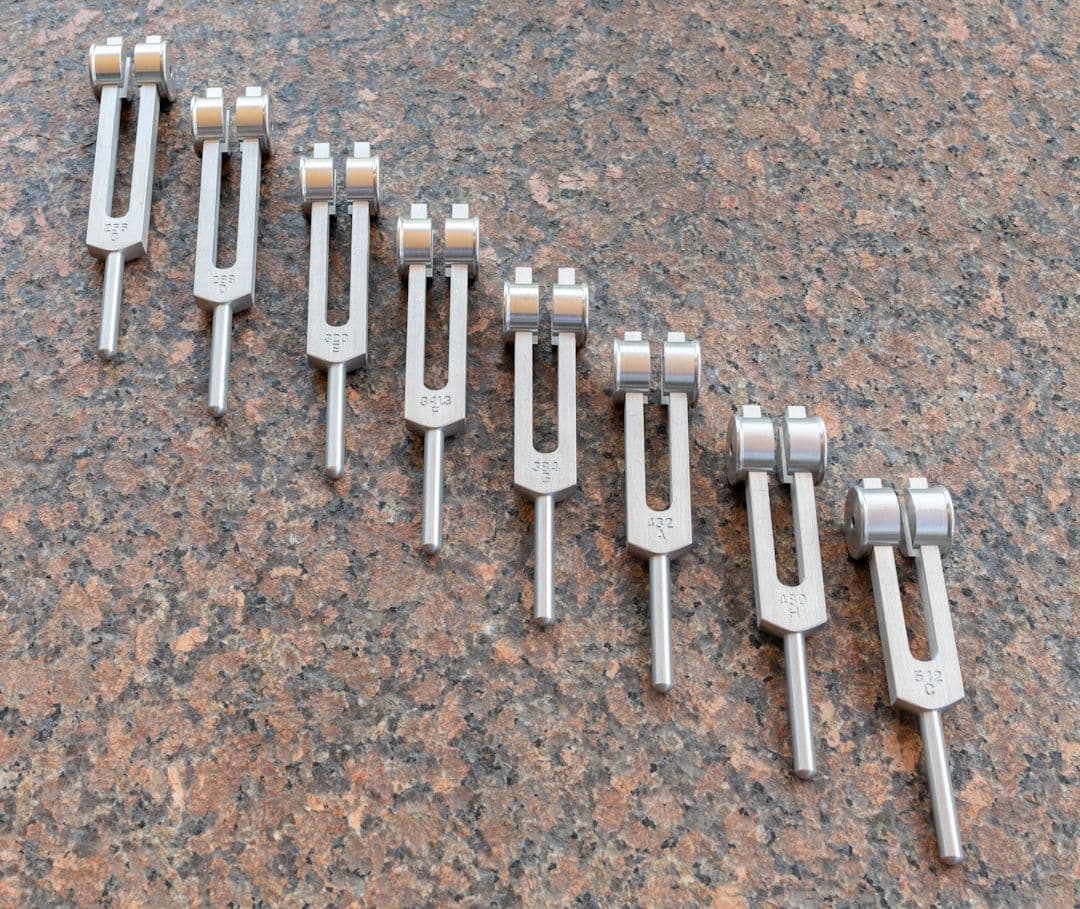
Different forks produce distinct frequencies — lower tones (around 64-128 Hz) create grounding, earthy vibrations, whilst higher frequencies feel lighter and more energising. Your practitioner may place forks on acupuncture points, energy centres, or areas of tension. Between placements, they might hold vibrating forks near your ears, creating an immersive sound bath.
The treatment portion lasts 25-35 minutes. Some practitioners work systematically from head to toe, whilst others focus on specific areas based on your needs. You might feel vibrations spreading from the contact point throughout your body, or notice certain frequencies resonating more strongly than others.
What You Might Experience
Most people feel immediate relaxation as the vibrations settle into their body. You may notice muscle tension releasing, breathing deepening, or a sense of mental clarity emerging. Some describe feeling the vibrations long after the fork is removed — this lingering sensation is perfectly normal.
Emotional responses vary considerably. You might feel deeply peaceful, experience unexpected emotions, or find memories surfacing. Some people become drowsy, whilst others feel energised and alert. Temperature changes are common — many report feeling warmer as circulation improves.
During the session, you may hear internal sounds: ringing, humming, or harmonic overtones that seem to come from within your body. This indicates the vibrations are resonating with your tissues. Don't worry if you don't experience dramatic sensations — some people are more sensitive to vibrational frequencies than others.
After the session, most people feel calm and centred. You might notice improved sleep, reduced anxiety, or physical tension relief over the following days. Others report enhanced mental clarity or emotional balance that develops gradually.
Post-Session Care
Drink plenty of water in the hours following your session — the vibrations may stimulate circulation and lymphatic drainage, making hydration particularly important. Avoid alcohol and caffeine for the rest of the day, as your nervous system may be more sensitive than usual.
Plan a quiet evening if possible. Many people feel deeply relaxed or emotionally open after treatment, so intense activities or stressful situations are best avoided. Light movement like gentle walking can help integrate the session's effects.
Keep notes about what you experience over the next few days. Changes often unfold gradually: sleep may improve on the second night, or emotional shifts might become apparent later in the week. These delayed responses help your practitioner adjust future sessions.
Some people experience mild detox symptoms — slight headache, fatigue, or emotional sensitivity. This typically resolves within 24 hours and indicates your system is processing the vibrational input.
Planning Your Treatment Course
Most practitioners recommend starting with weekly sessions for 4-6 weeks, allowing time for cumulative effects to develop. Unlike treatments targeting specific symptoms, tuning fork therapy often works on subtle energetic levels that require patience to appreciate fully.
Your response to the first session helps determine frequency. If you feel significant benefits that last several days, weekly appointments work well. Those who return to baseline quickly might benefit from twice-weekly sessions initially. Maintenance sessions every 2-4 weeks are common once you've achieved your goals.
People seeking stress relief often notice improvements within 2-3 sessions, whilst those addressing chronic tension or sleep issues may need 6-8 sessions to experience lasting change. Your practitioner will adjust fork selection and placement points based on your evolving response.
Be patient with the process. Sound-based therapies work by gradually recalibrating your nervous system rather than providing immediate fixes. The most profound benefits often emerge when you've completed a full course of treatment.