What it is
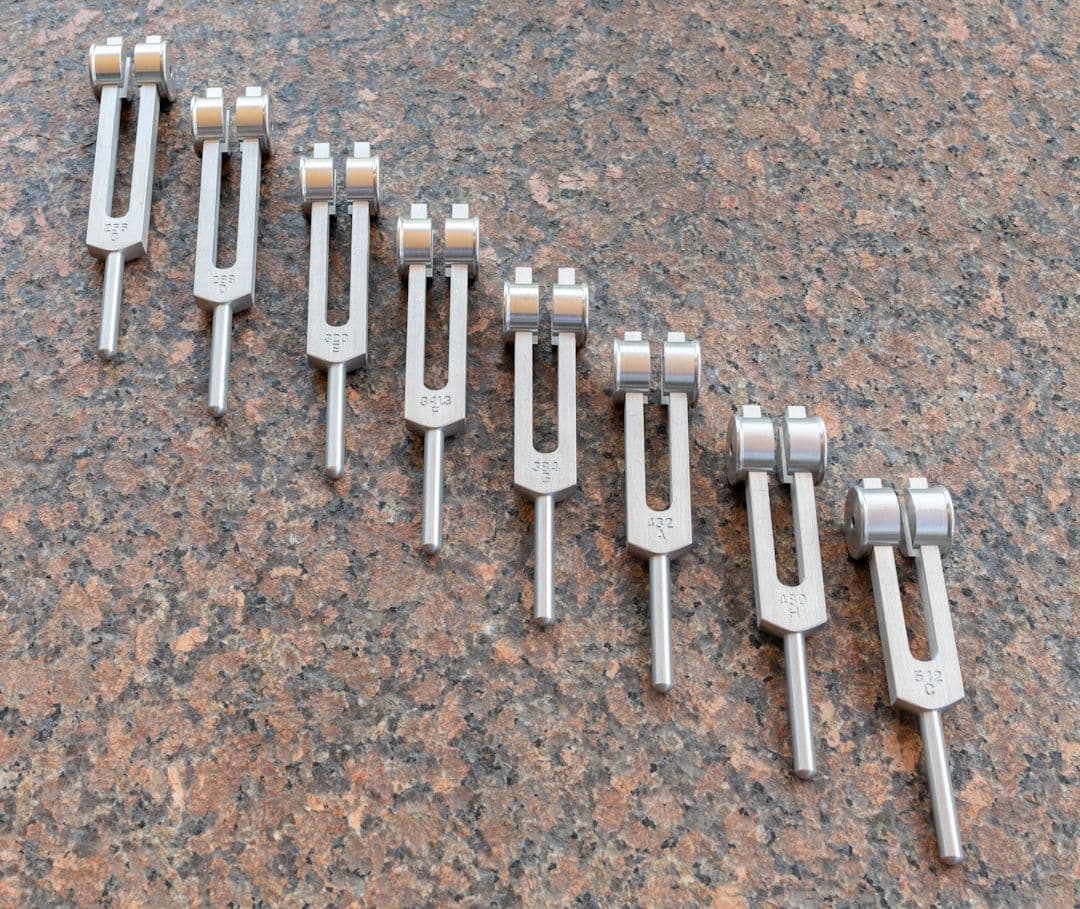
Calibrated metal forks are struck and applied to the body to deliver healing vibrations.
Explore the benefits of Tuning Forks for your wellness journey.
At a glance
What it is
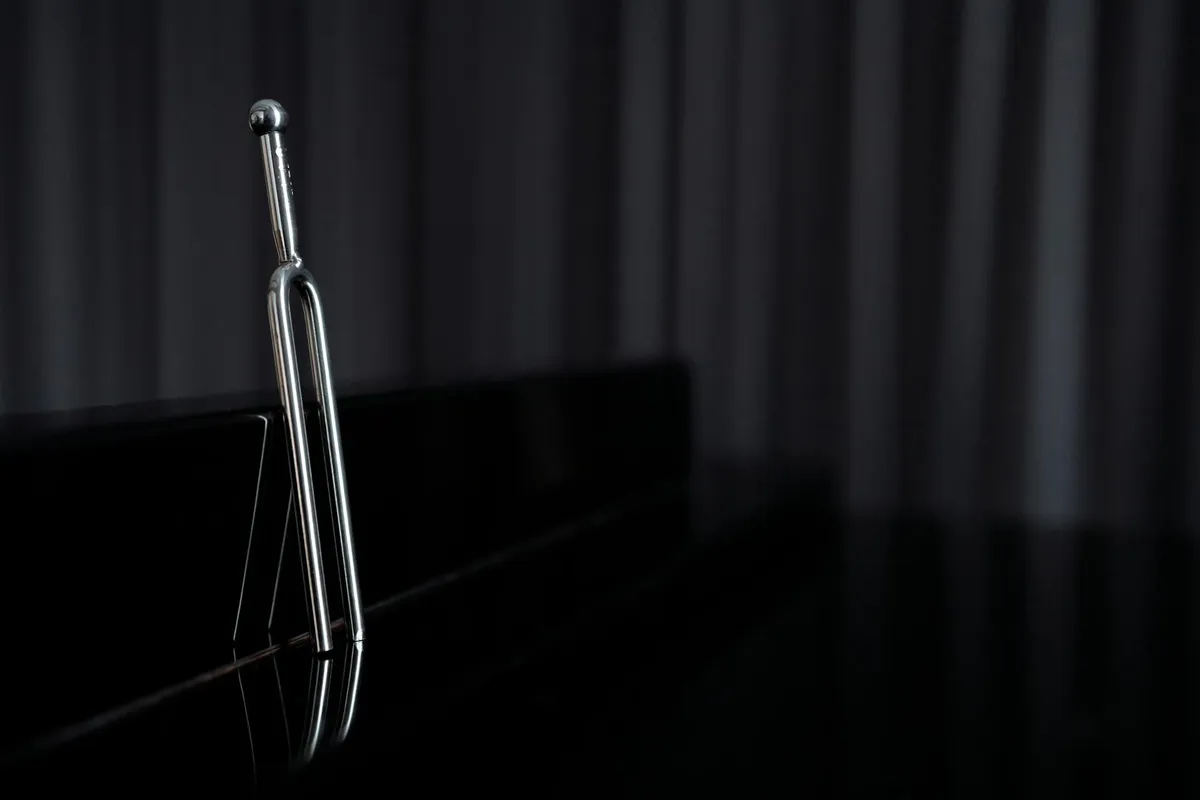
Calibrated metal forks are struck and applied to the body to deliver healing vibrations.
Why explore it
People explore it for stress relief, pain support, and emotional balance through vibrational resonance.
How it’s experienced
A practitioner places a vibrating fork on your skin or nearby, creating a gentle, grounding sensation.
Evidence context
Research is early and limited, though some studies hint at nervous system and nitric oxide effects.
See the evidence snapshotSafety
Generally low-risk, but those with implanted devices or vibration sensitivity should check with a provider.
See staying safeHistory & Origin
Tuning Forks Therapy utilizes tuned forks to create specific sound frequencies that promote relaxation, balance, and healing.
Tuning Forks transitioned from musical precision tools to wellness modalities through a convergence of 18th-century acoustics and 20th-century neuroscience. Originally invented in 1711 by British musician John Shore to standardize musical pitch, the tuning fork was adopted by the medical community in the 19th century as a diagnostic tool for neurological and auditory testing (notably the Weber and Rinne tests).
Mechanism
Tuning Forks is generally described as working through skilled touch, careful pacing, and the body's response to pressure, movement, warmth, or stillness. Practitioners may focus on muscle tone, joint comfort, circulation, breath, or relaxation depending on the method. Traditional explanations may also include energy flow or whole-person balance. Research support varies by modality, so the experience is best framed as supportive care with outcomes that vary. Tuning forks are struck to produce specific sound frequencies, which are then applied directly to the body, held near the ears, or placed on acupuncture points and energy centres.
Your first visit
A typical session outline to help you feel prepared
A tuning fork session uses calibrated metal forks struck to produce specific frequencies that are moved through your energy field and placed on your body to invite deep relaxation and balance.
Your practitioner will ask about your intentions for the session, any areas of physical or emotional tension, and your general wellbeing to help guide where they focus the forks.
You'll be invited to lie fully clothed on a padded massage table in a quiet, dimly lit room. Loose, comfortable clothing works best so vibrations can travel freely through your body.
The practitioner strikes a tuning fork and begins slowly moving it a few inches above your body, scanning your energy field from head to toe to sense areas of density or imbalance.
Weighted tuning forks are struck and gently placed directly on key points like the sternum, sacrum, or joints. You may feel a warm, buzzing vibration traveling deep into your tissues.
The practitioner works through areas flagged during the scan, using specific fork frequencies to encourage stuck or congested energy to shift. You might notice tingling, warmth, or a sense of release.
Toward the close of the session, softly ringing forks are held near each ear, bathing your nervous system in harmonics designed to bring your whole system into a coherent, settled state.
You'll be given a few quiet moments to rest before slowly sitting up. The practitioner may offer water and check in about any sensations or emotions that arose during the session.
You may be encouraged to drink extra water, rest if needed, and notice how you feel over the next day or two, as the balancing effects of a session can continue to unfold gradually.
The Evidence
What the research says about tuning fork therapy, its traditional roots, and how it fits within a broader approach to wellbeing.
Rooted in tradition, with emerging physiological interest
Tuning fork therapy has a long history as a wellness practice and a shorter but growing body of scientific interest, particularly around vibration, nitric oxide release, and nervous system regulation. Formal clinical evidence remains limited, and it is best understood as a complementary support practice.
No large-scale clinical trials have established tuning fork therapy as an evidence-based intervention. However, research into vibration, sound, and the autonomic nervous system provides a plausible physiological framework. Interest in nitric oxide stimulation via mechanical vibration is an active area of inquiry, though direct evidence linking tuning forks to measurable health outcomes remains preliminary.
Invented in 1711 to standardise musical pitch, tuning forks were adopted by 19th-century medicine for neurological and auditory assessment. Their transition into wellness settings drew on 20th-century interest in sound, resonance, and the body's response to vibrational input. This history bridges scientific instrumentation and holistic practice in an unusual way.
Within a holistic framework, tuning forks are used to encourage the body's natural regulatory processes — particularly relaxation and stress reduction. Practitioners often work with frequency selection, placement on the body, and harmonic sequencing. The approach is experiential and person-centred, and outcomes are generally reported as subjective improvements in calm, clarity, or physical ease.
Nitric oxide plays a role in vascular tone, immune signalling, and cellular communication. Mechanical vibration has been shown in laboratory settings to stimulate nitric oxide release. Separately, sound and vibration may support parasympathetic activation, contributing to a relaxation response. These mechanisms are scientifically plausible but have not been confirmed specifically for tuning fork therapy in robust human trials.
The practice is generally considered safe for most people. Caution is advised for individuals with sound sensitivity, certain neurological conditions, or implanted medical devices near application sites. It is not a substitute for professional assessment or medical care. Anyone using it alongside treatment for a health condition should inform their primary care provider.
Most support for tuning fork therapy comes from practitioner reports, traditional use, and adjacent research rather than direct clinical study. Inflated outcome claims are not supported by current evidence. People seeking support for specific health conditions should prioritise professional care and treat tuning fork therapy as a complementary option, not a primary intervention.
Safety first
General guidance to help you decide whether this approach is appropriate for you. This is informational only and not a substitute for medical, psychological, or professional advice.
If you are pregnant, managing a health condition, recovering from injury or surgery, or taking medication, consult a qualified healthcare professional first.
Some situations call for extra care or a different approach. Share any conditions, injuries, or sensitivities with your practitioner before your first session.
Look for clear boundaries, transparent pricing, and practitioners who avoid fear-based claims or pressure to book frequent sessions.
Mild, short-lived effects such as tenderness, tiredness, or temporary soreness can occur. Rest, hydrate, and tell your practitioner how you respond.
Explore approaches
Other practices people often explore alongside tuning forks.
In their words
FAQ
Tuning forks in therapeutic practice are precision-calibrated metal instruments that produce specific vibrational frequencies when struck. Practitioners use them on or near the body, placing them on acupuncture points, bones, or energetic centres, or using them in the surrounding space. The proposed mechanism involves the body's resonance response to specific frequencies — potentially influencing the nervous system, reducing muscular tension, and promoting relaxation. Tuning fork therapy is used as part of sound healing, biofield tuning, and acupuncture-adjacent bodywork.
Biofield tuning, developed by Eileen McKusick, uses tuning forks in the energy field surrounding the body — not just on physical structures. Practitioners listen for areas of altered resonance or dissonance in the field and use the forks to resolve these disruptions. The theoretical framework draws on the concept of a biofield (the measurable electromagnetic field generated by living systems) and posits that unresolved emotional or physical stress may be held within it. Biofield tuning remains outside mainstream scientific acceptance, but reports of relaxation, emotional release, and reduced pain are common among recipients.
Evidence is limited and largely preliminary. Small studies have found benefits for pain reduction, anxiety, and relaxation responses. The vibroacoustic effects of sound and vibration on the nervous system are established in broader sound therapy research, and some of these mechanisms may be relevant to tuning fork therapy. The specific mechanisms proposed in biofield tuning (energy field disruptions) are not currently supported by conventional science. Tuning fork therapy should be positioned as a complementary relaxation and wellness modality, not a medical treatment.
Sessions typically last 45–60 minutes. You lie fully clothed on a treatment table while the practitioner strikes the tuning forks and applies them to specific points on the body or moves them through the surrounding space. Different forks correspond to different frequencies — some practitioners use forks calibrated to planetary frequencies, Solfeggio frequencies, or anatomical resonances. The experience is generally deeply relaxing. Some people report emotional release, warmth, or tingling. There is no pain or discomfort involved.
Tuning fork therapy is typically sought by people looking for deep relaxation, nervous system regulation, or complementary support for chronic stress, anxiety, or pain. It is also used by people interested in energy-based modalities who find bodywork or verbal therapies less accessible. As a non-invasive, gentle practice with minimal contraindications, it is suitable for most people. Those with severe tinnitus may find certain frequencies uncomfortable and should inform the practitioner. It is not suitable as a replacement for medical treatment.
References
Educational sources that inform this overview. Inclusion is for context and does not imply endorsement.
Full citations are maintained by the Gyfts editorial team and reviewed periodically.
Keep exploring
Browse practitioners, explore honest overviews, and take what you learn to a conversation — at your own pace.