What It Is
An overuse injury where the patellar tendon below the kneecap becomes irritated and painful
Understanding the knee pain that sidelines active people
At a glance
What It Is
An overuse injury where the patellar tendon below the kneecap becomes irritated and painful
How It Presents
Sharp or aching front-knee pain during activity, stiffness after rest, and soreness after training
What May Help
Progressive loading physiotherapy, load management, and sports therapy are commonly explored
Evidence Context
Strong evidence supports progressive tendon loading as a key part of structured rehabilitation
See the evidence snapshotWhen to Seek Help
Seek assessment if pain persists, worsens, or if knee extension suddenly becomes impossible
Explanation
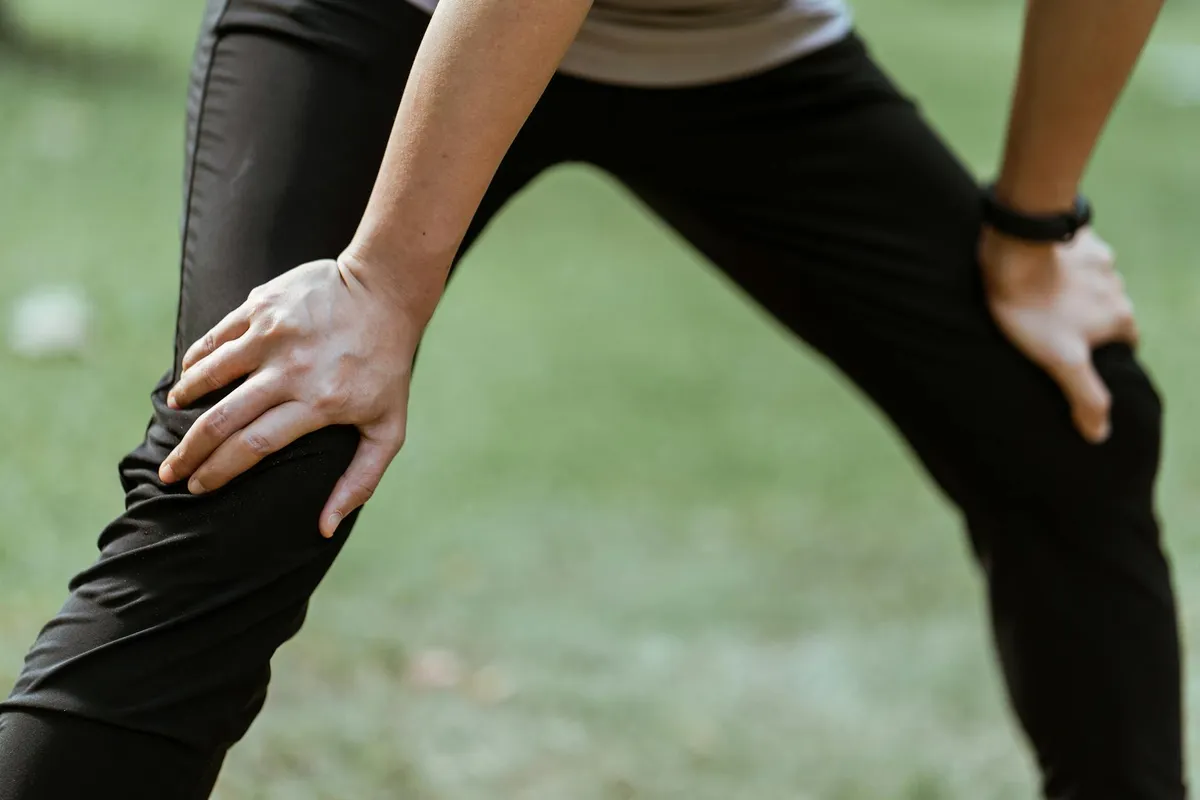
Patellar tendinopathy (commonly called patellar tendinitis or jumper's knee) involves pain and degeneration of the patellar tendon — the structure connecting the kneecap to the tibia. It is characterised by anterior knee pain, typically at the inferior pole of the patella, provoked by loading activities such as jumping, squatting, and stair use. It is common in athletes involved in jumping and running sports, and recovery requires a structured progressive loading programme rather than rest alone.
Could this be you
Patellar tendinitis shows up differently for everyone. Browse by how it tends to be felt — these are common experiences, not a checklist or a diagnosis.
Common experiences people describe — not a diagnostic checklist.
Why it happens
Patellar tendinitis usually comes from a mix of factors rather than a single cause. These are common contributors — not certainties.
Repetitive knee loading may gradually break down patellar tendon fibers, especially in those with quad tightness or weakness.
Sudden spikes in training volume or intensity are a common trigger for tendon overload and symptom onset.
Poor lower-limb biomechanics and hard playing surfaces may increase stress on the patellar tendon over time.
Inadequate sleep may slow tendon recovery, potentially making overuse injuries harder to resolve.
What happens in the body
Patellar tendinitis can involve several of the body’s systems. These are common patterns researchers describe — how they show up varies from person to person.
Repetitive tensile loading may cause microtears in the tendon collagen, leading to a failed healing response where disorganized scar-like tissue accumulates rather than healthy collagen.
Tendon cells may release pro-inflammatory mediators and matrix-degrading enzymes that disrupt the structural integrity of the tendon over time with sustained overload.
In chronic presentations, abnormal nerve and blood vessel growth into the tendon tissue may contribute to the persistent pain signals experienced during loading activities.
Weakness or tightness in the quadriceps may increase mechanical stress transferred through the patellar tendon during movement, potentially accelerating tissue strain and symptom onset.
Process
Management
Eccentric and heavy slow resistance exercises for the quadriceps and patellar tendon may support tissue remodeling and pain reduction over time, and are widely used in sports rehabilitation for this condition.
A doctor may discuss non-steroidal anti-inflammatory medications to help manage acute pain and discomfort, though these are generally considered a short-term measure rather than a solution for tendon recovery.
A qualified sports therapist or physiotherapist can assess biomechanics, guide a structured rehabilitation programme, and address contributing factors such as quad tightness or movement patterns.
In some cases a clinician may discuss corticosteroid injections for short-term relief, or platelet-rich plasma injections, which some practitioners suggest may support tendon healing, though evidence for PRP continues to develop.
Temporarily reducing or restructuring training volume and intensity is a foundational step many sports medicine practitioners recommend to allow the tendon to tolerate load without ongoing aggravation.
Self-Care
Gradually increasing tendon load through exercises like slow squats may support tissue adaptation and recovery over time.
Tight or weak quads place extra demand on the patellar tendon; some practitioners suggest targeted quad work as a key part of self-management.
Avoiding sudden spikes in jump volume or intensity may help reduce flare-ups; some people find training journals useful for spotting overload patterns.
Applying ice for 15 to 20 minutes after activity may support short-term comfort; some people find this helpful alongside their rehabilitation programme.
Temporarily swapping high-impact training for low-impact alternatives like cycling or swimming may allow the tendon to settle without full deconditioning.
The Evidence
What research says about patellar tendinitis, how it develops, and what approaches have the strongest support.
Progressive loading is the most supported approach for patellar tendinitis
Patellar tendinopathy is well-studied, with strong evidence supporting structured progressive loading over passive rest. Understanding the condition's mechanics helps guide realistic, effective recovery expectations.
Progressive loading — particularly heavy slow resistance and isometric exercise — consistently outperforms rest alone in clinical research. Shockwave therapy shows moderate evidence for persistent cases. Load management and biomechanical assessment are widely recommended as important supporting strategies alongside exercise.
Sustained tensile stress may cause disorganised collagen accumulation in the tendon rather than healthy repair. Over time, abnormal nerve and blood vessel growth into the tendon tissue can contribute to persistent pain during loading. Quadriceps weakness or tightness may increase mechanical strain through the tendon, compounding the problem.
Sudden inability to straighten the knee, an audible pop followed by severe swelling, inability to bear weight, or visible tendon deformity are signs that require urgent professional assessment. These may indicate a more serious structural injury that goes beyond typical tendinopathy and needs prompt evaluation.
Prolonged complete rest beyond the acute phase is not supported and may delay recovery by reducing tendon load tolerance. Repeated corticosteroid injections directly into the tendon carry risk of structural weakening and are generally not recommended for ongoing management. A qualified practitioner can help navigate these decisions safely.
Massage and soft tissue work may help address quadriceps tightness contributing to tendon load. Acupuncture has limited but emerging evidence for tendon pain management. Nutritional support for connective tissue health is an area of growing interest, though evidence remains early-stage. None of these replace a progressive loading programme as the primary approach.
A physiotherapist or sports medicine professional can assess load tolerance, identify contributing biomechanical factors, and design a graded return-to-activity plan. Self-managing without guidance risks progressing too quickly or avoiding load entirely — both of which can prolong recovery. Professional assessment is especially important if symptoms are not improving within a few weeks.
Safety first
Patellar tendinitis is manageable, and support helps. Some situations call for prompt professional help.
Explore approaches
Practices people explore for patellar tendinitis — alongside professional care.
FAQ
It typically develops when repetitive stress on the patellar tendon exceeds its capacity to recover. Sudden spikes in training load, hard surfaces, and limited tendon recovery time are common contributing factors.
Some people find that carefully managed, reduced activity is possible during early recovery. Complete rest is generally not recommended, as tendons respond well to appropriate loading guided by a sports therapist.
Some people find soft tissue work, eccentric exercise programs, and targeted sports therapy sessions helpful alongside load management. These approaches may support recovery when combined with structured rehabilitation.
Recovery varies widely depending on severity and how consistently rehabilitation is followed. Many people see meaningful improvement within several weeks, though persistent or advanced cases may take several months.
If pain is limiting daily activity, not improving with rest, or you experience sudden loss of knee extension, seek prompt professional assessment. Imaging may help confirm diagnosis and guide the right rehabilitation approach.
Keep exploring
Browse practitioners, explore honest overviews, and take what you learn to a conversation — at your own pace.