What it is
Combines hands-on therapy and rehab exercises to treat injuries and support performance.
Sports Therapy is a therapeutic discipline that combines manual therapy, stretching, and rehabilitation exercises to treat sports-related...
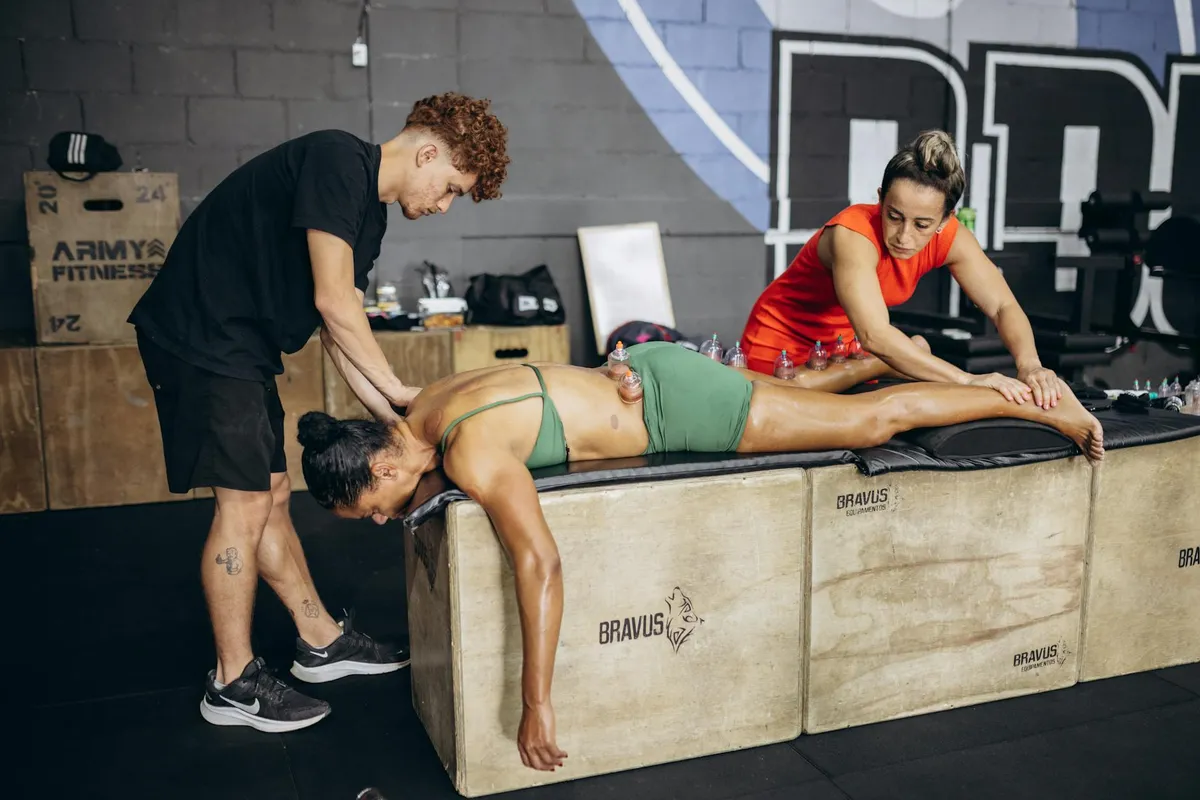
At a glance
What it is
Combines hands-on therapy and rehab exercises to treat injuries and support performance.
Why explore it
Helps you recover from sprains, strains, and overuse injuries while restoring movement and strength.
How it’s experienced
Expect assessment, soft tissue work, guided exercises, and a home program suited to your goals.
Evidence context
Key techniques have solid research support, though results depend on injury type and your consistency.
See the evidence snapshotSafety
Low risk with a qualified therapist, but get medical clearance after surgery or serious injury.
See staying safeHistory & Origin
Sports Therapy offers holistic therapeutic approaches to address sports-related injuries, pain, and promote recovery and performance optimization.
Sports Therapy emerged as a formalized discipline in the late 20th century, evolving from traditional sports medicine and physiotherapy practices. While athletic injury treatment has existed for centuries—ancient Greek physicians documented care for Olympic athletes—modern Sports Therapy developed systematically in the 1980s and 1990s, particularly in the United Kingdom and Australia, as sports participation increased globally and the demand for specialized injury management grew.
The discipline was shaped by key figures in sports medicine and physiotherapy who recognized that athletes required specialized approaches beyond general rehabilitation. Organizations such as the Sports Therapy Organization (established in the UK) helped standardize training, credentials, and best practices. Sports Therapists began integrating evidence from biomechanics, exercise physiology, and manual therapy techniques to create comprehensive treatment protocols.
The profession gained momentum as professional sports teams and athletic organizations hired dedicated Sports Therapists, lending credibility and visibility to the field. Today, Sports Therapy spans across elite athletics, recreational sports, and general fitness populations. The modality has spread internationally, with practitioners now common in sports clubs, private clinics, fitness centers, and rehabilitation facilities worldwide. Modern Sports Therapy continues to evolve, incorporating advances in understanding tissue healing, movement patterns, and performance science.
Mechanism
Sports Therapy is generally framed as a guided process for attention, reflection, learning, and emotional integration. Depending on the method, a practitioner may use conversation, imagery, structured exercises, body awareness, or therapeutic techniques to help the person explore patterns and choices. It should not be presented as a standalone solution or a substitute for urgent care, but it may support self-understanding when practiced within an appropriate scope. Sports Therapy combines manual techniques, targeted exercise prescription, and functional assessment to address musculoskeletal dysfunction underlying sports injuries.
Your first visit
A typical session outline to help you feel prepared
A Sports Therapy session blends hands-on assessment with targeted treatment and movement work to help you recover, perform, and stay active.
Your therapist will review your intake form and ask about your injury, pain levels, sport or activity, and any previous treatment so they can tailor the session to your specific needs.
You'll be asked to move, walk, squat, or perform activity-specific motions while your therapist watches your mechanics, identifies compensation patterns, and pinpoints areas of restriction or weakness.
Your therapist will use palpation to assess muscle tension, joint mobility, and soft tissue quality in the affected area, which may feel tender in spots but helps build a clear picture of what's going on.
Hands-on work gets underway and may include sports massage, myofascial release, joint mobilization, or soft tissue techniques aimed at reducing tension, improving circulation, and restoring range of motion.
Your therapist will guide you through targeted stretches or strengthening exercises specific to your sport or injury, coaching your form in real time to ensure you're activating the right muscles.
Midway or near the end of treatment your therapist will recheck your movement or pain levels to see how your body has responded and adjust the plan if needed.
You'll receive a personalized set of exercises or self-care strategies to do between sessions, often demonstrated and written out so you can confidently continue your progress at home.
Your therapist will discuss what they found, explain what to expect in the days ahead such as mild soreness, and outline a suggested treatment schedule to keep you moving toward your goals.
The Evidence
What research says about Sports Therapy for injury recovery, rehabilitation, and performance — and where the evidence is still developing.
Solid foundations, with gaps in comprehensive outcome data
Core components of Sports Therapy — exercise rehabilitation, manual therapy, and movement correction — have meaningful research support. Comprehensive outcome studies across the full discipline are limited, and evidence quality varies by technique and injury type.
Structured rehabilitation for ankle sprains, muscle strains, and overuse injuries is reasonably well-supported, particularly when exercise protocols are followed consistently. Manual therapy shows mixed results — some techniques have evidence for short-term pain relief and mobility gains, while others lack robust support. Many studies have small sample sizes, limiting broad conclusions.
Sports medicine research supports structured rehabilitation, progressive loading, and movement correction as key factors in recovery and reduced re-injury rates. Sports Therapy draws on these principles. It works best when coordinated with medical providers, particularly following imaging, surgical procedures, or for complex injuries requiring professional assessment.
Outcome measures differ across studies, making direct comparison difficult. The effectiveness of any session depends heavily on the practitioner's training, the specific injury, and how consistently the individual follows prescribed rehabilitation. Comprehensive studies evaluating Sports Therapy as a whole discipline — rather than individual techniques — are limited.
Seek medical evaluation before starting Sports Therapy if you have severe acute pain, visible deformity, significant swelling, inability to bear weight, or a suspected fracture. Those with chronic health conditions, recent surgery, severe osteoporosis, or pregnancy should obtain medical clearance and discuss any necessary modifications with their physician before beginning.
Sports Therapy should not proceed during the acute inflammatory phase of a severe injury without medical clearance. Active infections, undiagnosed pain, and suspected fractures all require professional assessment first. Conditions affecting bone integrity — including certain cancers — also require medical review before any hands-on or exercise-based intervention begins.
Sports Therapy is a formalized discipline with recognized training pathways in countries including the UK and Australia. Look for practitioners registered with a recognized professional body, such as the Sports Therapy Organization. Credentials, scope of practice, and regulatory oversight differ internationally, so verifying qualifications in your region is an important step before beginning care.
Safety first
General guidance to help you decide whether this approach is appropriate for you. This is informational only and not a substitute for medical, psychological, or professional advice.
If you are pregnant, managing a health condition, recovering from injury or surgery, or taking medication, consult a qualified healthcare professional first.
Some situations call for extra care or a different approach. Share any conditions, injuries, or sensitivities with your practitioner before your first session.
Look for clear boundaries, transparent pricing, and practitioners who avoid fear-based claims or pressure to book frequent sessions.
Mild, short-lived effects such as tenderness, tiredness, or temporary soreness can occur. Rest, hydrate, and tell your practitioner how you respond.
For you?
A simple, human way to weigh it up. This is general guidance, not personal medical advice — a qualified practitioner can advise on your situation.
Gyfts is a discovery platform, not a medical provider. Nothing here diagnoses, treats or replaces professional care. In an emergency, contact your local emergency number.
Explore approaches
Other practices people often explore alongside sports therapy.
In their words
FAQ
While there is overlap, Sports Therapy specializes specifically in sports-related injuries and athletic performance, with practitioners trained in sports-specific rehabilitation and movement optimization. Physiotherapy (or physical therapy) is broader and addresses general mobility, pain, and function across diverse conditions and populations. Some practitioners trained in both disciplines integrate approaches. In some regions, qualifications and terminology differ; always verify your practitioner's credentials.
This varies significantly depending on your injury severity, duration, goals, and how well you follow home exercise programs. Acute minor injuries might improve in 4-6 sessions, while chronic conditions or return-to-sport protocols may require 8-12+ sessions over several weeks or months. Your practitioner should provide an estimated timeline after the initial assessment and adjust this as you progress. Consistent home work accelerates recovery.
Some techniques may cause temporary mild discomfort, particularly during the initial assessment or when addressing tight muscles. This is generally manageable and should decrease after treatment. Sharp, acute pain is a warning signal and should be reported immediately. Your practitioner should explain what sensations to expect and can adjust intensity based on your tolerance. Communication about discomfort is essential.
Often yes, but this depends on your specific injury and phase of recovery. Your Sports Therapist will advise on activity modifications—which movements to avoid, which you can safely continue, and how to gradually reintroduce training. This personalized approach balances recovery with maintaining fitness. Following these guidelines is crucial to avoid re-injury.
This depends on your location, insurance coverage, and the nature of your condition. In some regions and with certain insurance plans, a physician referral is required. Even if not required, consulting your doctor about a new injury before Sports Therapy is wise, especially if the cause is unclear or the injury is severe. A Sports Therapist can work alongside your medical care team.
Coverage varies widely by insurance plan, region, and practitioner credentials. Some plans cover Sports Therapy if referred by a physician or if the practitioner holds specific qualifications. Others don't cover complementary therapies. Check your policy and ask the practitioner about billing options. Many practitioners offer direct payment options if insurance doesn't cover services.
Sports massage is one technique that may be used within a Sports Therapy session, focusing on muscle tension relief. Sports Therapy is broader, incorporating assessment, diagnosis of movement dysfunction, manual therapy, therapeutic exercise, and rehabilitation protocols to address underlying causes of injury and restore full function. A Sports Therapist uses massage as part of a comprehensive treatment plan rather than as the sole intervention.
Yes. Sports Therapists can identify biomechanical imbalances, movement pattern dysfunction, and areas of weakness that increase injury risk. Through targeted exercises, flexibility work, and movement education, they help correct these issues. Preventive Sports Therapy is particularly valuable for athletes with previous injuries, those returning to sport after recovery, and anyone seeking to optimize performance safely.
References
Educational sources that inform this overview. Inclusion is for context and does not imply endorsement.
Full citations are maintained by the Gyfts editorial team and reviewed periodically.
Keep exploring
Browse practitioners, explore honest overviews, and take what you learn to a conversation — at your own pace.