What it is
Your own blood is withdrawn, sometimes enriched with ozone, then reinjected to support immunity.
Your own blood as medicine — the German tradition of immune self-regulation.
At a glance
What it is
Your own blood is withdrawn, sometimes enriched with ozone, then reinjected to support immunity.
Why explore it
Some naturopathic practitioners use it for immune and allergy support, so it's worth knowing about.
How it’s experienced
A licensed provider draws blood, may add ozone, then reinjects it; sessions are short with mild soreness.
Evidence context
Research is limited and no major medical body endorses autohemotherapy for any condition yet.
See the evidence snapshotSafety
This invasive procedure carries infection risks and is restricted in many areas, so vet your provider carefully.
See staying safeHistory & Origin
Autohemotherapy (Eigenbluttherapie) is an injection-based immune modulation technique using the patient''s own blood, reintroduced to stimulate a non-specific immune response.
Autohemotherapy has roots in early 20th-century European medicine. The practice of reinjecting the patient''s own blood was documented as early as 1913 by Gruber. It became a standard complementary procedure in German naturopathic medicine (Heilpraktiker practice) and was widely used by German physicians through the mid-20th century. Ozone autohemotherapy was developed in the 1950s–1960s, primarily in Germany and Italy. The technique remains mainstream in German Heilpraktiker practice and is used by some physicians in Austria, Switzerland, and Latin American countries. It has been largely abandoned in mainstream English-speaking medicine due to lack of controlled evidence and regulatory concerns. The German Society for Ozone/Oxygen Therapy maintains clinical guidelines for ozone-based variants.
Mechanism
Autohemotherapy is generally framed as a guided process for attention, reflection, learning, and emotional integration. Depending on the method, a practitioner may use conversation, imagery, structured exercises, body awareness, or therapeutic techniques to help the person explore patterns and choices. It should not be presented as a standalone solution or a substitute for urgent care, but it may support self-understanding when practiced within an appropriate scope. A small volume (2–10ml) of venous blood is drawn and immediately reinjected intramuscularly (usually into the gluteal muscle).
Your first visit
A typical session outline to help you feel prepared
A short medical appointment where a small amount of your own blood is drawn and reinjected into muscle, typically taking 15–30 minutes from start to finish.
Your provider will go over your health history, current symptoms, and goals for the session to make sure autohemotherapy is appropriate for you that day.
You'll be seated or lying on a treatment table while the provider prepares a sterile field, laying out a syringe, needle, and collection equipment in a clean, organized setup.
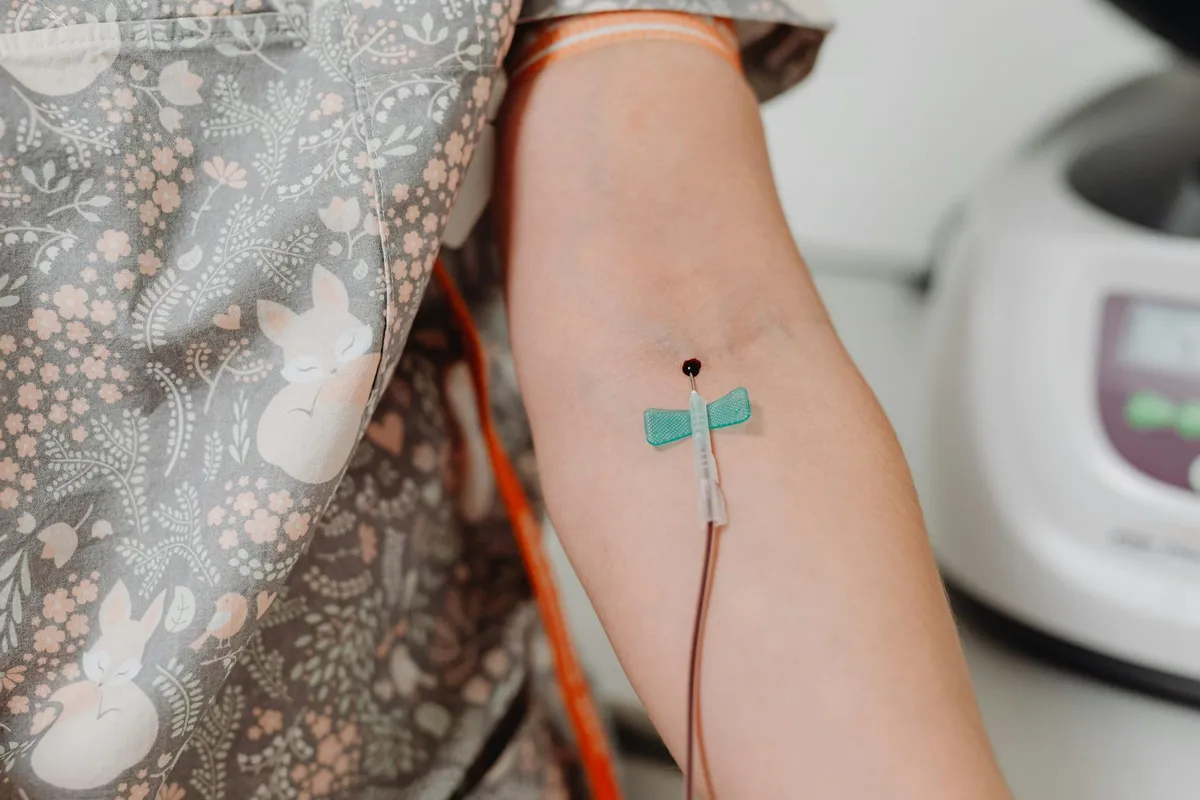
A small amount of your own venous blood, usually 2–10ml, is drawn from a vein in your arm just like a standard blood test. You may feel a brief pinch as the needle is inserted.
If you're receiving ozone autohemotherapy, your drawn blood is mixed with a precise amount of medical ozone inside a closed, sterile system before any reinjection takes place.
Your provider injects the blood into a muscle, typically the upper buttock or shoulder area. You may feel mild pressure or a brief stinging sensation at the injection site.
Your provider will check in with you for a few minutes after the injection, watching for any immediate reactions and making sure you feel comfortable before you get up.
You'll be advised that mild soreness at the injection site is normal for a day or two, and occasionally a brief low-grade fever response may occur as your body responds to the treatment.
Sessions are typically recommended 1–2 times per week over a course of 6–12 visits, so before you leave you'll usually book your next appointment to keep the schedule consistent.
The Evidence
What the research shows, where the gaps are, and what to consider before exploring this invasive complementary procedure.
Plausible mechanism, insufficient trial evidence, notable safety considerations
Autohemotherapy has a long history in German naturopathic practice, but systematic reviews have found the evidence base insufficient to support clinical recommendations. The ozone variant has more published research, though still without robust controlled trial support.
Observational studies and case reports document immune parameter changes, but adequately powered controlled trials are lacking. Ozone autohemotherapy has been studied for peripheral arterial disease and chronic hepatitis in European journals, yet systematic reviews conclude the evidence remains insufficient for clinical recommendations. The proposed immune stimulation mechanism is biologically plausible but unconfirmed.
Injection site reactions, soreness, and fever responses are reported. Improper sterile technique carries infection risk. Ozone variants require specialised equipment. The procedure is restricted or prohibited in many countries outside German-speaking regions. It should only be performed by appropriately licensed practitioners where legally permitted.
Documented from 1913, the technique became standard in German Heilpraktiker practice and was widely used by physicians through the mid-20th century. Ozone variants developed in Germany and Italy from the 1950s onward. The practice remains active in German-speaking countries and parts of Latin America, but has largely been set aside in mainstream English-speaking medicine.
As a complementary modality, it is typically used alongside conventional care rather than instead of it. Given the limited evidence and elevated procedural risk, individuals considering autohemotherapy should discuss it openly with their primary healthcare provider before proceeding, particularly if managing an existing health condition.
In Germany and Austria, Heilpraktiker and some physicians offer autohemotherapy within regulated frameworks. In many other countries it is restricted or unregulated. Prospective recipients should verify the legal status in their jurisdiction, confirm practitioner credentials, and ensure clinical-grade sterile technique is used. Inflated outcome claims from practitioners should be treated with caution.
The evidence base does not support using autohemotherapy as a primary intervention for any condition. It is not a substitute for professional assessment, and individuals with chronic, undiagnosed, or worsening symptoms should seek qualified medical evaluation first. Gyfts presents this information for educational awareness only.
Safety first
General guidance to help you decide whether this approach is appropriate for you. This is informational only and not a substitute for medical, psychological, or professional advice.
Mild, short-lived effects such as tenderness, tiredness, or temporary soreness can occur. Rest, hydrate, and tell your practitioner how you respond.
If you are pregnant, managing a health condition, recovering from injury or surgery, or taking medication, consult a qualified healthcare professional first.
Some situations call for extra care or a different approach. Share any conditions, injuries, or sensitivities with your practitioner before your first session.
Look for clear boundaries, transparent pricing, and practitioners who avoid fear-based claims or pressure to book frequent sessions.
For you?
A simple, human way to weigh it up. This is general guidance, not personal medical advice — a qualified practitioner can advise on your situation.
Gyfts is a discovery platform, not a medical provider. Nothing here diagnoses, treats or replaces professional care. In an emergency, contact your local emergency number.
Explore approaches
Other practices people often explore alongside autohemotherapy.
In their words
FAQ
In Germany and some other European countries, yes — when performed by licensed physicians or Heilpraktiker. It is restricted or prohibited in many other jurisdictions including parts of the US, UK, and Australia. Check local regulations.
Evidence is very limited. Some German observational studies and a small number of ozone autohemotherapy trials exist. Systematic reviews find insufficient evidence for clinical recommendations.
Risks include injection site reactions, fever, and infection from blood handling. It requires sterile technique and medical training. Only undergo treatment from appropriately licensed practitioners.
A variant where drawn blood is mixed with medical-grade ozone in a closed system before reinjection. It is the most studied variant and has a somewhat stronger (though still limited) evidence base than basic autohemotherapy.
References
Educational sources that inform this overview. Inclusion is for context and does not imply endorsement.
Full citations are maintained by the Gyfts editorial team and reviewed periodically.
Keep exploring
Browse practitioners, explore honest overviews, and take what you learn to a conversation — at your own pace.