What it is
A German injection therapy using procaine at key body sites to ease chronic pain.
Resetting the body''s electrical network — targeted injections for chronic pain resolution.
At a glance
What it is
A German injection therapy using procaine at key body sites to ease chronic pain.
Why explore it
It may help chronic pain and nervous system balance by targeting so-called interference fields.
How it’s experienced
A doctor injects procaine at specific sites; some patients feel an instant, dramatic symptom shift.
Evidence context
Research is very limited, and the core theory hasn't been scientifically validated yet.
See the evidence snapshotSafety
Invasive injections carry real risks, so always choose a certified medical doctor for this therapy.
See staying safeHistory & Origin
Neural Therapy (Neuraltherapie nach Huneke) is an injection-based therapeutic approach using local anaesthetics at specific body sites to reset autonomic nervous system regulation and resolve chronic pain conditions.
Neural Therapy was developed by German physicians Ferdinand and Walter Huneke in the 1920s. Ferdinand Huneke discovered in 1925 that intravenous procaine resolved his sister''s migraine. In 1940, Walter Huneke observed the ''Sekundenphänomen'' (seconds phenomenon) — instant resolution of a frozen shoulder following injection of an old leg scar — establishing the interference field concept. The method became a central modality in German complementary medicine, practised by both physicians and Heilpraktiker. It is taught in German medical schools as an elective and is covered by some German health insurance plans. The International Society for Neural Therapy (IGNH) maintains standards and training programmes. Neural Therapy is practised across German-speaking countries, Latin America (where it is mainstream in several countries), and increasingly in integrative medicine settings worldwide.
Mechanism
Neural Therapy is generally framed as a guided process for attention, reflection, learning, and emotional integration. Depending on the method, a practitioner may use conversation, imagery, structured exercises, body awareness, or therapeutic techniques to help the person explore patterns and choices. It should not be presented as a standalone solution or a substitute for urgent care, but it may support self-understanding when practiced within an appropriate scope. The theory proposes that scars, dental foci, and sites of previous trauma can create ''interference fields'' (Störfelder) that disrupt the body''s autonomic regulatory network, causing symptoms distant from the original site.
Your first visit
A typical session outline to help you feel prepared
A Neural Therapy session combines a focused health history with precise procaine injections at key sites to help restore your body's natural electrical flow and support its own healing process.
Your practitioner begins by asking detailed questions about your past surgeries, scars, dental work, injuries, and illnesses, since any of these can create interference fields that disrupt the nervous system.
Together you map out potential problem sites on your body, which might include an old appendix scar, a root canal, or a childhood injury — even something that happened decades ago and seemed fully healed.
The practitioner cleanses the identified areas with an antiseptic solution using sterile technique, and fresh single-use needles are prepared, so you can feel confident about safety at every step.
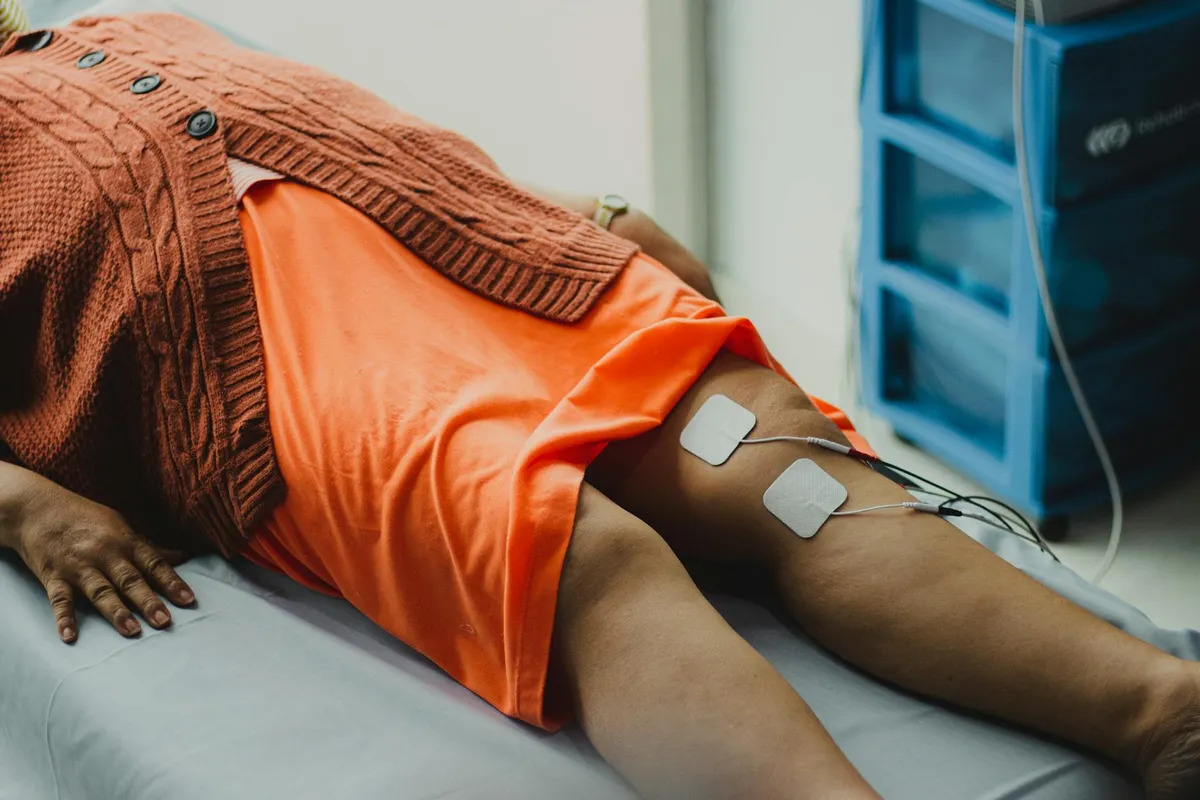
Using a very fine needle, your doctor injects a small amount of procaine — a local anesthetic — just under the skin at each interference field site, which typically causes only a brief, mild sting las
After each injection, your practitioner pauses and checks in with you, watching for a sudden and dramatic shift in symptoms that sometimes occurs within seconds, known as the Huneke phenomenon.
Whether or not an immediate response occurs, you and your practitioner talk through any sensations, changes in pain, warmth, or relaxation you notice as the procaine takes effect over the next several minutes.
The session wraps up in 15 to 30 minutes total, and you are encouraged to rest quietly for a few moments before getting up, since some people feel a pleasant wave of relaxation or mild light-headedness.
Your practitioner discusses what you may experience over the next day or two, including possible temporary soreness at injection sites, and outlines a typical course of 3 to 10 weekly sessions for cumulative support.
The Evidence
What the research says about Neural Therapy, where the evidence is strong, and where important gaps remain.
Established in German medicine, but lacking large controlled trials
Neural Therapy has a long clinical history in German-speaking countries and Latin America, with documented pharmacological effects for procaine. However, its core theoretical concepts — interference fields and the Huneke phenomenon — have not been validated in large-scale controlled research.
Case series and observational studies, primarily in German-language journals, document positive outcomes for chronic and scar-related pain. Procaine's local anaesthetic, vasodilating, and anti-inflammatory properties are well-documented in conventional medicine. The interference field concept and Huneke phenomenon lack controlled trial evidence. No large-scale RCTs have been published in English-language literature.
The method is taught as an elective in German medical schools and is covered by some German health insurance plans. The International Society for Neural Therapy (IGNH) maintains training standards. This institutional recognition reflects a level of professional validation that goes beyond its current trial evidence base, particularly within German-speaking and Latin American healthcare contexts.
Ferdinand Huneke discovered in 1925 that intravenous procaine resolved his sister's migraine. In 1940, Walter Huneke observed instant resolution of a frozen shoulder after injecting an old leg scar — establishing the interference field concept. The method became central to German complementary medicine and is now practised across German-speaking countries, Latin America, and integrative settings worldwide.
Injection risks include haematoma, infection, allergic reaction, and — for stellate ganglion injections — pneumothorax. Procaine allergy must be excluded before treatment. Patients on anticoagulants should disclose this before any session. The procedure should only be performed by qualified physicians or certified Heilpraktiker with injection training. Outside German-speaking countries, it typically falls within medical practice scope only.
The interference field concept — that scars or dental foci cause distant symptoms via autonomic disruption — is a theoretical framework without controlled scientific validation. The Huneke phenomenon, while clinically reported, has not been studied under rigorous conditions. Available evidence relies heavily on case series and observational data, making it difficult to separate specific treatment effects from non-specific or placebo responses.
Seek a practitioner with formal medical or Heilpraktiker training and documented injection certification. In many countries outside German-speaking regions, Neural Therapy is restricted to licensed physicians. Ask about their training, experience with the specific injection sites relevant to your situation, and their approach to screening for contraindications. Neural Therapy is not a substitute for professional assessment of underlying conditions.
Safety first
General guidance to help you decide whether this approach is appropriate for you. This is informational only and not a substitute for medical, psychological, or professional advice.
Some situations call for extra care or a different approach. Share any conditions, injuries, or sensitivities with your practitioner before your first session.
If you are pregnant, managing a health condition, recovering from injury or surgery, or taking medication, consult a qualified healthcare professional first.
Look for clear boundaries, transparent pricing, and practitioners who avoid fear-based claims or pressure to book frequent sessions.
Mild, short-lived effects such as tenderness, tiredness, or temporary soreness can occur. Rest, hydrate, and tell your practitioner how you respond.
For you?
A simple, human way to weigh it up. This is general guidance, not personal medical advice — a qualified practitioner can advise on your situation.
Gyfts is a discovery platform, not a medical provider. Nothing here diagnoses, treats or replaces professional care. In an emergency, contact your local emergency number.
Explore approaches
Other practices people often explore alongside neural therapy.
In their words
FAQ
Yes — it is an injection-based treatment. A physician injects small amounts of local anaesthetic (procaine) into specific sites using fine needles. Brief stinging at the injection site is normal.
When performed by a trained physician, it is generally safe. Rare complications include bruising, infection, and allergic reactions. Procaine allergy must be excluded beforehand. Stellate ganglion injections carry specific risks and require experienced practitioners.
In Neural Therapy theory, a scar, dental site, or area of previous trauma that disrupts the body''s autonomic regulatory network, causing symptoms distant from the original site. This concept is not scientifically validated but is central to the method.
In most jurisdictions, it requires a medical licence due to the injection component. In Germany, appropriately trained Heilpraktiker may also perform it. Always verify practitioner credentials.
In Germany, some statutory and private health insurance plans cover Neural Therapy. Coverage outside Germany varies. Check with your specific insurer.
References
Educational sources that inform this overview. Inclusion is for context and does not imply endorsement.
Full citations are maintained by the Gyfts editorial team and reviewed periodically.
Keep exploring
Browse practitioners, explore honest overviews, and take what you learn to a conversation — at your own pace.