What it is
BSR uses feather-light touch to help your nervous system release stored tension patterns.
Body Stress Release (BSR) is a gentle hands-on technique that uses light pressure to identify and release areas of muscular and nervous t...
At a glance
What it is
BSR uses feather-light touch to help your nervous system release stored tension patterns.
Why explore it
It may gently ease chronic back pain, migraines, and stress-held tension alongside regular care.
How it’s experienced
You lie clothed while a practitioner applies light pressure and reads your body's subtle responses.
Evidence context
Evidence is limited to small studies, so weigh any claims carefully with your medical provider.
See the evidence snapshotSafety
Generally low-risk, but skip near fractures or surgery sites and tell your doctor beforehand.
See staying safeHistory & Origin
Body Stress Release uses gentle movements to release stored tension and promote recovery.
Body Stress Release was developed in South Africa in the 1980s by Ewald Kliemt and Gail Meggersee. The technique emerged from their understanding that stress, both physical and emotional, becomes stored in the body as areas of tension that can interfere with normal healing and function. They observed that gentle, specific pressure applied to these tension points could help the body release stored stress and restore its natural balance.
The founders based their approach on the principle that the body has an innate ability to heal itself when restrictions are removed. They developed a systematic method for identifying areas of tension through gentle pressure and specific testing procedures. The technique draws from concepts in chiropractic care, osteopathy, and stress physiology, but uses much lighter pressure than traditional manual therapies.
BSR spread from South Africa to other countries including the United Kingdom, Australia, and parts of Europe through training programs and practitioner networks. The technique has evolved to include specific protocols for different age groups, including adaptations for babies, children, and elderly clients. Today, BSR is practiced worldwide, though it remains less widely known than some other manual therapies.
Mechanism
Body Stress Release is generally described as working through skilled touch, careful pacing, and the body's response to pressure, movement, warmth, or stillness. Practitioners may focus on muscle tone, joint comfort, circulation, breath, or relaxation depending on the method. Traditional explanations may also include energy flow or whole-person balance. Research support varies by modality, so the experience is best framed as supportive care with outcomes that vary. A practitioner conducts a physical assessment, identifying areas where stress and tension are held in muscles and the nervous system through gentle palpation and movement testing.
Your first visit
A typical session outline to help you feel prepared
A fully clothed, hands-on session using precise feather-light finger pressure to locate and release tension stored in your body's muscles and nerves.
Your practitioner begins by chatting through your health history, current concerns, and lifestyle. This helps them understand what stress patterns your body may be holding before any hands-on work begins.
You stand upright while your practitioner observes your posture from different angles, looking for subtle asymmetries that can reveal where body stress has accumulated along the spine and limbs.
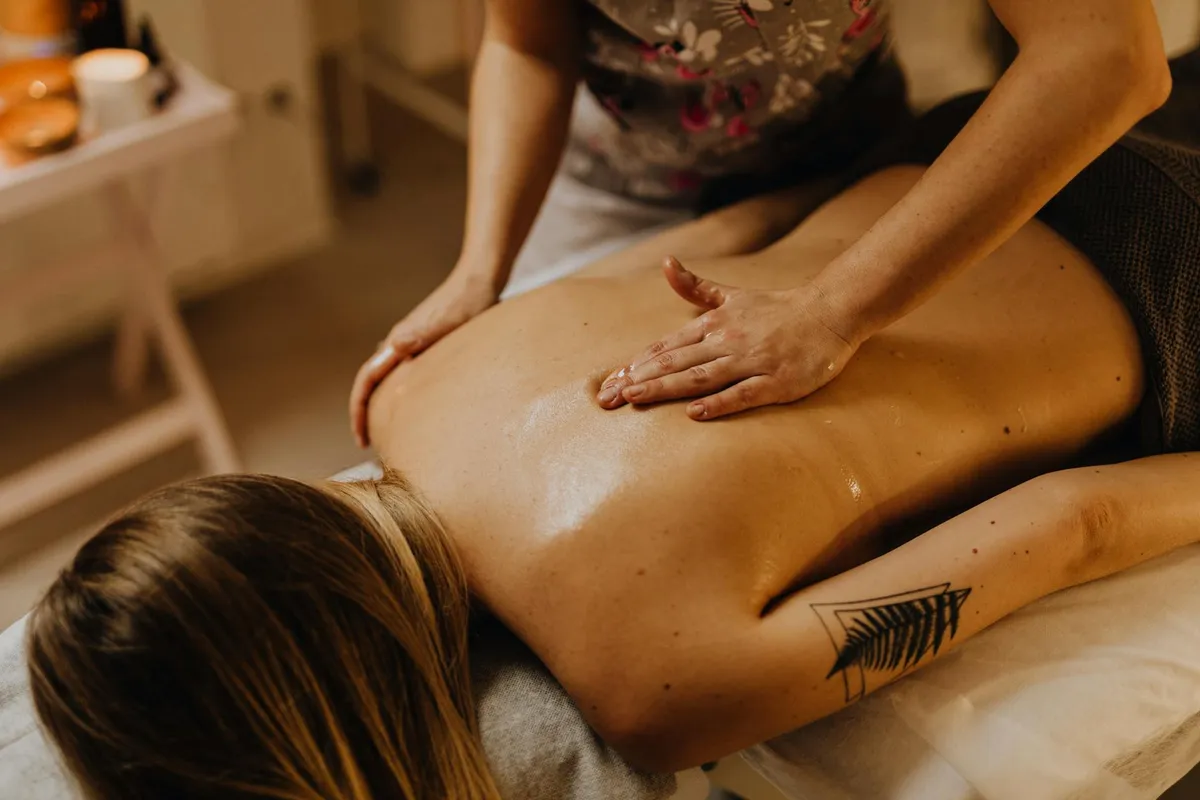
You remain fully clothed and remove only your shoes before lying face-down on a padded massage table. No oils or equipment are used, so comfortable, loose clothing works best.
Your practitioner applies very light finger pressure to specific test points along your spine, pelvis, and limbs. Your body's subtle muscular response guides them to the exact sites where stress is locked in.
Using only the lightest fingertip pressure at precise angles, your practitioner works through each identified stress site. You may feel gentle warmth, a mild tingling, or simply a sense of something quietly letting go.
You will be gently asked to turn onto your back or side partway through so your practitioner can address stress stored in the front of the body, neck, and limbs with the same light-touch technique.
After the hands-on work, you rest on the table for a few quiet moments. Many people feel deeply relaxed, a little dreamy, or notice an unexpected sense of lightness through the spine.
Before you leave, your practitioner shares simple aftercare tips such as drinking water and resting if needed. They explain that your body continues releasing and integrating the work over the following days.
The Evidence
What the research does and does not tell us about this gentle manual therapy approach.
Promising in principle, but formal research is sparse
Body Stress Release has a small evidence base, drawing mainly from case reports and practitioner observation. Light-touch manual therapies show some support for stress and tension relief, but large, well-designed trials on BSR specifically do not yet exist.
No large-scale randomised controlled trials have examined BSR directly. Most available support comes from case reports, practitioner accounts, and studies on related light-touch therapies. This does not mean BSR is ineffective, but it does mean confident conclusions about its effects cannot yet be drawn from formal research.
As an Alternative approach, BSR operates outside conventional medical systems and has not been integrated into standard clinical pathways. It may be used alongside conventional care, but it is not a substitute for professional assessment of pain, injury, or unexplained symptoms.
The founders drew on concepts from chiropractic care, osteopathy, and stress physiology, proposing that physical and emotional stress becomes stored as muscular tension that gentle pressure can help release. These theoretical foundations are plausible but have not been independently validated through controlled research.
Research into light-touch therapies more broadly has shown modest signals for reduced muscle tension, improved sleep, and stress management support. However, study sizes are typically small and methods vary, limiting how far these findings can be applied to BSR specifically.
People with recent surgery, acute illness, unexplained symptoms, or chronic medical conditions should consult a healthcare provider before starting BSR. Pregnant individuals should seek practitioner advice. Some people notice temporary shifts in energy or symptoms after sessions; communicate any concerns to your practitioner promptly.
Without rigorous trials, it is not possible to confirm how effective BSR is, for whom, or under what conditions. Inflated outcome claims from any source should be viewed critically. BSR is best understood as a low-risk complementary option for relaxation and tension support, not a standalone response to serious health concerns.
Safety first
General guidance to help you decide whether this approach is appropriate for you. This is informational only and not a substitute for medical, psychological, or professional advice.
If you are pregnant, managing a health condition, recovering from injury or surgery, or taking medication, consult a qualified healthcare professional first.
Some situations call for extra care or a different approach. Share any conditions, injuries, or sensitivities with your practitioner before your first session.
Look for clear boundaries, transparent pricing, and practitioners who avoid fear-based claims or pressure to book frequent sessions.
Mild, short-lived effects such as tenderness, tiredness, or temporary soreness can occur. Rest, hydrate, and tell your practitioner how you respond.
For you?
A simple, human way to weigh it up. This is general guidance, not personal medical advice — a qualified practitioner can advise on your situation.
Gyfts is a discovery platform, not a medical provider. Nothing here diagnoses, treats or replaces professional care. In an emergency, contact your local emergency number.
Explore approaches
Other practices people often explore alongside body stress release.
In their words
FAQ
A BSR session involves lying fully clothed on a treatment table while the practitioner uses very light finger pressure to identify and release areas of tension throughout your body. The pressure is extremely gentle - often described as no more than the weight of a coin. Sessions typically last 45-60 minutes and include discussion of your health concerns and guidance on supporting your healing process.
The number of sessions varies greatly depending on individual needs, how long tension has been building up, and your body's response to treatment. Some people notice improvements after just one session, while others benefit from a series of treatments over several weeks or months. Your practitioner will discuss a treatment plan based on your specific situation and adjust it as you progress.
Yes, BSR is generally very safe for all ages due to its gentle nature. Special techniques and protocols have been developed for babies, children, and elderly clients. The light pressure used makes it suitable even for those who might be too fragile for other types of manual therapy.
BSR uses much lighter pressure than massage and focuses specifically on releasing stored tension points rather than manipulating muscles or joints. Unlike chiropractic adjustments, BSR doesn't involve any forceful movements or joint manipulation. The approach is more about facilitating the body's own healing process through gentle, sustained pressure.
Body Stress Release (BSR) is a gentle, non-manipulative technique developed in South Africa that works with the nervous system's own reflexes to release stored tension. Unlike massage, which applies pressure to muscles directly, or chiropractic, which adjusts joints, BSR uses light pressure at specific points along the spine and body to stimulate the nervous system's ability to release accumulated stress. The practitioner works with the body's feedback responses rather than applying force. It is particularly used for chronic pain, headaches, and stress-related tension.
References
Educational sources that inform this overview. Inclusion is for context and does not imply endorsement.
Full citations are maintained by the Gyfts editorial team and reviewed periodically.
Keep exploring
Browse practitioners, explore honest overviews, and take what you learn to a conversation — at your own pace.