What it is
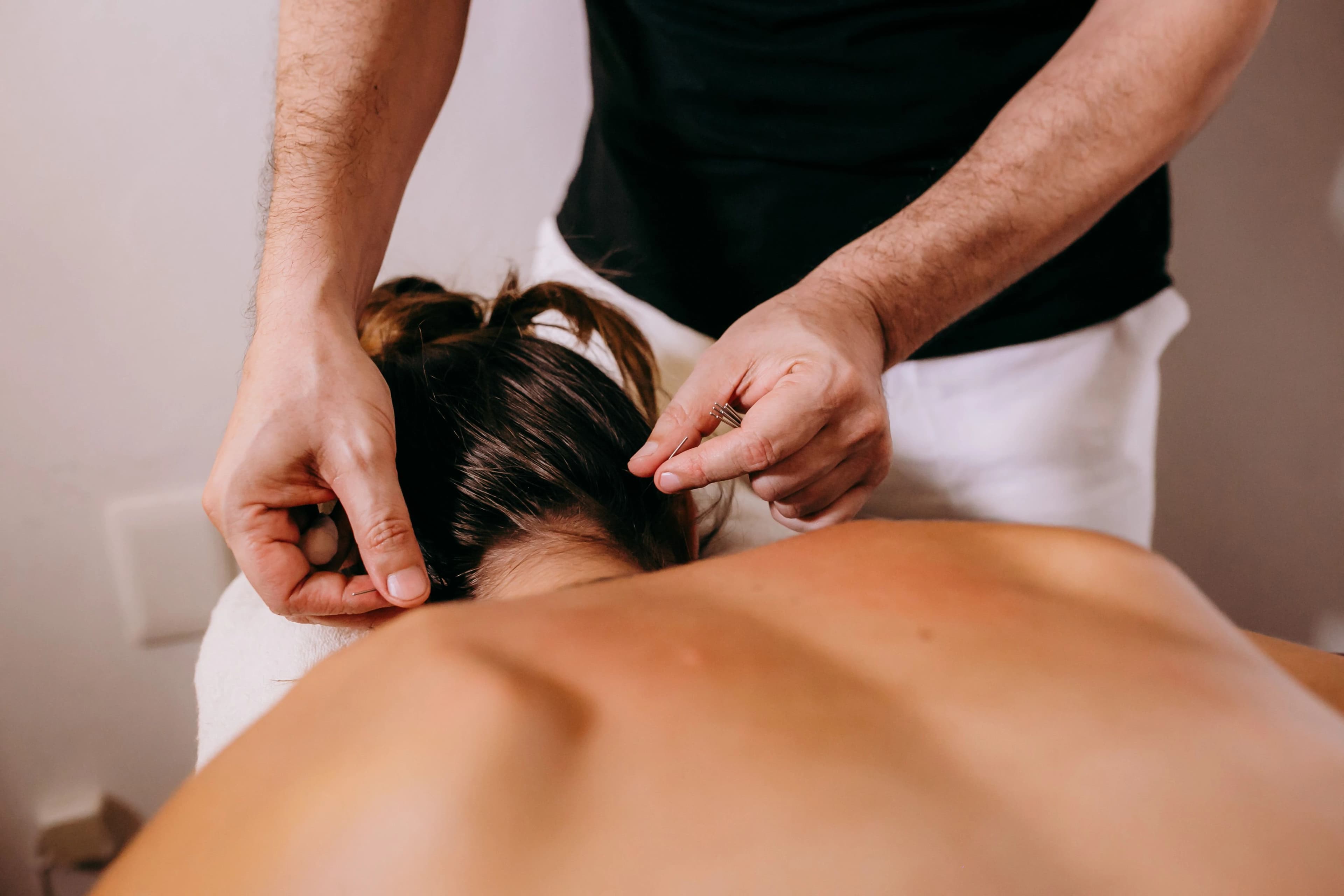
A Western technique using thin needles on muscle trigger points to ease pain and tension.
Targeted needle therapy for muscle pain relief
At a glance
What it is
A Western technique using thin needles on muscle trigger points to ease pain and tension.
Why explore it
It may help relieve neck tension, back pain, and sports injuries, especially alongside physical therapy.
How it’s experienced
A clinician inserts fine needles into tight muscles; you may feel a brief twitch during a 20–40 min session.
Evidence context
Research shows promising short-term pain relief, especially when dry needling is combined with other therapies.
See the evidence snapshotSafety
Low-risk with a credentialed provider; confirm your state's requirements and expect mild soreness afterward.
See staying safeHistory & Origin
Dry needling is a modern clinical technique performed by trained healthcare practitioners — most commonly physical therapists, chiropractors, and sports medicine physicians — that involves inserting thin, solid filiform needles into specific points in muscle tissue. Unlike acupuncture, which is rooted in traditional Chinese medicine and guided by concepts of energy flow, dry needling is primarily grounded in Western anatomical and neurophysiological principles. The primary targets are areas of muscle dysfunction often referred to as myofascial trigger points — localized, hyperirritable spots within taut bands of skeletal muscle that may be associated with local and referred pain patterns.
The term 'dry' refers to the absence of any injected substance; the needle itself is the therapeutic tool. Practitioners use the needle to mechanically stimulate trigger points or surrounding tissue, which some practitioners suggest may help release muscle tension, reduce local pain sensitivity, and support improved movement patterns. It is typically offered as one component of a broader rehabilitation or pain management plan rather than as a standalone treatment.
Dry needling has grown in popularity across sports medicine, orthopedic rehabilitation, and chronic pain management settings over the past two decades. While it shares superficial similarities with acupuncture — and the two are sometimes confused by patients — dry needling is a distinct practice with different training pathways, theoretical frameworks, and regulatory considerations. The scope of practice for dry needling varies significantly by U.S. state, so it is important to verify practitioner credentials and local regulations before seeking treatment.
The conceptual roots of dry needling can be traced to the mid-twentieth century, when physicians began investigating the role of trigger points in musculoskeletal pain. Researchers noted that injecting saline or anesthetic into painful muscle knots could provide relief — but so could inserting a needle without any injectate at all. This observation gave rise to the term 'dry needling,' distinguishing the technique from traditional injection-based treatments.
The trigger point model was significantly advanced through the work of medical researchers in the latter half of the 20th century who mapped patterns of referred pain originating from specific muscle sites. These concepts informed the development of dry needling as a clinical intervention distinct from acupuncture, despite both practices using similar needle types.
Over the following decades, dry needling gained traction primarily in physical therapy and sports medicine communities, particularly in the United States, Australia, and parts of Europe. Its integration into rehabilitation settings accelerated through the 1990s and 2000s as training programs formalized and research output grew. Today it is practiced across multiple healthcare disciplines, though its regulatory status — including which professions may legally perform it — continues to vary by jurisdiction.
Mechanism
Dry needling works by targeting areas of muscle dysfunction through precise needle insertion, with several proposed mechanisms that may contribute to its effects.
Your first visit
A typical session outline to help you feel prepared
A dry needling session uses thin sterile needles inserted into tight muscle spots to help release tension and support your body's natural recovery process.
Your practitioner will greet you and review a health history form covering any medications, injuries, or conditions that could affect your session. This is a great time to share your concerns and ask questions.
You'll be asked to move in specific ways — like rotating your neck or lifting your arm — so your practitioner can pinpoint where muscle tension or restricted movement is showing up. This guides exactl
You'll lie on a treatment table and expose only the area being worked on, such as your upper back or calf. Loose, comfortable clothing makes this easier, and your practitioner will keep you draped for privacy throughout.
Your practitioner will press gently along the muscle to find tight knots called trigger points. You may notice some spots feel tender or refer a dull ache elsewhere — that's a sign they've found the right area.
Thin, sterile single-use needles are inserted directly into the trigger points. The initial insertion is usually barely felt, but you may notice a brief local twitch or a deep, cramping sensation, whi
The needles typically stay in for anywhere from 10 to 30 seconds up to a few minutes depending on your needs. Your practitioner may gently move them to encourage a further muscle response during this time.
All needles are carefully removed and safely disposed of. Your practitioner will check in on how you're feeling and may retest your movement to compare how your body has responded to the treatment.
Expect some muscle soreness similar to a post-workout ache for a day or two — this is normal and usually fades quickly. Your practitioner will suggest staying hydrated, gentle movement, and any stretc
The Evidence
What the research currently says about dry needling, its limitations, and how it fits into broader musculoskeletal care.
Promising short-term results, with methodological caveats
Dry needling has a meaningful body of research supporting short-term pain relief and improved muscle function, particularly for myofascial conditions. Evidence quality is moderate — study designs vary and long-term outcomes remain less well understood.
Multiple peer-reviewed studies suggest dry needling may reduce pain intensity and improve pressure pain threshold in people with myofascial and musculoskeletal conditions. Some evidence also supports improvements in range of motion when combined with other therapies. Effects appear most consistent in the short term; longer-term outcomes are less well characterized.
Needle-based research is inherently hard to blind, making it difficult to fully separate therapeutic effects from placebo responses. Trial populations, needle placement protocols, and outcome measures vary widely, limiting direct comparisons across studies. Optimal session frequency and placement are still being investigated.
In practice, dry needling is most commonly integrated into broader rehabilitation programs that may include exercise, manual therapy, and patient education. It is not positioned as a standalone solution. Practitioners generally assess whether it is appropriate based on individual presentation, and it is not a substitute for professional assessment of underlying conditions.
Common side effects include temporary local soreness, minor bruising, and occasional lightheadedness. Rare but serious risks — such as pneumothorax near the chest — highlight the importance of proper training. Scope-of-practice regulations vary by region; confirm your provider is credentialed to perform dry needling. Disclose all health conditions and medications before treatment.
Dry needling is typically performed by physical therapists, chiropractors, or sports medicine physicians with specific post-graduate training. Licensing requirements differ by country and region. Ask about your provider's training, credentials, and experience with your specific concern before beginning. A thorough intake assessment should always precede treatment.
As a complementary modality, dry needling is most effective when part of a coordinated care plan. It does not replace medical assessment, rehabilitation exercise, or other recommended interventions. Discussing its role with your primary healthcare provider helps ensure it supports — rather than substitutes for — your broader health strategy.
Safety first
General guidance to help you decide whether this approach is appropriate for you. This is informational only and not a substitute for medical, psychological, or professional advice.
If you are pregnant, managing a health condition, recovering from injury or surgery, or taking medication, consult a qualified healthcare professional first.
Mild, short-lived effects such as tenderness, tiredness, or temporary soreness can occur. Rest, hydrate, and tell your practitioner how you respond.
Some situations call for extra care or a different approach. Share any conditions, injuries, or sensitivities with your practitioner before your first session.
Look for clear boundaries, transparent pricing, and practitioners who avoid fear-based claims or pressure to book frequent sessions.
For you?
A simple, human way to weigh it up. This is general guidance, not personal medical advice — a qualified practitioner can advise on your situation.
Gyfts is a discovery platform, not a medical provider. Nothing here diagnoses, treats or replaces professional care. In an emergency, contact your local emergency number.
Explore approaches
Other practices people often explore alongside dry needling.
In their words
Before you book
FAQ
Dry needling and acupuncture both use thin filiform needles, but they are distinct practices with different theoretical foundations and training requirements. Acupuncture is rooted in traditional Chinese medicine and focuses on energy pathways, while dry needling is based on Western anatomical and neurophysiological principles targeting muscle trigger points. Practitioners, regulatory requirements, and treatment goals differ between the two.
Sensations during dry needling vary between individuals and treatment sites. Many people experience a brief twitch response or a dull aching sensation when the needle reaches a trigger point, which some describe as a deep pressure feeling. Temporary post-session soreness in the treated area is common and typically resolves within one to two days.
The number of sessions varies depending on the individual, the condition being addressed, and how the body responds to treatment. Some practitioners suggest that noticeable changes may occur within two to four sessions, while others may benefit from a longer course integrated into a broader rehabilitation program. Your provider can offer a more personalized recommendation based on your specific situation.
References
Educational sources that inform this overview. Inclusion is for context and does not imply endorsement.
Full citations are maintained by the Gyfts editorial team and reviewed periodically.
Keep exploring
Browse practitioners, explore honest overviews, and take what you learn to a conversation — at your own pace.