What it is
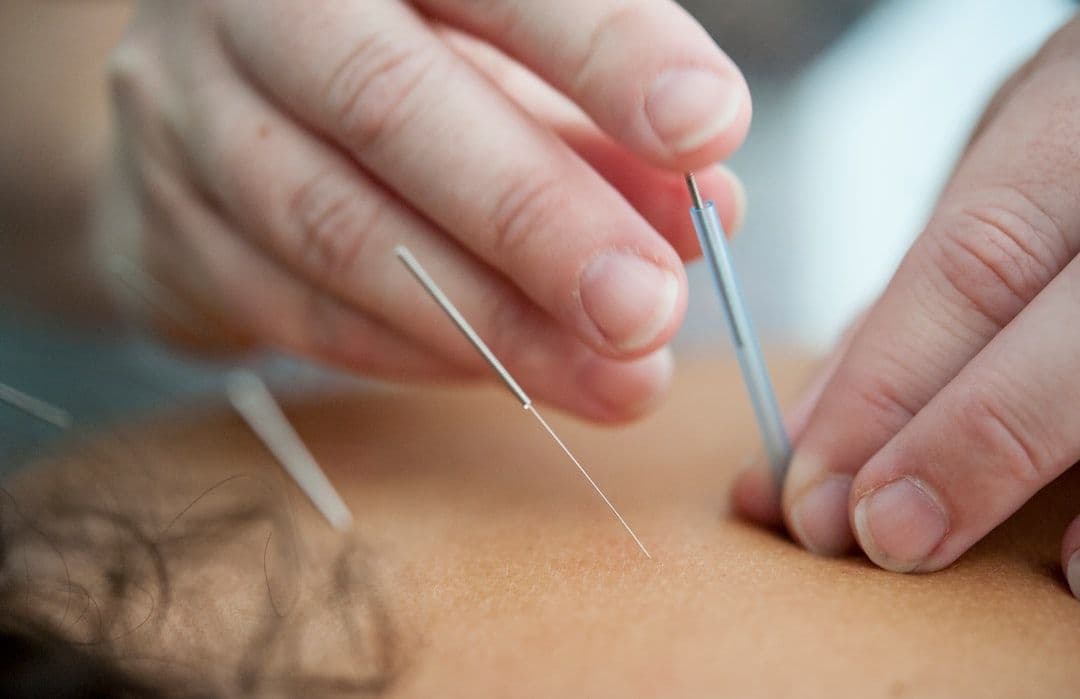
Acupuncture uses hair-thin needles at specific body points to support energy and healing.
A traditional practice commonly used to support pain management, stress regulation, and overall wellbeing.

At a glance
What it is
Acupuncture uses hair-thin needles at specific body points to support energy and healing.
Why explore it
It may ease chronic back pain, knee arthritis, migraines, tension headaches, and menstrual discomfort, with pain relief among its best-researched uses.
How it’s experienced
In a 30–60 minute session, placed needles often bring gentle tingling, warmth, and a deep sense of calm.
Evidence context
Pain relief and migraine prevention are among the best-supported uses of acupuncture in rigorous clinical research.
See the evidence snapshotSafety
Very low-risk with a licensed practitioner, though mild soreness may occur and some conditions require extra caution.
See staying safeHistory & Origin
Acupuncture involves inserting thin needles into specific points to relieve pain and improve wellness.
Acupuncture originated in China over 3,000 years ago as part of Traditional Chinese Medicine (TCM). Ancient practitioners observed that stimulating certain points on the body could relieve pain and treat various conditions. The practice is based on the concept of Qi (pronounced "chee") - vital life energy that flows through pathways called meridians. When Qi flow is blocked or imbalanced, illness occurs.
The Huangdi Neijing (Yellow Emperor's Classic of Internal Medicine), written around 300 BCE, first documented acupuncture points and techniques. Over centuries, the practice spread throughout Asia and evolved into various styles including Japanese, Korean, and Vietnamese acupuncture.
Acupuncture came to the West in the 1970s, gaining widespread attention after New York Times journalist James Reston wrote about receiving acupuncture for post-surgical pain in China. Since then, thousands of studies have explored its mechanisms and effectiveness, leading to its integration into mainstream healthcare in many countries.
Approaches
Acupuncture isn’t a single method. Practitioners may train in one tradition or blend several — here are the styles you’re most likely to meet.
The most widely practiced style, using channel theory, point selection, and a whole-person assessment.
Focuses on constitutional patterns and the five elements, often emphasizing emotional and spiritual balance.
Uses points on the outer ear, often as a focused approach for pain, stress, cravings, or nervous system support.
Adds a mild electrical current between needles and is often studied for pain and neuromuscular conditions.
Mechanism
In traditional terms, acupuncture supports the body's flow of energy, or qi, along defined channels. In research terms, studies look at effects on the nervous system, local circulation, and the body's relaxation response. Both framings coexist on Gyfts.
Your first visit
A typical session outline to help you feel prepared
An acupuncture session blends a thoughtful health conversation with gentle needle placement to support your body's natural balance and flow.
Your practitioner greets you and walks you through a detailed health history form covering your current concerns, sleep, digestion, stress levels, and any medications. First sessions typically run 60
You'll sit and talk through your wellness goals one on one with your acupuncturist. They may ask questions that seem unrelated at first, like whether you feel warmer or cooler than others, as these de
Your practitioner will gently feel both wrists to assess your pulse quality and briefly look at your tongue. These are traditional diagnostic tools in Chinese medicine and give them important informat
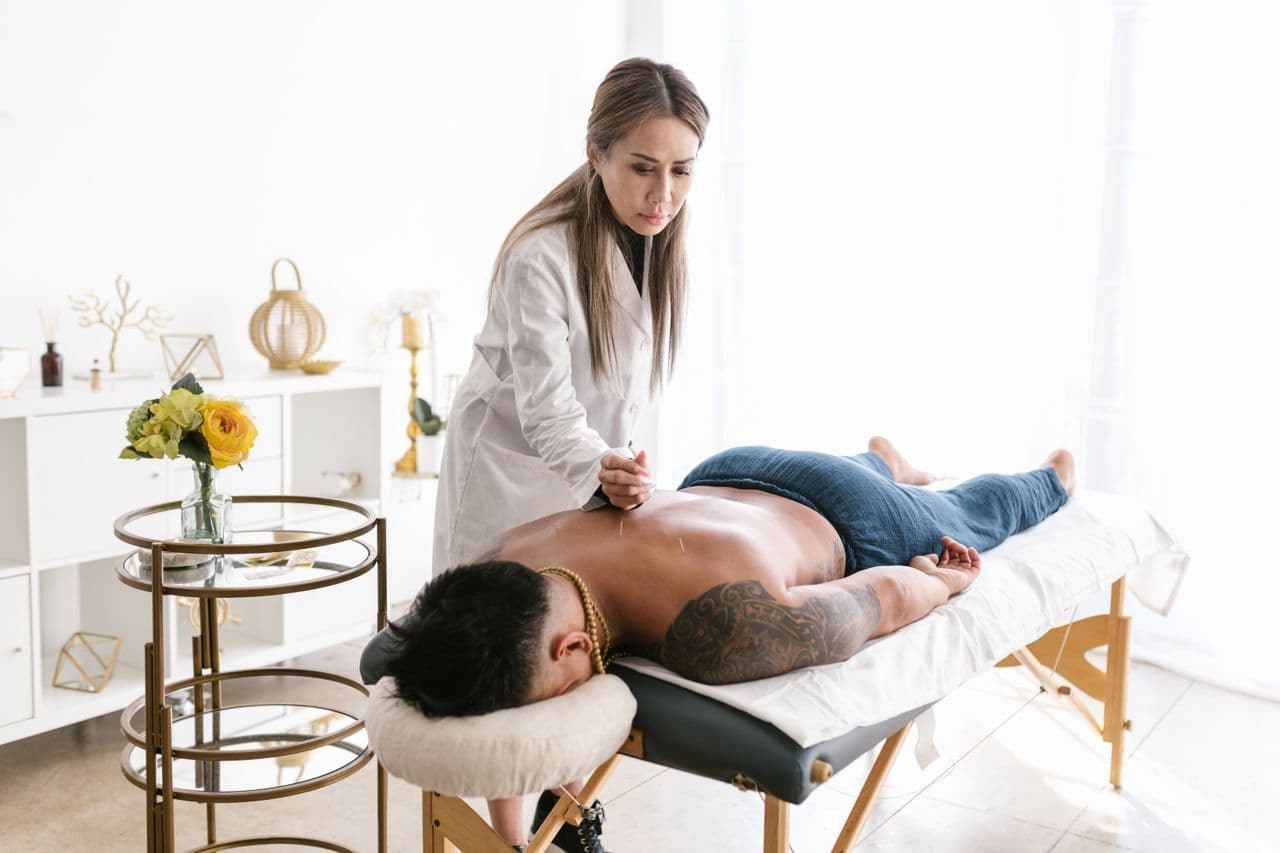
You'll be guided to lie on a padded treatment table, usually on your back. Wear loose, comfortable clothing that can be easily rolled up to the knees and elbows, as many common acupuncture points are
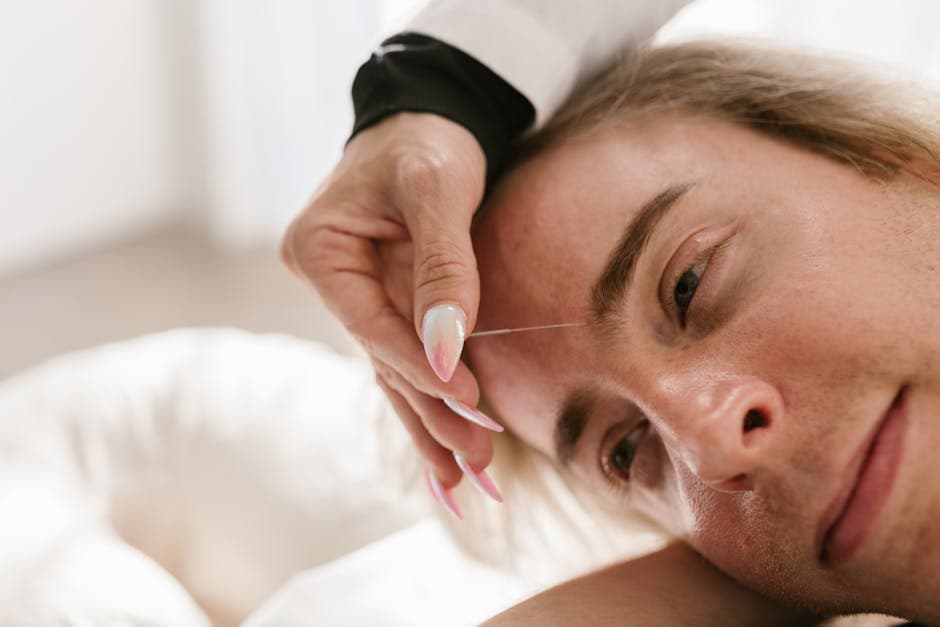
Using sterile, single-use needles about the width of a human hair, your practitioner inserts them at specific points on your body. You may feel a brief pinch, a dull ache, or a mild tingling sensation
Once all needles are placed, you rest quietly for 20 to 40 minutes while soft music or silence surrounds you. Many people feel a wave of deep relaxation, and it is completely normal to drift off to sl
Your practitioner returns to gently and quickly remove each needle. Removal is typically painless, and they will check in with you about what you felt during the session to refine future treatments.
Before you leave, your practitioner may suggest drinking extra water, avoiding strenuous exercise that day, and noting any shifts in energy or sleep over the next 24 to 48 hours. Benefits often deepen
The Evidence
What research says about acupuncture, and where evidence is still developing.
One of the better-researched holistic modalities available
Acupuncture has a substantial and growing research base, particularly for pain and headache management. Evidence varies by condition, and some applications remain in early stages of investigation.
Strong evidence supports acupuncture for chronic low back pain and knee osteoarthritis, where it is recognized by major health organizations as a non-pharmacological treatment option. These are among the most replicated findings in acupuncture research.
Moderate evidence supports acupuncture for migraine prevention, tension headaches, neck and shoulder pain, musculoskeletal pain, menstrual pain, and allergic rhinitis. Benefits are real but sometimes modest, and research quality varies between studies.
Acupuncture works across multiple body systems simultaneously — influencing pain signaling, stress hormones, and inflammatory pathways. This systemic quality aligns with its holistic classification, and may explain why it is used for a wide range of conditions beyond localized pain.
Originating in ancient China, acupuncture is grounded in concepts of Qi and meridian pathways. While these frameworks are not equivalent to biomedical models, they represent a coherent traditional system that has guided practice for millennia and continues to inform many practitioners today.
Serious adverse events are rare. Key precautions include avoiding treatment over broken or infected skin, exercising caution during pregnancy due to certain contraindicated points, and ensuring practitioners are licensed. Those with severe clotting disorders or active systemic infection should seek medical advice before proceeding.
Evidence quality varies partly because practitioner skill, needle placement, and session frequency all affect outcomes. Seeking a qualified, registered acupuncturist and discussing your health history beforehand supports both safety and effectiveness. Acupuncture is not a substitute for professional assessment of serious or undiagnosed symptoms.
Safety first
General guidance to help you decide whether this approach is appropriate for you. This is informational only and not a substitute for medical, psychological, or professional advice.
Some situations call for extra care or a different approach. Share any conditions, injuries, or sensitivities with your practitioner before your first session.
If you are pregnant, managing a health condition, recovering from injury or surgery, or taking medication, consult a qualified healthcare professional first.
Look for clear boundaries, transparent pricing, and practitioners who avoid fear-based claims or pressure to book frequent sessions.
Mild, short-lived effects such as tenderness, tiredness, or temporary soreness can occur. Rest, hydrate, and tell your practitioner how you respond.
For you?
A simple, human way to weigh it up. This is general guidance, not personal medical advice — a qualified practitioner can advise on your situation.
Gyfts is a discovery platform, not a medical provider. Nothing here diagnoses, treats or replaces professional care. In an emergency, contact your local emergency number.
Explore approaches
Other practices people often explore alongside acupuncture.
Featured
These practitioners have chosen to be featured on Gyfts.
See all practitionersIn their words
Top Practitioners
Practitioners are ranked using relevance, experience signals, reviews, and support-area fit.
FAQ
Most people experience minimal discomfort. The needles are extremely thin and many report a mild tingling sensation rather than pain.
This varies depending on the condition. Acute issues may require fewer sessions, while chronic conditions often benefit from a structured course of treatment.
When performed by a qualified practitioner using sterile needles, acupuncture is generally considered safe.
The strongest clinical evidence for acupuncture exists for chronic pain conditions — particularly chronic low back pain, neck pain, osteoarthritis, and headache/migraine prevention — where multiple systematic reviews and meta-analyses show benefits exceeding sham acupuncture and comparable to first-line pharmacological treatment. The Acupuncture Trialists' Collaboration individual patient data meta-analysis (2018), covering over 20,000 patients, found acupuncture superior to both sham and no-acupuncture controls for these conditions. Moderate evidence also exists for chemotherapy-induced nausea, post-operative pain, and menopausal symptoms. The NHS provides acupuncture for chronic primary pain in certain clinical guidelines.
Arrive neither too full nor too hungry — avoid a large meal immediately before and do not fast. Wear or bring loose, comfortable clothing that allows access to arms and legs. Bring a list of current medications (some interact with acupuncture treatment protocols) and any recent test results relevant to your presenting condition. Avoid alcohol before a session. On the day of treatment, try to allow time to rest afterwards rather than rushing straight back to demanding work — many people find acupuncture deeply relaxing and benefit from a quiet hour after the session.
References
Educational sources that inform this overview. Inclusion is for context and does not imply endorsement.
Full citations are maintained by the Gyfts editorial team and reviewed periodically.
Keep exploring
Browse practitioners, explore honest overviews, and take what you learn to a conversation — at your own pace.