What it is
Custom plant-based blends—teas, tinctures, or capsules—tailored to your individual needs.
Herbal Formulations involve creating customized remedies using dried herbs, plants, and botanicals in forms like teas, tinctures, capsule...
At a glance
What it is
Custom plant-based blends—teas, tinctures, or capsules—tailored to your individual needs.
Why explore it
Targeted herb blends may support digestion, sleep, hormones, and immunity in a personalized way.
How it’s experienced
A practitioner reviews your health history and builds a daily herbal blend you use over several weeks.
Evidence context
Evidence is moderate, with the strongest research supporting digestion, sleep, and immune health.
See the evidence snapshotSafety
Generally safe from qualified practitioners—always disclose herbal use, especially if you take medications.
See staying safeHistory & Origin
Herbal Formulations involve creating and using herbal remedies and formulations to address specific health concerns.
Herbal medicine represents one of humanity's oldest healing traditions, with evidence of medicinal plant use dating back over 5,000 years across virtually every culture. Ancient civilizations including the Egyptians, Greeks, Romans, Chinese, and Indian Ayurvedic practitioners developed sophisticated systems for identifying, cultivating, and preparing herbs for therapeutic purposes. The Ebers Papyrus from ancient Egypt documented over 700 herbal formulations, while traditional Chinese medicine and Ayurveda codified thousands of herbal remedies and combinations that remain in use today.
During the Medieval and Renaissance periods in Europe, herbalism became more systematized through monastic gardens and the work of herbalists who documented plant properties and created the first European pharmacopeias. Figures like John Gerard and Nicholas Culpeper published influential herbal texts that combined observation with traditional knowledge, though much was based on empirical use rather than scientific study. As modern pharmaceutical medicine emerged in the 19th and 20th centuries, herbal medicine was largely sidelined in Western medical practice, though it remained central to healthcare in many traditional cultures.
The late 20th century saw a resurgence of interest in herbal medicine within complementary health circles, driven by growing interest in natural approaches and concerns about pharmaceutical side effects. Scientific research into herbal constituents and mechanisms began in earnest, validating some traditional uses while revealing complexities in how herbal compounds interact with the body and medications. Today, herbal formulations represent a blend of traditional practice and contemporary research, with practitioners combining ancestral knowledge with modern phytochemistry and clinical evidence to create targeted formulations.
Mechanism
Herbal Formulations is usually understood through daily choices, patterns, and gradual behavior change rather than a single session effect. Practitioners may focus on food quality, timing, preparation, symptoms, preferences, culture, and sustainability. Some approaches are tradition-based, while others draw on nutrition science or clinical guidelines. Recommendations should be individualized, especially when medical conditions, pregnancy, medications, or restrictive eating patterns are involved. Herbal formulations work by delivering concentrated plant compounds—such as alkaloids, flavonoids, polyphenols, and essential oils—through various preparation methods.
Your first visit
A typical session outline to help you feel prepared
A herbal formulations session guides you through a personalized consultation where your health story shapes a custom botanical blend crafted just for you.
Your practitioner starts by reviewing a health intake form and chatting with you about your current symptoms, lifestyle habits, sleep, digestion, and any medications or supplements you already take.
You'll share more detail about how you've been feeling — including things that might seem unrelated — so the practitioner can identify patterns and understand the full picture of your wellbeing.
Drawing on traditional and evidence-informed herbal knowledge, the practitioner identifies which herbs and plant compounds may best support your individual needs and constitution.
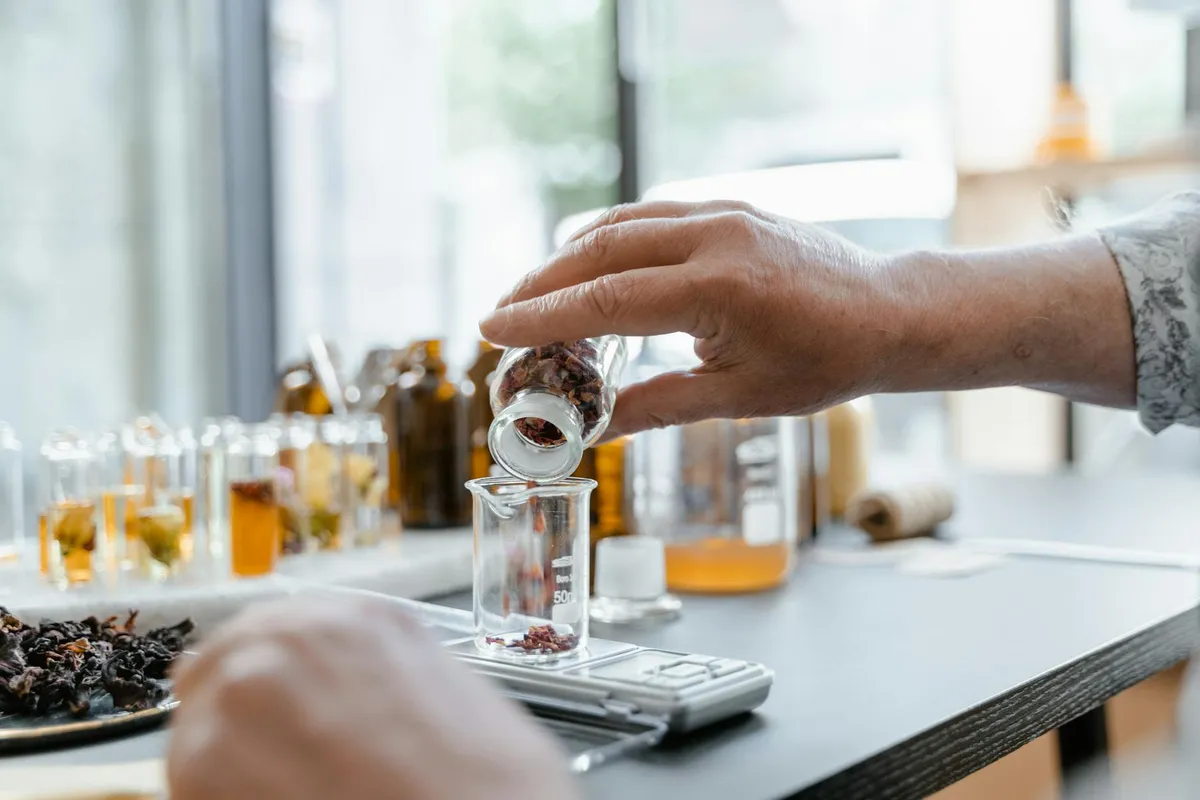
Right in the session, your practitioner selects and combines specific herbs — often from tinctures, dried botanicals, or powders — to build a blend tailored to your unique profile.
The practitioner walks you through each ingredient in your blend, explaining what each herb is and why it was chosen, so you feel confident and informed about what you're taking.
You'll receive clear instructions on how to take your formula — whether as a tea, tincture, capsule, or decoction — including exact amounts, timing with meals, and how long to use it.
Your practitioner explains what changes you might notice over the coming days or weeks, and what to watch for so you can report back accurately at your follow-up visit.
Before you leave, you'll schedule a check-in visit a few weeks out so your practitioner can adjust the formula based on how your body has responded to the blend.
The Evidence
What research and traditional knowledge tell us about herbal formulations, and where the evidence is strong, mixed, or limited.
A rich tradition meeting an uneven research landscape
Some herbs within formulations have well-documented bioactive compounds and clinical research support, while others rest primarily on traditional use. Evidence quality varies considerably by herb, preparation method, and health context.
Herbs like ginger, garlic, and turmeric have substantial clinical research behind them. Others have limited modern study and rely mainly on traditional use. Formulations combining multiple herbs are harder to study than single compounds, so the overall evidence base is uneven rather than uniformly strong or weak.
This reflects their roots outside conventional biomedical systems, though many herbs are now studied using modern methods. Herbal formulations can be used independently or alongside other approaches, but they are not a substitute for professional assessment when symptoms are serious or persistent.
Traditions including Traditional Chinese Medicine, Ayurveda, and European herbalism developed detailed systems for combining and preparing herbs over millennia. This empirical knowledge base is substantial, though traditional use alone does not confirm effectiveness or safety by modern research standards.
Standardised extracts of herbs like St. John's Wort, valerian, and echinacea have been evaluated in clinical trials with mixed but sometimes promising results. Studying multi-herb formulations is methodologically complex, and product variability between manufacturers can make findings difficult to generalise.
St. John's Wort can reduce the effectiveness of contraceptives, antidepressants, and blood thinners. Some herbs are unsuitable during pregnancy or for people with liver or kidney conditions. Always inform your doctor or pharmacist about any herbal products you are using, especially if you take prescription medications.
Qualified herbalists assess your full health picture before recommending formulations, reducing the risk of inappropriate herb selection or interactions. If you have a chronic condition, are pregnant, or take regular medications, professional guidance before starting herbal formulations is strongly recommended.
Safety first
General guidance to help you decide whether this approach is appropriate for you. This is informational only and not a substitute for medical, psychological, or professional advice.
If you are pregnant, managing a health condition, recovering from injury or surgery, or taking medication, consult a qualified healthcare professional first.
Some situations call for extra care or a different approach. Share any conditions, injuries, or sensitivities with your practitioner before your first session.
Look for clear boundaries, transparent pricing, and practitioners who avoid fear-based claims or pressure to book frequent sessions.
Mild, short-lived effects such as tenderness, tiredness, or temporary soreness can occur. Rest, hydrate, and tell your practitioner how you respond.
For you?
A simple, human way to weigh it up. This is general guidance, not personal medical advice — a qualified practitioner can advise on your situation.
Gyfts is a discovery platform, not a medical provider. Nothing here diagnoses, treats or replaces professional care. In an emergency, contact your local emergency number.
Explore approaches
Other practices people often explore alongside herbal formulations.
In their words
FAQ
Results vary significantly depending on the condition, the herbs used, individual health status, and consistency of use. Some people notice improvements within days or weeks for acute issues like sleep or digestion, while chronic conditions may require 6-12 weeks of consistent use before meaningful changes appear. Your practitioner can provide realistic timeframes based on what's being addressed. It's important to give formulations adequate time while staying in communication with your practitioner about progress.
Some herbal formulations work safely alongside medications, while others can interact negatively. This depends entirely on which specific herbs and medications you're combining. Always inform your herbal practitioner about all medications, supplements, and health conditions before starting. Ideally, discuss herbal use with your prescribing doctor as well. A qualified herbalist will avoid recommending herbs that interact with your medications or will suggest timing them apart to minimize interactions.
Herbal tea is typically a single herb or simple combination you prepare yourself, while a custom formulation is thoughtfully designed by a practitioner specifically for your individual health situation and constitution. A formulation considers your unique presentation, other health factors, and may use concentrated forms like tinctures or capsules for herbs that work better in those formats. Formulations are typically more potent and targeted than general herbal teas, though quality herbal teas can certainly support wellness.
Regulation varies significantly by country. In the United States, herbal products are classified as dietary supplements and have less rigorous regulation than pharmaceuticals. Quality standards exist but aren't universally enforced. Look for formulations from practitioners or companies that source from reputable suppliers, conduct third-party testing for purity and potency, and can verify ingredient identity. Working with a qualified herbalist who sources carefully provides better assurance of quality than purchasing random herbal products.
Contact your practitioner immediately if you experience adverse reactions or aren't seeing expected progress. Formulations can be adjusted—perhaps a different herb would work better for you, the dosage needs changing, or your constitution requires a different approach. Some people are sensitive to certain herbs or experience temporary detoxification effects (increased symptoms briefly as the body mobilizes) that can be managed by adjusting dosage. A good practitioner views formulations as adjustable tools, not fixed prescriptions.
While pre-made herbal blends are widely available, they're generally less effective than custom formulations because they're designed for a general population, not your specific situation. A consultation allows your practitioner to understand your individual needs, contraindications, and constitution. This personalization is what makes herbal formulations powerful—the right herb for the right person at the right dose. If consulting with a practitioner isn't possible, starting with single, well-researched herbs in small amounts is safer than assuming a generic blend will work for you.
Duration depends on what's being addressed. Acute situations (like a cold) might need herbs for 1-2 weeks. Chronic conditions typically require 2-6 months or longer of consistent use to create lasting change. Some formulations are designed for short-term use to support a specific process, while others support long-term wellness. Your practitioner will discuss realistic timelines and help you understand when to continue, pause, or discontinue a formulation based on your response.
References
Educational sources that inform this overview. Inclusion is for context and does not imply endorsement.
Full citations are maintained by the Gyfts editorial team and reviewed periodically.
Keep exploring
Browse practitioners, explore honest overviews, and take what you learn to a conversation — at your own pace.