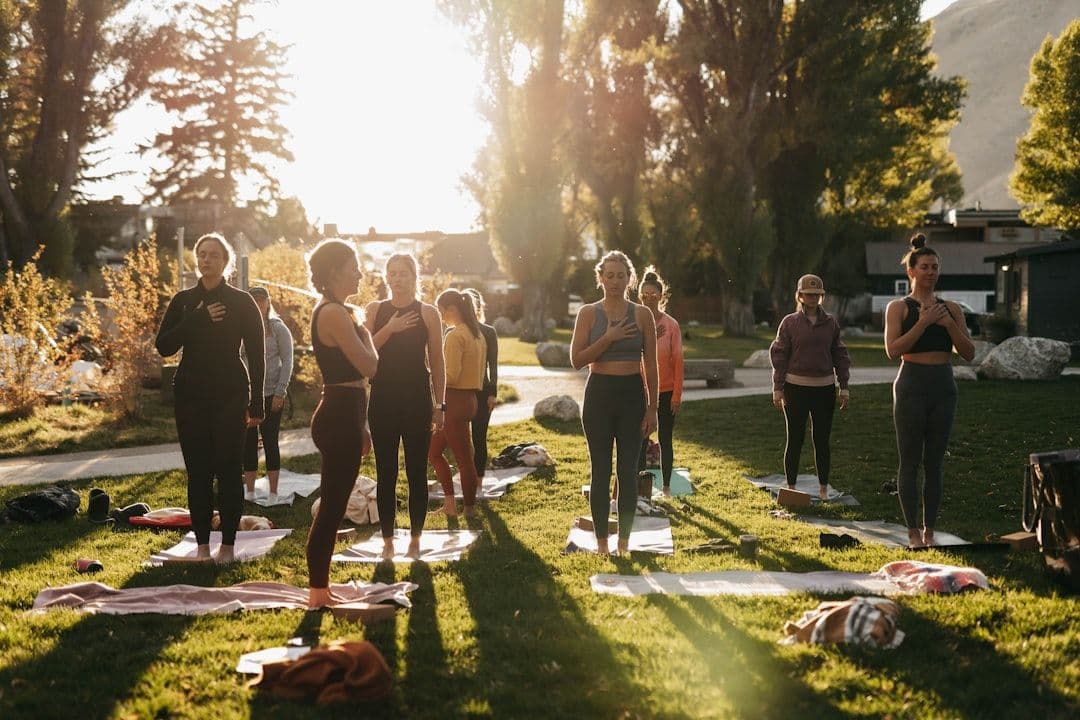
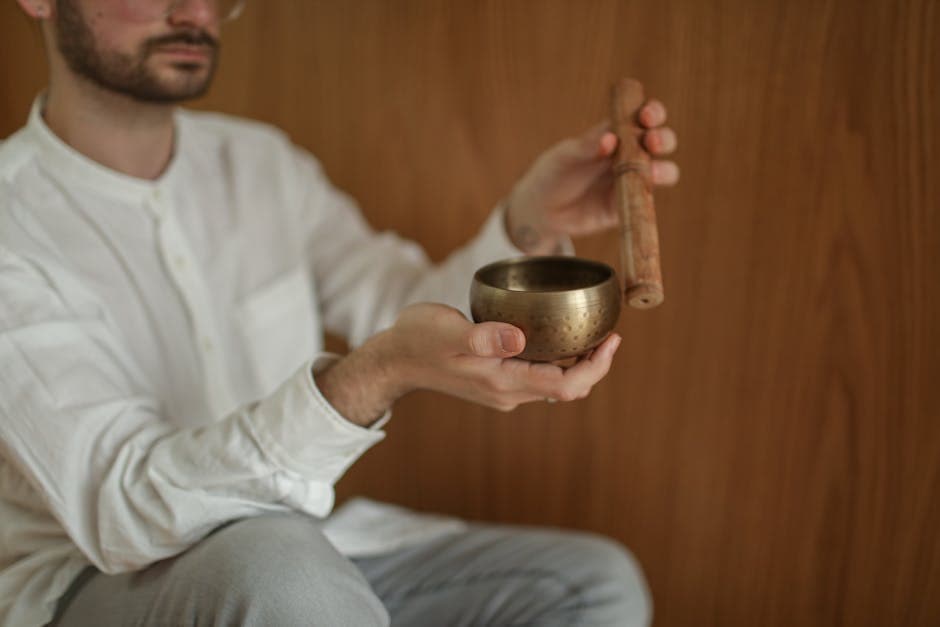
What it is
A mind-training practice using breath, imagery, or awareness to build focus and calm.
Mindful awareness for stress relief and emotional balance

At a glance
What it is
A mind-training practice using breath, imagery, or awareness to build focus and calm.
Why explore it
Research suggests it can ease stress, anxiety, and poor sleep while boosting emotional balance.
How it’s experienced
Sit, lie down, or move through guided sessions of 5 to 45 minutes using apps or audio.
Evidence context
Mindfulness has solid research support for stress and anxiety, though results vary by practice.
See the evidence snapshotSafety
Most adults can practice safely, but those with trauma or serious mental illness should check first.
See staying safeHistory & Origin
Meditation involves mindfulness and relaxation practices to promote mental and emotional well-being.
Meditation has ancient roots spanning thousands of years across multiple cultures and spiritual traditions. Evidence of meditative practices appears in early Hindu texts like the Vedas (around 1500 BCE) and in Buddhist traditions dating to around the 5th century BCE, where meditation became central to achieving enlightenment and understanding the nature of mind. The practice spread throughout Asia, becoming integral to Taoism, Zen Buddhism, and other contemplative traditions, each developing distinct techniques and philosophical frameworks.
In the Western world, meditation remained largely unknown until the 19th and 20th centuries, when scholars and spiritual seekers brought Eastern practices to Europe and North America. The 1960s saw a significant surge in interest, particularly through the work of Maharishi Mahesh Yogi, who introduced Transcendental Meditation to the West. This period marked a shift toward secularizing meditation, separating it from explicit religious contexts and framing it as a wellness and mental health tool.
A pivotal moment came in the late 1970s when Jon Kabat-Zinn developed Mindfulness-Based Stress Reduction (MBSR) at the University of Massachusetts Medical School. This clinical approach integrated Buddhist-derived mindfulness meditation with modern psychology and neuroscience, creating a secular, evidence-based framework that gained acceptance in medical and therapeutic settings. This development transformed meditation from a primarily spiritual practice into a recognized complementary health modality studied in clinical research.
Today, meditation exists in many forms—from traditional practices rooted in specific spiritual lineages to contemporary secular applications in therapy, corporate wellness, and healthcare. The accessibility of apps, online courses, and trained instructors has made meditation widely available globally, though its effectiveness and optimal applications continue to be subjects of active research.
Approaches
Meditation isn’t a single method. Practitioners may train in one tradition or blend several — here are the styles you’re most likely to meet.
Practices present-moment awareness of breath, body, thoughts, or emotions without trying to force a particular state.
Uses a repeated word, phrase, or sound as the main focus of attention.
Cultivates goodwill and compassion toward oneself and others.
A seated practice from Zen traditions, often emphasizing posture, breath, and direct awareness.
Moves attention through the body to notice sensations and release unnecessary tension.
Mechanism
Meditation is best framed as a traditional, symbolic, energetic, reflective, or spiritual practice rather than a validated medical mechanism. Practitioners may use ritual, attention, sound, imagery, touch-free work, cards, symbols, prayer, or intention to support meaning-making and a sense of connection. People may explore it for reflection, calm, or spiritual context, while health claims should remain cautious and personal. Meditation works by engaging focused attention or open awareness to calm the nervous system and shift brain activity.
Your first visit
A typical session outline to help you feel prepared
A meditation session gently guides you inward through breathwork, visualization, or focused awareness, helping you find calm and clarity at your own pace.
Your instructor greets you warmly and asks what brought you in — whether it's stress, sleep trouble, or simple curiosity — so the session can be shaped around your needs.
You'll settle into a comfortable seated or lying position, supported by cushions or a mat, with no pressure to look a certain way — comfort is the whole point.
Your guide invites you to close your eyes and let outside noise fade, signaling to your mind and body that it's safe to slow down and turn inward.
The session typically opens with a few rounds of conscious breathing — slow inhales and exhales — to anchor your attention and gently quiet the mental chatter.
Your instructor leads you through the chosen practice, such as a body scan, guided visualization, mantra repetition, or open awareness, speaking softly throughout.
As the technique settles in, you simply rest in the experience — thoughts may drift in and that's completely normal; you're gently guided back without judgment each time.
Near the close, your guide slowly brings your awareness back to the room — wiggling fingers, deepening the breath — giving your nervous system time to transition gently.
You'll briefly share how you felt and your instructor may suggest a short daily practice to try at home, even five minutes, so the benefits can build over time.
The Evidence
What research says about meditation, where evidence is strong, where it is limited, and how it fits within a broader health picture.
One of the most researched complementary practices available
Meditation, particularly MBSR and mindfulness-based cognitive therapy, has consistent research support for stress and anxiety reduction. Evidence for other applications is promising but less conclusive, and practice is considered low-risk for most people.
Multiple systematic reviews and randomised controlled trials support meditation's role in reducing perceived stress, anxiety, and depressive symptoms. Effects on sleep, chronic pain awareness, and blood pressure show promise but are less consistent across studies. Evidence quality varies by condition, and most researchers call for larger, longer-term trials.
MBSR and mindfulness-based cognitive therapy are offered in some clinical and hospital settings as adjuncts to standard care. They are not a substitute for professional assessment or medical management. For conditions such as depression, anxiety disorders, or chronic pain, meditation is best considered one tool within a broader, professionally guided plan.
Across Buddhist, Hindu, Taoist, and other traditions, meditation is understood as a path toward insight, liberation, or union with a greater reality. These dimensions are meaningful to many practitioners and are not reducible to clinical outcomes. Gyfts presents both perspectives without conflating them — the contemplative significance of practice is valid independently of what research can or cannot measure.
Meditative practices appear in Vedic texts from around 1500 BCE and Buddhist traditions from the 5th century BCE, later spreading through Taoism, Zen, and other contemplative lineages. The 20th century saw secular adaptations — most notably MBSR, developed by Jon Kabat-Zinn in the 1970s — which separated technique from religious context to make practice more broadly accessible.
People with severe mental illness, active psychosis, or significant trauma histories may find that intensive meditation intensifies certain symptoms. A gradual, self-paced approach with a qualified teacher reduces this risk. If you are under the care of a mental health professional, it is worth discussing meditation as part of your overall plan before starting a structured programme.
Many meditation studies use small samples, short durations, or lack active control groups, making it difficult to isolate effects. Benefits are generally modest to moderate in size. Meditation is not a substitute for professional assessment or evidence-based treatment for clinical conditions. Approaching it as a supportive practice rather than a standalone solution reflects the current evidence most accurately.
Safety first
General guidance to help you decide whether this approach is appropriate for you. This is informational only and not a substitute for medical, psychological, or professional advice.
If you are experiencing severe distress, suicidal thoughts, psychosis, acute trauma, or another serious mental health concern, seek qualified support first.
This approach is not suitable for diagnosis, treatment instructions, or decisions that require medical, legal, financial, or professional advice.
Look for clear boundaries, transparent pricing, and practitioners who avoid fear-based claims or pressure to book frequent sessions.
Treat any insight as one reflective perspective, not absolute truth. Important decisions should be considered with appropriate professional support.
For you?
A simple, human way to weigh it up. This is general guidance, not personal medical advice — a qualified practitioner can advise on your situation.
Gyfts is a discovery platform, not a medical provider. Nothing here diagnoses, treats or replaces professional care. In an emergency, contact your local emergency number.
Explore approaches
Other practices people often explore alongside meditation.
In their words
FAQ
In a typical session, you'll sit or lie comfortably in a quiet space while an instructor guides you through a meditation practice. This might involve focusing on your breath, body sensations, a mantra, or visualization. Your mind will naturally wander—this is normal and part of the practice. The instructor gently reminds you to refocus without judgment. Sessions usually last 20-60 minutes. Most people experience increasing calm, mental clarity, or deep relaxation, though experiences vary. You remain fully conscious and in control throughout.
Some people notice benefits after a single session, though lasting change typically emerges with consistent practice. Research suggests 4-8 weeks of regular practice (ideally daily or several times weekly) establishes noticeable improvements in stress, sleep, and focus. Starting with weekly guided sessions combined with 10-15 minutes of daily practice is a realistic foundation. Benefits tend to deepen over months and years of consistent practice.
Yes—this is one of the most common concerns and a normal part of meditation. A busy mind doesn't mean you're 'bad at meditation.' The practice isn't about eliminating thoughts but rather noticing them without attachment and gently returning focus to your anchor (breath, body, mantra). With consistent practice, you'll develop this skill. Techniques like counting breaths, body scans, or mantra-based practices can help busy minds find focus more easily.
No. While meditation has spiritual roots in many traditions, modern secular meditation—like Mindfulness-Based Stress Reduction (MBSR)—focuses purely on mental health and well-being benefits without spiritual or religious requirements. You can practice meditation from any worldview or belief system. Some people integrate meditation with their spiritual practice; others approach it purely as a wellness tool.
While relaxation and rest are beneficial, meditation involves active mental training. You're deliberately cultivating awareness, attention, and mindfulness rather than passive relaxation. In meditation, you remain alert and engaged with the practice, whereas relaxation or sleep involves letting go of effort. That said, meditation can lead to profound relaxation as a byproduct, and many people sleep better after regular practice.
Meditation is generally very safe. Common, mild effects include drowsiness, emotional release (feeling tearful or emotional), or temporary restlessness as your mind adjusts. In rare cases, particularly with intensive practice or in people with trauma histories, difficult emotions or sensations may surface—this is manageable with support from a qualified instructor. There are no known serious side effects. If you have severe mental health conditions, consult your healthcare provider before beginning.
No. Meditation is a complementary practice that can support well-being alongside medical treatment, but it should never replace prescribed medications, therapy, or medical care. If you're considering changing any treatment, discuss this with your healthcare provider. Meditation and conventional medicine work best together as part of a comprehensive approach to health.
Costs vary widely. Free options include meditation apps (many have free tiers), YouTube videos, and library books. Group classes typically cost $10-25 per session. Private one-on-one instruction ranges from $50-150+ per session. Meditation retreats can range from $200 to several thousand dollars depending on length and location. Many community centers, workplaces, and health centers offer low-cost or free meditation classes.
Mindfulness meditation involves observing thoughts, feelings, and sensations without judgment, anchoring attention in the present moment. Guided meditation uses an instructor's voice to lead you through imagery, visualization, or specific focus points. Breathwork emphasizes conscious breathing patterns to calm the nervous system or energize. Body scan involves progressive awareness through different body parts. Each style has different benefits and appeals to different people; your instructor can help identify what works best for you.
References
Educational sources that inform this overview. Inclusion is for context and does not imply endorsement.
Full citations are maintained by the Gyfts editorial team and reviewed periodically.
Keep exploring
Browse practitioners, explore honest overviews, and take what you learn to a conversation — at your own pace.