What it is
A short, clothed massage in an ergonomic chair targeting your neck, shoulders, and upper back.
Seated Massage is a massage therapy technique performed with the client in a specially designed chair, focusing on the neck, shoulders, b...
At a glance
What it is
A short, clothed massage in an ergonomic chair targeting your neck, shoulders, and upper back.
Why explore it
A quick way to ease desk-related tension and stress without lengthy appointments or disrobing.
How it’s experienced
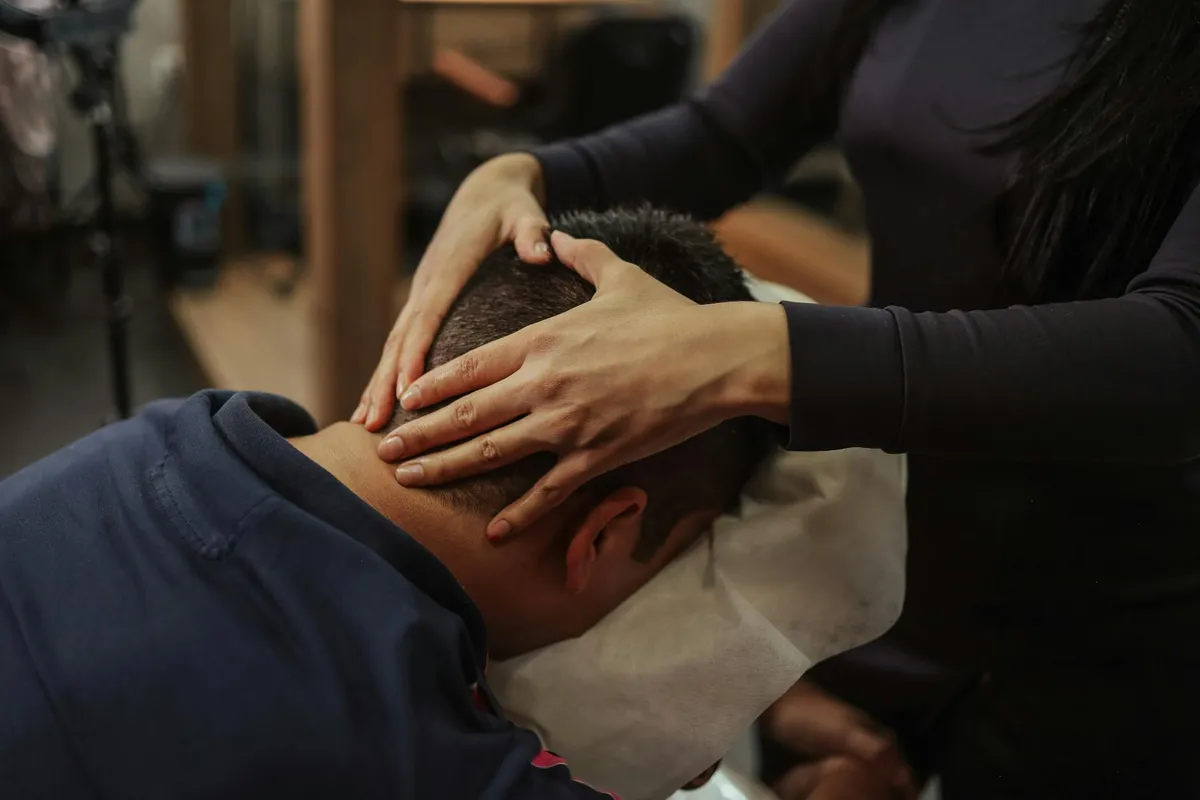
You sit fully clothed in a forward-leaning chair while a therapist works your upper body by hand.
Evidence context
Some studies show short-term stress and tension relief, with stronger benefits seen through regular sessions.
See the evidence snapshotSafety
Low-risk for most people — avoid with acute injuries or DVT, and always share your health history first.
See staying safeHistory & Origin
Seated Massage is a massage therapy modality that is administered with the recipient in a seated position.
Seated massage, also known as chair massage or on-site massage, emerged in the 1980s as a practical adaptation of traditional massage therapy to modern workplace environments. The modality was developed to make therapeutic massage more accessible and time-efficient for busy professionals, building on centuries of massage tradition but reimagined for contemporary settings.
The formalization of seated massage as a distinct modality is largely credited to David Palmer, who pioneered the concept in the early 1980s and developed the first ergonomic massage chairs specifically designed for the practice. Palmer recognized the growing stress levels in corporate America and sought to bring massage into office settings, making it available to workers during their breaks without requiring them to remove clothing or lie down on a table.
Since its inception, seated massage has expanded beyond corporate offices into airports, wellness centers, spas, and community health events. The modality draws from traditional massage techniques such as Swedish massage, trigger point therapy, and acupressure principles, but applies them to the accessible seated position. Today, many massage therapists incorporate seated massage into their practice offerings, and it has become an established entry point for people new to massage therapy.
Mechanism
Seated Massage is generally described as working through skilled touch, careful pacing, and the body's response to pressure, movement, warmth, or stillness. Practitioners may focus on muscle tone, joint comfort, circulation, breath, or relaxation depending on the method. Traditional explanations may also include energy flow or whole-person balance. Research support varies by modality, so the experience is best framed as supportive care with outcomes that vary. Seated massage is performed with you fully clothed, positioned in a specially designed ergonomic chair that supports your torso and head.
Your first visit
A typical session outline to help you feel prepared
A seated massage is a short, fully clothed session targeting your neck, shoulders, back, and arms using a specially designed chair — no undressing or table required.
Your therapist greets you and asks a few quick questions about any tension spots, injuries, or pressure preferences so they can tailor the session to your needs.
You'll sit facing forward in a padded ergonomic massage chair, resting your face in a cushioned cradle and your arms on supportive pads — it's designed to feel stable and comfortable.
Your therapist gives you a moment to settle in and may ask you to take a slow breath, helping your body relax before any touch begins.
The session typically begins with broad, warming strokes across your upper and mid-back, helping your muscles loosen up and your nervous system start to unwind.
Your therapist works into the neck and shoulder area using kneading, compression, and targeted pressure — common spots for stored tension that often feel tender at first, then release.
Attention moves down to your arms and hands with gentle squeezing and stretching, which can feel especially relieving if you spend long hours typing or using a phone.
Throughout the session your therapist will check in about pressure — speak up anytime something feels too intense or you'd like more focus on a specific area.
The session winds down with lighter, calming strokes. Afterward your therapist will suggest drinking water and may offer a few stretches to extend the benefits throughout your day.
The Evidence
What research says about seated massage, how it fits into broader massage evidence, and what to keep in mind when exploring it.
Supported by broader massage research, with growing specific data
Seated massage draws on a substantial evidence base for massage therapy generally, with moderate support for stress and tension relief. Evidence specific to the seated format is still emerging rather than robust.
Massage therapy broadly has moderate research support for reducing stress, anxiety, and muscular tension. Systematic reviews have found moderate evidence for stress and anxiety reduction. Most trials used table massage protocols, so evidence specific to seated massage is emerging rather than established. Limited specific data does not mean ineffectiveness.
Its accessibility — no disrobing, no table, sessions of 15–30 minutes — makes it practical for workplace wellness programs and health events. It is commonly used for neck, shoulder, and upper back tension associated with desk-based work. It is not a substitute for professional assessment of underlying musculoskeletal or medical conditions.
On the MACH framework, seated massage is classified as Complementary — meaning it is widely offered alongside conventional care settings, including workplaces and clinical environments. It can support stress and tension management as part of a broader care approach, though it is not a replacement for professional care for underlying health conditions.
The seated format is underrepresented in large randomised controlled trials. Much of the supporting evidence is extrapolated from general massage research. Session duration, pressure, and technique vary widely between practitioners, making standardised comparisons difficult. Seekers should weigh benefits against this evidence gap when making decisions.
People with acute upper body injury, severe osteoporosis, uncontrolled blood pressure, active infection, or cardiac conditions should consult a healthcare provider before booking. Absolute contraindications include open wounds, active blood clots, and malignant tumors in areas being worked on. Always inform your therapist of relevant health history before your session.
Look for practitioners with recognised massage therapy qualifications and experience in seated or chair massage specifically. Clear communication about pressure preferences and any discomfort during the session is important. If you have complex health needs, consider practitioners who work alongside or with referral pathways to healthcare providers.
Safety first
General guidance to help you decide whether this approach is appropriate for you. This is informational only and not a substitute for medical, psychological, or professional advice.
If you are pregnant, managing a health condition, recovering from injury or surgery, or taking medication, consult a qualified healthcare professional first.
Some situations call for extra care or a different approach. Share any conditions, injuries, or sensitivities with your practitioner before your first session.
Mild, short-lived effects such as tenderness, tiredness, or temporary soreness can occur. Rest, hydrate, and tell your practitioner how you respond.
Look for clear boundaries, transparent pricing, and practitioners who avoid fear-based claims or pressure to book frequent sessions.
For you?
A simple, human way to weigh it up. This is general guidance, not personal medical advice — a qualified practitioner can advise on your situation.
Gyfts is a discovery platform, not a medical provider. Nothing here diagnoses, treats or replaces professional care. In an emergency, contact your local emergency number.
Explore approaches
Other practices people often explore alongside seated massage.
In their words
FAQ
Wear comfortable, loose-fitting clothing as you remain fully clothed throughout the session. Avoid tight belts, heavy jackets, or restrictive fabrics. Many people wear work clothes to office-based seated massages without issue.
Many people feel immediate relaxation and tension relief after a single session. For cumulative benefits addressing chronic tension, practitioners often recommend weekly or bi-weekly sessions over 4–6 weeks. Benefits vary based on individual factors, lifestyle, and posture habits.
Seated massage should not be painful. You may feel mild tenderness in very tight muscles or trigger points, but this is different from pain. Always communicate with your therapist about pressure level—they can adjust techniques to keep you comfortable.
Most seated massage sessions last 15–30 minutes, making them convenient for workplace settings or busy schedules. Longer sessions of 45–60 minutes are sometimes available at spas or wellness centers.
Seated massage may help relieve tension headaches by reducing muscle tightness in the neck, shoulders, and upper back. However, if you experience frequent or severe headaches, consult a healthcare provider to rule out underlying conditions.
Some health insurance plans cover massage therapy if prescribed by a doctor for a medical condition. Coverage varies widely. Check with your insurance provider and ask if your therapist is a licensed, credentialed practitioner who accepts insurance.
Seated massage is performed fully clothed in a chair and focuses on the upper body and neck. Table massage involves lying down, allows undressing for oil application, and covers the entire body. Both use similar techniques but serve different purposes and settings.
Prenatal massage is a specialized field. Standard seated massage is generally safe in early pregnancy, but consult your healthcare provider and seek a therapist trained in prenatal massage for best results and safety.
References
Educational sources that inform this overview. Inclusion is for context and does not imply endorsement.
Full citations are maintained by the Gyfts editorial team and reviewed periodically.
Keep exploring
Browse practitioners, explore honest overviews, and take what you learn to a conversation — at your own pace.