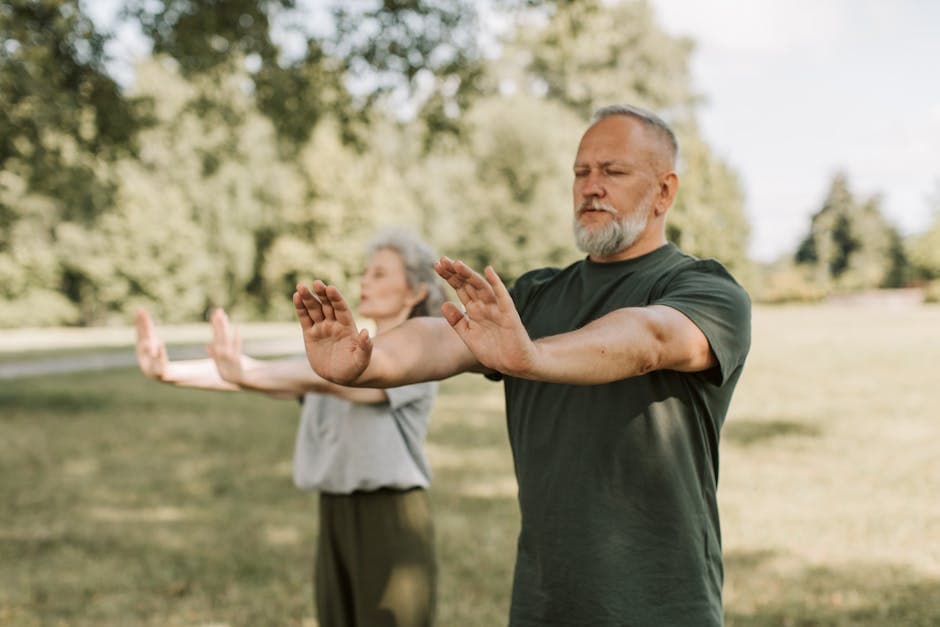
What it is
Tai Chi blends slow, flowing movement with breathwork, rooted in ancient Chinese philosophy.
Tai Chi is an ancient Chinese mind-body practice featuring slow, flowing movements synchronized with deep breathing to improve balance, f...
At a glance
What it is
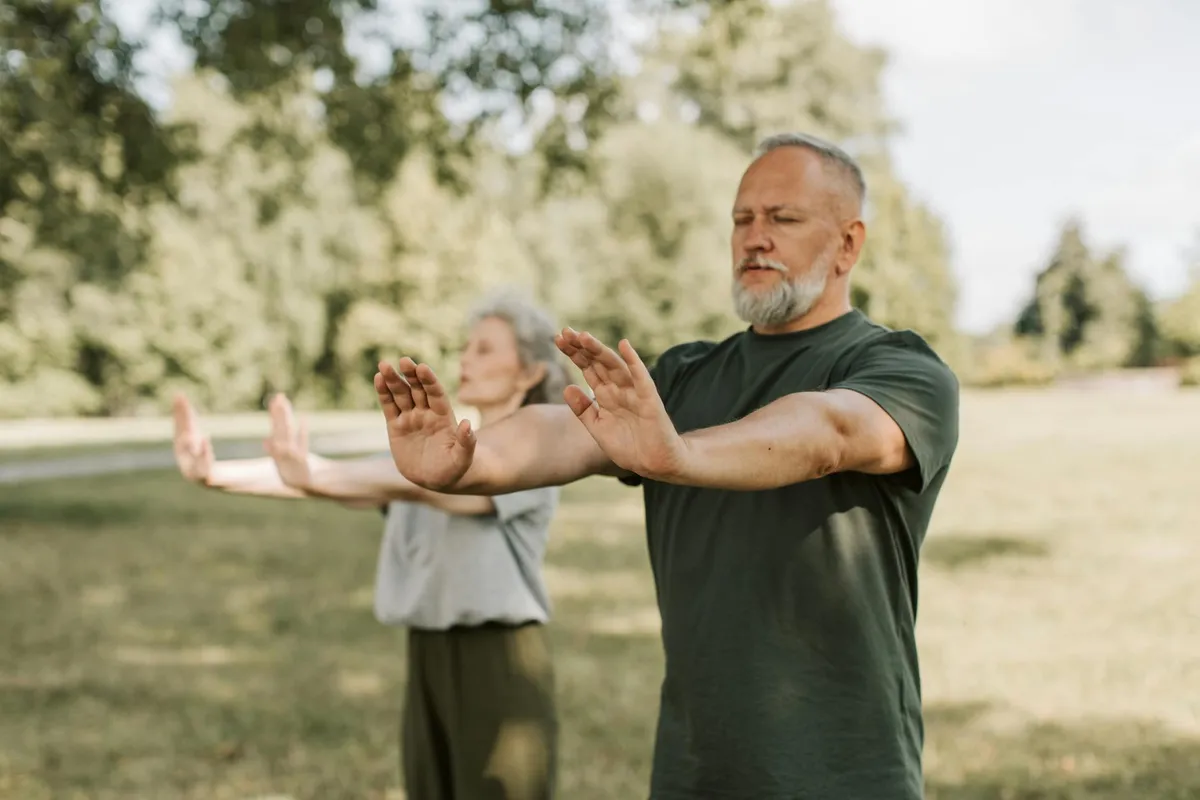
Tai Chi blends slow, flowing movement with breathwork, rooted in ancient Chinese philosophy.
Why explore it
It may improve balance, flexibility, sleep, and stress levels through gentle, sustained movement.
How it’s experienced
Sessions guide you through continuous movement sequences, available for beginners to advanced levels.
Evidence context
Strongest evidence supports fall prevention; research on anxiety and pain shows real promise.
See the evidence snapshotSafety
Low risk for most, but check with your doctor if you have surgery, bone loss, or balance conditions.
See staying safeHistory & Origin
Tai Chi is a mind-body practice that incorporates slow, flowing movements to improve balance, flexibility, and relaxation.
Tai Chi emerged in China during the 12th century, evolving from martial arts traditions and philosophical principles of Taoism and Buddhism. The practice synthesizes concepts of balance, flow, and harmony—embodied in the yin-yang symbol—into a movement meditation. Early practitioners developed Tai Chi as both a martial discipline and a health cultivation method, recognizing that the gentle, continuous movements could build internal strength and vital energy (qi) without the impact of more aggressive combat forms.
During the 20th century, Tai Chi masters like Yang Chengfu standardized and refined the practice, making it accessible to broader populations. Yang's lineage produced some of the most widely taught styles today, including Yang style, which emphasizes large, graceful movements. The Cultural Revolution initially suppressed traditional practices, but Tai Chi's health benefits led the Chinese government to promote it nationally afterward as a public health initiative.
Tai Chi spread internationally after the 1950s, gaining popularity in the West from the 1970s onward as interest in Eastern wellness practices grew. Teachers and researchers brought Tai Chi to community centers, hospitals, and research institutions, where scientists began documenting its effects on balance, cognition, and stress resilience. Today, major styles—including Yang, Chen, Wu, and Sun—are taught worldwide, with each emphasizing slightly different movement qualities while maintaining core principles of flow, relaxation, and mindfulness.
Approaches
Tai Chi isn’t a single method. Practitioners may train in one tradition or blend several — here are the styles you’re most likely to meet.
Known for slow, smooth, expansive movements and widely taught for health and balance.
An older style that includes silk-reeling movement, changes of speed, and more obvious martial elements.
Uses smaller, compact movements and a distinctive body alignment.
Uses agile stepping and higher stances, often adapted for older adults or balance programs.
Mechanism
Tai Chi is usually understood through movement, breath, attention, and repeated practice. A session may invite the body to explore safer patterns, steadier pacing, or a more settled relationship with sensation. Some traditions describe this as balancing energy or awareness, while contemporary explanations may focus on coordination, nervous system regulation, mobility, and confidence. Experiences vary by person, teacher, setting, and consistency. Tai Chi works through the integration of slow, deliberate movements synchronised with controlled breathing and focused awareness.
Your first visit
A typical session outline to help you feel prepared
A Tai Chi session blends gentle movement, breath, and mindfulness into a flowing practice that leaves you feeling centered and refreshed.
Your instructor starts with a relaxed conversation about your health history, any injuries or balance concerns, and what you hope to get from practice. This shapes how they guide you through the session.
You'll be shown the basic Tai Chi stance — feet shoulder-width apart, knees softly bent, spine tall. This foundational posture is the starting point for everything and helps you feel rooted and stable.
Before any sequences begin, you'll gently warm up joints with slow neck rolls, shoulder circles, and hip loosening movements. Your instructor cues you to breathe deeply and let your mind settle into the present moment.
You'll be introduced to a short series of flowing movements called forms, each with names like Cloud Hands or Wave Hands Like Clouds. Your instructor demonstrates slowly, then guides you step by step
You'll practice linking the forms together into one continuous, unhurried flow. Movements are soft and circular, coordinated with your breath, and there is no rush or competition — only your own rhythm.
As you settle into the sequence, your instructor may gently remind you to soften your gaze, relax your shoulders, and notice sensations in your body. Many people find this meditative quality is when t
The session winds down with slower, quieter movements and a moment of standing stillness, allowing your nervous system to absorb the practice. You may feel a pleasant warmth or tingling in your hands and limbs.
Your instructor checks in about how you felt during the session and may suggest simple movements to practice at home. They'll also discuss how regular sessions build balance, coordination, and stress
The Evidence
What research shows, where evidence is strong, and where important gaps remain.
Well-studied for balance and fall prevention; promising across other areas
Tai Chi has a substantial research base, with its strongest evidence in balance improvement and fall risk reduction in older adults. Evidence for stress, sleep, and cardiovascular benefits is promising but limited by small study sizes and methodological challenges.
Multiple systematic reviews confirm Tai Chi meaningfully improves balance and reduces fall risk in older adults. Evidence for blood pressure, anxiety, and sleep quality is promising but less definitive. Few studies directly compare Tai Chi to established interventions, so relative effectiveness remains unclear.
Blinding participants to a movement practice is inherently difficult, which limits study design quality. Publication bias may favour positive findings. Significant variation in Tai Chi styles, session lengths, and instructor experience makes it hard to compare results across studies or draw firm conclusions.
The practice combines slow, deliberate movement with controlled breathing and attentional focus. This engages stabiliser muscles, proprioception, and the parasympathetic nervous system together. Research suggests these combined effects may explain benefits across physical, psychological, and cardiovascular domains.
Originating in China, Tai Chi developed as both a martial art and a health cultivation practice. Concepts such as balance, flow, and qi (vital energy) are central to its traditional framework. In the 20th century it was standardised and promoted nationally as a public health initiative, and has since spread globally.
Those with significant joint damage, recent surgery, severe osteoporosis, balance disorders, or cardiovascular conditions should seek medical clearance first. Pregnant individuals should inform their instructor. Practice on flat, non-slip surfaces, wear supportive shoes, and progress gradually to avoid strain.
Tai Chi encompasses several distinct styles with differing emphases. Instructor training and credentials are not universally standardised, so seeking teachers with recognised qualifications or affiliations is advisable. For those with health conditions, instructors experienced in therapeutic or adapted Tai Chi are preferable.
Safety first
General guidance to help you decide whether this approach is appropriate for you. This is informational only and not a substitute for medical, psychological, or professional advice.
If you are pregnant, managing a health condition, recovering from injury or surgery, or taking medication, consult a qualified healthcare professional first.
Some situations call for extra care or a different approach. Share any conditions, injuries, or sensitivities with your practitioner before your first session.
Mild, short-lived effects such as tenderness, tiredness, or temporary soreness can occur. Rest, hydrate, and tell your practitioner how you respond.
Look for clear boundaries, transparent pricing, and practitioners who avoid fear-based claims or pressure to book frequent sessions.
For you?
A simple, human way to weigh it up. This is general guidance, not personal medical advice — a qualified practitioner can advise on your situation.
Gyfts is a discovery platform, not a medical provider. Nothing here diagnoses, treats or replaces professional care. In an emergency, contact your local emergency number.
Explore approaches
Other practices people often explore alongside tai chi.
In their words
FAQ
A session usually begins with centering and breathing exercises, followed by guided slow movements and flowing forms. Your instructor demonstrates and observes your technique, offering adjustments to posture and alignment. Sessions typically last 45–60 minutes in group classes or 30–60 minutes in private lessons. The pace is leisurely, allowing time to focus on each movement and its connection to breath. Classes often end with standing meditation or gentle stretching to consolidate benefits.
Many people report reduced stress and improved mood after just one session. Physical benefits like improved balance and flexibility typically become noticeable within 2–4 weeks of consistent practice (2–3 times weekly). However, deeper changes in strength, flexibility, and cognitive function often emerge over 2–3 months. Long-term practitioners (6+ months) often experience the most significant transformations. Consistency matters more than frequency—regular, moderate practice yields better results than sporadic intensive sessions.
No. Tai Chi is designed for all fitness levels and body types. Movements can be modified for limited mobility, arthritis, or weakness. Many practitioners begin with no prior experience and build flexibility, strength, and balance gradually through practice. Your instructor will show you how to adapt poses to your current capacity. Tai Chi is about meeting yourself where you are, not achieving a perfect external form.
The main styles—Yang, Chen, Wu, and Sun—differ in movement size, speed, and emphasis. Yang style features larger, more flowing movements and is popular for beginners. Chen style includes faster, more martial movements mixed with slow ones. Wu and Sun styles use smaller, more compact movements. All share core principles of relaxation, flow, and balance. Your choice depends on personal preference and what your instructor teaches. Many practitioners explore multiple styles over time.
Tai Chi provides excellent mind-body benefits, flexibility, and balance training, but it is not a high-intensity cardiovascular workout. For overall health, many experts recommend combining Tai Chi with other activities that elevate heart rate—such as walking, swimming, or cycling—at least 150 minutes weekly. Tai Chi complements other exercise beautifully and can be safely done alongside strength training or aerobic activities. Discuss your fitness goals with your instructor to determine the best combination for your needs.
Historically, Tai Chi emerged from martial arts traditions and retains martial applications in advanced practice. However, modern Tai Chi as taught in most Western classes emphasizes health, stress reduction, and wellness rather than combat technique. Even so, the flowing movements and balance principles reflect its martial roots. Some practitioners explore the martial aspects after building a foundation in the health benefits, while others practice purely for wellness. You can enjoy Tai Chi fully without any interest in its martial heritage.
Practicing 2–3 times weekly in classes, supplemented by 15–30 minutes of daily home practice, yields optimal results for most people. However, even once-weekly classes combined with occasional home practice provides noticeable benefits. Consistency matters more than duration—gentle, regular practice outperforms sporadic intense sessions. Many practitioners find that daily practice, even for 10–15 minutes, produces the most sustained improvements in balance, flexibility, and stress resilience. Your instructor can recommend a schedule suited to your goals and lifestyle.
Research supports Tai Chi for balance improvement and fall prevention, particularly in older adults. Evidence also suggests benefits for stress, anxiety, sleep, and certain types of chronic pain. Some studies show promise for cardiovascular health and cognitive function. However, Tai Chi should complement, not replace, medical treatment for serious conditions. Always inform your healthcare provider that you are practicing Tai Chi and discuss whether it is appropriate for your specific condition. Your Tai Chi instructor and doctor can collaborate to ensure safe, effective practice.
References
Educational sources that inform this overview. Inclusion is for context and does not imply endorsement.
Full citations are maintained by the Gyfts editorial team and reviewed periodically.
Keep exploring
Browse practitioners, explore honest overviews, and take what you learn to a conversation — at your own pace.