What it is
An Ayurvedic ritual that uses a curved tool to clear overnight residue from your tongue.
Ancient Oral Ritual, Renewed Every Morning
At a glance
What it is
An Ayurvedic ritual that uses a curved tool to clear overnight residue from your tongue.
Why explore it
It may support fresher breath, sharper taste, and a more intentional morning routine.
How it’s experienced
In under a minute, the tool glides tongue-back to tip, leaving your mouth feeling noticeably cleaner.
Evidence context
Early research hints at fresher breath benefits, but large studies are still needed.
See the evidence snapshotSafety
Generally safe with gentle technique, though ask your provider first if you take blood thinners.
See staying safeHistory & Origin
Tongue scraping, known in Ayurvedic tradition as Jihwa Prakshalana, is an ancient oral hygiene practice that involves using a small, curved tool — typically made from copper, stainless steel, or plastic — to gently remove the coating that accumulates on the surface of the tongue overnight. Practitioners run the scraper from the back of the tongue toward the tip, clearing away what Ayurvedic philosophy describes as accumulated toxins, bacteria, food debris, and dead cells. The practice is typically performed first thing in the morning, before eating or drinking, and takes only a minute or two to complete.
In Ayurvedic medicine, the tongue is viewed as a window into the health of the body's internal organs, and the color, texture, and thickness of tongue coating are traditionally interpreted as indicators of digestive function and overall balance. A white or yellowish film on the tongue, which is common upon waking, is thought in this framework to represent undigested metabolic waste — referred to as 'ama' — that the body has worked to expel during sleep. Removing this coating first thing in the morning is considered an essential step in a complete daily self-care routine, known as Dinacharya.
Beyond its Ayurvedic roots, tongue scraping has attracted growing interest in contemporary oral health circles. Some dental professionals acknowledge that the practice may be associated with reductions in certain odor-causing bacteria and may support overall oral hygiene when used alongside regular brushing and flossing. It is a low-cost, low-risk daily ritual that many people incorporate into their morning wellness routines, though its broader health claims remain an area where scientific evidence is still developing.
Tongue scraping has been practiced for thousands of years and is documented in Ayurveda, one of the world's oldest codified systems of medicine, which originated on the Indian subcontinent. References to Jihwa Prakshalana — literally meaning 'tongue cleansing' in Sanskrit — appear in classical Ayurvedic texts, including the Charaka Samhita and the Sushruta Samhita, texts that scholars estimate were compiled between approximately 600 BCE and 700 CE, though they draw on oral traditions considerably older. These texts describe tongue scraping as an essential component of Dinacharya, the Ayurvedic daily self-care regimen designed to promote longevity, sensory clarity, and alignment with natural rhythms.
Historically, tongue scrapers were crafted from gold, silver, or copper — metals valued in Ayurveda for their believed antimicrobial and energetic properties. Copper scrapers remain popular today, partly due to copper's demonstrated antimicrobial properties in laboratory settings, though direct clinical evidence for superiority over other materials in tongue scraping specifically is limited. Variants of tongue cleaning have also appeared in traditional medicine and hygiene practices across other cultures, including in parts of Africa and South America, suggesting that the observation of tongue coating and the instinct to address it is not unique to any single tradition.
Mechanism
Tongue scraping works through a combination of mechanical removal and, according to Ayurvedic theory, the stimulation of internal organ systems mapped to the tongue's surface.
Your first visit
A typical session outline to help you feel prepared
A simple, refreshing morning ritual that takes just a couple of minutes and leaves your mouth feeling noticeably cleaner and more awake.
You'll do this first thing in the morning, before eating, drinking anything other than water, or brushing your teeth, so the overnight residue on your tongue is still intact and ready to be removed.
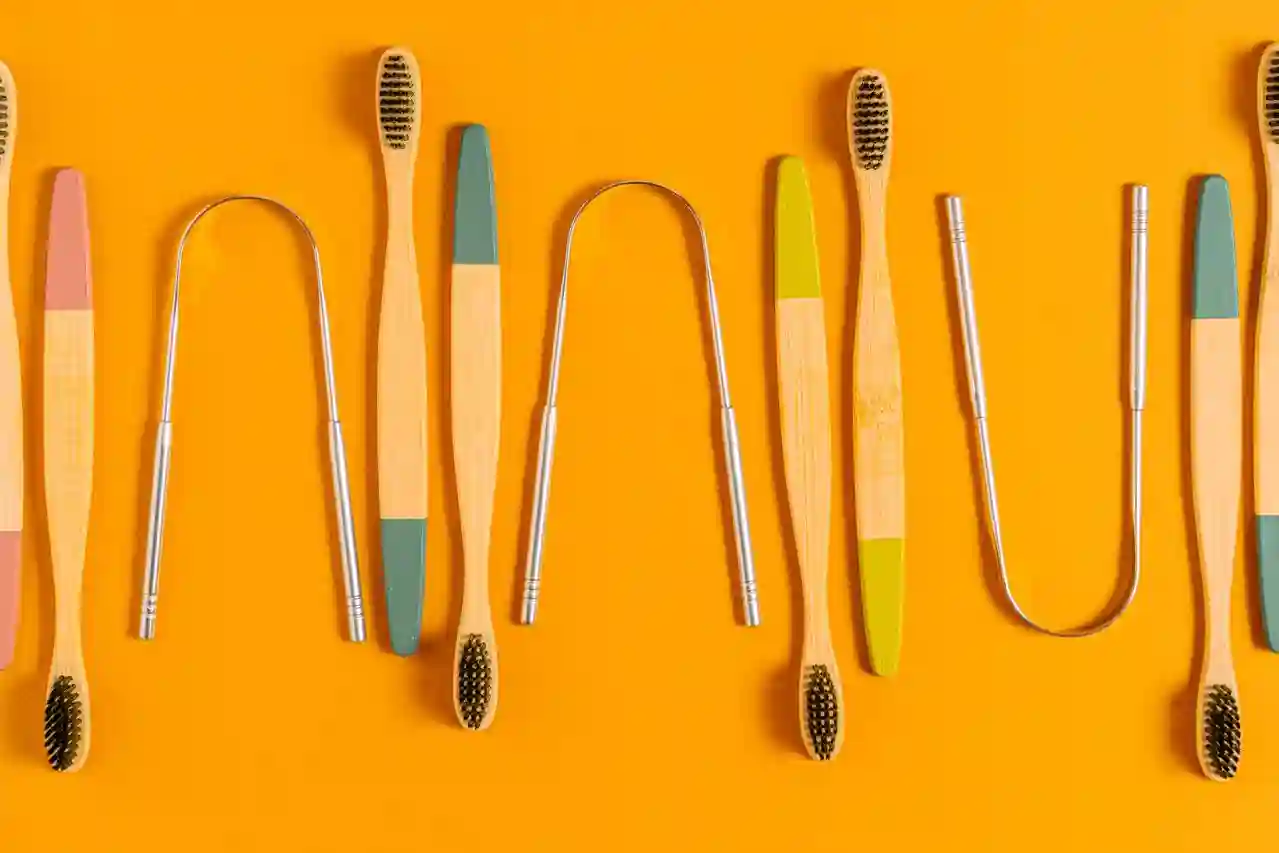
Pick up your tongue scraper, typically a thin U-shaped or arched tool made from stainless steel, copper, or plastic. Copper is the traditional Ayurvedic choice and is naturally antimicrobial.
Give your scraper a quick rinse under warm water before you begin, ensuring the surface that touches your tongue is clean and free of any residue from previous use.
Open your mouth, extend your tongue gently, and place the curved edge of the scraper as far back on your tongue as is comfortable without triggering a gag reflex. First-timers often start a little fur
Apply light, even pressure and draw the scraper forward in one smooth stroke from back to tip. You may notice a white, yellowish, or grayish coating being collected, which is the Ama, or accumulated r
After each stroke, rinse the scraper under running water to clear the collected coating before the next pass. You'll repeat the scraping motion five to ten times, gradually noticing less residue comin
Once little to no coating remains on the scraper, rinse your mouth thoroughly with warm water. Many practitioners follow this with oil pulling or proceed straight to brushing their teeth as part of th
Rinse your scraper well after the session and allow it to air dry. A well-maintained stainless steel or copper scraper can last for years with simple daily rinsing and an occasional deeper clean.
The Evidence
What research says about tongue scraping, where evidence is limited, and how its traditional roots relate to modern use.
Modest oral hygiene support; broader claims outpace the research
Small studies suggest tongue scraping may modestly reduce bad breath compared to brushing alone, but evidence is limited in scale and quality. Claims linking it to digestive health or detoxification are not supported by current clinical research.
A small number of studies suggest tongue scraping may reduce volatile sulfur compounds — a key driver of bad breath — more effectively than toothbrushing alone in the short term. These studies are limited in size and methodology. No well-designed trials support claims related to detoxification, organ health, or digestive function.
Documented in classical texts including the Charaka Samhita, tongue scraping forms part of Dinacharya — the Ayurvedic daily routine. Within this framework, tongue coating is interpreted as a reflection of digestive balance. These are traditional concepts that operate outside evidence-based medicine and have not been validated in clinical settings.
Overnight, reduced saliva flow allows bacteria and debris to accumulate between the tongue's papillae. Scraping lifts this material before it is swallowed or redistributed. This mechanical explanation is straightforward and biologically plausible, even where broader health claims remain unsubstantiated.
Inflated outcome claims around detoxification, improved digestion, and organ health are not backed by clinical evidence. The Ayurvedic diagnostic framework underlying these ideas has not been validated by modern research methods. Consumers should distinguish between the practice's plausible oral hygiene benefits and its wider traditional or wellness associations.
Applying too much pressure can cause minor irritation or abrasions; the scraper should glide, not drag. Starting mid-tongue reduces gag reflex risk. People with bleeding disorders or taking anticoagulant medications should consult a healthcare provider first. Scrapers should be cleaned after every use and replaced regularly.
If tongue coating is persistent, discoloured, or accompanied by other symptoms, a dentist or doctor should be consulted — these may reflect underlying conditions requiring professional attention. Tongue scraping is a self-care habit, not a substitute for professional oral or medical assessment.
Safety first
General guidance to help you decide whether this approach is appropriate for you. This is informational only and not a substitute for medical, psychological, or professional advice.
If you are pregnant, managing a health condition, recovering from injury or surgery, or taking medication, consult a qualified healthcare professional first.
Some situations call for extra care or a different approach. Share any conditions, injuries, or sensitivities with your practitioner before your first session.
Look for clear boundaries, transparent pricing, and practitioners who avoid fear-based claims or pressure to book frequent sessions.
Mild, short-lived effects such as tenderness, tiredness, or temporary soreness can occur. Rest, hydrate, and tell your practitioner how you respond.
For you?
A simple, human way to weigh it up. This is general guidance, not personal medical advice — a qualified practitioner can advise on your situation.
Gyfts is a discovery platform, not a medical provider. Nothing here diagnoses, treats or replaces professional care. In an emergency, contact your local emergency number.
Explore approaches
Other practices people often explore alongside tongue scraping (jihwa prakshalana).
Featured
These practitioners have chosen to be featured on Gyfts.
In their words
Before you book
FAQ
Some small studies suggest that tongue scrapers may be modestly more effective than toothbrushes at reducing volatile sulfur compounds associated with bad breath, though the evidence is limited and not definitive. Many oral health practitioners suggest that a dedicated tongue scraper may remove more surface debris than toothbrush bristles, which are designed for a different surface. Using either tool consistently as part of a complete oral hygiene routine is likely more important than which specific tool you choose.
In Ayurvedic practice, tongue scraping is traditionally recommended once daily, first thing in the morning before eating or drinking. Most practitioners who recommend it suggest a daily habit is more beneficial than occasional use, as consistency may help maintain lower bacterial load on the tongue surface over time. There is no established clinical guideline for frequency, as formal research in this area remains limited.
Copper has demonstrated antimicrobial properties in laboratory settings, and Ayurvedic tradition specifically favors copper scrapers for this reason. However, there is currently no direct clinical evidence establishing that copper tongue scrapers are more effective than stainless steel ones in everyday use. Both materials are durable and easy to clean; the choice is largely a matter of personal preference and alignment with traditional practice.
References
Educational sources that inform this overview. Inclusion is for context and does not imply endorsement.
Full citations are maintained by the Gyfts editorial team and reviewed periodically.
Keep exploring
Browse practitioners, explore honest overviews, and take what you learn to a conversation — at your own pace.