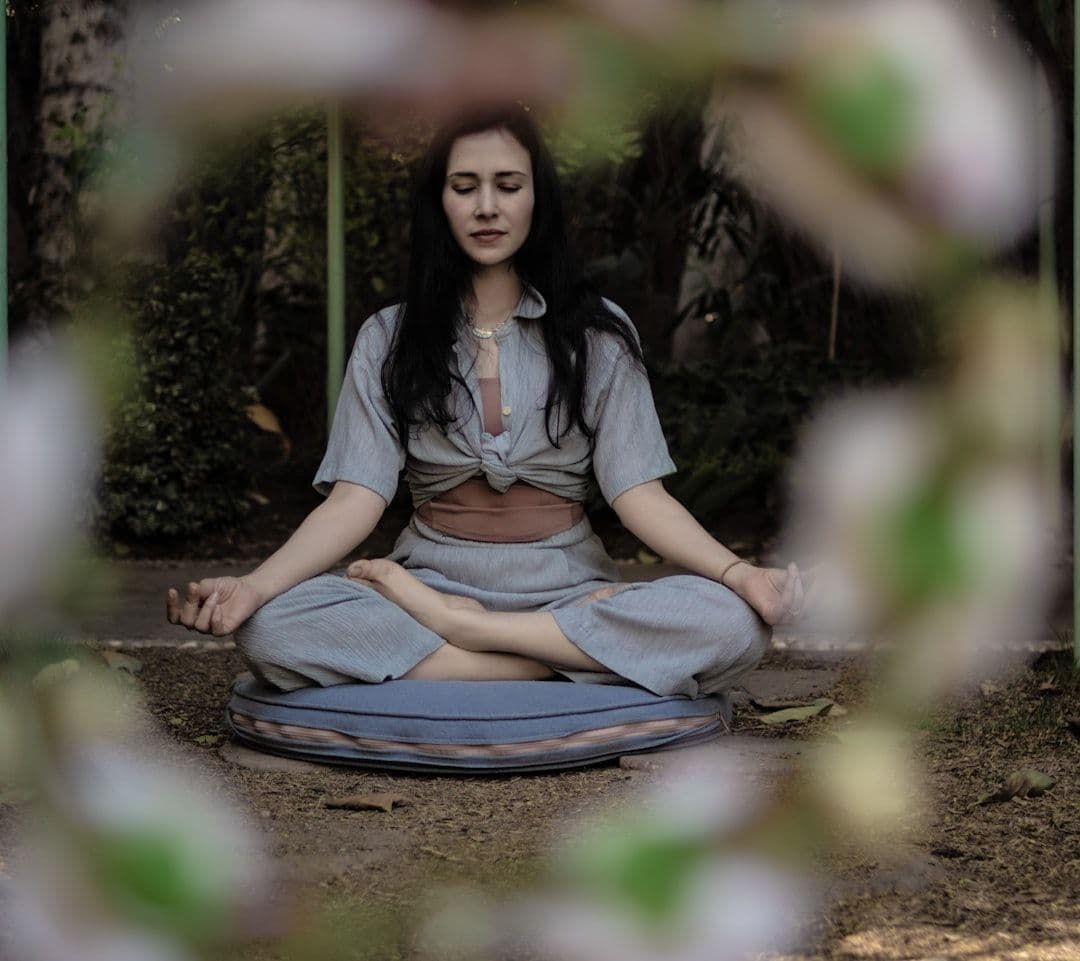
What it is
A Vedic technique using a personal mantra, practiced silently twice daily for 20 minutes.
Transcendental Meditation (TM) is a technique involving the silent repetition of a personalized mantra to facilitate deep relaxation and ...

At a glance
What it is
A Vedic technique using a personal mantra, practiced silently twice daily for 20 minutes.
Why explore it
Regular practice may ease stress, sharpen focus, and support better sleep and emotional balance.
How it’s experienced
Sit comfortably, close your eyes, and gently repeat your mantra — no concentration required.
Evidence context
Decades of studies show moderate benefits for stress and blood pressure, with consistent practice mattering most.
See the evidence snapshotSafety
Low risk for most adults; those with dissociative or psychotic conditions should consult a provider first.
See staying safeHistory & Origin
Transcendental Meditation (TM) is a deep meditation technique that aims to promote relaxation, stress reduction, and self-awareness.
Transcendental Meditation was developed and systematized by Maharishi Mahesh Yogi, an Indian spiritual leader and teacher of the Vedantic tradition, in the mid-1950s. Maharishi studied under Guru Dev (Swami Brahmananda Saraswati) and sought to make meditation practices more accessible to the general population by distilling them into a simple, standardized technique that could be learned in a few sessions. The technique draws from ancient Vedic traditions spanning thousands of years, but was repackaged and formalized for modern Western audiences seeking secular stress-relief and wellness benefits.
TM gained significant popularity in the West during the 1960s and 1970s, partly through endorsements by celebrities and The Beatles' association with Maharishi. The movement expanded rapidly, establishing meditation centers, training programs, and research institutions across North America, Europe, and beyond. Maharishi emphasized that TM required proper instruction from certified teachers and promoted standardized training protocols, which distinguished it from other meditation approaches available at the time.
The technique spread globally through dedicated organizations, most notably the Maharishi Foundation and the David Lynch Foundation (established in 2005 to bring TM to underserved communities). TM practitioners and organizations invested heavily in scientific research to validate claims, leading to hundreds of published studies examining physiological and psychological outcomes. Today, TM remains one of the most widely practiced and researched meditation techniques, though it maintains proprietary elements and certification requirements that distinguish it from freely available meditation methods.
Mechanism
Transcendental Meditation is best framed as a traditional, symbolic, energetic, reflective, or spiritual practice rather than a validated medical mechanism. Practitioners may use ritual, attention, sound, imagery, touch-free work, cards, symbols, prayer, or intention to support meaning-making and a sense of connection. People may explore it for reflection, calm, or spiritual context, while health claims should remain cautious and personal. Transcendental Meditation involves silently repeating a personalised mantra—a sound or word assigned by a trained instructor—to systematically settle the mind beyond thought into a state of restful alertness.
Your first visit
A typical session outline to help you feel prepared
A TM session is a quiet, eyes-closed practice where you silently repeat a personal mantra to let your mind settle into deep, restful awareness.
You find a comfortable chair and sit upright with your eyes open for a moment, letting your body relax naturally before you begin.
Your instructor guides you to gently close your eyes, signaling to your nervous system that it's time to shift inward and away from outer activity.
You silently begin repeating your personally assigned mantra, a specific sound with no meaning, allowing it to arise effortlessly in your mind without forcing it.
You continue repeating the mantra gently, never concentrating hard on it. If thoughts arise, that's completely normal and expected — you simply return to the mantra without judgment.
Over the next several minutes your mind naturally settles to quieter levels of thinking, and many people notice a sense of deep calm, heaviness, or warmth in the body.
Thoughts, images, or feelings may drift through — TM welcomes this as part of the process, a sign that accumulated stress is releasing naturally from the nervous system.
After about 15 to 20 minutes your instructor will guide you to stop repeating the mantra and rest in silence for another two minutes before opening your eyes.
You open your eyes slowly and take a moment to reorient, feeling the contrast between your settled inner state and the outer world around you.
The Evidence
What research says about Transcendental Meditation, where the evidence is strong, and where important gaps remain.
A well-studied practice with real findings and real limitations
TM has generated hundreds of peer-reviewed studies since the 1970s, with some credible findings around stress physiology and wellbeing. Methodological limitations and researcher conflicts of interest mean results should be interpreted with appropriate caution.
Some well-designed studies report measurable changes in stress markers, nervous system activity, and self-reported wellbeing. Effect sizes tend to be modest, replication is inconsistent, and publication bias likely favours positive results. The evidence is promising in places but not conclusive.
Many TM studies have small sample sizes, lack rigorous controls, or were conducted by researchers affiliated with TM organisations. These factors limit how confidently findings can be generalised. Independent replication of key results remains limited, and inflated outcome claims in popular media often go beyond what the data supports.
Rooted in ancient Vedic philosophy, TM is understood by practitioners as a means of accessing deeper levels of awareness beyond ordinary thought. Scientific research has explored its physiological correlates, but the inner, experiential dimension of the practice is not fully captured by measurable outcomes alone.
Maharishi Mahesh Yogi drew on teachings from his own guru within the Vedantic tradition to create a standardised, accessible technique. While the practice has ancient roots, its modern form was deliberately adapted for secular, Western audiences seeking stress relief and personal development.
Those with active or unstabilised psychiatric conditions, a history of dissociative episodes, or unprocessed trauma are advised to consult a qualified health professional before starting. TM is not a substitute for professional assessment or care, and instructor certification matters for safe, correct practice.
The technique involves a personalised mantra assigned by a trained teacher and is not designed for self-teaching from books or apps. Seeking an instructor certified by a recognised TM organisation helps ensure the technique is transmitted correctly and that appropriate support is available.
Safety first
General guidance to help you decide whether this approach is appropriate for you. This is informational only and not a substitute for medical, psychological, or professional advice.
If you are experiencing severe distress, suicidal thoughts, psychosis, acute trauma, or another serious mental health concern, seek qualified support first.
This approach is not suitable for diagnosis, treatment instructions, or decisions that require medical, legal, financial, or professional advice.
Look for clear boundaries, transparent pricing, and practitioners who avoid fear-based claims or pressure to book frequent sessions.
Treat any insight as one reflective perspective, not absolute truth. Important decisions should be considered with appropriate professional support.
For you?
A simple, human way to weigh it up. This is general guidance, not personal medical advice — a qualified practitioner can advise on your situation.
Gyfts is a discovery platform, not a medical provider. Nothing here diagnoses, treats or replaces professional care. In an emergency, contact your local emergency number.
Explore approaches
Other practices people often explore alongside transcendental meditation.
In their words
FAQ
You sit comfortably with eyes closed and silently repeat your personalized mantra. The mantra naturally anchors your attention, allowing your mind to settle into a quieter, more settled state. Rather than forcing concentration, you gently return to the mantra whenever your mind wanders. Most practitioners experience a state of deep relaxation where thoughts become less active and the mind achieves a quiet, alert awareness. Sessions typically last 15-20 minutes.
Individual results vary significantly. Some practitioners report feeling more relaxed immediately after their first session. Measurable improvements in stress, sleep, or emotional resilience often emerge within 2-4 weeks of consistent twice-daily practice, though this varies. Maximum benefits typically accumulate over months and years of regular practice. Consistency is key—sporadic practice may not produce noticeable effects.
TM is presented as a secular, non-religious technique without philosophical or spiritual requirements. The mantra is simply a sound tool, not a deity or spiritual entity. Many practitioners of various faiths (Christian, Jewish, Muslim, Buddhist, Hindu, and secular individuals) practice TM. However, some religious communities historically discouraged TM due to its associations with Eastern traditions; if you have concerns, discuss them with your spiritual adviser.
TM is distinguished by its use of a personalized, non-meaning mantra; standardized instruction protocol; emphasis on effortless practice rather than concentration; and organized, certified teacher training. Unlike mindfulness meditation (which focuses on observing thoughts without judgment) or concentration practices, TM uses the mantra to allow the mind to naturally settle into quieter states with minimal effort.
TM organizations emphasize that proper instruction from a certified teacher is essential for correct technique and maximum benefit. While books and apps on meditation exist, the TM technique requires personalized mantra selection and one-on-one verification. Learning from unauthorized sources risks improper practice that may not deliver claimed benefits and could be less effective or even counterproductive.
Twenty minutes may feel challenging initially, but most practitioners adapt within a few weeks. Starting with shorter durations (10 minutes) and gradually extending is sometimes possible with instructor guidance. If sitting still causes physical discomfort, discuss modifications (like using support cushions) with your instructor. If racing thoughts or restlessness persist, this is normal early on and typically resolves with continued practice.
TM is generally well-tolerated, but some practitioners experience temporary restlessness, mild anxiety, emotional release, or vivid dreams as the nervous system normalizes. These effects usually resolve within days or weeks. Individuals with severe mental health conditions (psychosis, active bipolar mania) should consult a mental health professional first, as meditation may rarely intensify symptoms. TM is not a substitute for medical care.
References
Educational sources that inform this overview. Inclusion is for context and does not imply endorsement.
Full citations are maintained by the Gyfts editorial team and reviewed periodically.
Keep exploring
Browse practitioners, explore honest overviews, and take what you learn to a conversation — at your own pace.