What it is
An ancient Maya practice blending herbal medicine, massage, ritual, and spiritual cleansing.
Ancient wisdom for body, spirit, and balance
At a glance
What it is
An ancient Maya practice blending herbal medicine, massage, ritual, and spiritual cleansing.
Why explore it
It may ease digestion, pelvic discomfort, grief, and stress through culturally rooted healing.
How it’s experienced
Expect abdominal massage, herbal preparations, copal ceremonies, and spiritual cleansing rituals.
Evidence context
Rooted in generations of indigenous wisdom, though formal clinical research remains very limited.
See the evidence snapshotSafety
Low-risk overall, but herbs, smoke, and abdominal work may need adjustments for some people.
See staying safeHistory & Origin
Mayan Healing is a centuries-old system of traditional medicine rooted in the indigenous cultures of Mesoamerica, particularly among the Maya peoples of present-day Mexico, Guatemala, Belize, Honduras, and El Salvador. It is a holistic practice that views physical health, emotional well-being, and spiritual harmony as inseparable. Practitioners, often known as curanderos, sobadores, or ajq'ijab' (daykeepers), traditionally serve as healers, spiritual guides, and community caretakers, drawing on an expansive body of ancestral knowledge passed down through generations.
The practice weaves together a range of healing modalities including herbal medicine, ritual ceremony, prayer, abdominal massage (commonly referred to as the Arvigo Techniques of Maya Abdominal Therapy in modern Western adaptations), spiritual cleansing known as limpia, and the use of the sacred Mayan calendar for timing and guidance. Plants, copal incense, and ceremonial fire are often incorporated as tools for restoring balance. Healers may also work with concepts of energetic imbalance, spiritual illness, or the presence of susto (fright illness) — conditions recognized within the traditional framework but not defined by Western biomedical models.
In contemporary settings, Mayan Healing is practiced both within indigenous communities, where it remains a living cultural tradition, and by trained practitioners outside those communities who have studied its principles formally. The practice has gained interest among individuals seeking complementary or integrative approaches to wellness, particularly those looking for culturally grounded, whole-person care. It is important to approach Mayan Healing with cultural respect and to seek out practitioners who are either from the tradition or trained with direct lineage authorization.
Mayan Healing traces its roots to the ancient Maya civilization, which flourished across Mesoamerica for thousands of years. The Maya developed a sophisticated understanding of medicinal plants, human anatomy, astronomy, and spiritual cosmology that informed their approach to health and illness. Healers held esteemed roles within their communities, and healing knowledge was considered sacred, often transmitted orally within family lineages or through apprenticeship with experienced practitioners.
After the Spanish colonization of Mesoamerica in the 16th century, much of this knowledge was suppressed, destroyed, or driven underground. Despite centuries of cultural disruption, many healing traditions survived within indigenous communities, preserved by dedicated practitioners who maintained the teachings across generations. In the latter half of the 20th century, renewed interest in indigenous wellness traditions — alongside efforts by Maya communities to reclaim and document their heritage — helped bring Mayan Healing to wider awareness. Today, it is practiced both within its communities of origin and by trained practitioners worldwide, with ongoing conversations about cultural stewardship and ethical access.
Mechanism
Mayan Healing works by addressing the physical, spiritual, and energetic layers of a person through a combination of ceremony, plant medicine, and hands-on therapeutic techniques.
Your first visit
A typical session outline to help you feel prepared
A Mayan Healing session blends hands-on bodywork, herbal medicine, and sacred ceremony to support your body, mind, and spirit through time-honored tradition.
Your healer greets you warmly and asks about your physical concerns, emotional state, and life circumstances, since Mayan Healing views the whole person as interconnected.
The healer may observe your posture, pulse, or abdomen and use traditional diagnostic methods passed down through their lineage to understand where imbalance lives in your body.
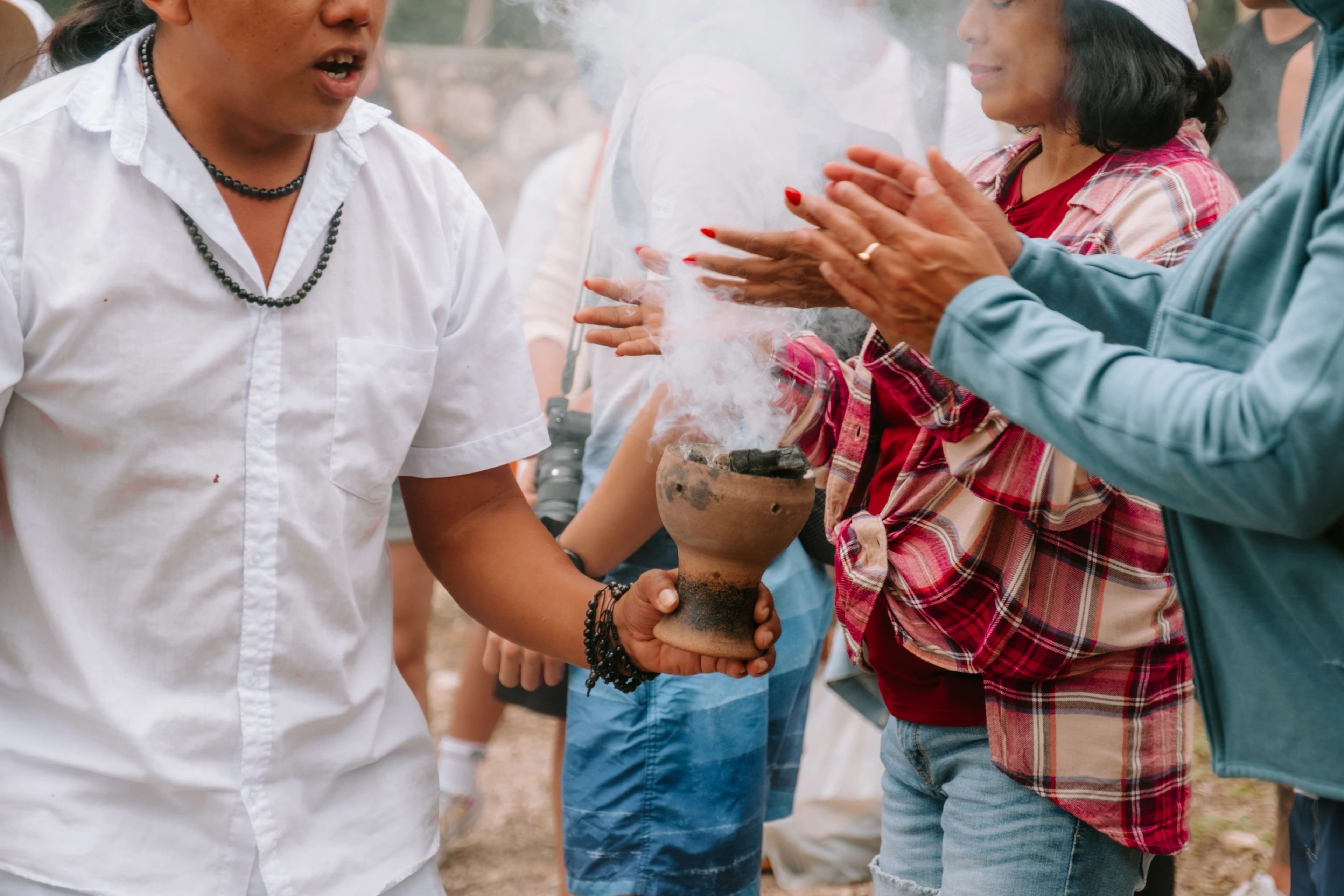
The healer opens the session with a prayer or invocation, often burning copal resin to cleanse the space and call in ancestral guidance before any physical work begins.
Warm herbal compresses or a steam infused with plants like oregano, basil, or rue may be prepared and applied to your abdomen or lower back to soften tissue and invite release.
The healer uses gentle, deliberate strokes on your abdomen to encourage circulation and support the repositioning of internal organs, which may feel like mild pressure or warmth.
Fragrant flower water or spiritual agua is brushed over your body in a sweeping ritual motion to clear stagnant energy, leaving your skin lightly misted and your senses calm.
The healer closes sacred space with a final prayer or copal blessing, signaling that the ceremonial container has been honored and your session is complete.
Your healer shares herbal recommendations, lifestyle suggestions, or dietary guidance rooted in Mayan tradition to help you sustain the benefits of the session at home.
The Evidence
What research and tradition tell us about Mayan Healing, and what remains an open question.
Centuries of practice; limited formal clinical research
Mayan Healing is grounded in indigenous knowledge passed down across generations, not clinical trials. Some individual plant compounds have shown early laboratory activity, but this does not confirm effectiveness in humans for specific health concerns.
No peer-reviewed clinical trials have assessed Mayan Healing as a complete system. Some constituent medicinal plants have been studied in ethnobotanical and pharmacological contexts, with preliminary findings in laboratory settings. These early signals do not confirm human clinical benefit. The gap reflects limited research funding for indigenous traditions, not a verdict on their value.
The Maya developed sophisticated systems of herbal medicine, anatomy, and cosmology long before formal scientific frameworks existed. Despite suppression following colonisation, these traditions survived within communities through oral transmission and apprenticeship. Many practitioners today are part of active efforts to preserve and document this heritage.
Within this tradition, health is understood as harmony between the body, the self, the natural world, and the community. Illness may be seen as disruption to that balance. This whole-person orientation aligns with holistic frameworks and may offer value for people seeking integrated approaches to wellbeing alongside conventional care.
Herbal preparations may interact with medications or be unsuitable during pregnancy or certain health conditions — always inform your healthcare provider. Abdominal massage should be avoided after recent surgery or with specific reproductive conditions. Smoke from copal used in ceremonies may affect those with respiratory sensitivities. Choose practitioners who are transparent about their training and scope.
Practitioners may carry titles such as curandero, sobador, or ajq'ij. Look for those who can speak clearly about their training, community lineage, and the limits of their practice. Be cautious of inflated outcome claims or anyone who discourages you from maintaining your relationship with qualified healthcare providers.
This tradition offers a culturally grounded, holistic approach to wellbeing — it is not a replacement for professional assessment, medical intervention, or mental health support when those are needed. If you are managing a serious or undiagnosed health concern, please consult a qualified healthcare provider. Mayan Healing may complement, but should not replace, appropriate professional care.
Safety first
General guidance to help you decide whether this approach is appropriate for you. This is informational only and not a substitute for medical, psychological, or professional advice.
If you are pregnant, managing a health condition, recovering from injury or surgery, or taking medication, consult a qualified healthcare professional first.
Some situations call for extra care or a different approach. Share any conditions, injuries, or sensitivities with your practitioner before your first session.
Look for clear boundaries, transparent pricing, and practitioners who avoid fear-based claims or pressure to book frequent sessions.
Mild, short-lived effects such as tenderness, tiredness, or temporary soreness can occur. Rest, hydrate, and tell your practitioner how you respond.
For you?
A simple, human way to weigh it up. This is general guidance, not personal medical advice — a qualified practitioner can advise on your situation.
Gyfts is a discovery platform, not a medical provider. Nothing here diagnoses, treats or replaces professional care. In an emergency, contact your local emergency number.
Explore approaches
Other practices people often explore alongside mayan healing.
In their words
FAQ
Mayan Healing is a distinct tradition rooted specifically in Maya indigenous culture, though it shares some overlap with the broader Latin American healing tradition known as curanderismo. Both involve herbal medicine, ceremony, and spiritual healing, but Mayan Healing draws from a specific cosmological framework tied to Maya history, calendar systems, and ancestral knowledge. The two traditions have developed along their own regional and cultural lines.
Many practitioners offer sessions to people of all backgrounds, though approaching the practice with genuine respect and cultural humility is considered important. Some traditional healers work primarily within their own communities, while others trained in formal programs may serve a broader clientele. It is always a good idea to ask a practitioner about their training, lineage, and perspective on working with clients from outside the tradition.
Mayan Healing is a traditional-use modality, meaning its foundations lie in centuries of indigenous practice rather than clinical research. Some individual herbal plants used within Maya healing traditions have been studied in ethnobotanical and early laboratory contexts, but there is currently limited peer-reviewed clinical evidence evaluating the practice as a whole system. Those interested should approach it as a complementary wellness practice and continue working with qualified healthcare providers for any medical concerns.
References
Educational sources that inform this overview. Inclusion is for context and does not imply endorsement.
Full citations are maintained by the Gyfts editorial team and reviewed periodically.
Keep exploring
Browse practitioners, explore honest overviews, and take what you learn to a conversation — at your own pace.