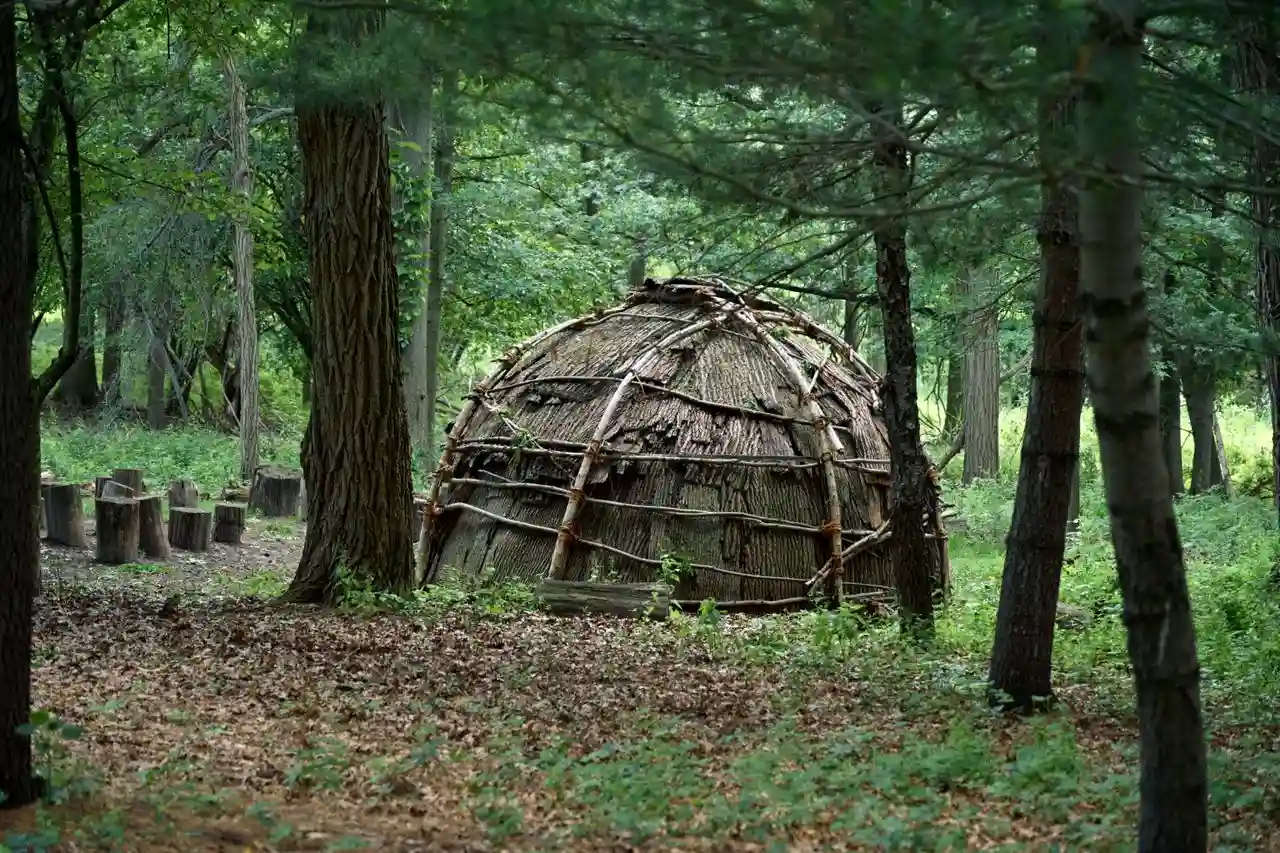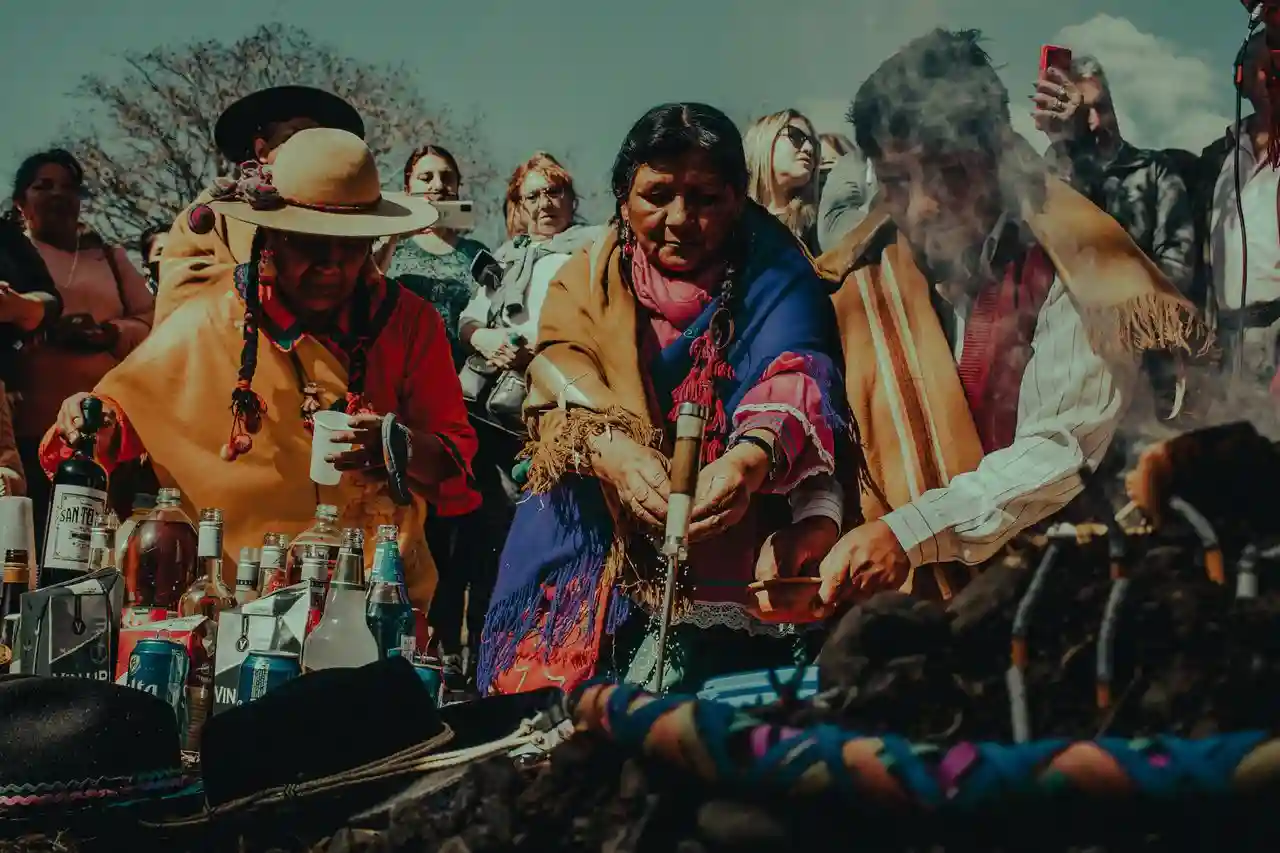
You arrive and nothing appears to be happening. There is a fire, there are stones in it, and there are people standing around it who have been there a while. This is the ceremony. The heating takes two or three hours and the waiting is not empty time — it is when you are told the protocol, when you meet the people you will be sitting with, and when you say anything the leader needs to know about your health.
Say it then. Not during. Once the door closes it is dark, it is loud with prayer and song, and it is a poor moment to mention a heart condition.
Going in
Entry follows an order, and in most traditions you enter low — the lodge is not tall enough to stand in. You sit on the ground in a ring around a central pit. The stones come in, carried carefully, and are set in the pit. Then the door closes.
The darkness is total or close to it. That surprises people more than the heat does at first. There is no ambient light, no phone, no watch, and no reliable sense of how long anything is taking.
The rounds
Water goes onto the stones and the steam arrives as a wave rather than a gradual warming. Most ceremonies run two to four rounds, and the whole thing lasts somewhere between one and three hours. Between rounds the flap opens briefly, cool air comes in, and there is a pause.
Each round has its own character depending on the tradition and the leader — prayer, song, silence, or an invitation for each person to speak. People sometimes cry. People sometimes say nothing for an hour. Both are ordinary.
When the heat peaks, lower yourself toward the ground. The air is cooler there and this is expected behavior, not a failure of endurance. Breathing through your mouth into your hands or into a towel helps.
Leaving
You can go. The between-round openings exist partly for this. Ask the leader beforehand how to signal, and then use it if you need to — feeling faint, confused, nauseated, or unable to catch your breath are all reasons to get out, and none of them is something to sit through.
This is the single clearest way to assess a ceremony before you commit to it. A leader who explains the exit protocol without being asked is running it properly. A leader who frames leaving as weakness, or who makes it socially difficult, is the pattern that appears in the accounts of ceremonies where people were seriously hurt.
Afterward
You come out and the outside air feels startling. Drink water, sit down, and eat something light rather than a full meal. Many people describe feeling deeply relaxed or emotionally open for the rest of the day. Some feel wrung out and quiet. Some feel nothing much in particular, which is also a normal outcome and not a sign you did it wrong.
Keep drinking water through the following day. If you feel confused, disoriented, or unwell hours afterward, that is not the ceremony working — that is a reason to seek medical attention, and the published fatal cases share a pattern of that step being delayed.