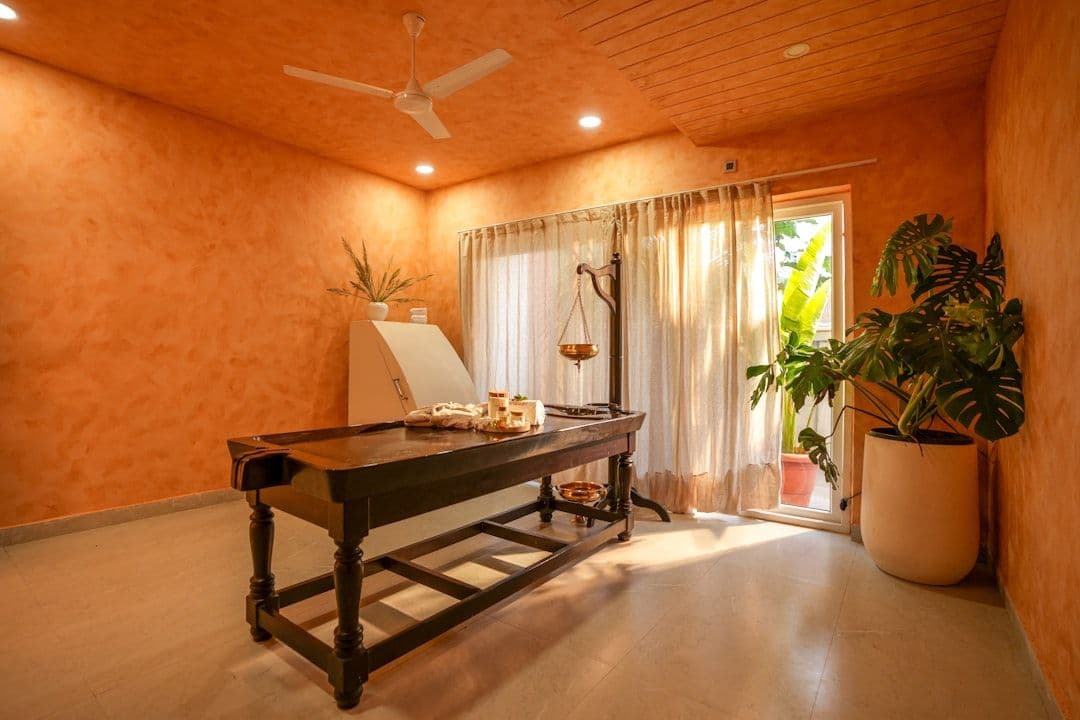
What it is
An ancient Indian practice using warm herbal oils to balance energy and ease tension.
Combines massage techniques with Ayurvedic principles to balance the body's energy systems (doshas) and promote overall wellness
At a glance
What it is
An ancient Indian practice using warm herbal oils to balance energy and ease tension.
Why explore it
People seek it for stress relief, better circulation, joint ease, and overall relaxation.
How it’s experienced
Warm herbal oils are applied in flowing strokes; sessions run 60–90 minutes and feel deeply calming.
Evidence context
Research is limited and early, so firm conclusions about its effectiveness can't yet be drawn.
See the evidence snapshotSafety
Consult your doctor if pregnant, or if you have heart disease, clotting issues, or allergies to oils.
See staying safeHistory & Origin
Ayurvedic Massage integrates massage techniques with Ayurvedic principles to balance the body, mind, and spirit.
Ayurvedic massage has its roots in Ayurveda, one of the world's oldest healing systems, which originated in India over 5,000 years ago. The practice is documented in ancient Sanskrit texts including the Charaka Samhita and Sushruta Samhita, which describe massage as an essential component of Ayurvedic medicine. Traditional Ayurvedic massage, known as 'abhyanga,' was developed as part of a comprehensive system that views health as a balance between the three doshas (constitutional types): Vata, Pitta, and Kapha.
The practice was traditionally passed down through generations of Ayurvedic physicians and healers in India. During the colonial period, Ayurvedic practices including massage faced suppression, but experienced a revival in the 20th century as India gained independence and sought to preserve its traditional healing heritage. Key figures in this revival included physicians like Vasant Lad and Deepak Chopra, who helped introduce Ayurvedic concepts to Western audiences.
Ayurvedic massage began spreading to the West in the 1960s and 1970s as interest in Eastern philosophy and alternative medicine grew. The practice gained particular traction in wellness centers, spas, and integrative health facilities. Today, it's practiced worldwide, though traditional training methods and authenticity vary significantly. Modern practitioners often blend traditional Ayurvedic techniques with contemporary massage therapy approaches, adapting the practice for diverse populations while maintaining its core principles of constitutional balance and holistic healing.
Mechanism
Ayurvedic Massage is generally described as working through skilled touch, careful pacing, and the body's response to pressure, movement, warmth, or stillness. Practitioners may focus on muscle tone, joint comfort, circulation, breath, or relaxation depending on the method. Traditional explanations may also include energy flow or whole-person balance. Research support varies by modality, so the experience is best framed as supportive care with outcomes that vary. An Ayurvedic massage practitioner applies warm, medicated oils and rhythmic hand techniques tailored to your individual constitution (dosha)—typically Vata, Pitta, or Kapha—as determined through initial assessment.
Your first visit
A typical session outline to help you feel prepared
An Ayurvedic massage blends ancient herbal oils, rhythmic strokes, and energy point work to support balance and deep relaxation tailored to your unique constitution.
Your session begins with a detailed consultation where the practitioner asks about your health history, lifestyle, sleep, digestion, and stress levels to understand your overall wellbeing.
The practitioner evaluates your Ayurvedic constitution, or dosha type, by observing your pulse, skin, and physical qualities, which guides every choice made during the session.
Based on your dosha and any current imbalances, the practitioner selects warm, herb-infused oils chosen specifically for your body type, such as sesame for Vata or coconut for Pitta.
You undress to your comfort level and lie on a padded table; modest draping is used throughout, and the practitioner checks in to ensure you feel at ease before beginning.
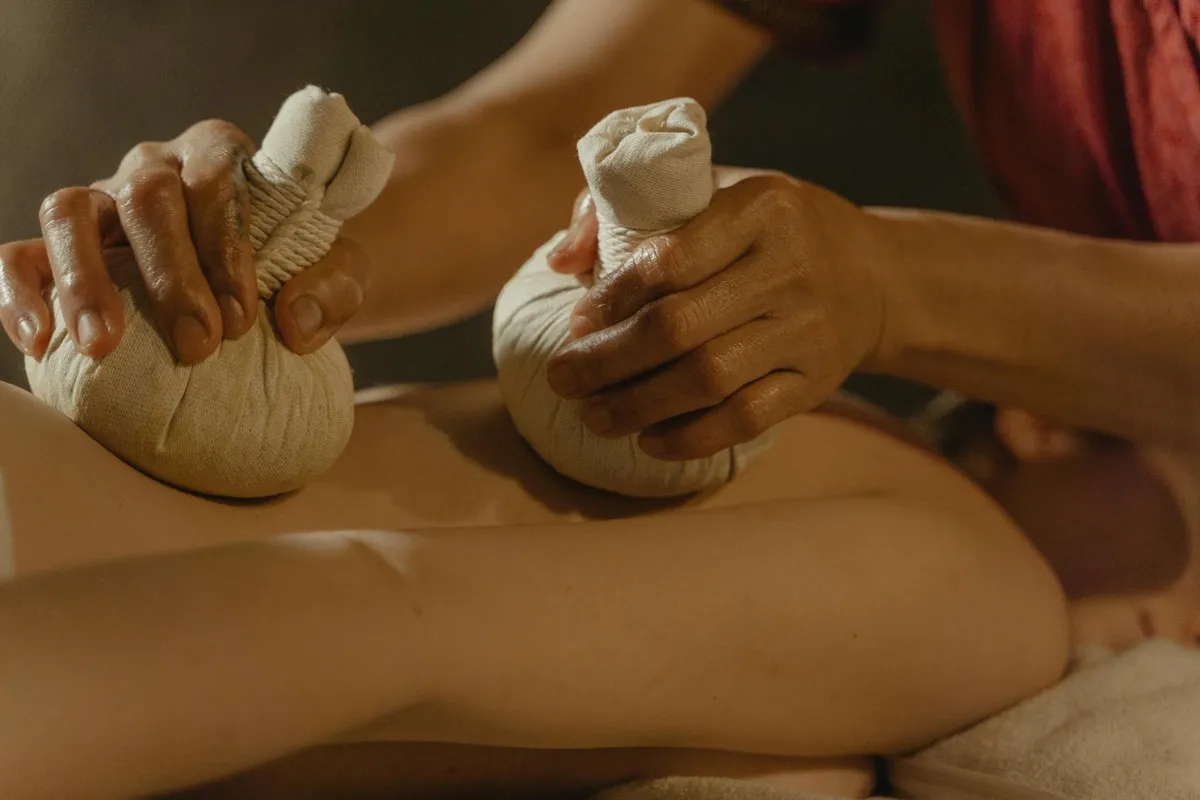
The practitioner applies the warmed herbal oil generously and works with long, rhythmic strokes along the limbs and circular movements over the joints, which may feel deeply soothing and grounding.
Gentle, focused pressure is applied to specific vital energy points called marma points located across the body, which may produce warmth, tingling, or a pleasant sense of release.
Many sessions include warm oil applied to the scalp and a gentle head massage, considered especially calming in Ayurveda and a hallmark of the tradition.
You rest briefly to allow the oils to absorb, then the practitioner shares personalized suggestions around diet, daily routine, or self-massage practices to support your balance between sessions.
The Evidence
What research and traditional knowledge currently tell us about Ayurvedic massage, and where the evidence has meaningful gaps.
Promising signals, but research remains early-stage
Ayurvedic massage draws on thousands of years of traditional use, but dedicated scientific research is limited. General massage therapy shows moderate evidence for stress and pain relief, though specific Ayurvedic claims around dosha balancing lack robust validation.
Most available studies are small-scale, lack control groups, or focus on broader Ayurvedic treatments rather than massage specifically. General massage therapy has moderate support for reducing anxiety, easing chronic pain, and improving circulation. These findings may partially apply here, but direct evidence for Ayurvedic massage as a distinct practice remains thin.
Abhyanga and related techniques are described in texts such as the Charaka Samhita, situating massage within a comprehensive framework of constitutional health. This traditional context gives the practice internal coherence and historical depth, even where modern clinical evidence has not yet caught up. Traditional use documentation is not equivalent to clinical trial evidence.
The theoretical framework of doshas and nadis is meaningful within Ayurvedic tradition but does not map directly onto biomedical models. Herbal oil effects in the context of massage are also under-researched. Practitioners and clients should distinguish between what is traditionally understood and what has been independently verified.
Consult a healthcare provider before proceeding if you are pregnant, have heart disease, kidney or liver conditions, cancer, or take blood thinners. Active infections, open wounds, uncontrolled hypertension, blood clots, and recent surgery are contraindications. Inform your practitioner of all medications and known allergies, as herbal oils can cause reactions in sensitive individuals.
Look for practitioners with formal training in Ayurvedic medicine or therapy, ideally affiliated with a recognised professional body. A thorough intake assessment covering your health history and constitution should precede any session. Ayurvedic massage is best understood as a complementary practice alongside, not a substitute for, professional medical assessment and care.
This classification acknowledges that Ayurvedic massage operates within its own coherent system of health principles rather than a biomedical one. It does not imply ineffectiveness, but signals that evidence standards differ from those applied to conventional interventions. Users are encouraged to explore it with curiosity while maintaining open communication with their existing healthcare providers.
Safety first
General guidance to help you decide whether this approach is appropriate for you. This is informational only and not a substitute for medical, psychological, or professional advice.
If you are pregnant, managing a health condition, recovering from injury or surgery, or taking medication, consult a qualified healthcare professional first.
Some situations call for extra care or a different approach. Share any conditions, injuries, or sensitivities with your practitioner before your first session.
Look for clear boundaries, transparent pricing, and practitioners who avoid fear-based claims or pressure to book frequent sessions.
Mild, short-lived effects such as tenderness, tiredness, or temporary soreness can occur. Rest, hydrate, and tell your practitioner how you respond.
For you?
A simple, human way to weigh it up. This is general guidance, not personal medical advice — a qualified practitioner can advise on your situation.
Gyfts is a discovery platform, not a medical provider. Nothing here diagnoses, treats or replaces professional care. In an emergency, contact your local emergency number.
Explore approaches
Other practices people often explore alongside ayurvedic massage.
In their words
FAQ
A session begins with a constitutional assessment to determine your dosha type and current imbalances. The practitioner then uses warm, herb-infused oils selected for your specific needs, applying long flowing strokes and working on marma points (energy points). Sessions typically last 60-90 minutes and end with personalized lifestyle recommendations.
Many people feel relaxed and rejuvenated after a single session. For addressing chronic conditions or achieving lasting balance, practitioners typically recommend a series of 6-12 sessions initially, followed by maintenance treatments every 2-4 weeks. The frequency depends on your individual needs, constitution, and health goals.
Practitioners use various base oils like sesame, coconut, or sunflower oil, often infused with herbs selected for your constitution. Common additions include ashwagandha, brahmi, or turmeric. All oils should be high-quality and appropriate for topical use. Inform your practitioner of any allergies or skin sensitivities beforehand.
Yes, Ayurvedic massage is based on individual constitutional assessment and uses specific oil blends and techniques to balance your doshas. It focuses on marma points and energy flow rather than just muscle tension, and includes lifestyle recommendations as part of the treatment approach.
Many conditions can benefit from Ayurvedic massage when properly modified, but you should always consult your healthcare provider first. Certain conditions like active infections, recent surgery, blood clots, or severe hypertension require medical clearance or may be contraindicated entirely.
References
Educational sources that inform this overview. Inclusion is for context and does not imply endorsement.
Full citations are maintained by the Gyfts editorial team and reviewed periodically.
Keep exploring
Browse practitioners, explore honest overviews, and take what you learn to a conversation — at your own pace.