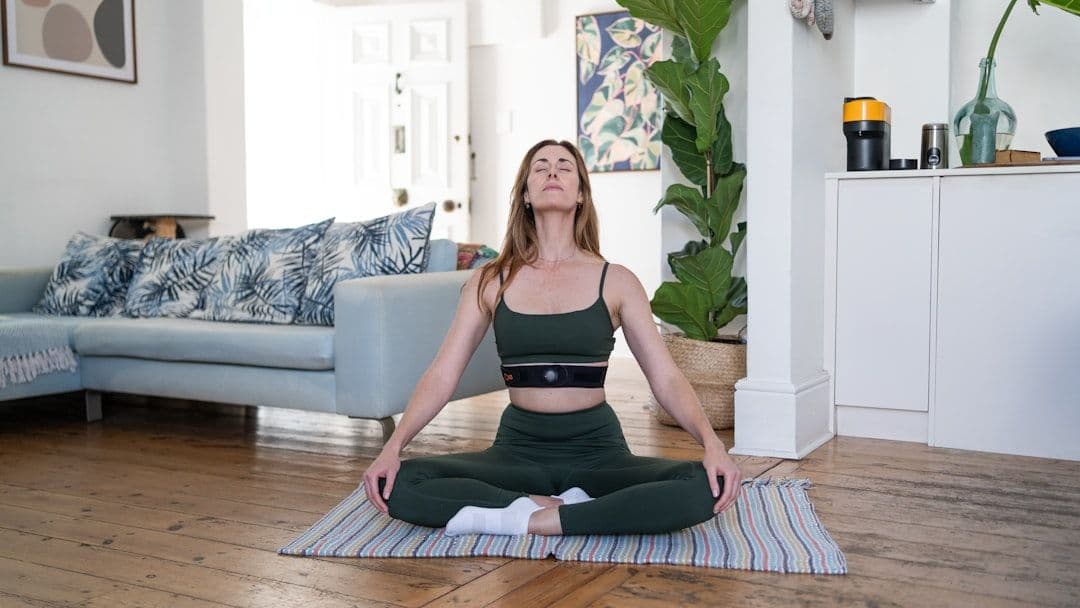
What it is
Breathwork uses guided breathing patterns to support relaxation and emotional awareness.
Various conscious breathing techniques designed to promote relaxation, emotional awareness, and mental clarity through controlled breathi...

At a glance
What it is
Breathwork uses guided breathing patterns to support relaxation and emotional awareness.
Why explore it
It may ease stress, improve sleep, and deepen self-awareness across a range of techniques.
How it’s experienced
A facilitator guides your breathing, and you may feel warmth, tingling, or emotional shifts.
Evidence context
Slow-paced techniques have solid stress and anxiety support, with emerging research for other uses.
See the evidence snapshotSafety
Safe for most adults, though those with heart or respiratory conditions should check with a doctor.
See staying safeHistory & Origin
Breathwork is a family of guided, conscious-breathing techniques — ranging from slow diaphragmatic breathing to more active patterned breathing styles — used to shift nervous-system state, sharpen focus, or process emotion in a session led by a trained facilitator.
Breathwork has ancient roots spanning multiple cultures and traditions. For thousands of years, controlled breathing practices have been integral to yoga (pranayama), meditation traditions in Buddhism and Hinduism, and indigenous healing ceremonies worldwide. These early practices recognized breath as a bridge between the conscious and unconscious mind, and as a tool for spiritual and physical healing.
The modern breathwork movement began emerging in the 1960s and 70s, influenced by both ancient wisdom and contemporary psychology. Leonard Orr developed Rebirthing Breathwork in the 1970s, while Stanislav Grof and his wife Christina created Holotropic Breathwork, combining breathing techniques with music and bodywork. These pioneers were influenced by their work in transpersonal psychology and studies of non-ordinary states of consciousness.
During the same period, researchers like Dr. Herbert Benson at Harvard Medical School were documenting the physiological benefits of controlled breathing, particularly the 'relaxation response.' This scientific validation helped bridge traditional breathing practices with modern healthcare approaches. The integration of breathwork into mainstream wellness began accelerating in the 1980s and 90s as stress-related health issues gained recognition.
Today, breathwork encompasses a diverse range of approaches, from gentle mindfulness-based breathing to more intensive transformational techniques. It has found applications in psychotherapy, trauma treatment, corporate wellness programs, and personal development workshops, representing a fusion of ancient wisdom with contemporary understanding of nervous system regulation and mental health.
Approaches
Breathwork isn’t a single method. Practitioners may train in one tradition or blend several — here are the styles you’re most likely to meet.
Yoga-based breath practices that may use counted breathing, breath holds, or alternate nostril breathing.
Uses a slow, steady breathing rhythm to support calm and nervous system regulation.
A structured, intensive breathwork method usually done with music, facilitation, and integration support.
Emphasizes nasal breathing, reduced breathing volume, and breath control exercises.
Mechanism
Breathwork is usually understood through movement, breath, attention, and repeated practice. A session may invite the body to explore safer patterns, steadier pacing, or a more settled relationship with sensation. Some traditions describe this as balancing energy or awareness, while contemporary explanations may focus on coordination, nervous system regulation, mobility, and confidence. Experiences vary by person, teacher, setting, and consistency. Breathwork operates through several interconnected physiological and psychological pathways.
Your first visit
A typical session outline to help you feel prepared
A breathwork session guides you through intentional breathing patterns to help release tension, process emotions, and reconnect with yourself — no experience needed.
Your practitioner will ask about your health history, stress levels, and intentions for the session. This helps them choose the right breathing style and pacing for you.
You'll settle onto a mat or comfortable surface, often with a blanket and eye mask nearby. Soft music is usually playing, and the room is kept dim and calm to help you relax.
Before breathing begins, your practitioner may invite you to set a personal intention — something you'd like to explore, release, or simply be present with during the session.
Your practitioner walks you through the specific breathing technique you'll use, such as a two-part inhale or circular connected breath. You'll practice a few rounds together before going deeper.
You'll follow the guided pattern for 20 to 45 minutes, breathing continuously while music supports the journey. You may feel tingling, warmth, emotional waves, or a sense of lightness — all of this is
Your practitioner will gently guide you back to natural breathing, slowing the pace and inviting your body to settle. This transition helps you land softly after the more active phase.
You'll spend several quiet minutes lying still, allowing whatever arose during the session to settle. This rest period is considered an important part of the experience, not just a cool-down.
You and your practitioner will briefly talk through what came up — emotions, sensations, or insights. You may be encouraged to hydrate, journal, and take it easy for the rest of the day.
The Evidence
What research says about breathwork, where the evidence is strong, where it is limited, and what to consider before starting.
Solid support for stress and anxiety; emerging evidence elsewhere
Breathwork has meaningful research support for reducing anxiety, stress, and panic symptoms through measurable physiological pathways. Evidence for more intensive techniques and complex conditions is promising but less established.
Simple, controlled breathing techniques show reliable evidence for reducing anxiety, lowering heart rate, and decreasing stress hormones. These effects are measurable within single sessions. Evidence for intensive techniques such as Holotropic Breathwork is more limited, with smaller studies and methodological challenges including difficulty creating control groups.
Slow exhalation stimulates the vagus nerve and activates the parasympathetic nervous system, producing measurable reductions in heart rate and blood pressure. Altered oxygen and carbon dioxide ratios contribute to the calm, clear-headed state many people report. These mechanisms give breathwork a plausible biological basis that supports its use alongside other wellbeing practices.
Breathwork is classified as a holistic modality because it engages physical, psychological, and emotional dimensions simultaneously. Regular practice may build interoceptive awareness — the ability to notice internal bodily signals — which supports emotional self-regulation. This multi-level engagement is part of why breathwork is used across diverse wellness contexts, from stress management to personal growth.
Pranayama in yoga, Buddhist and Hindu meditation traditions, and indigenous healing practices all incorporated breath as a central tool long before modern research. Contemporary breathwork methods, including Holotropic Breathwork, emerged in the 1970s from transpersonal psychology. This long cross-cultural history does not itself constitute clinical evidence, but it reflects sustained human interest in breath as a health resource.
People with cardiovascular conditions, respiratory disorders, epilepsy, severe hypertension, or active mental health crises should consult a qualified health professional before beginning breathwork. Intensive techniques carry higher risk and should only be undertaken with a trained practitioner. Temporary dizziness, tingling, or emotional releases can occur and are worth discussing with your practitioner in advance.
Breathwork research is complicated by the wide variety of techniques, small study sizes, and the difficulty of designing placebo controls for breathing practices. Many reported benefits rely on self-report. Breathwork is not a substitute for professional assessment or care for clinical conditions, and inflated outcome claims should be viewed with caution. It is best understood as a complementary practice within a broader approach to wellbeing.
Safety first
General guidance to help you decide whether this approach is appropriate for you. This is informational only and not a substitute for medical, psychological, or professional advice.
If you are pregnant, managing a health condition, recovering from injury or surgery, or taking medication, consult a qualified healthcare professional first.
Some situations call for extra care or a different approach. Share any conditions, injuries, or sensitivities with your practitioner before your first session.
Mild, short-lived effects such as tenderness, tiredness, or temporary soreness can occur. Rest, hydrate, and tell your practitioner how you respond.
Look for clear boundaries, transparent pricing, and practitioners who avoid fear-based claims or pressure to book frequent sessions.
For you?
A simple, human way to weigh it up. This is general guidance, not personal medical advice — a qualified practitioner can advise on your situation.
Gyfts is a discovery platform, not a medical provider. Nothing here diagnoses, treats or replaces professional care. In an emergency, contact your local emergency number.
Explore approaches
Other practices people often explore alongside breathwork.
In their words
FAQ
A typical session involves lying down comfortably while a trained facilitator guides you through specific breathing patterns. You may experience deep relaxation, emotional releases, physical sensations like tingling, or insights and memories. The practitioner provides continuous support and ensures your safety throughout the process. Sessions usually last 60-90 minutes and include time for integration and discussion afterward.
Many people experience some benefits after their first session, such as deep relaxation or emotional release. However, lasting changes typically develop over multiple sessions. For general wellness and stress management, 4-6 sessions may be sufficient. For deeper emotional work or trauma processing, ongoing sessions over several months may be beneficial. Your practitioner will work with you to determine the best approach for your specific needs.
While generally safe when practiced with qualified practitioners, breathwork is not suitable for everyone. People with cardiovascular conditions, severe respiratory problems, epilepsy, or acute mental health issues should avoid intensive breathing techniques or consult their doctor first. Pregnant women should also seek medical guidance. Gentle breathing practices are typically safe for most people, but it's important to work with experienced practitioners who can adapt techniques to your needs.
While both practices can promote relaxation and awareness, breathwork specifically uses altered breathing patterns to create physiological and psychological changes. Meditation typically focuses on observing the natural breath or other objects of attention. Breathwork sessions are often more active and may produce more intense experiences, while meditation is generally more contemplative and observational.
Holotropic breathwork, developed by Stanislav Grof, uses sustained accelerated breathing with evocative music to induce non-ordinary states of consciousness for therapeutic and spiritual exploration. It is more intensive than most breathwork styles and typically conducted in groups, with participants working in pairs. Sessions can produce profound emotional release, somatic experiences, and transpersonal phenomena. Holotropic breathwork has specific contraindications (including cardiovascular conditions, glaucoma, and history of psychosis) and should only be practised under trained facilitation. It sits at the intensive end of the breathwork spectrum.
References
Educational sources that inform this overview. Inclusion is for context and does not imply endorsement.
Full citations are maintained by the Gyfts editorial team and reviewed periodically.
Keep exploring
Browse practitioners, explore honest overviews, and take what you learn to a conversation — at your own pace.