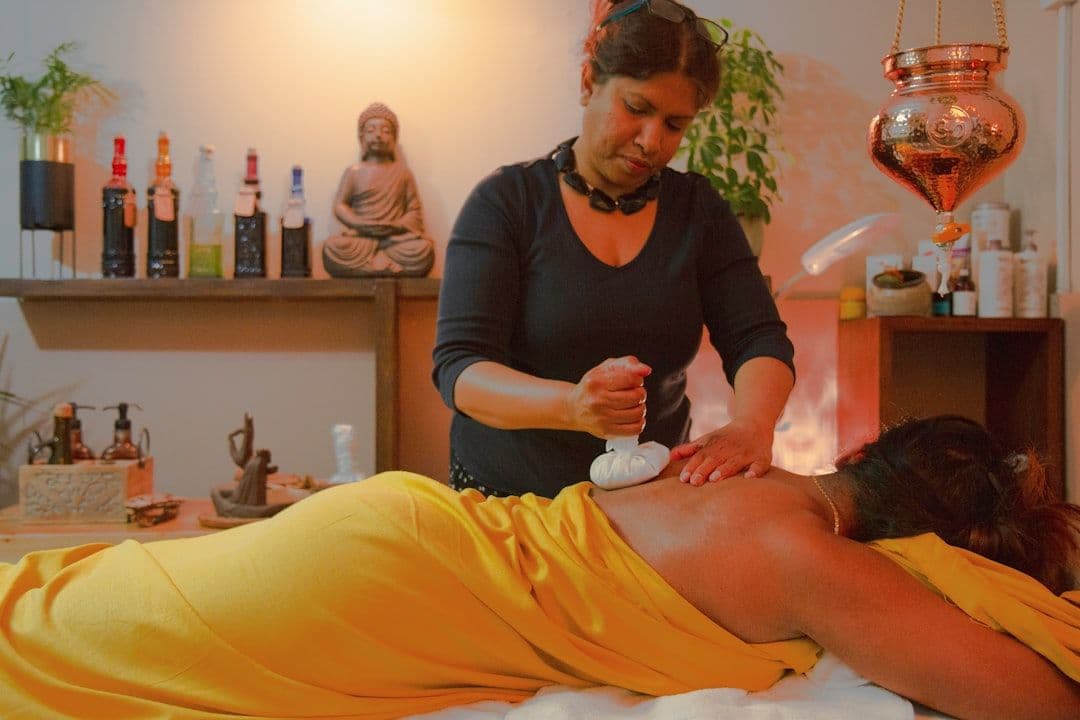
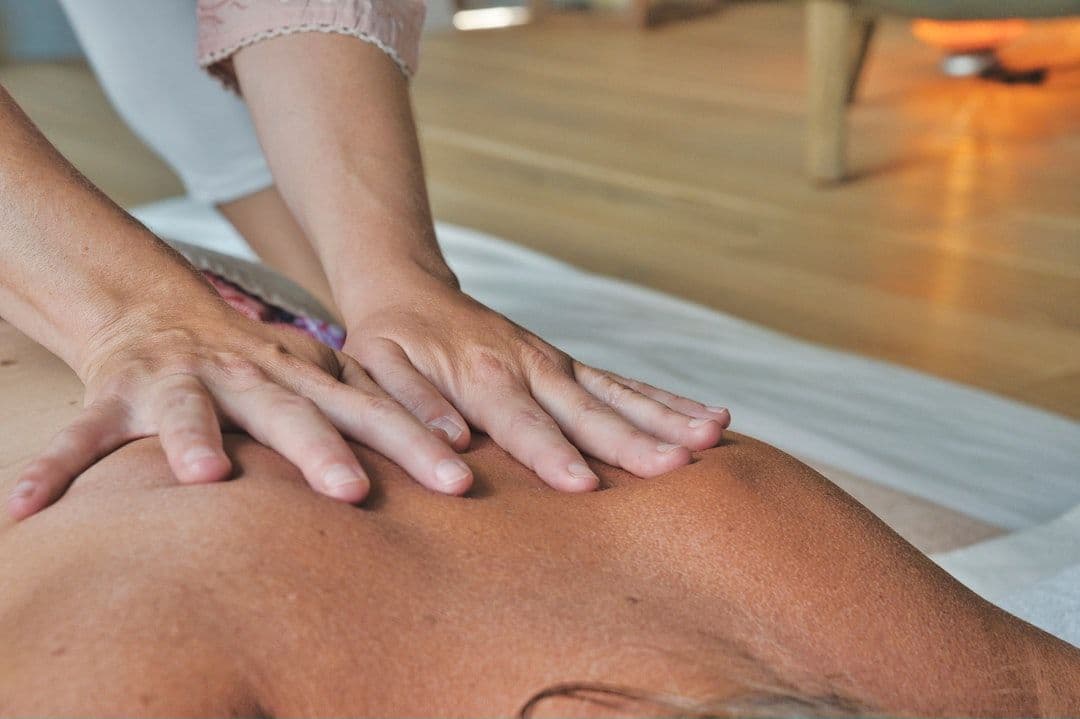
What it is
A gentle spinal massage using St. John's Wort oil to encourage deep relaxation and ease.
The gentlest touch for the spine — St John''s Wort oil, slow strokes, and deep stillness.
At a glance
What it is
A gentle spinal massage using St. John's Wort oil to encourage deep relaxation and ease.
Why explore it
Pairs beautifully with the Dorn Method to release back tension in a calm, unhurried session.
How it’s experienced
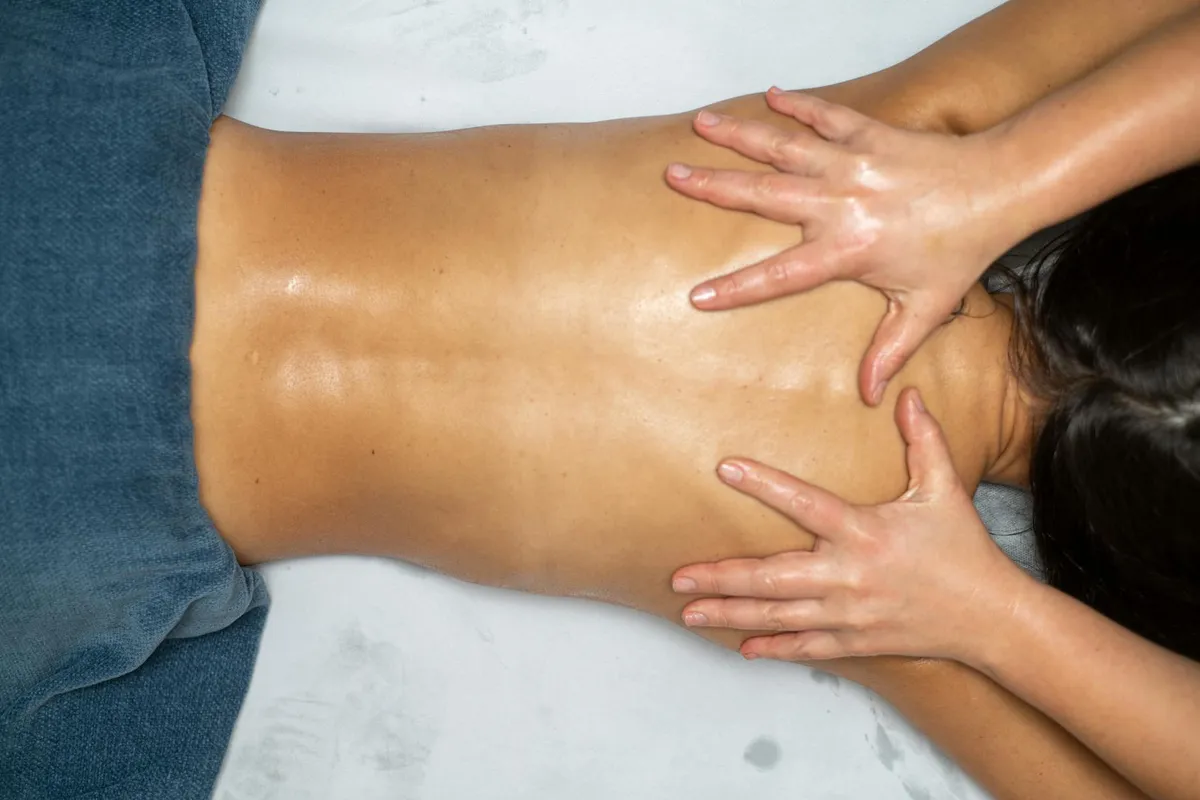
Feather-light strokes along your spine with warm oil often bring a profound sense of stillness.
Evidence context
Benefits likely come from gentle touch and relaxation; disc regeneration claims lack scientific support.
See the evidence snapshotSafety
Very gentle and low-risk, though avoid strong sun on treated skin for 24 hours after your session.
See staying safeHistory & Origin
Breuss Massage is a gentle manual therapy technique focused on the spine, using specific oil (St John''s Wort/Hypericum) and slow, sustained stretching movements to decompress vertebrae and nourish intervertebral discs.
Breuss Massage was developed by Rudolf Breuss (1899–1990), an Austrian naturopath from Bludenz in Vorarlberg. Breuss was a controversial figure who also promoted a ''Total Cancer Cure'' (a 42-day juice fast), which mainstream medicine considers dangerous and unfounded. His spinal massage technique, however, gained independent recognition as a gentle and beneficial bodywork approach, particularly when separated from his more extreme claims. The massage was adopted and popularised by Helmuth Koch and other Dorn Method practitioners as a preparatory or complementary treatment to Dorn spinal corrections. It is now taught worldwide as a standalone technique or in combination with the Dorn Method. The pairing of Breuss Massage (relaxation and disc nourishment) followed by Dorn Method (joint realignment) has become a standard treatment sequence in the German manual therapy tradition.
Mechanism
Breuss Massage is generally described as working through skilled touch, careful pacing, and the body's response to pressure, movement, warmth, or stillness. Practitioners may focus on muscle tone, joint comfort, circulation, breath, or relaxation depending on the method. Traditional explanations may also include energy flow or whole-person balance. Research support varies by modality, so the experience is best framed as supportive care with outcomes that vary. The recipient lies prone and the practitioner applies St John''s Wort oil along the entire length of the spine.
Your first visit
A typical session outline to help you feel prepared
A gentle, meditative session where warm oil and slow spinal strokes invite deep relaxation and a sense of ease in your body.
Your practitioner will ask a few questions about your spinal health, any discomfort, and what you're hoping to experience, so the session feels personal and safe.
You'll undress to your comfort level and lie face-down on the treatment table, with bolsters or pillows supporting you. Only your back will be uncovered during the session.
The practitioner gently warms St. John's Wort oil in their hands before any touch begins, so the first contact feels soothing rather than startling.
Using long, slow, feather-light strokes along either side of your spine, your practitioner works the warm oil into your back. The pace is deliberately unhurried and deeply meditative.
As the strokes continue, many people find their breathing slows and their mind quiets. It's completely normal to drift toward sleep during this part of the session.
Once the massage is complete, your back is gently covered with a layer of silk paper and a warm towel, cocooning you while your body absorbs the warmth and settles.
You'll be left to rest quietly for several minutes, undisturbed. This integration time is considered an essential part of the Breuss experience, not an afterthought.
Your practitioner will suggest you drink water, move gently, and avoid strenuous activity for the rest of the day to honor the calm your body has found.
The Evidence
What research says, what remains unproven, and how this gentle spinal technique may still offer real value through relaxation and manual therapy.
Gentle technique, unproven core claims, plausible relaxation benefits
No clinical studies exist for Breuss Massage specifically, and its central claim about disc regeneration via oil absorption is not anatomically supported. Its value likely lies in the well-documented benefits of gentle manual therapy, sustained touch, and deep relaxation.
Breuss Massage has not been studied in clinical trials. The core claim — that intervertebral discs absorb St John's Wort oil through skin and spinal tissue — is not supported by anatomy; adult discs are largely avascular. Where benefit is plausible, it aligns with broader evidence for gentle manual therapy and relaxation responses from sustained touch.
Within the MACH framework, Breuss Massage sits in the complementary category — used alongside, not instead of, conventional care. It is commonly used in practice as a preparatory step before Dorn Method corrections. Muscular tension reduction and deep relaxation are realistic outcomes supported by general manual therapy evidence.
Rudolf Breuss (1899–1990) developed this technique in Vorarlberg, Austria. It was later popularised by Helmuth Koch and integrated into the Dorn Method tradition as a standard preparatory sequence. The Breuss-then-Dorn pairing became a recognised approach in German manual therapy practice and is now taught internationally.
The massage itself is very gentle and carries low physical risk. St John's Wort oil can cause photosensitivity — recipients should avoid intense sun exposure on treated skin for 24 hours. Inflated outcome claims about disc regeneration should not lead anyone to delay professional assessment for serious or persistent spinal symptoms.
Without clinical studies, it is not possible to confirm specific outcomes beyond general relaxation and tension relief. The disc absorption mechanism is not anatomically plausible, but this does not negate all potential benefit from the manual therapy component. Practitioners and seekers should hold realistic expectations and not substitute this for professional spinal assessment.
Practitioners are usually trained through Dorn Method programmes or specialist bodywork courses, with more structured training traditions found in German-speaking countries where the Dorn-Breuss pairing has the longest history. If you have a known spinal condition, disc injury, or osteoporosis, discuss suitability with a qualified health professional before booking. This technique is not a substitute for professional assessment of spinal symptoms.
Safety first
General guidance to help you decide whether this approach is appropriate for you. This is informational only and not a substitute for medical, psychological, or professional advice.
Some situations call for extra care or a different approach. Share any conditions, injuries, or sensitivities with your practitioner before your first session.
If you are pregnant, managing a health condition, recovering from injury or surgery, or taking medication, consult a qualified healthcare professional first.
Look for clear boundaries, transparent pricing, and practitioners who avoid fear-based claims or pressure to book frequent sessions.
Mild, short-lived effects such as tenderness, tiredness, or temporary soreness can occur. Rest, hydrate, and tell your practitioner how you respond.
For you?
A simple, human way to weigh it up. This is general guidance, not personal medical advice — a qualified practitioner can advise on your situation.
Gyfts is a discovery platform, not a medical provider. Nothing here diagnoses, treats or replaces professional care. In an emergency, contact your local emergency number.
Explore approaches
Other practices people often explore alongside breuss massage.
In their words
FAQ
No — they are separate but complementary techniques. Breuss Massage is a gentle spinal oil massage for relaxation and tension release. The Dorn Method is a joint realignment technique using patient-assisted movement. They are often performed sequentially: Breuss first (to relax), then Dorn (to realign).
The traditional claim that oil can be absorbed through the skin to nourish intervertebral discs is not supported by anatomy — adult discs are largely avascular. The massage''s benefits likely come from muscular relaxation, gentle stretching, and the anti-inflammatory properties of topical St John''s Wort oil.
An oil infused with Hypericum perforatum flowers, traditionally used for its anti-inflammatory, wound-healing, and nerve-soothing properties. It gives the oil a characteristic red colour. Note: it can cause photosensitivity.
No — Breuss Massage is deliberately very gentle. The pressure is light, the pace is extremely slow, and most people find it deeply relaxing. Many fall asleep during treatment.
Typically 30–45 minutes for the massage itself, plus 10–15 minutes of rest afterward with the spine covered. When combined with a Dorn session, allow 90 minutes total.
Rudolf Breuss (1899–1990), an Austrian naturopath. The massage technique was adopted and popularised independently of his more controversial cancer treatment claims.
References
Educational sources that inform this overview. Inclusion is for context and does not imply endorsement.
Full citations are maintained by the Gyfts editorial team and reviewed periodically.
Keep exploring
Browse practitioners, explore honest overviews, and take what you learn to a conversation — at your own pace.