What it is
A gentle Bavarian technique using thumb pressure and your own movement to realign joints and spine.
Gentle alignment, active participation — the Bavarian approach to spinal health.
At a glance
What it is
A gentle Bavarian technique using thumb pressure and your own movement to realign joints and spine.
Why explore it
It may ease back and sacroiliac pain while empowering you with self-help exercises to use at home.
How it’s experienced
Expect guided movements, gentle thumb pressure on joints, and take-home exercises to support alignment.
Evidence context
Research is limited, so treat it as a thoughtful complement to care rather than a standalone solution.
See the evidence snapshotSafety
Low-risk and non-manipulative, but verify your practitioner's training and flag any bone health concerns.
See staying safeHistory & Origin
The Dorn Method (Dorn-Methode) is a manual therapy approach for correcting misalignments of the spine and peripheral joints using gentle thumb or hand pressure applied while the patient actively moves the affected joint or limb.
The Dorn Method was developed by Dieter Dorn (1938–2011), a Bavarian farmer and sawmill operator with no formal medical training, in the early 1970s. The story goes that Dorn sought help from an elderly local healer, Josef Müller, for acute back pain, and was treated with a simple thumb-pressure technique during movement. When Müller died shortly afterward, Dorn began practising and refining the approach, initially treating neighbours and eventually teaching it more widely. The method spread through the German-speaking world primarily via word of mouth and practitioner training workshops. It gained mainstream attention in Germany through the work of Helmuth Koch, Gerda Flemming, and other early students who systematised and documented the approach. Today the Dorn Method is practised by Heilpraktiker, physiotherapists, and massage therapists across Germany, Austria, Switzerland, and increasingly internationally. It remains primarily a German-speaking world modality with growing presence in Southern and Eastern Europe.
Mechanism
Dorn Method is generally described as working through skilled touch, careful pacing, and the body's response to pressure, movement, warmth, or stillness. Practitioners may focus on muscle tone, joint comfort, circulation, breath, or relaxation depending on the method. Traditional explanations may also include energy flow or whole-person balance. Research support varies by modality, so the experience is best framed as supportive care with outcomes that vary. Dorn Method is best understood through the way practitioners describe its session process, goals, and context.
Your first visit
A typical session outline to help you feel prepared
A Dorn Method session gently guides your spine and joints back into balance through light hands-on work and your own small movements working together.
Your practitioner starts by asking about any pain, past injuries, or areas of concern. This helps them understand your body's history before any hands-on work begins.
You lie down fully clothed while the practitioner checks whether your legs appear to be the same length, a key Dorn Method indicator of hip and spinal alignment.
You stand upright while the practitioner observes your spine, shoulders, and hips from different angles to identify where joints may be out of alignment.
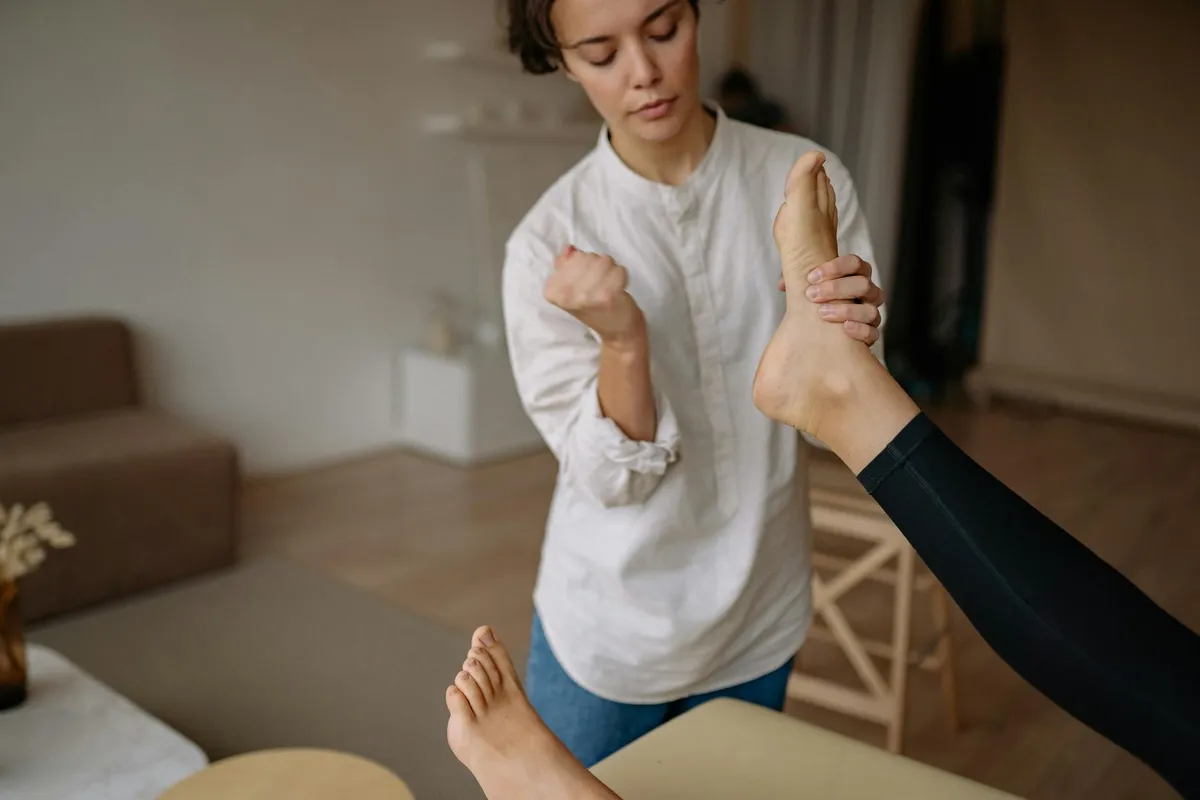
Starting at the hips or sacrum, the practitioner applies gentle thumb or hand pressure to a joint while you swing your free leg or arm in a slow, rhythmic motion to help the joint ease back into place.
The practitioner moves methodically up each vertebra, using light pressure paired with your active movements like turning your head or shifting your weight, so your muscles stay relaxed throughout.
Upper body joints including shoulders and the cervical vertebrae are addressed last, with the same gentle pressure-plus-movement approach and no forceful manipulation involved.
You rest briefly while the practitioner reassesses leg length and posture to see how your body has responded, and you share how everything felt during the session.
You leave with a short set of simple Dorn self-help exercises to practice daily, designed to encourage your body to maintain the alignment work done during your session.
The Evidence
What the research says, what remains uncertain, and how the Dorn Method fits within complementary musculoskeletal care.
Gentle manual approach with a thin research base
The Dorn Method has a favourable safety profile and a loyal following in German-speaking countries, but formal research is very limited. Its principles overlap with broader manual therapy evidence, though the specific protocol has not been independently validated.
No randomised controlled trials have been published in peer-reviewed English-language journals. Available documentation consists of observational reports and case series from Heilpraktiker practice. The method's conceptual overlap with manual therapy for spinal conditions is noted, but the specific Dorn protocol has not been independently validated. Evidence should be considered preliminary.
Conventional orthopaedics distinguishes between functional and true anatomical leg length discrepancy — a distinction that differs from Dorn's model of hip misalignment. The term 'subluxation' is used differently here than in medical terminology. The active self-help exercise component aligns well with evidence supporting patient participation in musculoskeletal rehabilitation, which is a recognised strength of the approach.
Dieter Dorn, a Bavarian farmer with no formal medical training, developed the approach after receiving treatment from a local healer. The method spread through German-speaking countries via practitioner workshops and was systematised by early students. It remains primarily a German-speaking world modality, now practised internationally by Heilpraktiker, physiotherapists, and massage therapists.
No high-velocity thrusts are used, which reduces risks associated with forceful spinal manipulation. The method is not appropriate for acute inflammatory conditions, fractures, severe osteoporosis, or conditions requiring surgical assessment. Self-help exercises should be practised without pain. Practitioner training varies — formal certification exists but is not universally standardised, so checking a practitioner's background is advisable.
Practitioners include Heilpraktiker, physiotherapists, and massage therapists with additional Dorn training. Formal certification programmes exist but differ in depth and are not universally regulated. When seeking a session, ask about training background, contraindication screening, and whether self-help exercises will be included. The Dorn Method is not a substitute for professional assessment of serious spinal or joint conditions.
Without controlled trials, it is not possible to separate the specific effects of the Dorn protocol from general benefits of manual contact, therapeutic attention, and active exercise. Inflated outcome claims sometimes appear in practitioner marketing and should be viewed critically. Users are encouraged to maintain conventional care for any underlying condition and to inform their primary healthcare provider about complementary therapies they are using.
Safety first
General guidance to help you decide whether this approach is appropriate for you. This is informational only and not a substitute for medical, psychological, or professional advice.
Some situations call for extra care or a different approach. Share any conditions, injuries, or sensitivities with your practitioner before your first session.
If you are pregnant, managing a health condition, recovering from injury or surgery, or taking medication, consult a qualified healthcare professional first.
Look for clear boundaries, transparent pricing, and practitioners who avoid fear-based claims or pressure to book frequent sessions.
Mild, short-lived effects such as tenderness, tiredness, or temporary soreness can occur. Rest, hydrate, and tell your practitioner how you respond.
For you?
A simple, human way to weigh it up. This is general guidance, not personal medical advice — a qualified practitioner can advise on your situation.
Gyfts is a discovery platform, not a medical provider. Nothing here diagnoses, treats or replaces professional care. In an emergency, contact your local emergency number.
Explore approaches
Other practices people often explore alongside dorn method.
In their words
FAQ
Both address spinal alignment, but the approach is fundamentally different. Chiropractic often uses high-velocity thrusts to adjust joints. The Dorn Method uses gentle sustained pressure while the patient actively moves, making it non-manipulative and generally gentler.
No — the corrections should feel like pressure but not pain. If a correction is painful, the practitioner adjusts their technique. The method is designed to be gentle enough for most people.
Many people notice improvement after 1–3 sessions for straightforward complaints. Chronic or recurring conditions may require more sessions plus consistent self-help exercises. The self-help component is considered essential for lasting results.
Simple daily movements taught by the practitioner to maintain corrections — typically 3–5 exercises taking 5–10 minutes per day. They involve specific leg swings, hip movements, or neck stretches designed to reinforce the session work.
A gentle spinal massage using St John''s Wort oil, often performed before or after Dorn work. It aims to gently stretch the spine and nourish the intervertebral discs. Named after Austrian healer Rudolf Breuss.
Dieter Dorn (1938–2011), a Bavarian farmer with no formal medical training, developed the method in the early 1970s after being treated by a local healer. It spread through the German-speaking world via practitioner training.
Evidence is very limited — no RCTs have been published. The method''s gentle, non-manipulative nature aligns with principles supported in manual therapy research, but the specific Dorn protocol has not been independently validated.
References
Educational sources that inform this overview. Inclusion is for context and does not imply endorsement.
Full citations are maintained by the Gyfts editorial team and reviewed periodically.
Keep exploring
Browse practitioners, explore honest overviews, and take what you learn to a conversation — at your own pace.