What it is
Eurythmy therapy uses therapeutic movement and sound gestures rooted in anthroposophic medicine.
Therapeutic movement through the language of sound and gesture
At a glance
What it is
Eurythmy therapy uses therapeutic movement and sound gestures rooted in anthroposophic medicine.
Why explore it
It may gently support stress relief, breathing, emotional balance, and body awareness.
How it’s experienced
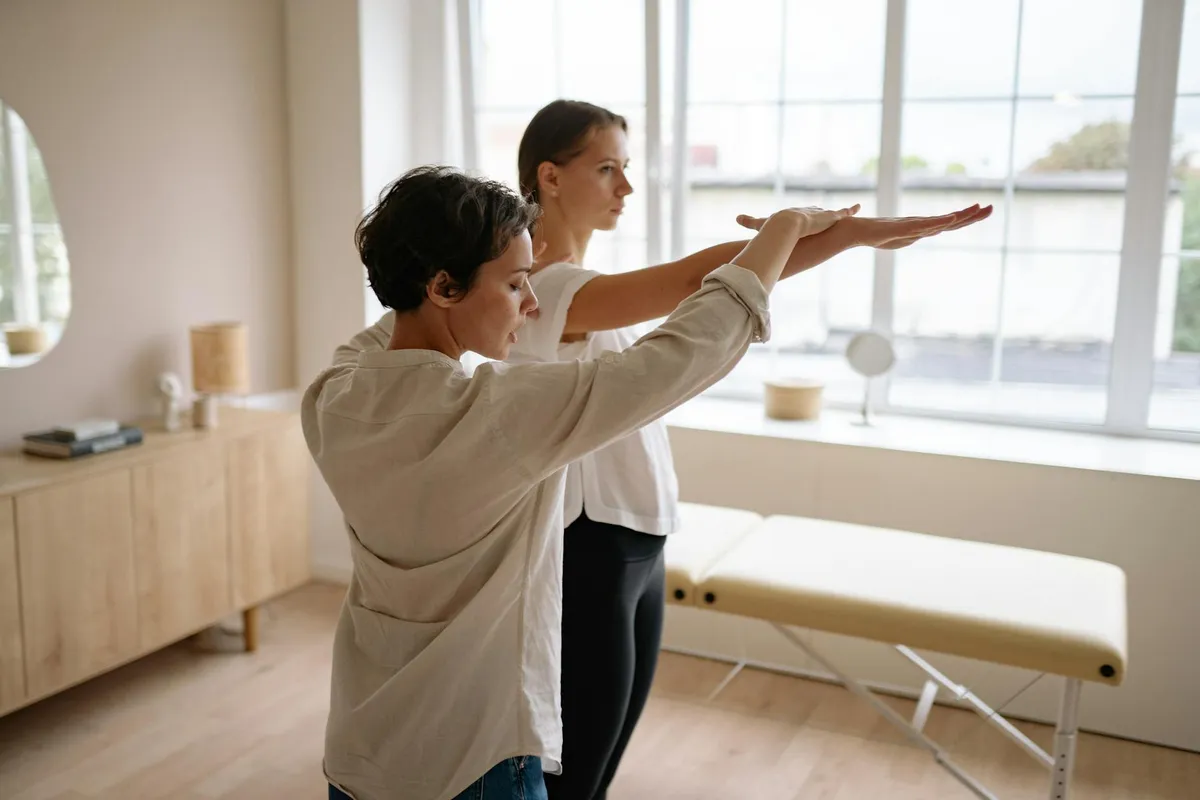
A trained therapist guides expressive movement to speech or music in a clinical setting.
Evidence context
Research is limited and mostly small-scale, so it's best explored as a complementary option.
See the evidence snapshotSafety
This gentle, non-invasive practice is generally considered safe for most people, including children.
See staying safeHistory & Origin
Eurythmy therapy translates the inherent qualities of language and music into visible, therapeutic movement. Each vowel and consonant has a corresponding gesture, and practitioners prescribe specific movement sequences tailored to the patient's condition. Sessions typically involve 15–30 minutes of guided movement, often alongside anthroposophic medical consultation. The therapy addresses physical conditions (musculoskeletal, respiratory, cardiovascular), psychological states (anxiety, depression, exhaustion), and developmental conditions in children. It is part of the wider anthroposophic medicine system and is integrated into hospital care in several European countries.
Mechanism
Eurythmy Therapy is generally framed as a guided process for attention, reflection, learning, and emotional integration. Depending on the method, a practitioner may use conversation, imagery, structured exercises, body awareness, or therapeutic techniques to help the person explore patterns and choices. It should not be presented as a standalone solution or a substitute for urgent care, but it may support self-understanding when practiced within an appropriate scope. Eurythmy therapy works through the principle that specific movement patterns resonate with and influence particular organ systems and physiological processes.
Your first visit
A typical session outline to help you feel prepared
A eurythmy therapy session guides you through gentle, intentional movement sequences designed to support balance and vitality in body, soul, and spirit.
Your therapist greets you warmly and takes time to learn about your health history, current concerns, and what brings you to eurythmy therapy. This conversation helps shape your personal movement prescription.
Together you and the therapist clarify a focus for the session, whether that is physical ease, emotional steadiness, or general wellbeing. This anchors the therapeutic movements that follow.
You are invited to change into loose, comfortable clothing and soft shoes or go barefoot, allowing your body freedom of movement throughout the session.
The therapist gently introduces you to the space and leads you through simple orienting movements to help you become present in your body and comfortable with moving expressively.
The heart of the session involves following specific therapeutic eurythmy gestures and sequences, often drawn from speech sounds or musical tones, guided by the therapist's live demonstration and spoken direction.
You practice assigned movements on your own while the therapist observes, offers gentle corrections, and may accompany the movements with spoken verse or music to deepen the experience.
After the movement work you rest quietly, allowing your nervous system and senses to absorb and integrate the session. Many people notice a feeling of warmth, calm, or quiet clarity at this stage.
Your therapist checks in about what you noticed and may send you home with a short daily movement exercise to practice between sessions, which is considered an important part of the therapeutic process.
The Evidence
What the research says about eurythmy therapy, its clinical use, and where the evidence currently stands.
Emerging practice with a small but growing research base
Eurythmy therapy is an established part of anthroposophic medicine in several European countries, but formal clinical research remains limited. Existing studies are generally small-scale, and independent replication is needed before strong conclusions can be drawn.
Published studies have explored eurythmy therapy for conditions including attention difficulties in children, fatigue, and anxiety. Results are generally positive in tone, but most trials are small, lack robust controls, and come primarily from anthroposophic research centres. Independent replication is limited. The evidence base does not yet support strong clinical conclusions.
Within the MACH framework, eurythmy therapy sits in the Holistic category — it works with the whole person rather than isolated symptoms. Its theoretical basis draws on anthroposophic medicine's three-fold model of human physiology. This framework is not part of conventional biomedical science, and its principles should be understood within their own tradition rather than evaluated solely by biomedical standards.
In Germany, Switzerland, and the Netherlands, eurythmy therapy is offered within anthroposophic hospitals and integrative clinics, often alongside conventional medical care. It is typically used as a supportive adjunct rather than a standalone intervention. This clinical integration reflects institutional acceptance within specific healthcare systems, though it is not widely available outside those contexts.
The movements involved are gentle and adaptable, making the practice accessible across age groups and physical abilities. No significant adverse effects are documented in the literature. As with any movement-based approach, sessions should be adapted for individuals with significant physical limitations. It is not a substitute for professional assessment of serious or undiagnosed health concerns.
Eurythmy therapy is distinct from artistic eurythmy and requires dedicated therapeutic training, typically at postgraduate level, through recognised anthroposophic institutions. Professional bodies exist in several European countries. When seeking a practitioner, it is reasonable to ask about their training background, professional registration, and whether they work in coordination with your existing healthcare providers.
The anthroposophic principles underlying eurythmy therapy are not part of mainstream biomedical science, and some of its explanatory concepts cannot be tested using standard research methods. People should be cautious of inflated outcome claims. Eurythmy therapy is best understood as a supportive practice within an integrative care context, not a primary intervention for serious health conditions.
Safety first
General guidance to help you decide whether this approach is appropriate for you. This is informational only and not a substitute for medical, psychological, or professional advice.
If you are pregnant, managing a health condition, recovering from injury or surgery, or taking medication, consult a qualified healthcare professional first.
Some situations call for extra care or a different approach. Share any conditions, injuries, or sensitivities with your practitioner before your first session.
Look for clear boundaries, transparent pricing, and practitioners who avoid fear-based claims or pressure to book frequent sessions.
Mild, short-lived effects such as tenderness, tiredness, or temporary soreness can occur. Rest, hydrate, and tell your practitioner how you respond.
Explore approaches
Other practices people often explore alongside eurythmy therapy.
In their words
FAQ
You perform specific therapeutic movements guided by a trained eurythmy therapist. Sessions typically last 30–45 minutes and include movements corresponding to speech sounds and musical elements, prescribed for your individual condition.
No. Eurythmy is a performing art. Eurythmy therapy is its clinical application, requiring additional medical training and prescribed within the anthroposophic medical framework.
It is used for musculoskeletal conditions, respiratory issues, cardiovascular regulation, anxiety, depression, fatigue, and developmental conditions in children. It is most commonly practised alongside other anthroposophic treatments.
Primarily in Germany, Switzerland, the Netherlands, and other European countries with established anthroposophic medical systems. Some practitioners work in the UK, USA, and Australia.
References
Educational sources that inform this overview. Inclusion is for context and does not imply endorsement.
Full citations are maintained by the Gyfts editorial team and reviewed periodically.
Keep exploring
Browse practitioners, explore honest overviews, and take what you learn to a conversation — at your own pace.