What it is
Gyrotonic uses specialized equipment to guide fluid, spiral movements that free the spine.
Moving in spirals — the body''s natural language of motion, on equipment designed to follow it.
At a glance
What it is
Gyrotonic uses specialized equipment to guide fluid, spiral movements that free the spine.
Why explore it
It may improve spinal mobility, posture, and joint health through three-dimensional movement.
How it’s experienced
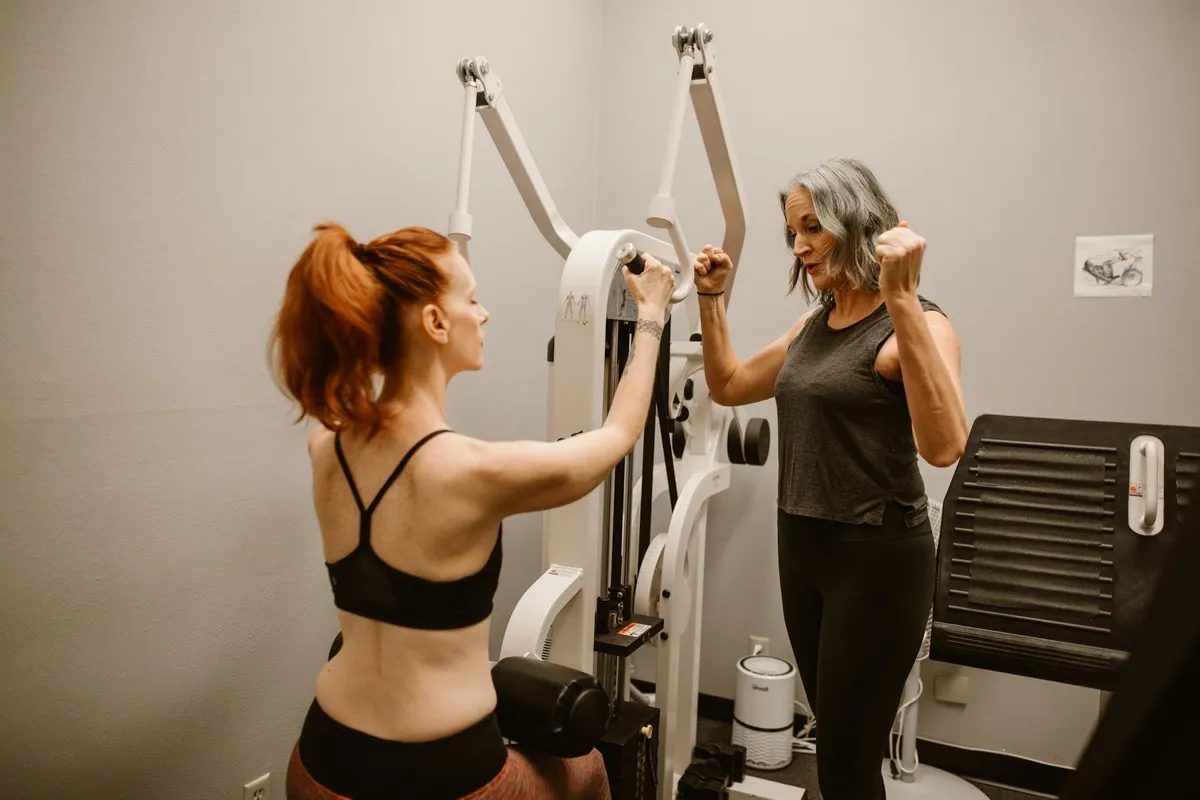
A certified trainer guides you through breath-coordinated spirals on the signature pulley-tower machine.
Evidence context
Research is limited and early-stage, though small studies hint at mobility and postural benefits.
See the evidence snapshotSafety
Equipment is adjustable for most bodies, but spinal conditions call for medical clearance first.
See staying safeHistory & Origin
Gyrotonic (and its mat-based counterpart Gyrokinesis) is a movement methodology using continuous spiralling and wave-like motion patterns to develop spinal mobility, joint freedom, and functional strength.
Gyrotonic was created by Juliu Horvath (born 1942), a Romanian-born professional ballet dancer who defected to the United States via Italy in the 1970s. After career-ending injuries, Horvath turned to yoga, swimming, dance, and gymnastics to rehabilitate, eventually synthesising these influences into a movement system he initially called ''Yoga for Dancers'' and later ''White Cloud.'' In the 1980s, he designed the proprietary equipment (the Gyrotonic Expansion System) to provide the specific resistance qualities his movement patterns required. The name ''Gyrotonic'' combines ''gyro'' (circle/spiral) and ''tonic'' (to tone/strengthen). The system gained a following among professional dancers, then expanded into rehabilitation, athletics, and general fitness. Horvath established the Gyrotonic Sales Corp and a structured trainer certification programme. By the 2020s, Gyrotonic studios operated in over 70 countries with thousands of certified trainers. The method has been particularly embraced by dance companies, performing arts conservatories, and rehabilitation centres.
Mechanism
Gyrotonic is usually understood through movement, breath, attention, and repeated practice. A session may invite the body to explore safer patterns, steadier pacing, or a more settled relationship with sensation. Some traditions describe this as balancing energy or awareness, while contemporary explanations may focus on coordination, nervous system regulation, mobility, and confidence. Experiences vary by person, teacher, setting, and consistency. The Gyrotonic Expansion System uses a proprietary pulley tower (the Gyrotonic tower, plus handle unit, leg extension unit, and other attachments) that provides adjustable, three-dimensional resistance through weighted pulleys.
Your first visit
A typical session outline to help you feel prepared
A Gyrotonic session blends flowing movement with breathwork on specialized equipment, guided by a trainer who tailors every exercise to your body.
Your trainer starts by asking about your movement history, any injuries, and what you're hoping to get from Gyrotonic. This helps them tailor the session safely to your body.
You'll get a tour of the Gyrotonic tower, including the rotating handle unit and adjustable pulley system. Your trainer explains how the weighted pulleys create smooth, supported resistance.
The equipment is adjusted specifically for your height and limb length before you begin. You'll typically sit or lie on the bench in comfortable, form-fitting clothes that allow free movement.
Before the main movement work begins, your trainer introduces the coordinated breathing patterns that drive every Gyrotonic exercise. Inhale and exhale cues are paired with specific movements from the start.
The heart of the session involves guided spinal arches, curls, and lateral waves through the handle unit. Movements are slow and circular, and you may feel a gentle opening sensation through your back and hips.
Your trainer guides you through three-dimensional spiraling movements that mobilize the shoulders, hips, and spine together. Resistance is adjusted in real time so the flow always feels fluid rather than forced.
The session closes with slower, more grounded movements to let your nervous system settle. Your trainer may guide a brief moment of stillness so you can notice how your body feels after the work.
Your trainer shares observations from the session and may suggest movement patterns to explore before your next visit. They'll also advise on hydration and what sensations are normal in the hours that follow.
The Evidence
What the research says, what remains uncertain, and how Gyrotonic fits within a broader movement and rehabilitation context.
Promising in practice, but formal research is still early
Gyrotonic has a strong anecdotal and professional reputation, particularly in dance and rehabilitation settings, but published clinical research is sparse. Its core principles align with broader evidence for functional movement and spinal health, though direct study of the method itself remains limited.
Small observational studies have examined spinal mobility and functional outcomes in specific populations, with generally positive findings. The method's principles — three-dimensional movement, spinal articulation, breath coordination — are consistent with broader evidence supporting movement variety and functional training for musculoskeletal health. Stronger conclusions await larger, controlled studies.
It is widely used in professional dance medicine and rehabilitation as a complement to physiotherapy and medical management. The International Association of Dance Medicine and Science recognises it as a training and rehabilitation tool. For musculoskeletal concerns, it is best understood as a supportive movement practice rather than a standalone intervention.
Practitioners in dance medicine, physiotherapy, and sports conditioning have integrated Gyrotonic for spinal mobility, post-injury recovery, and functional strength development. Comparison with Pilates is common, but the methods differ substantially in movement quality and equipment. Clinical adoption is growing, though evidence-based protocols specific to Gyrotonic remain underdeveloped.
The proprietary equipment provides adjustable, supported resistance adaptable from rehabilitation to advanced training. Trainers should hold official Gyrotonic certification (200+ hours). Those with spinal conditions should seek an experienced trainer and may benefit from medical clearance beforehand. Gyrokinesis — the mat-based form — offers a more accessible and affordable entry point.
The Gyrotonic certification programme is proprietary and requires substantial training hours. Studios operate in over 70 countries. When seeking a session, confirm the trainer holds current certification through the official Gyrotonic programme. For rehabilitation purposes, a trainer with experience in clinical or post-injury populations is advisable. Session costs are typically higher than group fitness due to equipment and specialised training.
Without controlled trials, it is not possible to confirm how Gyrotonic compares to other movement modalities for specific health outcomes. Positive anecdotal reports from the dance and rehabilitation communities are encouraging but not a substitute for professional assessment or evidence-based care. Anyone managing a health condition should discuss Gyrotonic with a qualified health professional before starting.
Safety first
General guidance to help you decide whether this approach is appropriate for you. This is informational only and not a substitute for medical, psychological, or professional advice.
Some situations call for extra care or a different approach. Share any conditions, injuries, or sensitivities with your practitioner before your first session.
If you are pregnant, managing a health condition, recovering from injury or surgery, or taking medication, consult a qualified healthcare professional first.
Look for clear boundaries, transparent pricing, and practitioners who avoid fear-based claims or pressure to book frequent sessions.
Mild, short-lived effects such as tenderness, tiredness, or temporary soreness can occur. Rest, hydrate, and tell your practitioner how you respond.
For you?
A simple, human way to weigh it up. This is general guidance, not personal medical advice — a qualified practitioner can advise on your situation.
Gyfts is a discovery platform, not a medical provider. Nothing here diagnoses, treats or replaces professional care. In an emergency, contact your local emergency number.
Explore approaches
Other practices people often explore alongside gyrotonic.
In their words
FAQ
Both develop core strength and body awareness, but Gyrotonic emphasises continuous circular and spiralling movements on equipment that allows three-dimensional motion, while Pilates typically works in more linear planes with a focus on stabilisation. Gyrotonic feels more fluid and dance-like; Pilates feels more controlled and precise.
The mat-based form of the Gyrotonic method. It uses a stool, floor, and standing sequences to achieve similar spiralling and wave-like movement patterns without the tower equipment. More accessible and affordable than equipment-based sessions.
No. While the method was created by a dancer and is popular in dance communities, it is designed for all bodies. Trainers adapt the work for beginners, rehabilitation clients, and athletes.
Juliu Horvath, a Romanian-born professional ballet dancer, created the system after career-ending injuries. He designed both the movement methodology and the proprietary equipment.
Evidence is very limited — no RCTs. The method is recognised by dance medicine organisations and widely used in professional dance rehabilitation. Its principles align with evidence supporting functional, three-dimensional movement training.
Private Gyrotonic sessions typically cost more than group fitness due to specialised equipment and one-to-one instruction. Gyrokinesis group classes are more affordable. Prices vary by location and studio.
References
Educational sources that inform this overview. Inclusion is for context and does not imply endorsement.
Full citations are maintained by the Gyfts editorial team and reviewed periodically.
Keep exploring
Browse practitioners, explore honest overviews, and take what you learn to a conversation — at your own pace.