What it is
A guided meditation protocol rooted in yogic sleep science, adapted for modern healthcare.
Clinically standardised meditation protocol adopted by the US military for PTSD
At a glance
What it is
A guided meditation protocol rooted in yogic sleep science, adapted for modern healthcare.
Why explore it
It may ease stress, calm emotions, and help with sleep through gentle, body-focused awareness.
How it’s experienced
A guide leads you through body scans and imagery while you rest — no experience needed.
Evidence context
Early studies show promise for PTSD and pain relief, though large clinical trials are still limited.
See the evidence snapshotSafety
Gentle and trauma-informed, iRest is considered safe and accessible for most people.
See staying safeHistory & Origin
iRest follows a standardised 10-step protocol: (1) setting an intention, (2) heartfelt desire (sankalpa), (3) inner resource (safe haven), (4) body sensing, (5) breath awareness, (6) welcoming feelings and emotions, (7) welcoming thoughts and beliefs, (8) welcoming joy, (9) welcoming the sense of self, and (10) integration. Unlike traditional yoga nidra, iRest is secular, manualisable, and designed for clinical populations including veterans, active-duty military, and people with PTSD. The protocol can be delivered in individual or group settings, typically in 20–45 minute sessions. Training is administered through the iRest Institute.
Mechanism
iRest Yoga Nidra is usually understood through movement, breath, attention, and repeated practice. A session may invite the body to explore safer patterns, steadier pacing, or a more settled relationship with sensation. Some traditions describe this as balancing energy or awareness, while contemporary explanations may focus on coordination, nervous system regulation, mobility, and confidence. Experiences vary by person, teacher, setting, and consistency. iRest works through the principle of 'welcoming' — a non-reactive, witnessing awareness that allows the practitioner to experience body sensations, emotions, and thoughts without resistance or identification.
Your first visit
A typical session outline to help you feel prepared
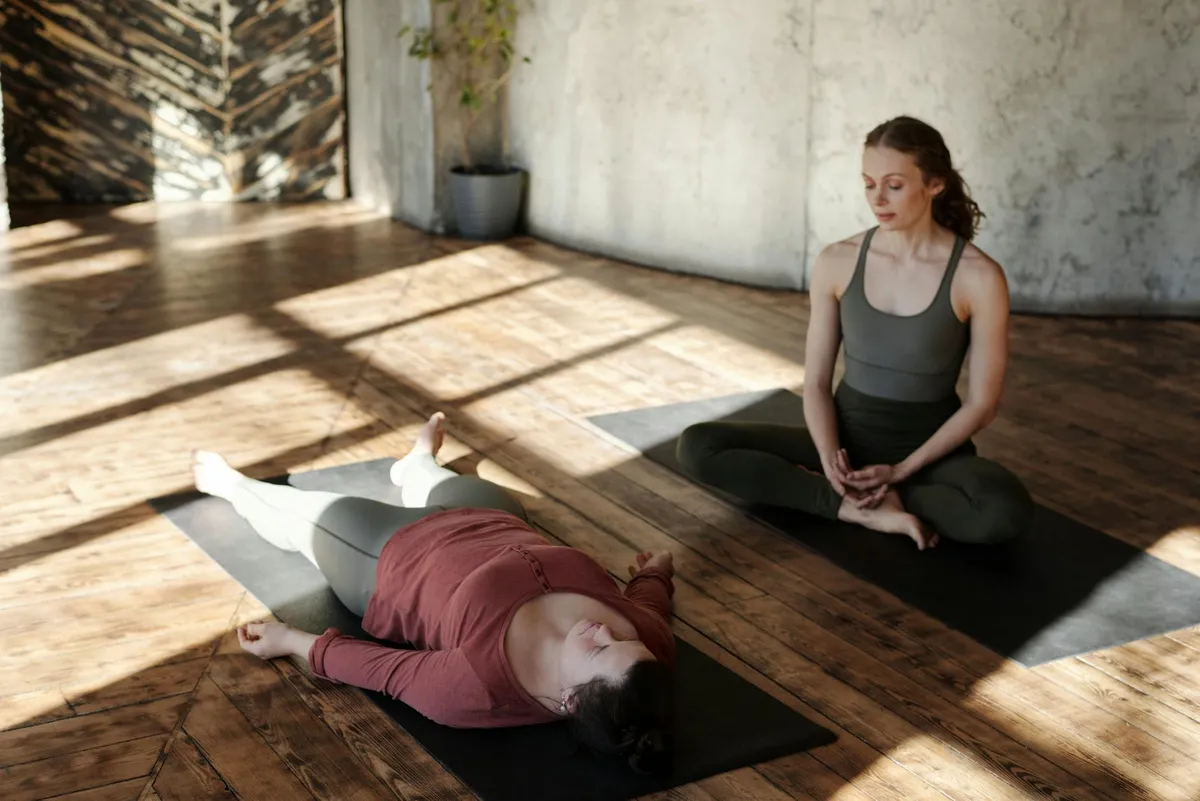
You'll lie down comfortably and be guided through a structured meditation that moves gently between waking and sleep states to support deep rest and inner awareness.
Your facilitator greets you, briefly explains the iRest protocol, and invites you to ask any questions. You'll choose a comfortable position, typically lying on your back on a mat or chair, with blank
You're guided to form a Heartfelt Intention, called a Sankalpa in the iRest tradition, a personally meaningful statement that reflects your deepest values. This isn't a goal but a felt sense of what matters most to you.
The facilitator guides your attention slowly through different regions of your body in a specific rotating sequence. This body scan helps quiet the nervous system and draws your awareness inward away
You're invited to simply notice the natural rhythm of your breath without changing it. This anchors attention in the present moment and deepens the state of relaxed alertness that iRest cultivates.
You're gently guided to notice any emotions or feelings present, welcoming them without judgment rather than pushing them away. This is a core iRest principle and can feel quietly liberating for many people.
Your facilitator may guide you through brief visualizations or invite you to notice any recurring thoughts or beliefs. The practice encourages observing these with openness rather than identifying with them.
Near the end of the session you're guided into a state of pure, open awareness with minimal instruction. This is often described as a profound sense of stillness or spaciousness that feels both restful and quietly alert.
The facilitator gently brings you back to full waking awareness with soft verbal cues. You're encouraged to rest quietly for a few moments before sitting up, and may be invited to share any observatio
The Evidence
What research says about iRest Yoga Nidra, where evidence is strong, and where gaps remain.
Promising early findings, especially in trauma and stress contexts
iRest has been studied primarily in veteran and military populations, with early trials suggesting benefits for PTSD symptoms, sleep, and stress. Evidence is growing but remains limited in scale and diversity, and should be interpreted with appropriate caution.
Pilot studies and small randomised trials — many conducted with US veterans — report reductions in PTSD symptom severity, perceived stress, and sleep disturbance following iRest programs. Effect sizes are generally moderate. Most studies have small samples, short follow-up periods, and limited control conditions, so findings should be treated as promising rather than definitive.
The US Department of Defense and Veterans Affairs have incorporated iRest into integrative care programs, giving it a degree of institutional validation uncommon for emerging complementary practices. Its standardised 10-step protocol makes it more amenable to clinical delivery and research replication than many meditation-based approaches.
As a complementary modality, iRest is typically offered alongside — not instead of — evidence-based mental health care. For people managing PTSD, anxiety, or chronic pain, it may support emotional regulation and stress resilience as part of a broader care plan. It is not a substitute for professional assessment or structured psychological therapy.
Most published iRest studies involve predominantly male, Western, military-affiliated participants, limiting generalisability. Methodological limitations — including lack of active control groups and reliance on self-report — mean that specific effects are difficult to isolate from general relaxation or group support. Larger, more diverse trials are needed before stronger conclusions can be drawn.
iRest is generally well-tolerated and carries a low risk profile. However, body-based and emotion-welcoming practices can occasionally surface distressing material in people with trauma histories. Trauma-informed facilitation is important in clinical contexts. Individuals with active psychosis or severe dissociative conditions should consult a qualified mental health professional before participating.
Facilitators are trained and credentialed through the iRest Institute, which provides a degree of quality assurance not always present in broader yoga nidra offerings. When seeking iRest sessions, checking a facilitator's training credentials is advisable, particularly in clinical or trauma-informed settings where appropriate professional background matters.
Safety first
General guidance to help you decide whether this approach is appropriate for you. This is informational only and not a substitute for medical, psychological, or professional advice.
If you are pregnant, managing a health condition, recovering from injury or surgery, or taking medication, consult a qualified healthcare professional first.
Some situations call for extra care or a different approach. Share any conditions, injuries, or sensitivities with your practitioner before your first session.
Look for clear boundaries, transparent pricing, and practitioners who avoid fear-based claims or pressure to book frequent sessions.
Mild, short-lived effects such as tenderness, tiredness, or temporary soreness can occur. Rest, hydrate, and tell your practitioner how you respond.
Explore approaches
Other practices people often explore alongside irest yoga nidra.
In their words
FAQ
iRest is a standardised, 10-step clinical protocol that is secular, manualisable, and designed for research and clinical populations. Traditional yoga nidra varies widely between teachers and lineages and often includes spiritual elements.
Yes. iRest has been adopted by the U.S. Department of Defense and Veterans Affairs for PTSD, chronic pain, insomnia, and traumatic brain injury. It is used in military hospitals, VA centres, and civilian clinics.
Training is administered through the iRest Institute. The pathway includes Level 1 (personal practice), Level 2 (teaching skills), and certification for clinical application. Healthcare professionals receive CE/CPD credits.
References
Educational sources that inform this overview. Inclusion is for context and does not imply endorsement.
Full citations are maintained by the Gyfts editorial team and reviewed periodically.
Keep exploring
Browse practitioners, explore honest overviews, and take what you learn to a conversation — at your own pace.