What it is
An ancient Indian practice combining movement, breathwork, and meditation for mind-body wellness.
Yoga therapy is the professional application of yoga principles and practices to promote health and wellbeing

At a glance
What it is
An ancient Indian practice combining movement, breathwork, and meditation for mind-body wellness.
Why explore it
Research supports yoga for back pain, anxiety, stress, better sleep, and improved flexibility.
How it’s experienced
Classes blend guided postures, breathing, and mindfulness, from gentle restorative to active flows.
Evidence context
Evidence is moderate and varies by condition, so going in with honest expectations really helps.
See the evidence snapshotSafety
Low risk when well-adapted, but always share injuries or health conditions with your instructor first.
See staying safeHistory & Origin
Yoga is a mind-body practice that combines physical postures, breath control, and meditation to promote physical, mental, and spiritual well-being.
Yoga originated in ancient India over 5,000 years ago as a comprehensive system for physical, mental, and spiritual development. The word "yoga" comes from the Sanskrit root "yuj," meaning to unite or yoke - referring to the union of body, mind, and spirit.
The Yoga Sutras of Patanjali, written around 400 CE, codified yoga philosophy and practice into an eight-limbed path. However, yoga as therapeutic intervention is relatively modern. In the early 20th century, pioneers like Krishnamacharya and his students (including B.K.S. Iyengar and Indra Devi) began adapting yoga for specific health conditions.
Yoga therapy emerged as a distinct field in the 1980s when practitioners recognized the need to differentiate therapeutic applications from general yoga classes. The International Association of Yoga Therapists, founded in 1989, established professional standards and training requirements.
Today, yoga therapy integrates traditional yogic wisdom with modern medical understanding. Therapists assess individual conditions and create personalized practices addressing specific health concerns while respecting physical limitations.
Approaches
Yoga isn’t a single method. Practitioners may train in one tradition or blend several — here are the styles you’re most likely to meet.
A broad approach to physical yoga postures and breath, often taught at a steady pace.
Links movement and breath in flowing sequences.
Emphasizes alignment, precision, and the use of props.
Uses set sequences practiced in a vigorous, structured order.
Combines postures, breath practices, mantra, and meditation.
Uses longer-held floor postures to emphasize stillness and connective tissue sensation.
Uses props and supported positions to promote rest and relaxation.
Mechanism
Yoga is usually understood through movement, breath, attention, and repeated practice. A session may invite the body to explore safer patterns, steadier pacing, or a more settled relationship with sensation. Some traditions describe this as balancing energy or awareness, while contemporary explanations may focus on coordination, nervous system regulation, mobility, and confidence. Experiences vary by person, teacher, setting, and consistency. Yoga works through integrated physiological pathways: controlled breathing practices (pranayama) stimulate the vagus nerve to increase parasympathetic activity and reduce cortisol, while sustained postures decompress joints, release myofascial restriction, and improve proprioceptive awareness.
Your first visit
A typical session outline to help you feel prepared
A yoga session gently guides you through breathing, movement, and relaxation tailored to your body and goals — no experience or flexibility needed.
Your therapist greets you and spends a few minutes reviewing your health history, any injuries, and what you hope to get from yoga. This helps them shape the session around your body and needs.
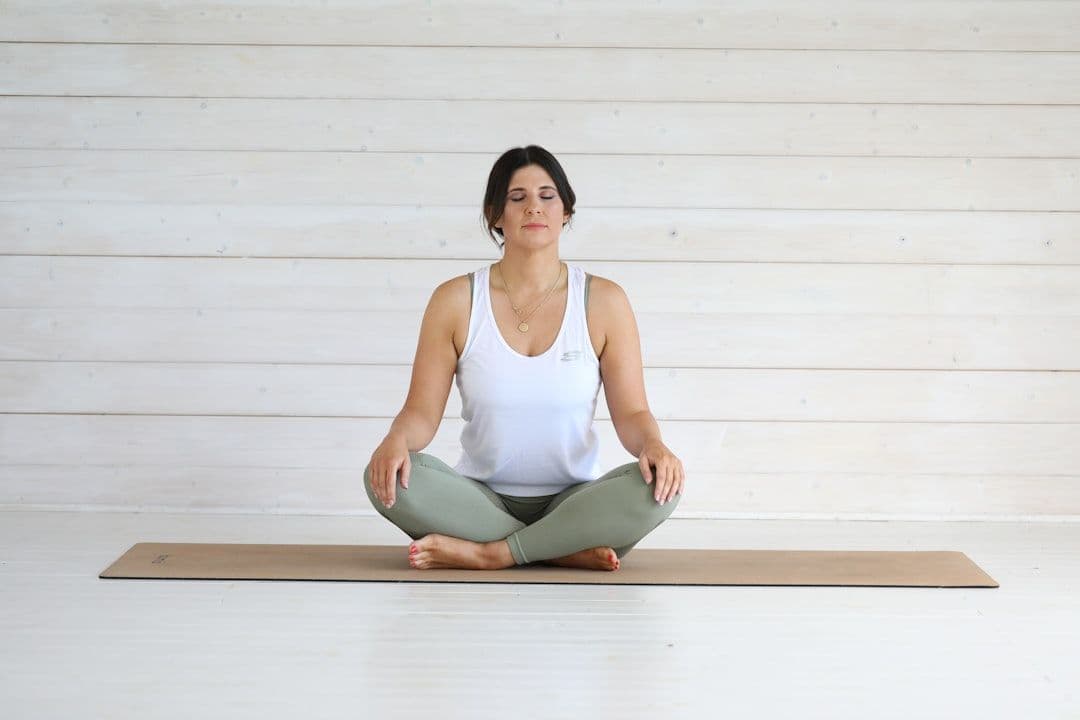
You'll be invited to sit comfortably and set a simple intention for the session, like finding calm or building strength. This quiet moment helps you arrive mentally and leave outside distractions behind.
Your therapist introduces pranayama, or guided breathwork, walking you through slow, conscious breathing techniques. You may notice your heart rate settle and your mind begin to quiet within just a few minutes.
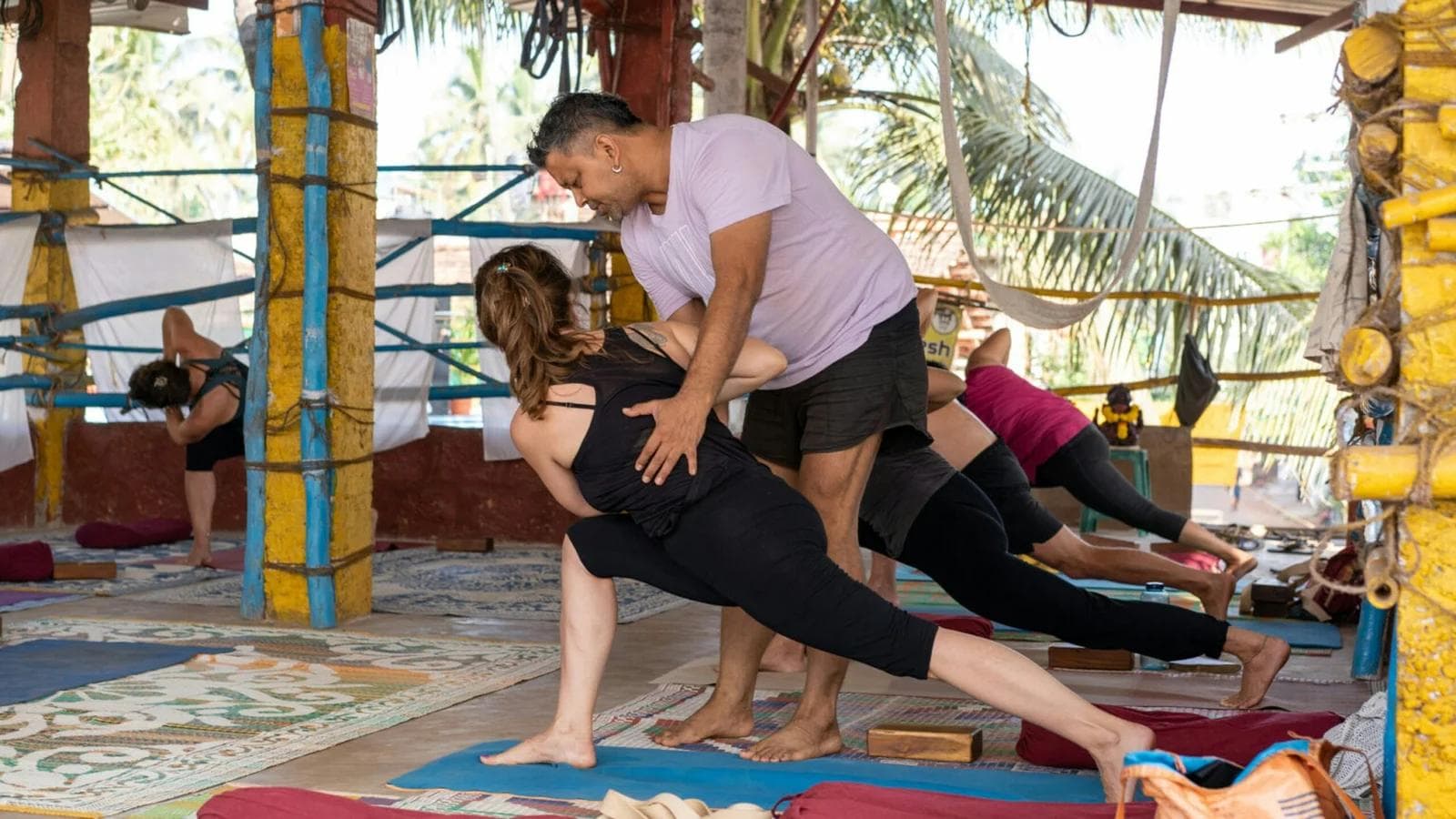
You'll move through easy foundational poses like Cat-Cow or Child's Pose to gently wake up the spine and joints. Your therapist watches your movement patterns and offers adjustments to keep you comfortable and safe.
The heart of the session involves a sequence of yoga poses chosen specifically for your goals and ability level. Your therapist guides you step by step, offering modifications and hands-on adjustments
The session winds down with Savasana, a guided rest pose where you lie still and let your body absorb the practice. Most people feel a deep, pleasant heaviness and calm during this five to ten minute rest.
Before you leave, your therapist shares a simple home routine you can do between sessions, usually just ten to fifteen minutes a day. You'll also have a chance to ask questions and note anything that
The Evidence
Yoga has one of the stronger evidence bases among mind-body practices, with well-studied mechanisms and clinical research across multiple health areas.
Well-researched mind-body practice with broad health applications
Yoga has substantial research support for conditions including chronic low back pain, anxiety, depression, and cardiovascular health. Its mechanisms are well understood, spanning nervous system regulation, inflammation reduction, and improved body awareness.
Clinical trials support yoga for chronic low back pain at a level comparable to physical therapy. Significant symptom reduction has been documented for anxiety and depression, and cardiovascular benefits including blood pressure regulation are well established. Sleep quality improvement also has consistent research backing across multiple study designs.
Controlled breathing stimulates the vagus nerve, increasing parasympathetic activity and reducing stress hormones. Sustained postures release myofascial tension and improve joint proprioception. Regular practice has been shown to upregulate thalamic GABA, supporting anxiety reduction and emotional regulation alongside its physical effects.
Yoga therapy is distinct from general yoga classes. It requires additional training in anatomy, pathology, and adapting practices for specific health needs. The International Association of Yoga Therapists sets professional standards for this field. When exploring yoga for a health concern, a qualified yoga therapist offers a different level of assessment than a general instructor.
Yoga originated in India over 5,000 years ago as a comprehensive system for physical and mental development. Its therapeutic application emerged in the early 20th century through practitioners like Krishnamacharya, and yoga therapy became a distinct professional field in the 1980s. Today it integrates traditional practice with contemporary understanding of physiology and pathology.
People with severe osteoporosis, uncontrolled hypertension, glaucoma, or recent surgery should inform their practitioner before starting. Inversions and intense breathing techniques may need modification or avoidance in some cases. For trauma survivors, trauma-informed yoga therapists are trained to adapt practices that might otherwise intensify distress. Prenatal yoga is beneficial but requires a practitioner trained in pregnancy-specific adaptations.
Evidence for yoga in fibromyalgia, IBS, and respiratory conditions such as asthma is moderate rather than strong, and study quality varies. Yoga is not a substitute for professional assessment or medical management of serious conditions. It is best understood as a supportive practice that may complement, rather than replace, other forms of care.
Safety first
General guidance to help you decide whether this approach is appropriate for you. This is informational only and not a substitute for medical, psychological, or professional advice.
If you are experiencing severe distress, suicidal thoughts, psychosis, acute trauma, or another serious mental health concern, seek qualified support first.
This approach is not suitable for diagnosis, treatment instructions, or decisions that require medical, legal, financial, or professional advice.
Look for clear boundaries, transparent pricing, and practitioners who avoid fear-based claims or pressure to book frequent sessions.
Treat any insight as one reflective perspective, not absolute truth. Important decisions should be considered with appropriate professional support.
For you?
A simple, human way to weigh it up. This is general guidance, not personal medical advice — a qualified practitioner can advise on your situation.
Gyfts is a discovery platform, not a medical provider. Nothing here diagnoses, treats or replaces professional care. In an emergency, contact your local emergency number.
Explore approaches
Other practices people often explore alongside yoga.
In their words
FAQ
The most widely practised styles include Hatha (gentle, foundational — good for beginners), Vinyasa (flowing, breath-linked movement — moderate intensity), Ashtanga (structured, physically demanding series), Yin (passive, long-held poses targeting connective tissue — excellent for recovery and flexibility), Restorative (supported, gentle — ideal for stress and nervous system regulation), Kundalini (combines movement, breathwork, chanting and meditation), and Iyengar (precise alignment using props). Beginners benefit from Hatha or a beginner Vinyasa class. Therapeutic goals — such as managing chronic pain, anxiety, or recovery — are best served by Yin, Restorative, or Yoga Therapy with a trained teacher.
Yoga has one of the strongest evidence bases among mind-body practices. Strong evidence exists for reducing anxiety, depression symptoms, and chronic low back pain. Moderate evidence supports benefits for blood pressure, sleep quality, fatigue in cancer patients, and menopausal symptoms. Yoga is listed in several clinical guidelines as an adjunctive treatment for chronic low back pain. The combination of physical movement, breath regulation, and meditative focus gives yoga a multi-system effect that few single interventions replicate.
Most yoga styles are safe for most people when practised with an informed teacher, but certain conditions require modification or avoidance of specific poses. Acute spinal injury, recent surgery, severe osteoporosis, uncontrolled hypertension, and late pregnancy all require adaptation. Inform your teacher of any injuries or conditions before class — a good teacher will offer modifications. For specific therapeutic goals (rehabilitation, chronic pain, neurological conditions), seek a qualified yoga therapist rather than a standard yoga class.
Research suggests that 2–3 sessions per week produces meaningful health benefits over 8–12 weeks. Daily practice, even short sessions of 15–20 minutes, accelerates gains in flexibility, stress reduction, and body awareness. Consistency matters more than duration — a brief regular practice outperforms occasional long sessions. Beginners often notice improved sleep, reduced tension, and mood benefits within the first 2–4 weeks.
Yoga therapy is an individualised, clinically-informed application of yoga practices to specific health conditions or therapeutic goals. A yoga therapist (trained to at least C-IAYT certification standard) conducts a detailed intake, designs a personalised practice, and progressively adapts it based on response. This is distinct from a group yoga class, which offers a general practice not tailored to individual health needs. Yoga therapy is appropriate for chronic conditions, injury rehabilitation, mental health support, and cases where a standard class would need significant modification.
References
Educational sources that inform this overview. Inclusion is for context and does not imply endorsement.
Full citations are maintained by the Gyfts editorial team and reviewed periodically.
Keep exploring
Browse practitioners, explore honest overviews, and take what you learn to a conversation — at your own pace.