What it is
Shiatsu and Anma use rhythmic pressure along energy pathways to ease tension and restore balance.
Traditional massage techniques rooted in Japanese healing practices, including Shiatsu and Anma, designed to balance energy flow and rele...
At a glance
What it is
Shiatsu and Anma use rhythmic pressure along energy pathways to ease tension and restore balance.
Why explore it
A thousand-year tradition that may ease stress, stiffness, and sleep troubles while supporting recovery.
How it’s experienced
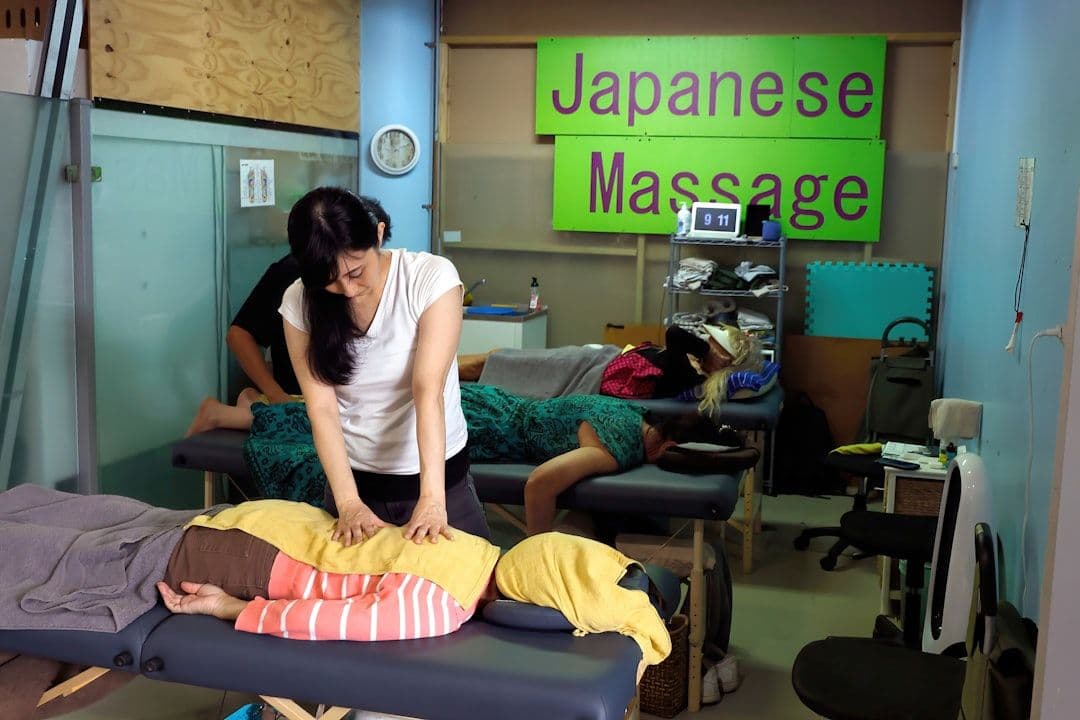
You stay clothed while a practitioner applies thumb, palm, and stretch techniques to your comfort level.
Evidence context
Research is limited, so benefits are rooted more in centuries of traditional Japanese practice than clinical trials.
See the evidence snapshotSafety
Safe with a trained practitioner, but share any injuries, pregnancy, or health conditions beforehand.
See staying safeHistory & Origin
Japanese Massage involves massage techniques inspired by Japanese traditions and principles.
Japanese massage traditions have deep roots extending back over a thousand years, influenced by Chinese acupuncture and traditional medicine that arrived in Japan during the 6th century. From this foundation, two primary forms evolved: Anma, developed in medieval Japan as a systematic massage therapy, and Shiatsu, which emerged in the early 20th century as a more codified practice emphasizing acupressure points and energy meridians. Anma practitioners became highly respected in Japanese society, with detailed anatomical knowledge and refined techniques passed down through apprenticeship. In the early 1900s, Tokujiro Namikoshi formalized Shiatsu as a distinct modality, combining traditional massage principles with modern anatomical understanding, eventually gaining recognition in Japan and spreading internationally throughout the 20th century. Both traditions operate on the principle of balancing 'ki' (life energy) and removing blockages along meridian pathways, reflecting the broader Japanese adoption of Chinese medical philosophy adapted to Japanese cultural context.
Mechanism
Japanese Massage is generally described as working through skilled touch, careful pacing, and the body's response to pressure, movement, warmth, or stillness. Practitioners may focus on muscle tone, joint comfort, circulation, breath, or relaxation depending on the method. Traditional explanations may also include energy flow or whole-person balance. Research support varies by modality, so the experience is best framed as supportive care with outcomes that vary. Japanese massage encompasses techniques like Shiatsu and Anma, which apply pressure to specific points and meridians along the body to influence energy flow, based on principles derived from traditional Chinese medicine.
Your first visit
A typical session outline to help you feel prepared
A Japanese Massage session blends clothed bodywork with rhythmic pressure along energy pathways, leaving you deeply relaxed and restored.
Your practitioner greets you and asks about your health history, any areas of tension, and what you hope to get from the session. This helps them tailor the pressure and focus areas to your needs.
Together you briefly discuss what your body is communicating — areas of tightness, fatigue, or stress. Your practitioner may ask about your energy levels and daily habits to inform their approach.
You remain fully clothed, so wear loose, comfortable clothing like yoga pants or a t-shirt. You'll lie down on a padded floor mat called a futon, which is traditional to this style of bodywork.
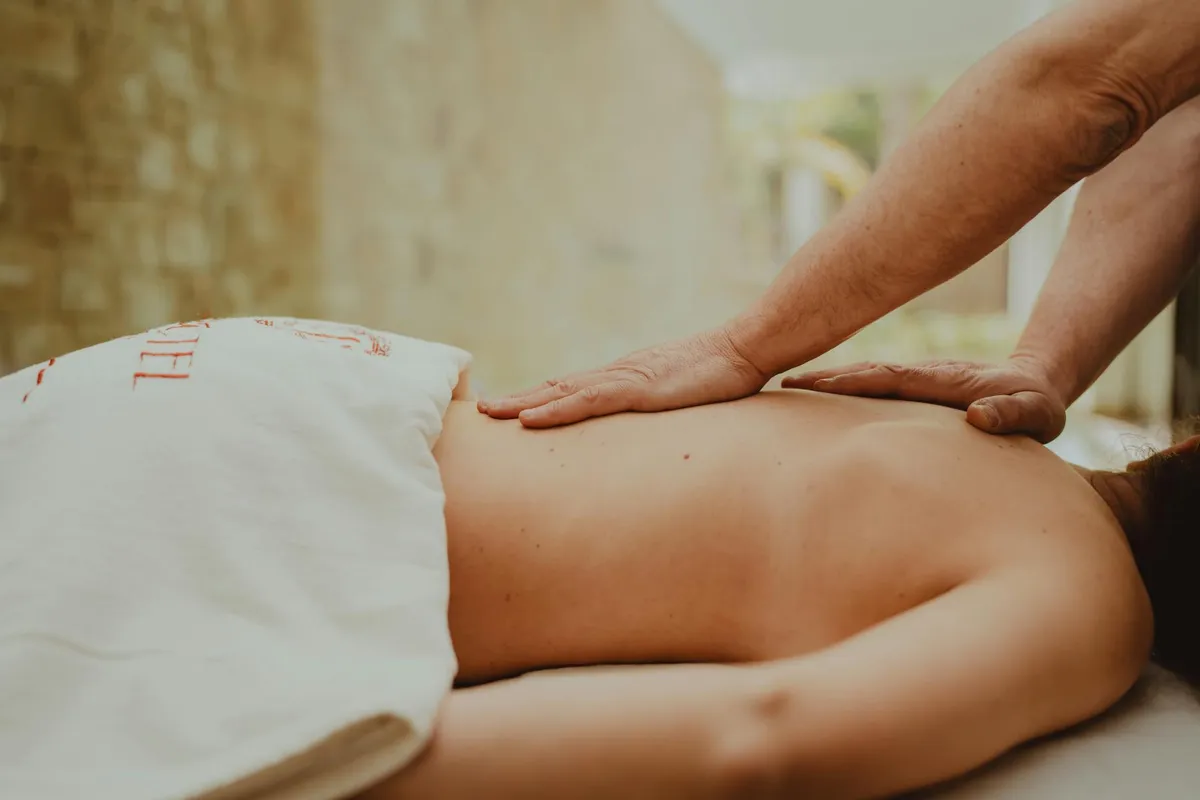
Your practitioner begins with gentle palm pressure across your back, hips, and limbs to sense areas of holding or imbalance along the body's energy pathways, known as meridians.
Using thumbs, fingers, palms, elbows, and sometimes knees, your practitioner applies steady, leaning pressure along meridian lines. You may feel a releasing warmth or mild tenderness as tension softens.
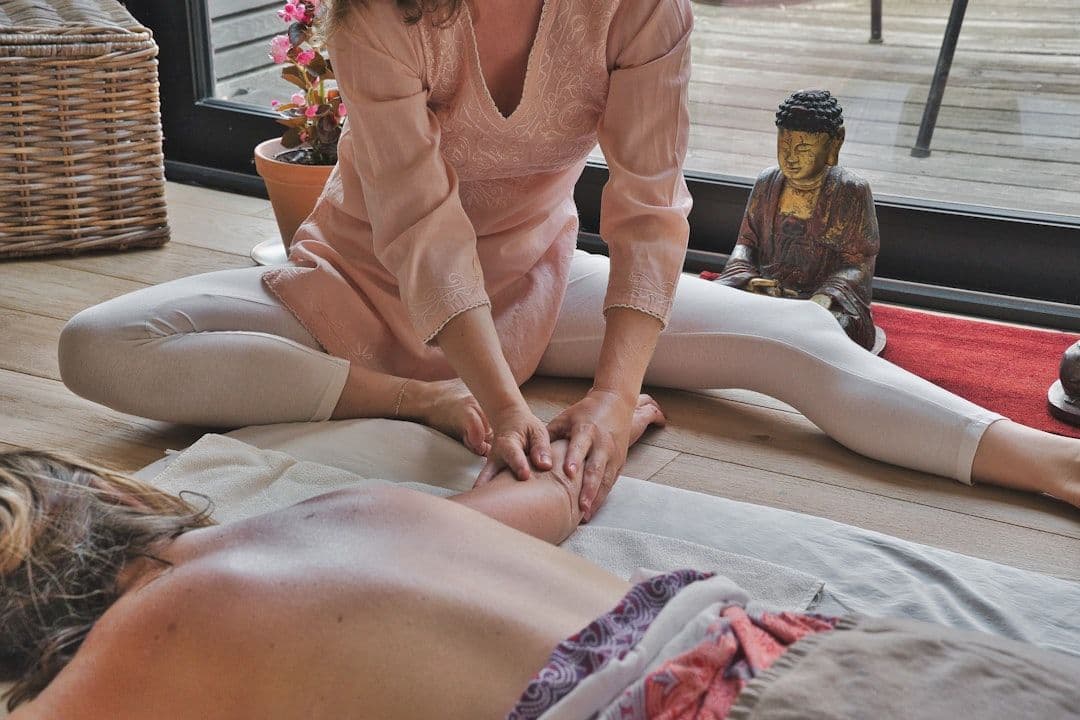
Your practitioner gently rotates, extends, and stretches your limbs to encourage energy flow and ease stiffness. These movements feel passive and supported — you simply breathe and let go.
The session winds down with slower, quieter holds and broad palm contact to settle your nervous system. Many people feel a pleasant heaviness or deep calm during this final phase.
Your practitioner invites you to rest briefly before rising, then shares simple suggestions like drinking water and gentle movement to support what your body experienced during the session.
The Evidence
What research and tradition tell us about Japanese massage, and where the evidence currently stands.
Long tradition, limited modern clinical evidence
Japanese massage has over a thousand years of traditional use, but modern scientific research remains sparse and methodologically limited. Current evidence suggests potential benefits for relaxation and muscle tension, though no firm clinical conclusions can yet be drawn.
Most available research on Shiatsu and Anma involves small sample sizes and lacks rigorous control groups. Some studies suggest possible benefits for stress, fatigue, and muscle tension, but these findings are not strong enough to draw firm conclusions. Evidence quality is currently insufficient to establish clinical standards.
Anma developed as a systematic therapy in medieval Japan, while Shiatsu was formalised in the early 20th century by Tokujiro Namikoshi. Both traditions work with the concept of ki and meridian pathways. This long history of use is meaningful context, though traditional use alone does not confirm clinical effectiveness.
Shiatsu and Anma apply pressure along meridians to influence ki, a concept not mapped to Western physiology. This does not make the practice invalid, but it does mean outcomes like energy balance are difficult to measure in standard research settings. Understanding this framework helps set realistic expectations.
Participants always know whether they are receiving massage, making placebo controls impractical. Practitioner technique and training vary widely, and some intended outcomes do not translate easily into measurable endpoints. These are structural research challenges, not unique failures of Japanese massage.
Those with acute injuries, recent surgery, uncontrolled high blood pressure, active infections, or serious ongoing health conditions should consult a healthcare provider before booking. Pregnant individuals should inform their practitioner, as some techniques require modification. Mild post-session soreness is normal; sharp or severe pain is not.
Look for practitioners with recognised training in Shiatsu or Anma and membership in a professional body where available. Communicate openly about your health history and pressure preferences before and during a session. Japanese massage is not a substitute for professional assessment of unexplained or serious symptoms.
Safety first
General guidance to help you decide whether this approach is appropriate for you. This is informational only and not a substitute for medical, psychological, or professional advice.
If you are pregnant, managing a health condition, recovering from injury or surgery, or taking medication, consult a qualified healthcare professional first.
Some situations call for extra care or a different approach. Share any conditions, injuries, or sensitivities with your practitioner before your first session.
Mild, short-lived effects such as tenderness, tiredness, or temporary soreness can occur. Rest, hydrate, and tell your practitioner how you respond.
Look for clear boundaries, transparent pricing, and practitioners who avoid fear-based claims or pressure to book frequent sessions.
For you?
A simple, human way to weigh it up. This is general guidance, not personal medical advice — a qualified practitioner can advise on your situation.
Gyfts is a discovery platform, not a medical provider. Nothing here diagnoses, treats or replaces professional care. In an emergency, contact your local emergency number.
Explore approaches
Other practices people often explore alongside japanese massage.
In their words
FAQ
Japanese Massage is a broad category encompassing traditional Japanese massage techniques. Shiatsu is a specific formalized system developed in the 20th century that emphasizes acupressure points and meridians, typically delivered through clothing. Anma is an older traditional Japanese massage technique that predates Shiatsu and uses more varied hand techniques including kneading and rubbing. Both Shiatsu and Anma fall under the umbrella of Japanese Massage, though practitioners may specialize in one or the other.
Ki (also spelled chi or qi in Chinese) refers to the vital life force or energy believed to flow through the body along pathways called meridians. In Japanese massage philosophy, blockages or imbalances in ki flow are thought to cause tension, pain, and illness. Practitioners aim to restore balanced ki flow through pressure on specific points and meridian pathways. While ki is a foundational concept in the practice, its existence has not been proven by Western scientific methods.
This varies greatly depending on your individual condition and goals. For acute issues, some people notice benefits after 2-3 sessions. For chronic conditions or deeper wellness work, practitioners often recommend weekly sessions for 4-8 weeks, then reassessing. For general relaxation and maintenance, many people do monthly sessions. Your practitioner will discuss an appropriate schedule after your initial consultation.
Most Japanese massage, particularly Shiatsu, is performed fully clothed. You should wear loose, comfortable clothing that allows the practitioner to access meridians and apply pressure effectively. Unlike some Western massage styles, you typically remain clothed throughout the session, which some people find more comfortable and appropriate.
Japanese massage should not be acutely painful, though some pressure may feel intense, particularly in areas of tension. Practitioners work within your comfort level—communicate if pressure is too deep or uncomfortable. Some people experience mild muscle soreness after their first session, similar to after exercise, which typically resolves within 24-48 hours. Any sharp or severe pain indicates the pressure is too strong; inform your practitioner immediately.
Most people feel relaxed and energized after treatment. Common temporary aftereffects include mild muscle soreness (especially after first sessions), temporary fatigue, mild headache, or emotional release. These typically resolve within 24 hours. Drinking water and rest support the body's integration of the treatment. Persistent or worsening symptoms are unusual and warrant discussion with your practitioner or healthcare provider.
Yes, many people combine Japanese massage with other complementary therapies and with conventional medical care. Inform all your healthcare providers about all treatments you're receiving. Japanese massage is generally considered complementary—it works alongside but does not replace medical treatment for serious conditions. Discuss timing with your practitioners, as some recommend spacing treatments to observe effects clearly.
Research on Japanese massage is limited compared to some other therapies. Some studies suggest benefits for stress reduction, muscle tension, and sleep quality, but research quality is often modest and outcomes vary. Japanese massage is primarily a traditional practice with centuries of use in Japan, rather than one with extensive modern clinical evidence. It's best viewed as a complementary wellness approach rather than a treatment proven effective for specific medical conditions.
References
Educational sources that inform this overview. Inclusion is for context and does not imply endorsement.
Full citations are maintained by the Gyfts editorial team and reviewed periodically.
Keep exploring
Browse practitioners, explore honest overviews, and take what you learn to a conversation — at your own pace.