What it is
An ancient spiritual practice using ritual and ceremony to heal mind, body, and spirit.
Uses rituals, ceremonies, and energy work to address physical, emotional, and spiritual imbalances

At a glance
What it is
An ancient spiritual practice using ritual and ceremony to heal mind, body, and spirit.
Why explore it
May ease trauma, grief, and spiritual disconnection while deepening your sense of purpose and nature.
How it’s experienced
Expect drumming, journeywork, vivid imagery, or strong emotions, followed by essential integration time.
Evidence context
Outcomes are largely anecdotal, with value rooted in generations of indigenous wisdom and tradition.
See the evidence snapshotSafety
Low-risk for most adults, but consult a mental health professional first if you have psychosis or dissociation.
See staying safeHistory & Origin
Shamanic Healing utilizes traditional indigenous healing practices to promote well-being, balance, and spiritual growth.
Shamanic healing practices originate from indigenous cultures across the globe, including Siberia, the Americas, Africa, and Asia, dating back thousands of years. These traditions emerged from humanity's earliest attempts to understand illness, spirituality, and the interconnection between the physical and spiritual worlds. Shamans served as healers, spiritual leaders, and mediators between the seen and unseen realms, utilizing plant knowledge, ritual, and trance states to diagnose and treat ailments.
In the 20th century, Western interest in shamanism grew significantly through anthropological study and the work of scholars like Mircea Eliade, whose 1964 work "Shamanism: Archaic Techniques of Ecstasy" brought these practices to academic attention. The 1970s and 1980s saw increased Western adoption of shamanic practices, particularly in complementary health circles, though often adapted from their original cultural contexts. Practitioners like Sandra Ingerman and Michael Harmon popularized core shamanic techniques designed for Western audiences, emphasizing soul retrieval and journey work.
Today, shamanic healing exists in two forms: traditional practices maintained within indigenous communities and Western neo-shamanic adaptations used in complementary health settings. Contemporary shamanic practitioners may blend traditional techniques with modern energy work, though cultural appropriation remains a significant ethical consideration. The practice continues to evolve as Western practitioners engage with indigenous teachers and as indigenous communities reclaim and preserve their ancestral healing traditions.
Mechanism
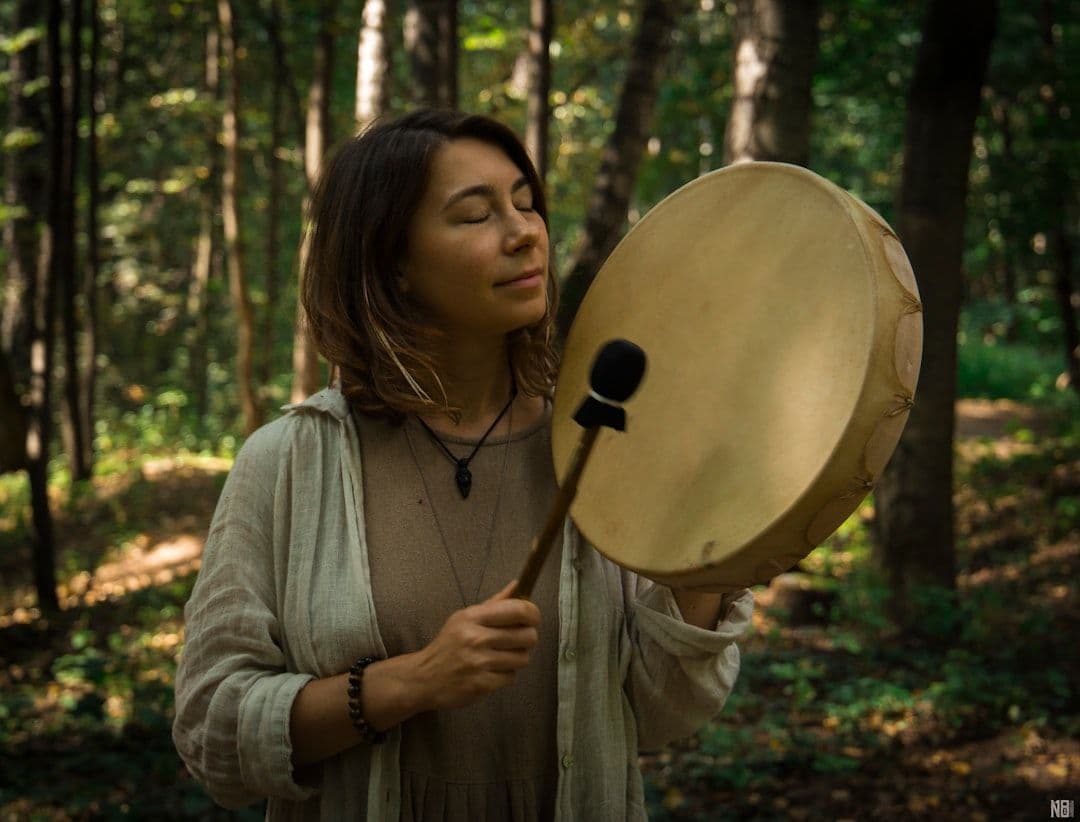
Shamanic Healing is best framed as a traditional, symbolic, energetic, reflective, or spiritual practice rather than a validated medical mechanism. Practitioners may use ritual, attention, sound, imagery, touch-free work, cards, symbols, prayer, or intention to support meaning-making and a sense of connection. People may explore it for reflection, calm, or spiritual context, while health claims should remain cautious and personal. Shamanic healing typically involves the practitioner entering an altered state of consciousness—often through drumming, chanting, or breathwork—to access non-ordinary reality and communicate with spiritual guides or power animals believed to assist in diagnosis and treatment.
Your first visit
A typical session outline to help you feel prepared
A shamanic healing session blends conversation, sacred ritual, and energy work to help you reconnect with lost parts of yourself and restore inner balance.
Your practitioner greets you and prepares the space with intention, often using smoke, sound, or prayer to create a sacred container for the work ahead.
You'll share what brought you in — emotional struggles, life patterns, or a sense of something feeling off. Your practitioner listens deeply and may ask about your history and intentions.
Together you clarify a specific intention or question to guide the session, giving the healing work a clear and meaningful direction.
Your practitioner opens the session ceremonially, calling in helping spirits or guides through chanting, rattling, or drumming. You'll typically lie down fully clothed on a mat or table.
Using rhythmic drumming or rattling, your practitioner enters an altered state to work on your behalf in the spirit realm, performing techniques like soul retrieval, extraction, or power animal recovery.
You may feel subtle sensations — warmth, tingling, emotional waves, or spontaneous imagery — as your practitioner works around and sometimes lightly on your body to clear or restore energy.
The drumming slows and your practitioner gently returns, closing sacred space with gratitude. You're given a few quiet moments to come back to full awareness at your own pace.
Your practitioner shares what they experienced and any guidance received. They'll suggest integration practices for the coming days and let you know if follow-up sessions would be supportive.
The Evidence
What research and tradition tell us about shamanic healing, and how to approach it with informed expectations.
Deeply rooted in tradition; limited by formal research
Shamanic healing carries thousands of years of cultural history across many societies, but formal scientific evidence remains sparse and methodologically limited. Preliminary findings suggest possible benefits for well-being and emotional processing, though robust trials are lacking.
Existing studies on shamanic healing are small, often lack control groups, and are difficult to standardise. Some preliminary work suggests possible benefits for stress, anxiety, and self-reported well-being. Research on shamanic drumming for relaxation shows mixed results. Large-scale controlled trials have not yet been conducted, so conclusions remain tentative.
Originating across Siberia, the Americas, Africa, and Asia, shamanic healing predates modern medicine by millennia. Shamans served as healers and spiritual mediators within their communities. Western interest grew through 20th-century anthropology, and adapted forms have since entered complementary health settings, though often removed from original cultural contexts.
Rather than targeting isolated symptoms, shamanic practice works with perceived imbalances across emotional, spiritual, and relational dimensions of a person's life. Common intentions include soul retrieval, restoring a sense of inner wholeness, and processing grief or disconnection. This holistic orientation may complement, but does not replace, professional assessment for physical or mental health concerns.
People experiencing active mental health crises, psychotic episodes, or significant dissociation should consult a mental health professional before engaging in shamanic journeywork. Altered states of consciousness may not be appropriate for everyone. This modality should never substitute for professional assessment of physical illness, acute injury, or psychiatric emergencies.
There is no universal licensing body for shamanic practitioners. Training backgrounds range from indigenous apprenticeship to Western workshop-based programmes. Look for practitioners who are transparent about their training, respect cultural origins, maintain clear professional boundaries, and do not make inflated outcome claims. A good practitioner will support, not discourage, engagement with conventional care.
Shamanic healing resists the standardisation required for rigorous clinical trials, making it hard to separate specific effects from therapeutic relationship or expectation. Cultural adaptation from original contexts also raises questions of authenticity and appropriateness. Individuals should hold realistic expectations and remain open to integrating other forms of support where needed.
Safety first
General guidance to help you decide whether this approach is appropriate for you. This is informational only and not a substitute for medical, psychological, or professional advice.
If you are pregnant, managing a health condition, recovering from injury or surgery, or taking medication, consult a qualified healthcare professional first.
Some situations call for extra care or a different approach. Share any conditions, injuries, or sensitivities with your practitioner before your first session.
Look for clear boundaries, transparent pricing, and practitioners who avoid fear-based claims or pressure to book frequent sessions.
Mild, short-lived effects such as tenderness, tiredness, or temporary soreness can occur. Rest, hydrate, and tell your practitioner how you respond.
For you?
A simple, human way to weigh it up. This is general guidance, not personal medical advice — a qualified practitioner can advise on your situation.
Gyfts is a discovery platform, not a medical provider. Nothing here diagnoses, treats or replaces professional care. In an emergency, contact your local emergency number.
Explore approaches
Other practices people often explore alongside shamanic healing.
In their words
Read next
FAQ
During a shamanic journey, the practitioner typically enters an altered state of consciousness—often induced by rhythmic drumming or rattling—to access non-ordinary reality and work with spiritual guides. While the practitioner journeys, you remain present in the room, either lying down or sitting quietly. The practitioner may retrieve information, power animals, or other spiritual resources intended to support your healing. You might experience visualizations, emotional releases, or physical sensations during this time. Afterward, the practitioner shares what they discovered and how it relates to your healing.
The number of sessions varies widely depending on your specific concerns and how you respond to the work. Some people experience significant shifts after one session, while others benefit from a series of sessions spaced over several weeks or months. Practitioners typically assess your progress during follow-up consultations and recommend a treatment plan. There is no standard protocol—this is individualized work that depends on your needs, openness, and the practitioner's approach.
Shamanic healing is grounded in traditional indigenous practices with thousands of years of cultural history, but it lacks extensive conventional scientific validation. Research on shamanic practices is limited and faces methodological challenges due to the spiritual nature of the work and difficulty in creating controlled studies. Some studies suggest potential benefits for stress, anxiety, and well-being, but these findings are preliminary. This modality is best viewed as a complementary spiritual practice rather than a scientifically proven medical treatment.
No. Shamanic healing is not intended to diagnose or cure medical diseases and should never replace conventional medical care. While some practitioners work with people dealing with chronic conditions alongside conventional treatment, shamanic healing addresses spiritual and emotional dimensions of wellness rather than medical pathology. If you have a diagnosed medical condition, continue working with your healthcare provider and view shamanic work as a complementary support to your overall wellness plan.
Soul retrieval is a shamanic technique based on the belief that traumatic experiences can cause fragmentation of one's spirit or life force, resulting in feelings of disconnection, depression, or loss of purpose. The practitioner journeys to retrieve these fragmented parts and reintegrate them into the person's whole self. This is approached as a metaphorical and spiritual process addressing emotional and spiritual wholeness rather than a literal medical intervention. Some people report feeling more grounded and present after soul retrieval work.
After shamanic work, responses vary widely. Many people feel deeply relaxed, peaceful, or emotionally lighter. Some experience emotional release during or after sessions. Others notice shifts in perspective or clarity about their situation. A small number report feeling temporarily emotional or processing memories and feelings that surface. It's common to feel somewhat spacey or introverted after a session, and rest is recommended. Changes sometimes unfold gradually over days or weeks rather than immediately.
This is an important ethical question in Western shamanic practice. Traditional shamanism is integral to specific indigenous cultures, and some argue that Western neo-shamanic adaptations represent cultural appropriation. Many contemporary Western practitioners acknowledge this concern and either work respectfully with indigenous teachings or focus on universal principles of healing and spirituality. When seeking shamanic work, you may want to inquire about the practitioner's training lineage, their relationship to indigenous traditions, and their approach to respecting cultural origins.
Yes, many people combine shamanic healing with conventional mental health therapy, medical treatment, and other complementary practices. In fact, integrative approaches often support one another—for example, shamanic work addressing spiritual dimensions alongside therapy addressing psychological patterns. However, inform all your practitioners about all the treatments and modalities you're using so they can provide integrated, safe care. Shamanic healing should complement, not replace, conventional medical or psychiatric care for serious conditions.
References
Educational sources that inform this overview. Inclusion is for context and does not imply endorsement.
Full citations are maintained by the Gyfts editorial team and reviewed periodically.
Keep exploring
Browse practitioners, explore honest overviews, and take what you learn to a conversation — at your own pace.