What it is
Watsu combines warm-water floating with gentle stretches and movement for deep relaxation.
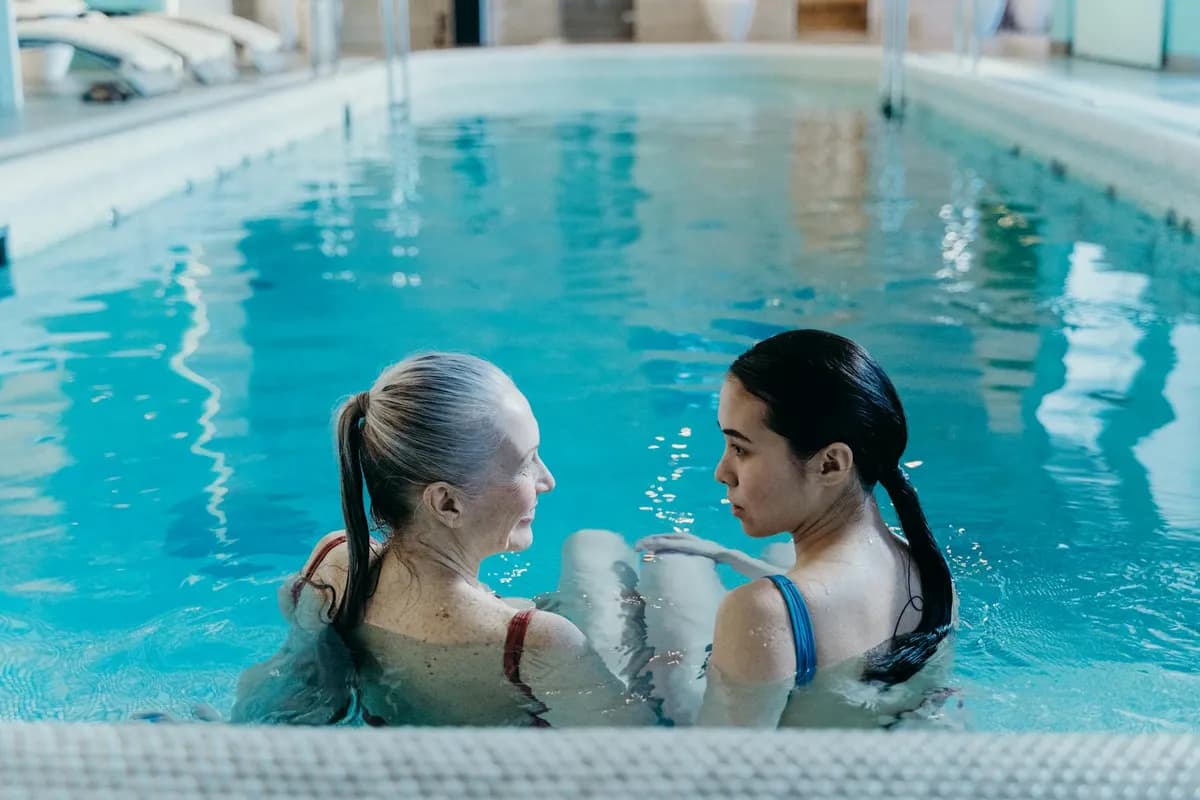
Weightless, warm, and held — the healing power of water, movement, and human connection.
At a glance
What it is
Watsu combines warm-water floating with gentle stretches and movement for deep relaxation.
Why explore it
It may ease chronic pain, fibromyalgia, and stress in ways land-based bodywork can't replicate.
How it’s experienced
A certified practitioner supports you in warm water, guiding slow stretches across about 60 minutes.
Evidence context
Early research hints at pain relief and relaxation benefits, but larger studies are still needed.
See the evidence snapshotSafety
Risk is low with certified practitioners; slow pool exits and trauma-informed consent are standard.
See staying safeHistory & Origin
Watsu (Water Shiatsu) is a one-to-one aquatic bodywork modality in which a trained practitioner supports, stretches, and moves the recipient through warm water in continuous flowing sequences, combining shiatsu principles with the therapeutic properties of immersion.
Watsu was created by Harold Dull, a poet and Zen Shiatsu practitioner, at Harbin Hot Springs in northern California in the early 1980s. Dull had studied Zen Shiatsu with master Shizuto Masunaga in Japan and began experimenting with applying shiatsu principles in the warm pools at Harbin. He discovered that warm water''s buoyancy allowed stretches and movements impossible on a massage table, while the continuous flow of movement created a uniquely immersive therapeutic experience. Dull founded the Worldwide Aquatic Bodywork Association (WABA) to establish standards and training for Watsu practitioners. Training is structured in progressive levels, with full certification requiring extensive supervised practice hours. Watsu has been adopted in rehabilitation centres, hospitals, spas, and therapy pools in over 50 countries. It is particularly valued in paediatric rehabilitation, chronic pain management, and trauma recovery. Harbin Hot Springs (destroyed by fire in 2015, since rebuilding) remains the spiritual home of the practice.
Mechanism
Watsu is generally described as working through skilled touch, careful pacing, and the body's response to pressure, movement, warmth, or stillness. Practitioners may focus on muscle tone, joint comfort, circulation, breath, or relaxation depending on the method. Traditional explanations may also include energy flow or whole-person balance. Research support varies by modality, so the experience is best framed as supportive care with outcomes that vary. The practitioner stands in chest-deep warm water (typically 34–36°C) and cradles the recipient, supporting their head with one arm while using the other hand and body to create flowing movement sequences.
Your first visit
A typical session outline to help you feel prepared
A Watsu session unfolds in a warm therapy pool, where you float in a practitioner's arms through gentle, flowing movements designed to ease tension and invite deep relaxation.
Before you enter the water, your practitioner will review your health history, discuss any injuries or concerns, and explain what to expect so you feel fully at ease.
You'll change into a swimsuit and be guided to the edge of the warm therapy pool, which is typically kept around 95°F to match body temperature and encourage muscle relaxation.
Your practitioner helps you into the pool and begins by simply holding you as you float, giving you a few quiet moments to settle into the warmth and buoyancy of the water.
Standing beside you in the water, your practitioner gently rocks you in slow, rhythmic patterns, encouraging you to soften your breath and release any held tension in your body.
You are cradled and guided through a series of continuous, dance-like movements — including spinal stretches, gentle twists, and joint mobilizations — all performed in silence at a meditative pace.
As the session progresses, many people drift into a dreamlike, deeply restful state; it is completely normal to lose track of time or feel sensations of warmth spreading through the body.
Your practitioner gradually slows the movements, returning you to stillness while continuing to hold you gently, allowing your nervous system to absorb the experience before you return to standing.
After leaving the pool, you'll have time to rest, dry off, and rehydrate; your practitioner may suggest drinking plenty of water and taking it easy for the remainder of the day.
The Evidence
What the research shows, where the gaps are, and how Watsu fits within complementary and rehabilitation care.
Promising early findings, but large trials are still needed
Watsu has a small but clinically relevant evidence base, with positive findings in fibromyalgia and chronic pain rehabilitation. Evidence quality is limited by small sample sizes, and it is not a substitute for professional medical or physiotherapy care.
Chon et al. (2009) found significant improvements in pain and function in fibromyalgia patients compared to a control group. Other small studies report positive outcomes in chronic low back pain and neurological rehabilitation. Results are generally encouraging, but the absence of large randomised controlled trials means findings should be interpreted cautiously.
Watsu has been adopted in rehabilitation centres and hospitals, particularly for chronic pain, neurological conditions, and paediatric care. It is valued as a complement to physiotherapy rather than a standalone intervention. The aquatic rehabilitation literature supports warm-water immersion as a useful adjunct in pain and mobility management.
As a complementary modality, Watsu is best understood as a supportive addition to medical or physiotherapy programmes. It is not a substitute for professional assessment or rehabilitation. Its value lies in enhancing relaxation, reducing pain perception, and supporting mobility in ways that complement, rather than replace, conventional care pathways.
Most studies involve small participant numbers, limiting generalisability. It is difficult to separate the specific effects of Watsu techniques from the general benefits of warm-water immersion. Blinding participants in aquatic bodywork research is not feasible, introducing potential bias. Larger, well-designed trials are needed before stronger conclusions can be drawn.
Practitioners must hold Watsu certification through WABA alongside current water safety qualifications. Warm water can temporarily lower blood pressure — recipients should exit the pool slowly with assistance. Informed consent and sensitivity to trauma history are essential given the close physical contact involved. Pool hygiene and water quality must meet appropriate standards.
Watsu training is structured in progressive levels requiring substantial supervised practice hours. The Worldwide Aquatic Bodywork Association (WABA) sets international certification standards. When seeking a practitioner, confirm their WABA certification level, water safety credentials, and access to a suitable warm therapy pool. Watsu is practised in over 50 countries across rehabilitation, spa, and clinical settings.
Safety first
General guidance to help you decide whether this approach is appropriate for you. This is informational only and not a substitute for medical, psychological, or professional advice.
Some situations call for extra care or a different approach. Share any conditions, injuries, or sensitivities with your practitioner before your first session.
If you are pregnant, managing a health condition, recovering from injury or surgery, or taking medication, consult a qualified healthcare professional first.
Look for clear boundaries, transparent pricing, and practitioners who avoid fear-based claims or pressure to book frequent sessions.
Mild, short-lived effects such as tenderness, tiredness, or temporary soreness can occur. Rest, hydrate, and tell your practitioner how you respond.
For you?
A simple, human way to weigh it up. This is general guidance, not personal medical advice — a qualified practitioner can advise on your situation.
Gyfts is a discovery platform, not a medical provider. Nothing here diagnoses, treats or replaces professional care. In an emergency, contact your local emergency number.
Explore approaches
Other practices people often explore alongside watsu.
In their words
FAQ
Most people describe it as one of the most deeply relaxing experiences they have ever had. You are gently cradled and moved through warm water in continuous flowing sequences. Many enter a meditative or sleep-like state. The warmth, weightlessness, and rhythmic movement create a uniquely immersive sensation.
No swimming ability is required. Your face remains above water at all times, and the practitioner supports your full body weight. Nose clips are available if needed.
A swimsuit. The session takes place in a warm therapy pool, and you are fully supported by the practitioner throughout.
Watsu requires a warm therapy pool (34–36°C), which limits availability. It is offered in dedicated aquatic therapy centres, rehabilitation facilities, and some spa resorts in over 50 countries. WABA maintains a practitioner directory.
Evidence is limited but clinically relevant. Small studies show benefits for fibromyalgia and chronic pain. Phenomenological research documents deep relaxation and emotional release. Large controlled trials are lacking.
Harold Dull, a Zen Shiatsu practitioner, created Watsu at Harbin Hot Springs, California, in the early 1980s by adapting shiatsu principles for warm-water application.
Watsu is increasingly used in trauma recovery settings. The warm water, gentle holding, and non-verbal nature of the practice can provide a deeply nurturing, non-threatening experience of physical contact. Trauma-informed Watsu training is available for practitioners.
References
Educational sources that inform this overview. Inclusion is for context and does not imply endorsement.
Full citations are maintained by the Gyfts editorial team and reviewed periodically.
Keep exploring
Browse practitioners, explore honest overviews, and take what you learn to a conversation — at your own pace.