What It Is
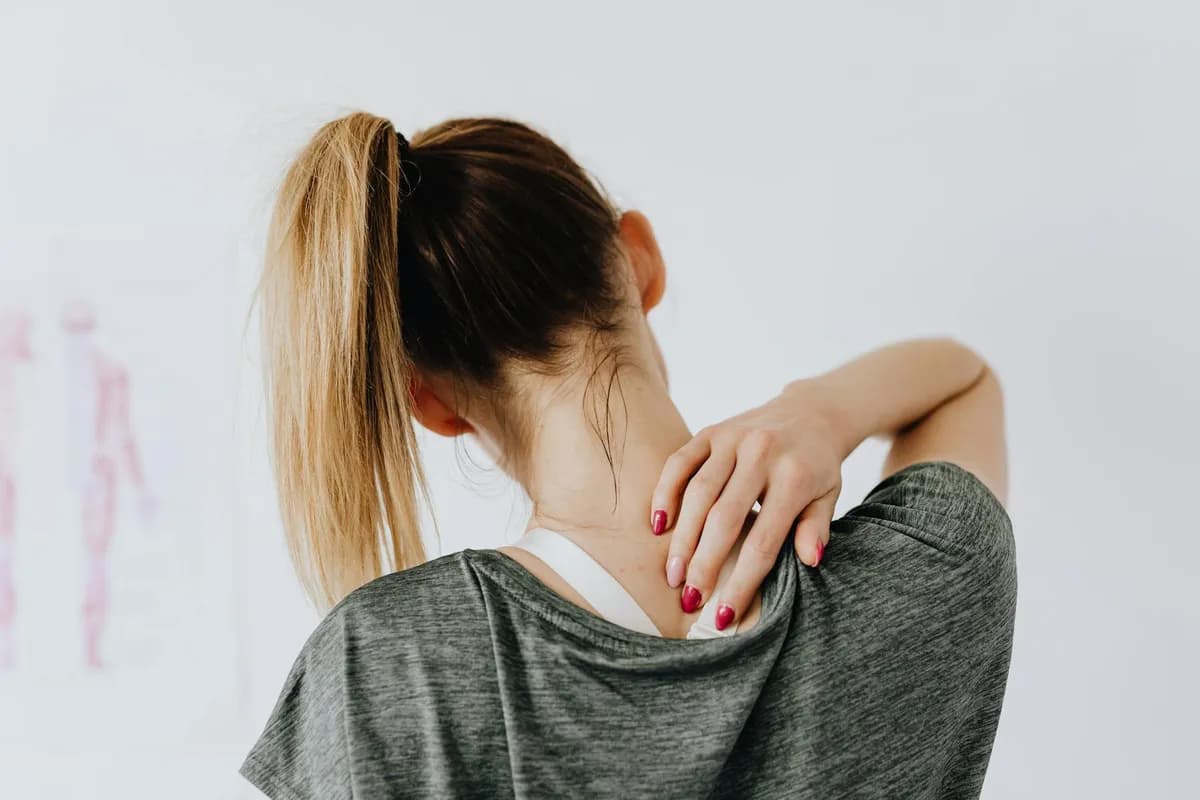
Cervicalgia is localized neck pain in the cervical spine that does not radiate down the arms or legs.
Understanding neck pain and what may help you feel better
At a glance
What It Is
Cervicalgia is localized neck pain in the cervical spine that does not radiate down the arms or legs.
How It Presents
Stiffness, aching, reduced head movement, and headaches starting at the base of the skull are common.
What May Help
Movement, manual therapy, posture awareness, and stress management are commonly explored approaches.
Evidence Context
Moderate evidence supports manual and movement-based care; individual responses vary meaningfully.
See the evidence snapshotWhen to Seek Help
See a provider if pain follows trauma, includes neurological symptoms, or persists beyond two to four weeks.
Explanation
Cervicalgia is the clinical term for neck pain arising from the cervical spine — the seven vertebrae forming the neck. It encompasses pain from the base of the skull to the upper thoracic region and may involve the muscles, joints, discs, ligaments, or nerves of the cervical spine. It is extremely common in adults, with lifetime prevalence exceeding 70%. Cervicalgia ranges from mild, self-limiting muscle tension to severe radiculopathy with arm symptoms. Posture, occupational demands, and psychosocial factors are major drivers in contemporary populations.
Could this be you
Cervicalgia shows up differently for everyone. Browse by how it tends to be felt — these are common experiences, not a checklist or a diagnosis.
Common experiences people describe — not a diagnostic checklist.
Why it happens
Cervicalgia usually comes from a mix of factors rather than a single cause. These are common contributors — not certainties.
Age-related disc degeneration and reduced spinal flexibility may make the cervical vertebrae more vulnerable to strain and localized pain.
Emotional stress often causes people to hold tension in the neck and upper trapezius muscles, which may contribute to persistent cervicalgia.
Sedentary habits and prolonged screen use can weaken postural muscles, increasing cervical strain risk over time.
Sleeping on an unsupportive pillow or in a twisted position may place strain on cervical structures overnight, contributing to morning neck pain.
What happens in the body
Cervicalgia can involve several of the body’s systems. These are common patterns researchers describe — how they show up varies from person to person.
Sustained loading or injury to cervical muscles, joints, discs, or ligaments may trigger local inflammation and pain signaling in the neck.
Irritation of cervical nerve roots or surrounding soft tissue may sensitize local pain receptors, contributing to aching, stiffness, or referred discomfort.
Persistent neck pain may involve changes in how the central nervous system processes pain signals, potentially amplifying sensitivity over time.
Psychological stress and anxiety may increase muscle tension in the cervical region and lower pain thresholds, contributing to the experience of neck pain.
Process
Management
A physical therapist may guide targeted strengthening and mobility work for the cervical spine, which some people find helps reduce stiffness and supports longer-term postural improvement.
A doctor may discuss NSAIDs or acetaminophen for short-term comfort management during acute neck pain episodes, alongside other approaches rather than as a standalone solution.
Sports therapists may apply soft tissue techniques and corrective movement strategies to address muscle tension patterns in the neck, particularly when pain is linked to repetitive posture or activity.
Some people explore Rolfing to address fascial tension around the neck and upper back; some practitioners suggest it may support improved alignment and ease of movement over a series of sessions.
Applying gentle heat to the cervical region is traditionally used to relax muscle tension, and some people find combining this with massage or mobilisation helps ease day-to-day neck discomfort.
Self-Care
Positioning your monitor at eye level and keeping your keyboard close may reduce the forward head posture that often contributes to neck tension throughout the day.
Slow, controlled chin tucks and side-to-side neck rolls done several times daily may help ease stiffness and support better cervical alignment over time.
Applying a warm compress or heat pack to the neck for 15 to 20 minutes may help relax tense muscles, and some people find this especially helpful before stretching.
A pillow that keeps your head aligned with your spine, whether you sleep on your back or side, may reduce morning stiffness and overnight discomfort.
Taking a brief walk or doing shoulder rolls every 45 to 60 minutes during sustained desk work or driving may help prevent the muscle fatigue that often underlies cervicalgia.
The Evidence
What research says about neck pain, its drivers, and the approaches with the strongest support.
Neck pain is well-studied and responds well to active care
Cervicalgia is one of the most researched musculoskeletal conditions. Evidence consistently supports movement, manual therapy, and self-management over passive or medication-only approaches for most presentations.
Combining manual therapy with structured exercise consistently outperforms either approach alone. Acupuncture has moderate supporting evidence. Heat, postural correction, and self-management education also have meaningful research backing. Evidence for passive treatments used in isolation is weaker.
Cervicalgia may involve muscles, joints, discs, or nerve roots of the cervical spine. Persistent pain can involve central nervous system sensitisation, meaning the pain experience may outlast the original tissue issue. Psychosocial factors — including stress and anxiety — are recognised contributors to both onset and persistence.
Osteopathy and physiotherapy offer manual and exercise-based approaches with good evidence. Acupuncture has moderate evidence for pain reduction. Yoga and Pilates may support postural awareness and long-term resilience. These approaches are best used as part of a broader self-management plan, not as standalone solutions.
Seek urgent care if neck pain follows trauma, or is accompanied by arm weakness, hand numbness, difficulty walking, fever, or unexplained weight loss. These may indicate nerve compression, spinal instability, or systemic conditions requiring professional assessment before any manual or physical intervention.
Forceful cervical manipulation without prior imaging is not appropriate for older adults or following trauma. Neurological symptoms — such as arm weakness or numbness — should be assessed before manual therapy begins. Always inform your practitioner of your full health history, including any previous neck injuries.
Active approaches — exercise, postural correction, ergonomic adjustment — have strong preventive and therapeutic evidence. Manual therapy from a qualified practitioner can support recovery. Self-management education improves long-term outcomes. A qualified health professional can help identify which combination suits your specific presentation.
Safety first
Cervicalgia is manageable, and support helps. Some situations call for prompt professional help.
Explore approaches
Practices people explore for cervicalgia — alongside professional care.
FAQ
Cervicalgia means localized neck pain without radiation into the arms. Unlike a pinched nerve, it stays in the neck region and is often linked to muscle tension or posture rather than structural nerve involvement.
Gentle movement, heat, and posture adjustments may support relief. Some people find short rest helpful, but staying gently active tends to work better than prolonged rest for most neck pain.
Some practitioners suggest manual therapy and movement-based approaches may support reduced tension and improved range of motion. Evidence is moderate, meaning results vary and these work best alongside good daily habits.
Evidence is rated moderate for cervicalgia. Some people find meaningful benefit from manual therapy and movement work, though individual results vary and no single approach is guaranteed to work for everyone.
See a doctor if pain follows trauma, comes with arm weakness or hand numbness, or does not improve after two to four weeks of self-care. Fever or unexplained weight loss alongside neck pain also warrants prompt medical attention.
Keep exploring
Browse practitioners, explore honest overviews, and take what you learn to a conversation — at your own pace.