What It Is
Tendinopathy is tendon pain and reduced function from overuse or failed tissue repair
Understanding tendon pain and finding your path forward
At a glance
What It Is
Tendinopathy is tendon pain and reduced function from overuse or failed tissue repair
How It Presents
Localised aching, stiffness, and weakness at tendons like the Achilles or rotator cuff
What May Help
Progressive loading, physiotherapy, shockwave therapy, and acupuncture are commonly explored
Evidence Context
Moderate evidence supports loading-based rehab; complementary approaches show promising early research
See the evidence snapshotWhen to Seek Help
Seek professional assessment if tendon pain persists beyond two to four weeks of self-management
Explanation
Tendinopathy is a clinical syndrome characterised by localised tendon pain, swelling, and impaired function. It is now understood as a continuum from reactive tendinopathy (early-stage inflammatory response) through tendon disrepair to degenerative tendinopathy (chronic structural change). Common sites include the Achilles, patellar, rotator cuff, and elbow tendons. Tendinopathy is driven by mechanical overload relative to the tendon's capacity, and recovery requires progressive loading to restore tendon structure and capacity.
Could this be you
Tendinopathy shows up differently for everyone. Browse by how it tends to be felt — these are common experiences, not a checklist or a diagnosis.
Common experiences people describe — not a diagnostic checklist.
Why it happens
Tendinopathy usually comes from a mix of factors rather than a single cause. These are common contributors — not certainties.
Ageing tendons lose elasticity and cell activity, making them more vulnerable to overuse injury and slower to recover from repeated loading stress.
Sudden spikes in training volume or intensity may overload tendons before they can adapt, raising the likelihood of pain and tissue breakdown.
Conditions such as diabetes or gout, and some medications including fluoroquinolone antibiotics, may increase tendon vulnerability.
Poor sleep and inadequate recovery time between sessions may limit the tendon repair that occurs during rest, prolonging symptoms.
What happens in the body
Tendinopathy can involve several of the body’s systems. These are common patterns researchers describe — how they show up varies from person to person.
Mechanical overload may disrupt the collagen matrix within the tendon, leading to disorganized fiber structure and impaired load-bearing capacity over time.
Tenocytes may respond to repeated stress by producing abnormal collagen types and increased ground substance, potentially impairing normal tendon remodeling.
Abnormal nerve and blood vessel growth into degenerative tendon tissue may contribute to the persistent, deep aching pain characteristic of chronic tendinopathy.
Conditions such as diabetes or gout may alter tendon cell metabolism and collagen quality, potentially increasing susceptibility to load-related tendon breakdown.
Process
Management
Structured physiotherapy with progressive tendon loading is widely considered a core approach and may support pain reduction and tendon function over time.
Extracorporeal shockwave therapy is a non-invasive option some practitioners suggest for persistent tendinopathy that has not responded to exercise-based approaches.
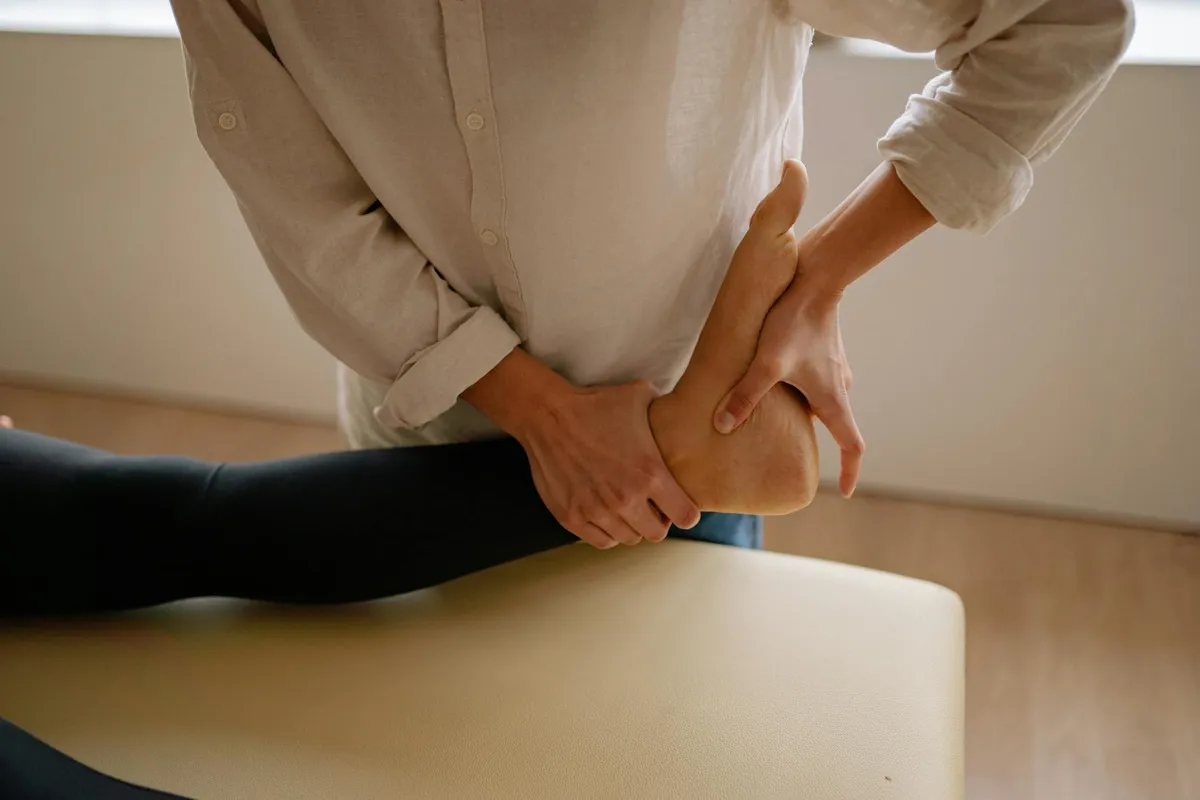
Targeted soft tissue work around the affected tendon may support circulation and tissue mobility, and some people find it helpful alongside a rehabilitation programme.
A doctor may discuss short-term use of NSAIDs to help manage pain and discomfort during flare-ups, though these are generally not considered a long-term solution.
Some practitioners suggest SCENAR therapy as a complementary option that may support pain modulation in musculoskeletal conditions including tendinopathy.
Self-Care
Gradually increasing tendon load through structured exercise, such as isometric and eccentric movements, may support tendon adaptation and recovery over time.
Avoiding sudden spikes in training volume or intensity may help prevent symptom flares. Some people find tracking weekly load useful for spotting patterns that aggravate their tendon.
Strengthening the muscles around the affected tendon may reduce strain on the tendon itself. Some practitioners suggest this is one of the most important long-term self-care strategies for tendinopathy.
Tendons repair during rest, and adequate sleep may support the body's natural tissue maintenance processes. Building recovery days into your routine may help prevent overuse from accumulating.
Some research suggests that vitamin C-enriched collagen taken before exercise may support tendon tissue. A balanced diet with adequate protein may also contribute to overall connective tissue health.
The Evidence
What the research says about tendinopathy, how it develops, and which approaches have the strongest support for recovery.
Progressive loading is the most supported approach for tendon recovery
Tendinopathy is well-studied, and the evidence consistently points to graduated mechanical loading as the foundation of recovery. Complementary approaches such as shockwave therapy and acupuncture have supportive evidence, though results vary by site and severity.
Eccentric and heavy slow resistance exercises are consistently supported across Achilles, patellar, and rotator cuff tendinopathies. Shockwave therapy has moderate to strong evidence for chronic presentations. Acupuncture has emerging supportive evidence. Corticosteroid injections may offer short-term relief but evidence suggests they can impair longer-term tendon healing.
Mechanical overload relative to the tendon's capacity is the primary driver. Early-stage reactive tendinopathy may be reversible with load management. Chronic degenerative tendinopathy involves structural collagen disorganisation and abnormal neurovascular ingrowth, which contributes to persistent deep aching pain. Systemic factors such as diabetes may also affect tendon tissue quality.
Sudden severe tendon pain, a felt or heard snap, significant swelling with bruising, complete loss of movement, or inability to bear weight may indicate tendon rupture or serious injury. These presentations warrant prompt assessment by a qualified health professional rather than a wait-and-see approach.
Prolonged complete rest beyond the acute phase is not supported and may reduce tendon capacity further. Repeated corticosteroid injections without addressing underlying load factors carry risk of longer-term tissue changes. Returning to high-load activity without graduated progression is a common cause of setback and should be avoided.
Physiotherapy-guided loading remains the foundation. Massage and manual therapy may support symptom management and tissue mobility. Nutritional approaches, including collagen-supportive nutrients, are an area of growing interest though evidence remains early. Acupuncture has supportive evidence for pain modulation. These approaches are best used alongside, not instead of, structured rehabilitation.
A physiotherapist or sports medicine professional can assess tendon stage, identify contributing load and movement factors, and design a progressive programme suited to your capacity. Self-managed loading without professional input can be effective for mild presentations, but persistent, worsening, or unclear symptoms benefit from professional assessment to rule out other structural issues.
Safety first
Tendinopathy is manageable, and support helps. Some situations call for prompt professional help.
Explore approaches
Practices people explore for tendinopathy — alongside professional care.
FAQ
This pattern is very characteristic of tendinopathy. Tendons can stiffen during rest, and gentle movement may help reduce that initial discomfort. It often returns, though, with more intense or prolonged activity.
Some practitioners suggest acupuncture may support pain relief alongside conventional rehabilitation. Early research shows some promise, though evidence is still developing and individual responses vary.
Eccentric exercises involve controlled muscle lengthening under load. Some research suggests this type of progressive loading may support tendon remodelling and reduce pain over time when done consistently.
If your tendon pain has not improved with relative rest and gentle self-care after two to four weeks, a physiotherapy or sports medicine assessment is worthwhile. Sudden severe pain or loss of function warrants urgent evaluation.
Complete rest is generally not recommended for most tendinopathies. Some people find that relative rest combined with gradual, progressive loading tends to support better recovery than avoiding movement entirely.
Keep exploring
Browse practitioners, explore honest overviews, and take what you learn to a conversation — at your own pace.