What it is
Two slightly different tones, one per ear, create a beat your brain perceives and responds to.
Binaural beats use two slightly different sound frequencies played simultaneously in each ear to create an auditory illusion that may inf...
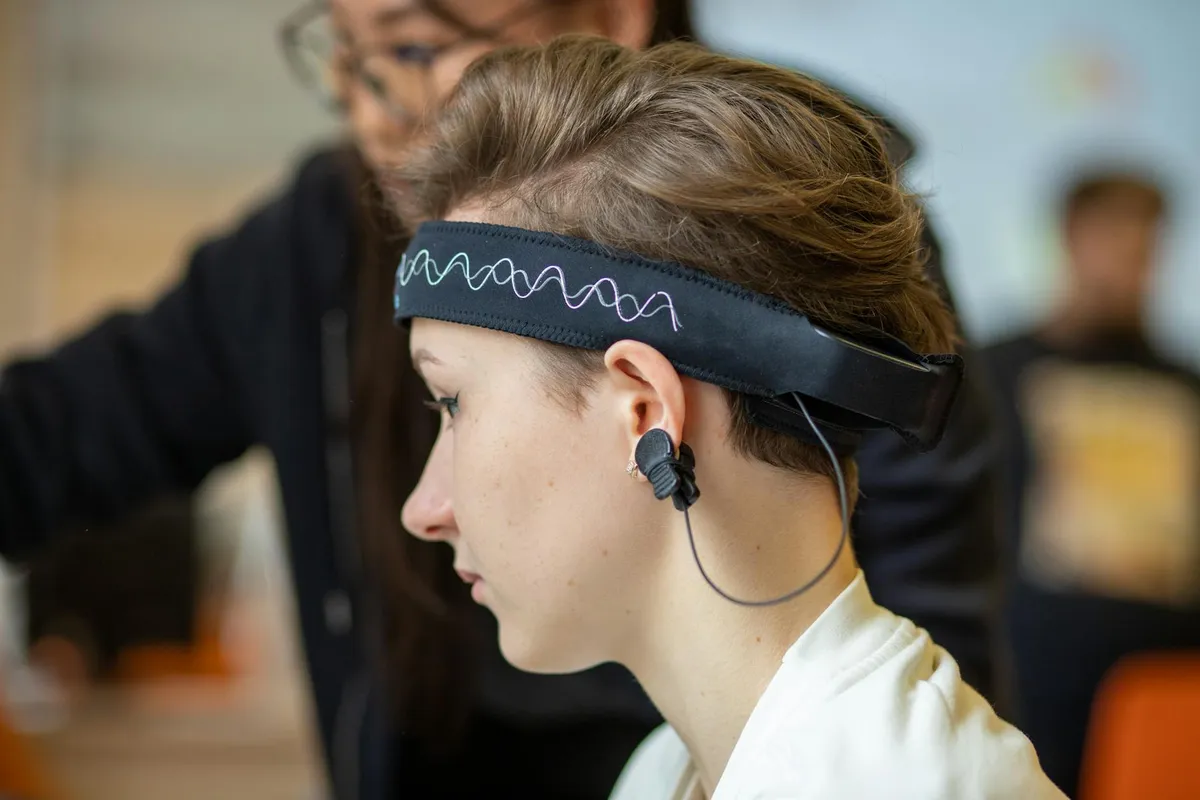
At a glance
What it is
Two slightly different tones, one per ear, create a beat your brain perceives and responds to.
Why explore it
Many people use binaural beats to ease stress, deepen meditation, improve sleep, or sharpen focus.
How it’s experienced
Just put on stereo headphones and listen for 10 to 30 minutes, many notice a gentle shift in mood.
Evidence context
Early research hints at benefits for relaxation and focus, though findings are mixed and still evolving.
See the evidence snapshotSafety
Safe for most adults, but skip it while driving and check with a doctor if you have epilepsy or tinnitus.
See staying safeHistory & Origin
Binaural Beats use sound waves to influence brainwave patterns and promote relaxation and focus.
The phenomenon of binaural beats was first discovered in 1839 by German physicist Heinrich Wilhelm Dove, who observed that when two tones of slightly different frequencies are presented separately to each ear, the brain perceives a third rhythmic beating tone. However, Dove's discovery remained largely academic curiosity for over a century.
The modern therapeutic application of binaural beats began to emerge in the 1970s with the work of biophysicist Gerald Oster, who published influential research on binaural beats in Scientific American. Oster's work explored how these auditory illusions could potentially influence brainwave patterns and suggested therapeutic possibilities. Around the same time, researcher Robert Monroe began experimenting with binaural beats for altered states of consciousness at his Monroe Institute in Virginia.
The practice gained significant momentum in the 1990s and 2000s as digital audio technology made it easier to create and distribute precise binaural beat recordings. The rise of personal audio devices and streaming platforms further popularized the practice, leading to a proliferation of commercial binaural beat products marketed for everything from stress relief to cognitive enhancement.
Today, binaural beats represent a convergence of neuroscience, audio technology, and wellness practices, with researchers continuing to investigate their potential effects on brainwave entrainment, though the field remains an area of ongoing scientific inquiry with mixed results.
Mechanism
Binaural Beats is best framed as a traditional, symbolic, energetic, reflective, or spiritual practice rather than a validated medical mechanism. Practitioners may use ritual, attention, sound, imagery, touch-free work, cards, symbols, prayer, or intention to support meaning-making and a sense of connection. People may explore it for reflection, calm, or spiritual context, while health claims should remain cautious and personal. When two slightly different frequencies are played separately into each ear—for instance, 100 Hz in the left ear and 110 Hz in the right—your brain perceives a rhythmic "beat" at the difference between them (10 Hz in this example).
Your first visit
A typical session outline to help you feel prepared
A binaural beats session uses specially designed audio to gently guide your brain into a desired state, whether that's calm, focus, or restful sleep.
Your practitioner starts by asking what you're hoping to get from the session, such as stress relief, better focus, or improved sleep, so they can select the right audio track for you.
You'll be given a pair of stereo headphones to put on, since binaural beats only work when each ear receives a slightly different tone separately, so proper fit really matters here.
You'll settle into a reclining chair or lie down on a mat, fully clothed, in a dimly lit and quiet space. Your practitioner may offer a blanket or eye mask to help you relax more deeply.
The session starts as a low, steady hum fills each ear at slightly different frequencies. You won't hear a beat exactly, but your brain begins naturally syncing to the difference between the two tones.
Over the first few minutes you may notice your thoughts slowing, muscles softening, or a mild tingling sensation as your brainwaves begin to shift toward the target state chosen for your session.
You rest quietly while the audio continues for anywhere from 15 to 60 minutes. Some people feel dreamlike or deeply relaxed, while others simply feel calm and present. Both responses are completely normal.
The track fades out gradually and your practitioner gives you a quiet moment before speaking, then asks how you're feeling and what you noticed, helping you begin to process the experience.
Your practitioner may suggest a track you can use at home between sessions, since consistent regular listening is where many people find the most meaningful and lasting benefits over time.
The Evidence
What research currently shows about binaural beats, where the evidence is limited, and what that means for how you use it.
Promising signals, but research is still early and inconsistent
Some small studies suggest binaural beats may support relaxation, sleep, and anxiety reduction, but effect sizes are modest and study designs vary widely. The science is genuinely interesting, though not yet conclusive.
Systematic reviews have found some support for anxiety reduction and improved sleep quality, though study designs varied considerably. EEG research confirms binaural beats can influence brainwave activity, particularly in alpha and theta ranges. Whether these changes produce meaningful real-world benefits remains an open question.
Sample sizes in binaural beat research tend to be small, and outcome measures differ enough between studies to make comparisons difficult. Placebo controls are challenging to design for auditory interventions. This does not mean the practice is ineffective, but it does mean confident conclusions are not yet possible.
Within the MACH framework, binaural beats sit in the Complementary category — meaning they may work alongside, not instead of, conventional care. They are commonly used to support relaxation, focus, and sleep hygiene as part of a broader self-care routine. Inflated outcome claims should be viewed with caution.
The frequency-following response — where brainwave oscillations shift toward the perceived beat frequency — has measurable neurophysiological support. Alpha and theta range beats are most studied. However, whether these shifts translate to lasting therapeutic benefit in everyday populations is not yet established by the available evidence.
People with epilepsy or seizure disorders should consult a neurologist before use, as rhythmic auditory stimuli may be a consideration. Those with tinnitus, significant hearing impairment, or conditions affecting brain chemistry should speak with a relevant health professional first. For most adults, short sessions at moderate volume carry minimal risk.
If you are using binaural beats to support persistent anxiety or ongoing sleep difficulties, these concerns warrant professional assessment in their own right. A qualified practitioner can help determine whether binaural beats are a reasonable addition to your care, and can also advise whether any neurological considerations — such as seizure history — apply to your situation.
Safety first
General guidance to help you decide whether this approach is appropriate for you. This is informational only and not a substitute for medical, psychological, or professional advice.
If you are pregnant, managing a health condition, recovering from injury or surgery, or taking medication, consult a qualified healthcare professional first.
Some situations call for extra care or a different approach. Share any conditions, injuries, or sensitivities with your practitioner before your first session.
Look for clear boundaries, transparent pricing, and practitioners who avoid fear-based claims or pressure to book frequent sessions.
Mild, short-lived effects such as tenderness, tiredness, or temporary soreness can occur. Rest, hydrate, and tell your practitioner how you respond.
For you?
A simple, human way to weigh it up. This is general guidance, not personal medical advice — a qualified practitioner can advise on your situation.
Gyfts is a discovery platform, not a medical provider. Nothing here diagnoses, treats or replaces professional care. In an emergency, contact your local emergency number.
Explore approaches
Other practices people often explore alongside binaural beats.
In their words
FAQ
During a binaural beats session, you'll wear headphones and listen to specially designed audio tracks while relaxing comfortably. The experience is passive - you simply listen as slightly different frequencies are played in each ear, creating the binaural beat effect. Sessions typically last 15-60 minutes and may include guidance on breathing or meditation techniques.
The number of sessions varies greatly depending on individual goals and responsiveness. Some people notice immediate relaxation effects, while others require several sessions to experience benefits. For ongoing issues like sleep problems or stress management, regular sessions over several weeks or months may be recommended, often combined with home practice using provided recordings.
Yes, high-quality stereo headphones are essential for binaural beats to work properly, as each ear must receive a distinct frequency. Regular speakers won't create the necessary effect. Many practitioners provide headphones during sessions, and quality recordings can be used at home with good headphones or earbuds.
Binaural beats are generally well-tolerated with minimal side effects. Some people may experience mild headaches, dizziness, or unusual sensations, especially when first starting. Rarely, individuals with seizure disorders may be at risk for triggered episodes. It's important to start with shorter sessions and moderate volumes.
Binaural beats are an auditory processing effect — not an external sound but a perception created by the brain when two slightly different frequencies are presented separately to each ear. The brain perceives a rhythmic pulse at the frequency difference, which is proposed to entrain brainwave activity toward specific states (delta for sleep, theta for meditation, alpha for relaxation, beta for focus). This distinguishes them from sound baths or singing bowls, which use external acoustic vibration. Binaural beats require stereo headphones to work as intended and have a specific neurological basis, even if the therapeutic claims remain partially contested.
References
Educational sources that inform this overview. Inclusion is for context and does not imply endorsement.
Full citations are maintained by the Gyfts editorial team and reviewed periodically.
Keep exploring
Browse practitioners, explore honest overviews, and take what you learn to a conversation — at your own pace.