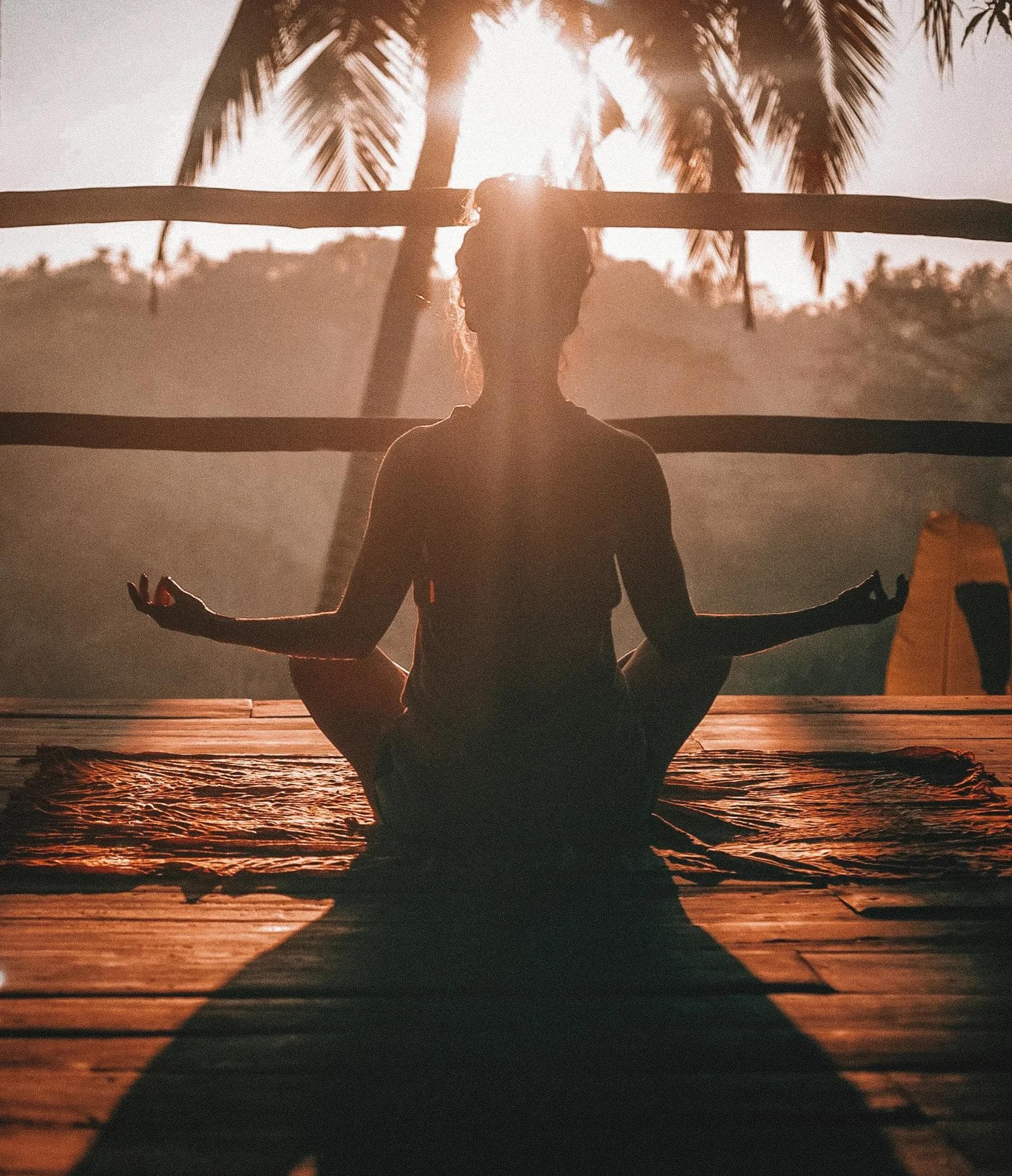
What it is
Floor poses held 3–5 minutes to gently reach deep tissues like fascia and ligaments.
Still the body. Soften the layers. Find your depth.
At a glance
What it is
Floor poses held 3–5 minutes to gently reach deep tissues like fascia and ligaments.
Why explore it
May ease stress, improve sleep, and support flexibility through slow, sustained relaxation.
How it’s experienced
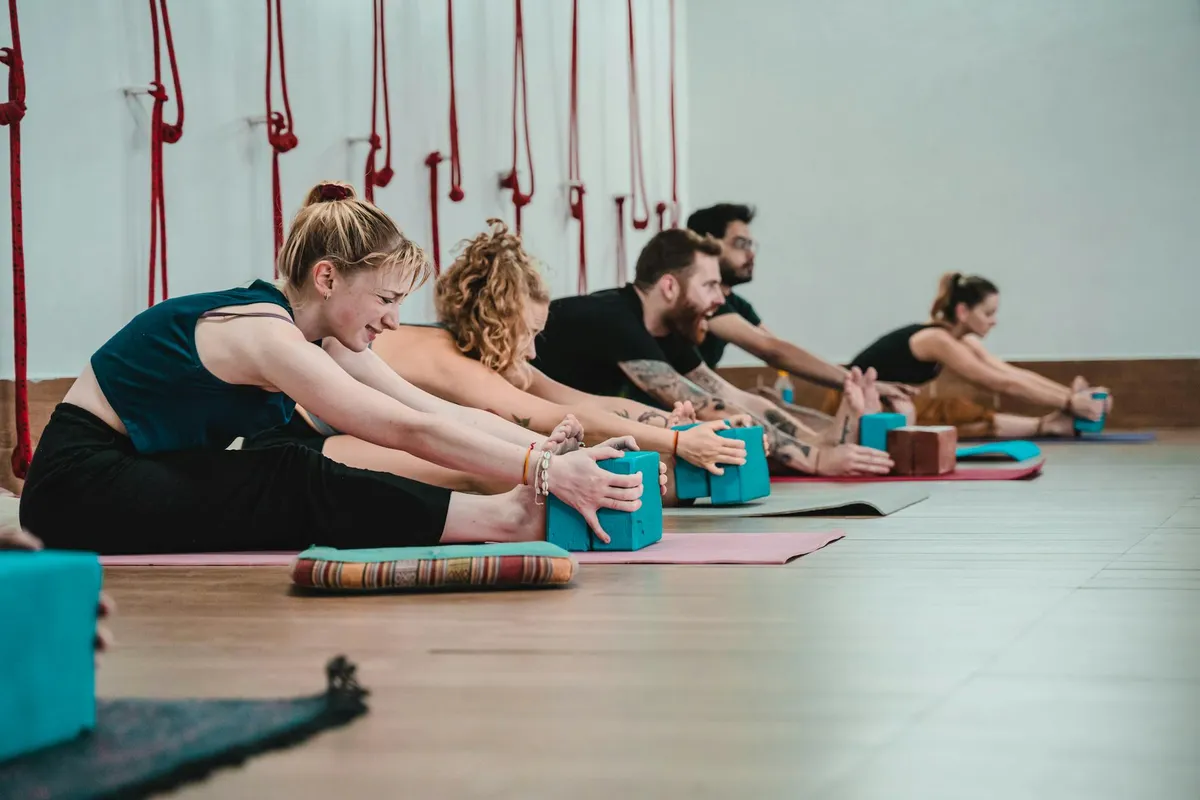
Expect a quiet, unhurried class with long holds, mild sensation, and props for support.
Evidence context
Early research looks promising for stress and sleep, but larger studies are still needed.
See the evidence snapshotSafety
Low-risk for most, but those with hypermobility or joint concerns should check with a provider.
See staying safeHistory & Origin
Yin Yoga is a slow-paced, meditative style of yoga that emphasizes long-held passive postures, typically sustained for two to five minutes or more. Unlike more dynamic forms of yoga that target muscles through active engagement, Yin Yoga is designed to gently stress the deeper connective tissues of the body — including fascia, ligaments, joint capsules, and tendons — with the intention of increasing flexibility and encouraging greater range of motion over time. Poses are generally performed close to the floor, and props such as bolsters, blocks, and blankets are commonly used to support the body and allow it to soften into each shape.
Rooted in both Taoist philosophy and traditional Chinese medicine, Yin Yoga incorporates concepts such as the flow of 'qi' (life energy) through meridian pathways in the body. Practitioners and teachers often describe the practice as a complement to more active ('yang') movement disciplines, offering a counterbalance that may be associated with reduced physical tension, nervous system downregulation, and a greater sense of stillness. Many people find the extended holds and quiet atmosphere to be a natural entry point into mindfulness and breathwork.
Yin Yoga has grown considerably in popularity across Western wellness communities over the past two decades, and it is now offered in yoga studios, rehabilitation settings, and online platforms. It is frequently positioned as accessible to a wide range of ages and fitness levels, including those with limited mobility or those recovering from stress and burnout. While the evidence base is still developing, many practitioners and some researchers suggest the practice may support flexibility, stress reduction, and overall well-being when practiced consistently.
The modern form of Yin Yoga was largely developed in the late 1970s and 1980s by martial arts expert and Taoist yoga teacher Paulie Zink, who drew on a blend of Taoist yoga traditions, Chinese martial arts, and classical Hatha yoga. The practice was later adapted and popularized by teachers Paul Grilley and Sarah Powers, who integrated insights from anatomy, traditional Chinese medicine, and Buddhist mindfulness into the form that is widely practiced today.
The philosophical roots of Yin Yoga reach back to ancient Taoist principles, particularly the concept of yin and yang — complementary forces that together create balance and wholeness. In this context, 'yin' qualities include stillness, receptivity, coolness, and depth, in contrast to the 'yang' qualities of movement, heat, and effort found in more active yoga styles. The incorporation of traditional Chinese medicine concepts, particularly the meridian system and the idea of cultivating and moving qi, reflects the practice's deep connections to East Asian healing traditions.
While Yin Yoga draws on ancient ideas, its codified form as a distinct yoga style is relatively modern, emerging primarily in Western wellness contexts over the past four decades. It has since spread globally and evolved as teachers continue to blend its foundational traditions with contemporary anatomical and psychological understanding.
Mechanism
Yin Yoga works by applying gentle, sustained pressure to the body's deeper connective tissues while cultivating stillness in both body and mind.
Your first visit
A typical session outline to help you feel prepared
A Yin Yoga session guides you through long, floor-based poses held in stillness, inviting deep release in both body and mind.
Your teacher greets you and invites you to find a spot on your mat. You'll be encouraged to grab props like bolsters, blankets, and blocks before the session begins.
The teacher opens the class with a few quiet words, often inviting you to set a personal intention or simply arrive in the present moment. This gentle ritual helps signal to your nervous system that i
You'll begin lying down or seated, following a few guided breaths to help you transition out of the busyness of your day and into the quieter pace of a Yin practice.
The teacher guides you into an opening pose, typically something gentle like a supported child's pose or reclined butterfly. Props are adjusted so you can relax fully into the shape without straining.
Each pose is held for roughly three to five minutes, long enough to reach into the connective tissue around joints and the spine. You may feel a mild, dull sensation of stretch or pressure, which is normal and expected.
After each hold, the teacher guides you out slowly and gives you a moment of stillness called a rebound, where you simply rest and notice how your body feels before moving into the next shape.
The session closes with a longer savasana, where you lie completely still and let the effects of the practice settle in. The room stays quiet, and you may be offered an extra blanket for warmth.
The teacher brings the class to a gentle close, often with a few grounding words. Take your time sitting up, drink water, and move slowly afterward as your body may feel softer and more open than usual.
The Evidence
What research currently shows, where the evidence is limited, and how Yin Yoga fits within a broader health picture.
Promising early findings, but research is still maturing
Small-scale studies suggest Yin Yoga may support flexibility, stress reduction, and sleep quality, but most research has significant methodological limitations. It is best understood as a complementary practice rather than a standalone intervention.
Pilot trials and small studies suggest associations between regular Yin Yoga practice and improvements in perceived stress, flexibility, and sleep quality. Most studies rely on self-reported outcomes, lack control groups, and involve short intervention periods. Firm conclusions cannot be drawn from the current evidence base.
Concepts such as meridian pathways and qi flow, central to traditional explanations of Yin Yoga, are not supported by conventional biomedical research. Claims about connective tissue remodeling specific to Yin Yoga also lack robust human trial data. These gaps do not invalidate the practice, but they should be understood clearly.
Yin Yoga is most commonly positioned as a complement to more active disciplines, supporting recovery, nervous system regulation, and mindful awareness. It addresses physical, psychological, and contemplative dimensions of wellbeing together, which aligns with a holistic health framework rather than a single-outcome clinical model.
Developed from the 1970s onward by Paulie Zink and later shaped by Paul Grilley and Sarah Powers, Yin Yoga integrates Taoist yin-yang principles and TCM meridian concepts with anatomical and mindfulness perspectives. These traditional frameworks carry cultural and philosophical significance that sits outside biomedical evaluation frameworks.
Yin Yoga is low risk for most healthy adults when practiced mindfully. Those with hypermobility, osteoporosis, spinal conditions, or circulatory disorders should seek professional guidance first. Pregnant individuals should consult a prenatal specialist. Extended stillness can be emotionally activating — a trauma-aware instructor is advisable for those with relevant history.
Working with an experienced Yin Yoga teacher helps ensure poses are adapted appropriately for your body and history. Gyfts does not replace professional assessment — if you have an existing health condition or are unsure whether this practice is suitable, consult a qualified health professional before starting.
Safety first
General guidance to help you decide whether this approach is appropriate for you. This is informational only and not a substitute for medical, psychological, or professional advice.
If you are experiencing severe distress, suicidal thoughts, psychosis, acute trauma, or another serious mental health concern, seek qualified support first.
This approach is not suitable for diagnosis, treatment instructions, or decisions that require medical, legal, financial, or professional advice.
Look for clear boundaries, transparent pricing, and practitioners who avoid fear-based claims or pressure to book frequent sessions.
Treat any insight as one reflective perspective, not absolute truth. Important decisions should be considered with appropriate professional support.
For you?
A simple, human way to weigh it up. This is general guidance, not personal medical advice — a qualified practitioner can advise on your situation.
Gyfts is a discovery platform, not a medical provider. Nothing here diagnoses, treats or replaces professional care. In an emergency, contact your local emergency number.
Explore approaches
Other practices people often explore alongside yin yoga.
In their words
Before you book
FAQ
Yes, Yin Yoga is widely considered accessible for beginners since it does not require prior yoga experience, strength, or high levels of flexibility. Poses are passive and floor-based, and props are typically provided to help participants find a comfortable position. Starting with a beginner-focused class or an experienced instructor is recommended to ensure proper alignment and safety.
While both styles are slow-paced and floor-based, Yin Yoga intentionally introduces a mild, tolerable stress to connective tissues by holding poses at a gentle edge, whereas restorative yoga uses props to fully support the body with the goal of complete release and rest. Yin Yoga tends to involve a more noticeable physical sensation during holds, while restorative yoga is designed to feel entirely effortless. Both practices may support relaxation and nervous system downregulation.
Many teachers and practitioners suggest that even one to two sessions per week may be associated with gradual improvements in flexibility and stress levels over time, though individual results vary. Consistency is generally considered more important than frequency. It is worth noting that evidence on optimal practice frequency is limited, and more research is needed to establish clear recommendations.
References
Educational sources that inform this overview. Inclusion is for context and does not imply endorsement.
Full citations are maintained by the Gyfts editorial team and reviewed periodically.
Keep exploring
Browse practitioners, explore honest overviews, and take what you learn to a conversation — at your own pace.