What it is
Gentle rolling moves across muscles and fascia, with rest pauses, done fully clothed.
A light-touch soft-tissue therapy using precise rolling moves over muscles, tendons, and fascia — followed by silent pauses that invite the body to respond.

At a glance
What it is
Gentle rolling moves across muscles and fascia, with rest pauses, done fully clothed.
Why explore it
May ease chronic back, neck, and shoulder pain using light, non-invasive touch over fascia.
How it’s experienced
Expect soft moves, rest breaks, and deep relaxation — mild fatigue may follow a session.
Evidence context
Early studies show promise for pain relief, though larger independent trials are still needed.
See the evidence snapshotSafety
Low risk with a trained practitioner; a brief symptom flare in the first 72 hours is possible.
See staying safeHistory & Origin
A gentle, hands-on soft-tissue therapy using cross-fibre rolling moves with rest intervals; applied to musculoskeletal pain, fascia restrictions, and systemic tension.
Bowen Therapy was developed in Geelong, Australia, by Thomas Ambrose Bowen (1916–1982), a self-taught bodyworker with no formal medical training but an extraordinary observational gift. In the 1950s and 1960s, Bowen refined a hands-on system of precise, light-pressure moves designed to address musculoskeletal complaints quickly. Operating from a small clinic, he reportedly saw up to 13,000 patients per year, with documented waiting lists and a community reputation for addressing complaints ranging from back pain to respiratory difficulties.
Bowen did not write extensively about his own method, and he personally taught only six students — 'the Bowen Boys' — who carried the technique forward. Among them, Oswald Rentsch and Elaine Rentsch catalogued and codified what became known as Bowtech (The Bowen Technique) in Australia and New Zealand, travelling internationally to teach it from the 1980s onwards. Other lineages followed, including Smart Bowen, Neurostructural Integration Technique, and the International School of Bowen Therapy (ISBT) pioneered by the late Dr Julian Baker.
Bowen Therapy spread through Australia, the United Kingdom, the United States, continental Europe, and parts of Asia across the late 1980s and 1990s. The Bowen Association Australia, Bowen Therapy Professional Association (UK), and European Bowen Therapy Association regulate training standards in their respective jurisdictions. In Australia, Bowen therapists must hold a minimum Advanced Diploma-level qualification (500+ hours clinical practice) to register with peak bodies including the Australian Traditional-Medicine Society (ATMS). The practice is not formally regulated under the Australian Health Practitioner Regulation National Law, but practitioner associations enforce codes of conduct, continuing professional development, and professional indemnity insurance requirements.
Mechanism
Bowen Therapy is generally described as working through skilled touch, careful pacing, and the body's response to pressure, movement, warmth, or stillness. Practitioners may focus on muscle tone, joint comfort, circulation, breath, or relaxation depending on the method. Traditional explanations may also include energy flow or whole-person balance. Research support varies by modality, so the experience is best framed as supportive care with outcomes that vary. Bowen Therapy operates through a series of precise, gentle cross-fiber rolling movements applied to muscles, tendons, and fascia, followed by deliberate rest intervals that allow the nervous system to process and respond.
Your first visit
A typical session outline to help you feel prepared
A Bowen session is a gentle, clothed bodywork experience where a practitioner uses small, precise moves on your muscles and connective tissue, with built-in pauses that let your body respond.
Your practitioner begins by asking about your health history, current concerns, and goals for the session. This conversation helps them understand your body and tailor the session to you.
You stay fully clothed throughout — comfortable, loose-fitting clothes work best. You'll lie on a massage table, and the practitioner will confirm you're comfortable before anything begins.
The practitioner may observe your posture and gently check areas of tension or asymmetry before touching you. This helps them decide which Bowen moves and sequences to use.
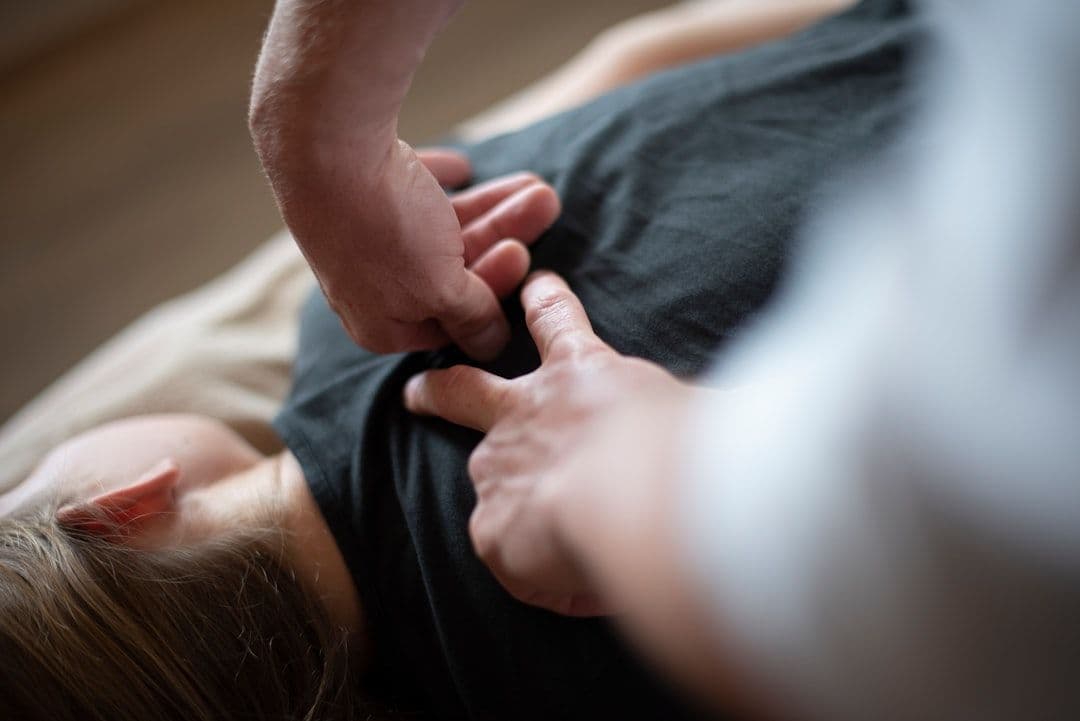
Using thumbs and fingers, the practitioner makes small, rolling moves across specific muscles, tendons, and connective tissue. Each move is light but precise — nothing forceful or jarring.
After each set of moves, your practitioner will step away or simply pause for a couple of minutes. These breaks are intentional and essential — they give your nervous system time to process and respond.
Many people feel warmth, tingling, a deep sense of relaxation, or even drowsiness during the session. Some notice subtle shifts in tension or breathing — all of this is a normal part of the process.
The practitioner finishes with a final set of moves and checks in with you about how you're feeling. You'll take a moment to slowly sit up before getting off the table.
Your practitioner will suggest drinking water and taking it easy for the rest of the day. Changes often unfold over the following days, so they'll recommend a follow-up session about a week later.
The Evidence
What the research shows, where the evidence is limited, and how Bowen Therapy fits within a broader care picture.
Promising early findings, but research is still maturing
Bowen Therapy has a growing body of clinical research, including several RCTs showing pain and mobility benefits. Study sizes remain small and findings are mixed, so conclusions should be held with appropriate caution.
Recent RCTs in people with myofascial neck pain have found improvements in pressure-pain threshold and cervical range of motion, with some benefits maintained at longer follow-up. A double-blind RCT found lower pain scores versus sham at short-term follow-up. Most earlier studies were non-randomised, limiting how far findings can be generalised.
The rolling moves are proposed to stimulate mechanoreceptors in fascia and muscle, while rest intervals may support a shift from sympathetic to parasympathetic nervous system tone. Some RCT authors have noted sympathetic nervous system activation as a possible mechanism. These are plausible pathways, but the precise mechanisms remain under investigation.
It is commonly used alongside conventional care for musculoskeletal conditions such as neck pain, lower back pain, and myofascial tension. It is not a substitute for professional assessment, and people with new, unexplained, or complex symptoms should seek appropriate medical review before or alongside bodywork.
Caution applies with recent acute injuries, severe osteoporosis, anticoagulant therapy, deep vein thrombosis, acute infection, and advanced malignancy near the spine. Pregnancy is not a contraindication, but practitioners should use adapted protocols and hold relevant training. Always disclose your full health history to your practitioner before a session.
Seek medical assessment before Bowen Therapy if you have sudden severe or unexplained pain, neurological symptoms such as numbness or weakness, unexplained weight loss, or fever alongside musculoskeletal symptoms. These may indicate conditions requiring professional assessment that bodywork alone cannot address.
Most trials have fewer than 100 participants, and blinding in hands-on therapy research is inherently difficult. Some positive short-term findings did not persist at final follow-up. Independent replication in larger, well-designed trials is needed before strong conclusions can be drawn. Bowen Therapy should not be presented with inflated outcome claims.
Safety first
General guidance to help you decide whether this approach is appropriate for you. This is informational only and not a substitute for medical, psychological, or professional advice.
If you are pregnant, managing a health condition, recovering from injury or surgery, or taking medication, consult a qualified healthcare professional first.
Some situations call for extra care or a different approach. Share any conditions, injuries, or sensitivities with your practitioner before your first session.
Mild, short-lived effects such as tenderness, tiredness, or temporary soreness can occur. Rest, hydrate, and tell your practitioner how you respond.
Look for clear boundaries, transparent pricing, and practitioners who avoid fear-based claims or pressure to book frequent sessions.
For you?
A simple, human way to weigh it up. This is general guidance, not personal medical advice — a qualified practitioner can advise on your situation.
Gyfts is a discovery platform, not a medical provider. Nothing here diagnoses, treats or replaces professional care. In an emergency, contact your local emergency number.
Explore approaches
Other practices people often explore alongside bowen therapy.
In their words
FAQ
No. Bowen is performed over loose, comfortable clothing. The practitioner works through a single layer of fabric rather than requiring undress.
The rest intervals — often 2 to 5 minutes — are considered essential to Bowen, not incidental. They give the nervous system time to respond to the proprioceptive and fascial input.
Most practitioners recommend starting with 2–3 sessions spaced 5–10 days apart, then reassessing. If no change is perceived after three sessions, further Bowen is unlikely to help.
No. Bowen is complementary, not a substitute for medical diagnosis or physiotherapy. Red-flag symptoms — sudden severe pain, neurological signs, unexplained weight loss — warrant doctor or specialist review first.
Yes, when delivered by a practitioner trained in pregnancy-adapted Bowen protocols. Specific positioning and procedure modifications apply.
Responses vary. Many people feel a deep parasympathetic shift during the session. Tangible musculoskeletal change often emerges over 24–72 hours.
The 2019 Australian Government review of natural therapies concluded the evidence base was insufficient to justify insurance rebates. This is a cost-coverage issue, not a safety conclusion.
References
Educational sources that inform this overview. Inclusion is for context and does not imply endorsement.
Full citations are maintained by the Gyfts editorial team and reviewed periodically.
Keep exploring
Browse practitioners, explore honest overviews, and take what you learn to a conversation — at your own pace.