What it is
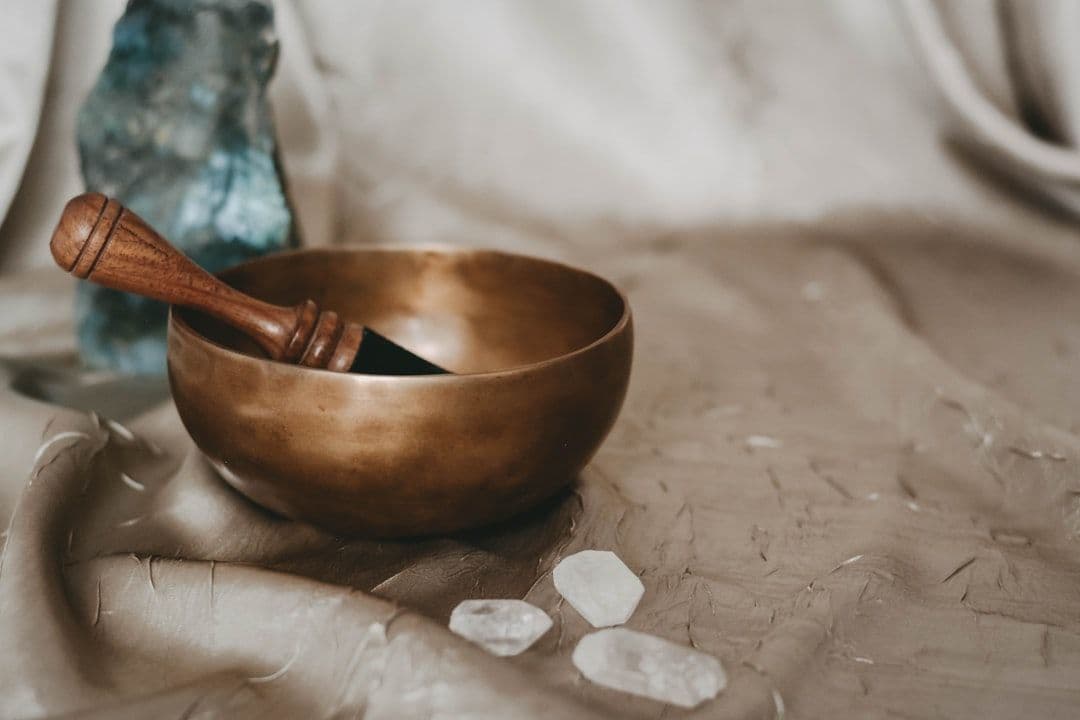
Sound healing uses bowls, voice, and instruments to promote relaxation through vibration.
Sound Healing uses vibrational frequencies from instruments, voice, and music to promote relaxation, emotional release, and energetic bal...
At a glance
What it is
Sound healing uses bowls, voice, and instruments to promote relaxation through vibration.
Why explore it
People turn to sound healing to ease stress, anxiety, and sleep troubles as part of self-care.
How it’s experienced
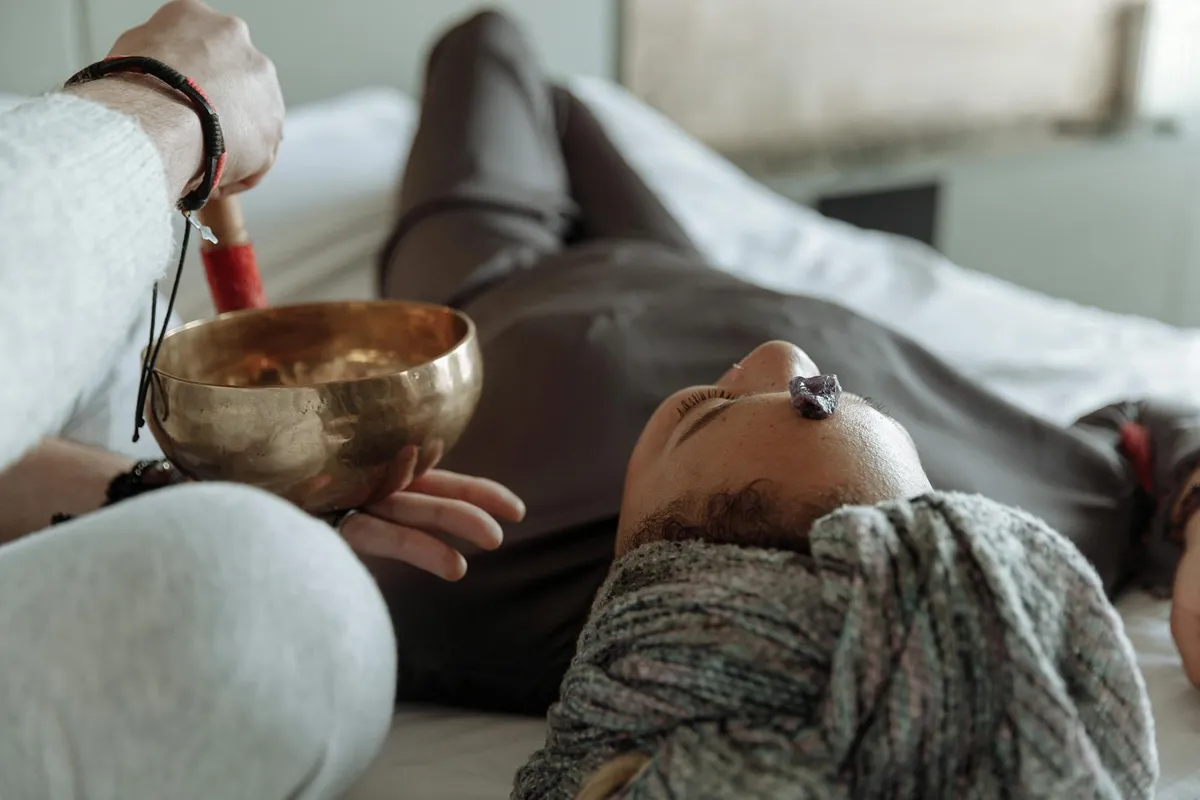
You rest while a practitioner plays bowls or gongs, often bringing calm or emotional release.
Evidence context
Research is still early, so sound healing is best used as a complement to conventional care.
See the evidence snapshotSafety
Generally low-risk, but check with your doctor if you have implants or hearing sensitivities.
See staying safeHistory & Origin
Sound Healing harnesses the power of sound to facilitate healing, balance, and emotional release.
Sound has been recognized as a healing modality across many ancient cultures for thousands of years. In traditional Chinese medicine, sound frequencies were believed to correspond to organ systems and emotional states. Indigenous cultures worldwide have used drumming, chanting, and tonal vibrations in healing rituals and ceremonies. Ancient Greek philosophers, including Pythagoras, documented the therapeutic effects of musical intervals and harmonies on the human body and mind.
In the modern era, Sound Healing experienced a resurgence in the late 20th century as practitioners began synthesizing ancient practices with contemporary understanding of acoustics and vibration. Figures like Hans Jenny, who studied cymatics (the visualization of sound frequencies), demonstrated how sound creates geometric patterns, influencing interest in sound's biological effects. Practitioners including Jonathan Goldman and other acoustic researchers helped establish Sound Healing as a distinct complementary modality.
The field expanded through the 1980s and 1990s with increasing availability of tuning forks, singing bowls, and specialized instruments designed for therapeutic use. Sound Healing has since integrated approaches from music therapy, vibrational medicine, and energy work. Today, it is offered in wellness centers, spas, meditation studios, and complementary health practices worldwide, often combined with other modalities like meditation and chakra balancing.
Approaches
Sound Healing isn’t a single method. Practitioners may train in one tradition or blend several — here are the styles you’re most likely to meet.
Uses sustained tones from instruments such as singing bowls, gongs, chimes, or voice in a relaxation setting.
Uses calibrated forks near or on the body to provide focused vibration or tone.
Uses metal or crystal bowls for resonant tones and vibration.
Uses gong sound waves and overtones, often in a group relaxation session.
Uses low-frequency sound vibration delivered through a table, chair, or mat.
Mechanism
Sound Healing is best framed as a traditional, symbolic, energetic, reflective, or spiritual practice rather than a validated medical mechanism. Practitioners may use ritual, attention, sound, imagery, touch-free work, cards, symbols, prayer, or intention to support meaning-making and a sense of connection. People may explore it for reflection, calm, or spiritual context, while health claims should remain cautious and personal. Sound healing operates on the principle that specific frequencies and vibrations can influence the body's physical and energetic systems.
Your first visit
A typical session outline to help you feel prepared
A sound healing session guides you into deep relaxation through carefully chosen instruments whose vibrations and tones may ease tension and support your sense of inner balance.
Your practitioner greets you and asks about your current physical and emotional state, any areas of tension or stress, and what you're hoping to experience from the session.
Together you'll briefly identify a focus or intention for the session, such as releasing anxiety or finding calm, giving the practitioner a sense of how to guide the sound work.
You'll lie fully clothed on a massage table or comfortable mat, often with a blanket and eye pillow offered so you can fully relax without distraction.
Your practitioner starts with gentle, sustained tones, often from a singing bowl or soft chime, to help your nervous system settle and signal the beginning of the sound journey.
Using instruments like Tibetan or crystal singing bowls, tuning forks, gongs, or a drum, your practitioner moves sound around and sometimes near your body, and you may feel vibrations physically as well as hear them.
As you rest in the sound, you might notice warmth, tingling, emotional shifts, vivid mental imagery, or simply a deepening sense of stillness, all of which are considered normal responses.
The practitioner gradually softens and spaces out the sounds, using quieter instruments to ease you out of the deeply relaxed state and back into gentle awareness.
You're given a quiet moment to return fully before sitting up slowly, and your practitioner may suggest drinking water, resting, and journaling to help you integrate what you experienced.
The Evidence
What research and tradition tell us about sound as a wellness tool, and where the evidence is still developing.
Ancient practice with promising but limited modern evidence
Sound healing has deep roots across many cultures and centuries. Small modern studies suggest benefits for stress and mood, but high-quality clinical evidence remains limited and specific mechanisms are not yet scientifically established.
Small studies on singing bowl meditation and sound-based relaxation suggest reductions in stress markers and improved subjective wellbeing. However, most studies are limited by small sample sizes, lack of control groups, and reliance on self-reported outcomes. Rigorous, large-scale trials are lacking, so findings should be interpreted cautiously.
Ancient Greek, Chinese, and Indigenous traditions all recognised sound's influence on the body and mind. Drumming, chanting, and tonal instruments featured in healing ceremonies worldwide. This breadth of traditional use provides meaningful cultural context, even where modern clinical evidence is still catching up.
Practitioners work with the idea that sound vibrations may influence nervous system regulation, emotional states, and a sense of inner balance. This whole-person orientation aligns with holistic wellness frameworks. It is best understood as a supportive practice rather than a standalone intervention for specific health conditions.
Credentialed music therapy has produced more robust research, particularly for anxiety, mood support, and pain management in clinical settings. Sound healing shares some principles but differs in training standards and methodology. Where clinical outcomes matter, music therapy may offer a more evidence-supported option.
Those with severe hearing sensitivity, electronic implants such as pacemakers, or recent ear surgery should consult a healthcare provider before sessions. People managing serious mental health conditions should discuss suitability with their clinician. Sound healing should complement, not replace, professional medical or mental health care.
Blinding participants to sound is not feasible, making controlled trials inherently difficult to design. Most published research is preliminary. Practitioners and users should be cautious of inflated outcome claims. Engaging with sound healing as a supportive wellness practice, rather than expecting specific health outcomes, reflects the current evidence most accurately.
Safety first
General guidance to help you decide whether this approach is appropriate for you. This is informational only and not a substitute for medical, psychological, or professional advice.
If you are pregnant, managing a health condition, recovering from injury or surgery, or taking medication, consult a qualified healthcare professional first.
Some situations call for extra care or a different approach. Share any conditions, injuries, or sensitivities with your practitioner before your first session.
Look for clear boundaries, transparent pricing, and practitioners who avoid fear-based claims or pressure to book frequent sessions.
Mild, short-lived effects such as tenderness, tiredness, or temporary soreness can occur. Rest, hydrate, and tell your practitioner how you respond.
For you?
A simple, human way to weigh it up. This is general guidance, not personal medical advice — a qualified practitioner can advise on your situation.
Gyfts is a discovery platform, not a medical provider. Nothing here diagnoses, treats or replaces professional care. In an emergency, contact your local emergency number.
Explore approaches
Other practices people often explore alongside sound healing.
In their words
FAQ
You recline or sit in a comfortable position while a practitioner uses instruments like singing bowls, tuning forks, gongs, or voice to create therapeutic sound vibrations. These vibrations are believed to promote relaxation, emotional release, and energetic balance. Sessions typically last 30 to 90 minutes, and many people report feeling deeply calm and peaceful afterward.
This depends on your individual needs and goals. A single session can be beneficial for relaxation and stress relief. For deeper work, practitioners often recommend a series of 4 to 8 weekly or bi-weekly sessions. Some people maintain ongoing monthly sessions for continued wellness support, while others use sound healing occasionally as part of their self-care routine.
Many people do feel physical vibrations, especially if instruments are placed on or near the body. However, experiences vary—some people feel subtle energy shifts, emotional release, or simply deep relaxation without obvious physical sensations. All experiences are valid; your practitioner can adjust the approach if you wish to experience more or less direct vibration.
Sound healing is generally considered a low-risk modality. However, individuals with severe hearing sensitivity, certain types of hearing aids, pacemakers, or other electronic implants should inform their practitioner. Pregnant women and people with diagnosed mental health conditions should consult their healthcare provider first. Sound healing is best used to complement conventional medical care, not replace it.
Most people feel deeply relaxed, calm, and peaceful after sound healing. Some experience emotional release, mild tingling, or a sense of energetic shift. Occasionally, people feel slightly emotional or introspective for a day or two as they integrate the experience. Rest and hydration are often recommended post-session.
Many practitioners and clients report that sound healing supports relaxation and can help ease anxiety and improve sleep quality. The calming vibrations and frequencies may promote parasympathetic nervous system activation. However, for clinical anxiety disorders or chronic insomnia, sound healing should complement—not replace—medical evaluation and treatment.
References
Educational sources that inform this overview. Inclusion is for context and does not imply endorsement.
Full citations are maintained by the Gyfts editorial team and reviewed periodically.
Keep exploring
Browse practitioners, explore honest overviews, and take what you learn to a conversation — at your own pace.