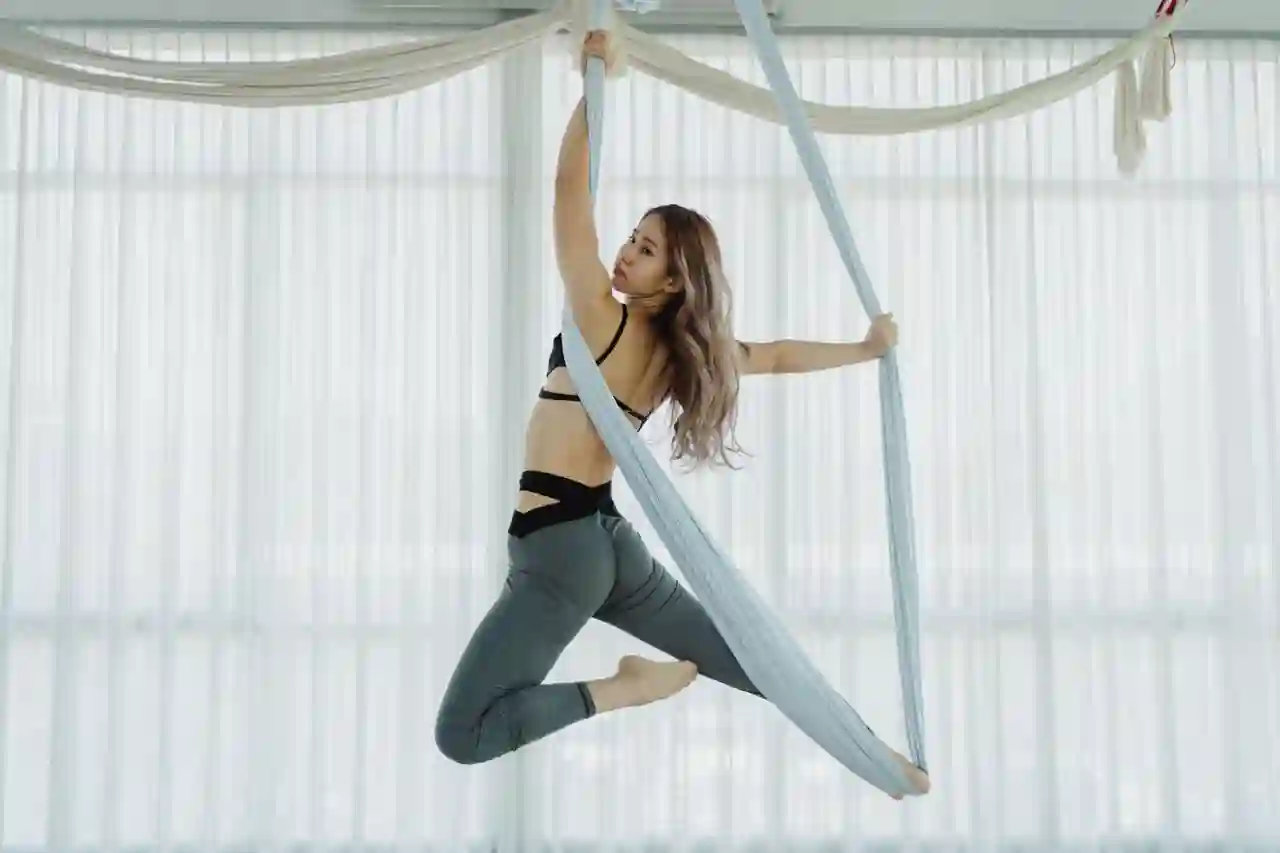
Aerial yoga is a style of yoga practiced with a soft fabric hammock hung from the ceiling, which supports your body during stretches, gentle inversions and floating poses. It is often described as a low-impact way to explore flexibility and relaxation, but research on aerial yoga itself is very limited, so most benefit claims are based on yoga in general and personal reports.
What is aerial yoga?
Aerial yoga blends traditional yoga postures with a hammock, sometimes called a silk or sling, suspended about hip height from a rigging point. The fabric holds some of your weight, so you can lean, hang and fold in ways that feel different from a mat.
Classes usually mix standing poses, supported stretches and a rest at the end where you lie wrapped in the hammock. Many studios keep your feet close to the floor, and hanging upside down is typically optional.
It is different from aerial silks or circus arts, which are acrobatic and strength heavy. Aerial yoga leans toward stretching and relaxation.
What happens in a beginner class?
Most beginner classes run 45 to 60 minutes and start with a short orientation to the hammock.
- •Setting the height: the instructor helps you adjust the fabric to your body.
- •Warm-up: gentle mobility work, often with the hammock as a support.
- •Poses: supported lunges, forward folds and backbends, with the hammock taking some weight.
- •Optional inversions: a gentle inverted pose with the hips in the hammock, only if you choose.
- •Cocoon rest: a final relaxation wrapped in the fabric.
Wear fitted clothing that covers your underarms and legs, since the fabric can rub skin. Skip zippers, large jewelry and loose layers that snag.
What does the evidence say about aerial yoga?
Evidence is emerging and thin. A search of PubMed for aerial yoga returns very few relevant papers. One 2024 case study analyzed movement and muscle activity in a single woman who practiced aerial and hatha yoga, and the authors suggested that objective movement analysis might help instructors and physiotherapists adjust poses to reduce injury risk. A single case cannot show that aerial yoga helps with any health goal.
For yoga more broadly, the National Center for Complementary and Integrative Health reports that research suggests yoga may support stress management, sleep and balance, and may offer a small benefit for low-back pain. Yoga styles differ widely, which makes studies hard to compare, so those findings may not carry over directly to hammock practice.
Honest takeaway: people report that the hammock feels supportive and relaxing, but we do not yet have good trials of aerial yoga itself.
Safety and who should check first
Aerial yoga adds height, fabric and sometimes inversion, so extra care makes sense. The NCCIH notes that yoga is generally considered safe for healthy people when done properly with a qualified instructor, and that injuries such as sprains and strains can occur. It also lists conditions that may call for modifications, including balance issues, glaucoma and severe high blood pressure, and advises people who are pregnant to talk with their health care provider.
Please check with a clinician before trying aerial yoga if any of these apply:
- •Glaucoma or other eye conditions
- •High blood pressure or heart conditions
- •Pregnancy
- •Recent surgery or an injury that is still healing
- •Vertigo, dizziness or balance problems
- •Neck, spine, shoulder or wrist problems
Also tell the instructor before class begins. If you feel dizzy, numb or tingling, come out of the pose and return to the ground. Never use a hammock that looks worn or is rigged to a ceiling point you cannot confirm is rated for load.
How is aerial yoga different from mat yoga?
The hammock changes what the practice asks of you. It can take pressure off wrists and hips for some poses, which some people find welcoming. Other poses, such as holding yourself away from the fabric, can be more demanding than they look.
Mat styles offer more variety in pace and philosophy. If you want a slower, supported option, you might also explore restorative yoga or yin yoga. For a classic foundation in alignment and breath, hatha yoga is a common starting point.
Tips for your first class
- •Eat lightly and avoid a heavy meal in the two hours before class.
- •Arrive early to meet the instructor and mention any health concerns.
- •Ask how the studio inspects and replaces its hammocks.
- •Move slowly in and out of the fabric, and keep your head above your heart if inversions do not feel right.
- •Rest in the cocoon at the end, but let the instructor know if it feels claustrophobic.
How to find a practitioner
Look for an instructor with yoga teacher training plus specific aerial training, and ask how many students are in the room. Small classes make it easier for someone to check your setup.
Related reading: what hatha yoga is and what research shows covers the ground-based foundation, restorative yoga poses and benefits is a gentler option, and yoga therapy for holistic health suits people working around a specific concern.
On Gyfts, you can browse aerial yoga instructors, explore the wider world of yoga, or look at yoga therapy if you want an individualized plan for a health concern. You can also start from Gyfts explore.